 How-to
Find Local Holistic Hair Specialist: A Step-by-Step Guide
Table of Contents
- What Makes a Holistic Hair Specialist Different
- How to Search for a Natural Hair Salon Near Me
- Questions to Ask a Trichologist Before Your First Appointment
- What to Expect During a Hair and Scalp Consultation
- How to Identify a Holistic Hair Loss Specialist
- Verifying Credentials and Training
- Red Flags and What to Avoid
- Frequently Asked Questions
Last Updated: October 8, 2026
What Makes a Holistic Hair Specialist Different
A holistic hair specialist is a trained professional who addresses hair and scalp health by examining the whole person, not just treating surface symptoms. Unlike conventional dermatologists or stylists, these practitioners look at lifestyle factors, hormonal balance, nutrition, and stress levels alongside scalp condition.
What sets them apart is their approach. A holistic hair specialist combines multiple disciplines. They might use clinical trichology, Traditional Chinese Medicine, herbal remedies, and lifestyle coaching all together. The goal is to find and fix the root cause of hair loss or scalp problems, not just mask symptoms with medicated shampoos.
At Sophiatrichoholistic Hair Spa LLC, this integrated approach treats your body as a connected system. Your hair reflects your overall health. If your hormones are imbalanced, your scalp is inflamed, or your stress is through the roof, your hair will show it. A true holistic hair specialist knows this and acts on it.
The difference matters most for chronic conditions. If you've had psoriasis on your scalp for years, or postpartum hair loss that won't stop, or seborrheic dermatitis that keeps coming back despite dermatology treatments, a holistic specialist offers something different: a personalized plan that addresses why it's happening, not just what to do about it.
How to Search for a Natural Hair Salon Near Me
Finding a local holistic hair salon requires knowing what to search for and where to look. Generic searches won't cut it, you need targeted strategies.
Start with specific search terms:
- "Holistic hair specialist near me"
- "Trichologist near me"
- "Natural hair salon [your city]"
- "Scalp treatment specialist near me"
- "Clinical trichology near me"
These terms filter results much better than "hair salon near me," which returns conventional salons that won't have the expertise you need.
Check online directories and platforms:
- Google Maps and Google Business profiles (filter by reviews mentioning "holistic," "natural," or "scalp health")
- Yelp (search for "trichologist" or "holistic hair care")
- Health-focused directories like Healthgrades or Zocdoc
- Wellness platforms like Mindbody or ClassPass (many holistic practitioners list there)
- Instagram and Facebook (search hashtags like #holistichaircare, #trichologist, #scalp treatment)
Look for specific credentials in listings:
- Licensed Acupuncture Physician or Doctor of Acupuncture
- Certified Trichologist
- Licensed Master Cosmetologist with trichology training
- Certified Holistic Health Practitioner
These titles signal real training, not just marketing language.
Ask in wellness communities:
- Local acupuncture or Traditional Chinese Medicine groups
- Women's health forums focused on hair loss or scalp conditions
- Facebook groups for alopecia, postpartum hair loss, or seborrheic dermatitis
- Reddit communities like r/trichology or condition-specific subreddits
Real people share honest experiences. You'll learn which practitioners actually deliver results and which ones overpromise.
Questions to Ask a Trichologist Before Your First Appointment
Before booking, contact the specialist and ask these questions. Their answers tell you whether they're the right fit.
About their training and approach:
- "What certifications or licenses do you hold in trichology?" (Listen for Certified Trichologist, Licensed Acupuncture Physician, or similar credentials)
- "How do you determine the root cause of hair loss or scalp problems?" (They should mention assessment, testing, or detailed consultation, not just looking at your scalp)
- "Do you work with a specific philosophy or method?" (Holistic, Traditional Chinese Medicine, clinical trichology, etc.)
- "Have you treated cases like mine before?" (Describe your condition: alopecia, postpartum loss, seborrheic dermatitis, psoriasis, etc.)
About the treatment process:
- "What happens during the first appointment?" (Should involve thorough consultation and assessment)
- "How long is a typical treatment plan?" (Honest practitioners give realistic timelines, not vague "it depends" answers)
- "What does treatment involve?" (In-spa sessions, home care, supplements, lifestyle changes, etc.)
- "How will you measure progress?" (Photos, scalp assessments, hair density checks, or other objective measures)
About costs and commitment:
- "What are your fees for consultation and ongoing treatment?" (Ask for pricing structure, not just guesses)
- "Do you offer payment plans or packages?" (Some practitioners bundle sessions for better pricing)
- "How often would I need to come in?" (Weekly, monthly, or as-needed?)
- "Is there a minimum commitment period?" (Some require 3-6 months; others work session-by-session)
Red flags in their answers:
- Vague promises: "Everyone sees results" or "It always works"
- No clear assessment process: "I'll know what to do when I see you"
- Pressure to commit long-term before trying one session
- Unwillingness to explain their credentials or training
Good practitioners answer these questions directly and honestly. They acknowledge that results vary and timelines depend on your specific situation.
What to Expect During a Hair and Scalp Consultation
Your first appointment with a holistic hair specialist should be thorough and personalized. Here's what a proper consultation includes.
The assessment phase (30-45 minutes): A qualified specialist starts by asking detailed questions about your health history, not just your hair. They'll ask about stress levels, sleep quality, diet, hormonal changes, previous treatments, medications, and family history of hair loss.
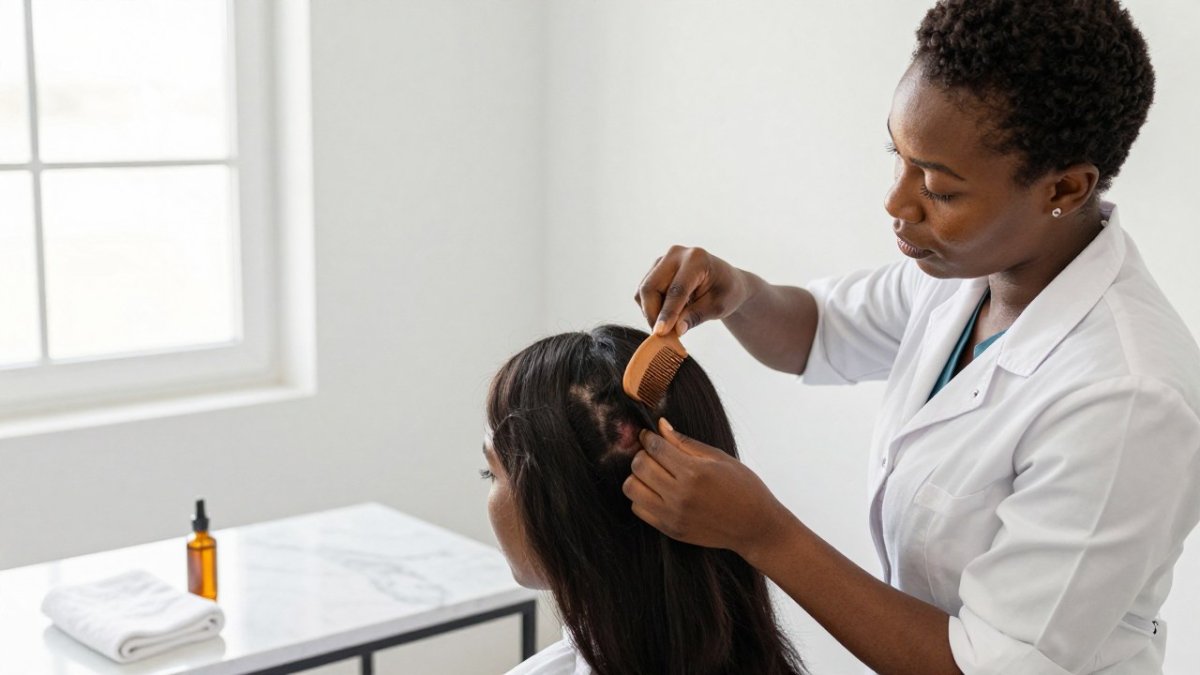
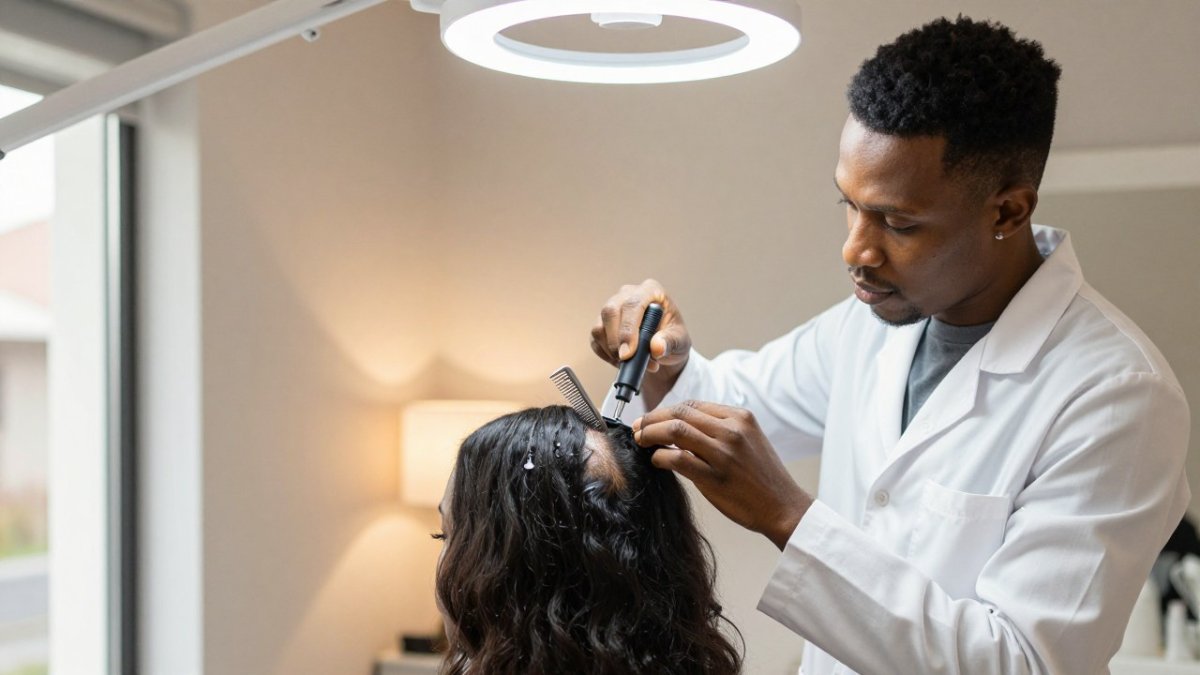
Next comes the physical assessment. The specialist examines your scalp closely, looking at redness, oiliness, dryness, flaking, or sensitivity. They assess your hair texture, density, and any visible shedding or thinning patterns. Many use magnification tools or scalp imaging to document your baseline condition.
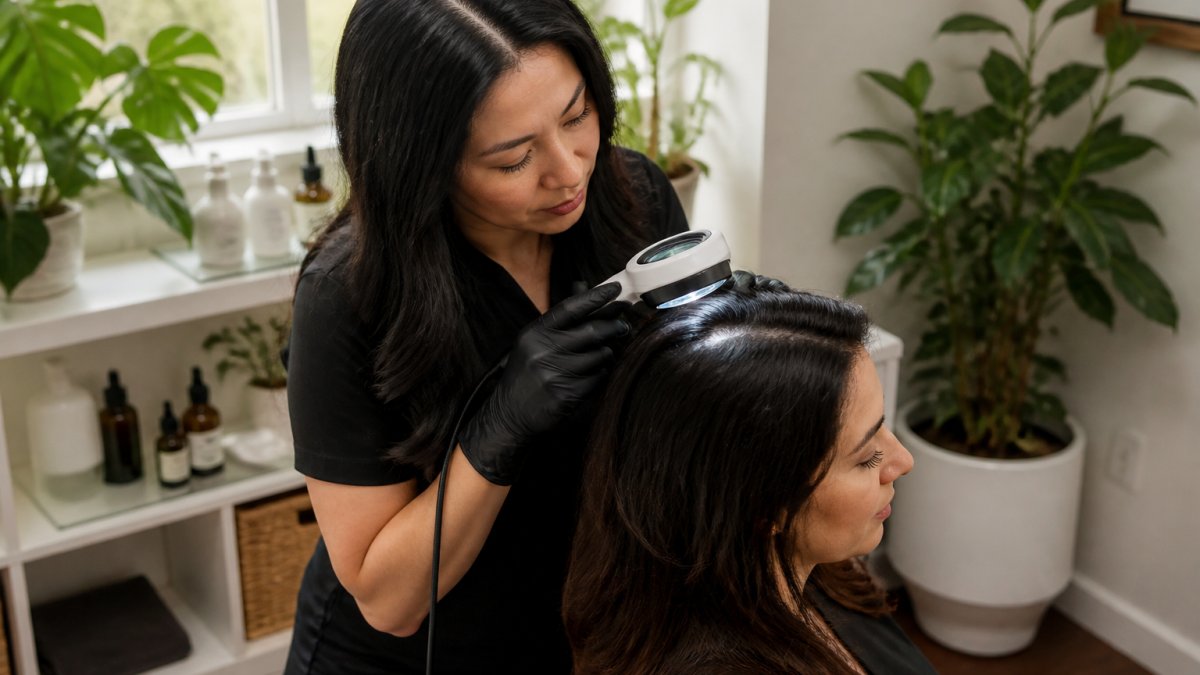
The diagnostic phase: Some specialists recommend testing. This might include blood work to check hormones, thyroid, iron, or vitamin levels. Others use microscopy to examine hair shaft quality or scalp microbiome health.
The treatment plan: Based on the assessment and any tests, the specialist outlines a personalized plan. This includes:
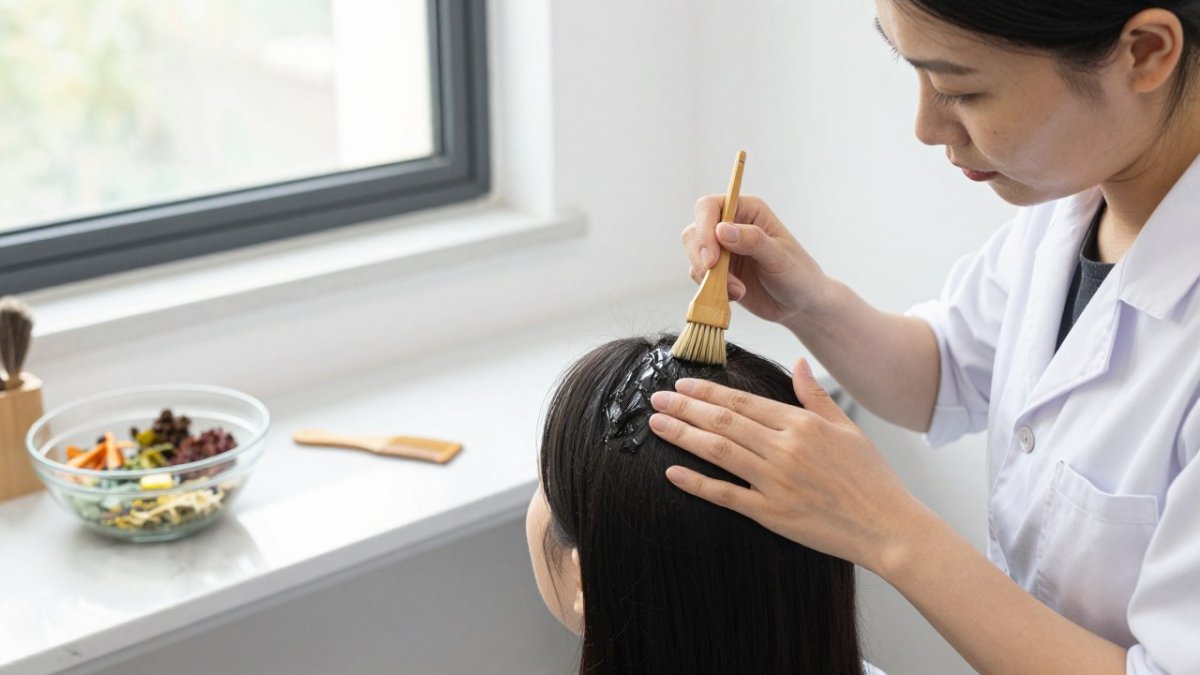
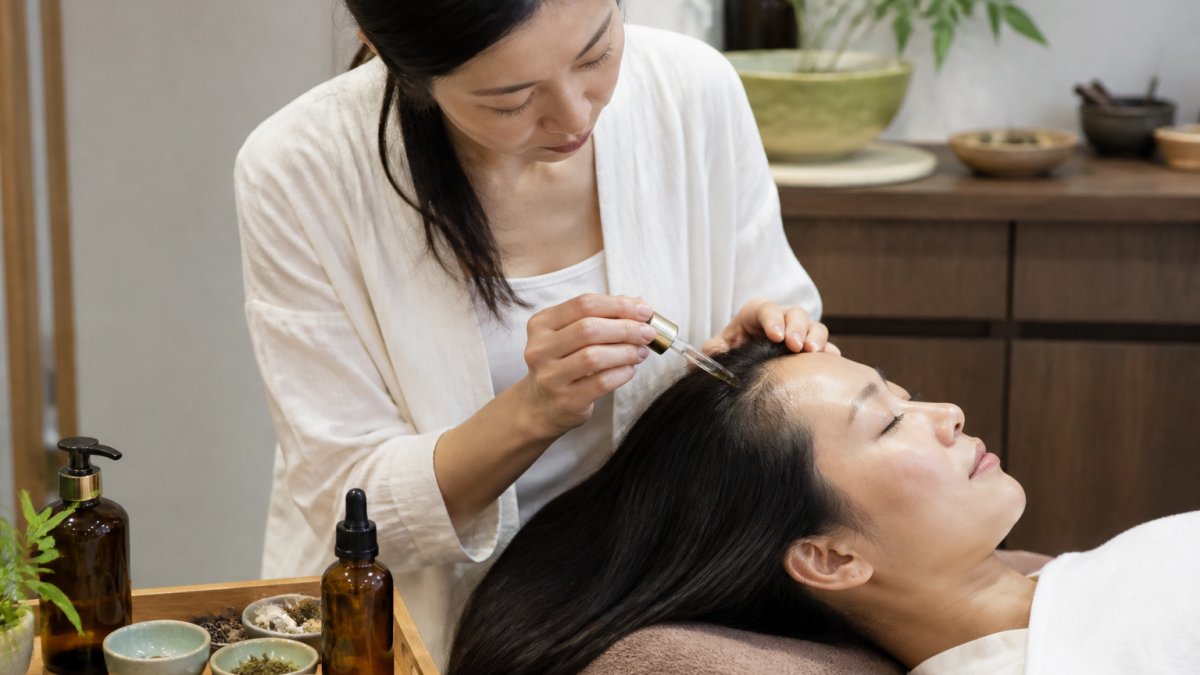
- In-spa treatments (scalp massage, herbal applications, acupuncture, etc.)
- Home care routine (specific products, techniques, frequency)
- Lifestyle recommendations (diet, stress management, sleep, etc.)
- Supplements or herbs if appropriate
- Timeline and frequency of appointments
- How progress will be measured
Timeline reality: A good consultation takes 60-90 minutes for the first visit. Follow-up appointments are usually shorter (30-45 minutes). The specialist should explain how long improvement typically takes for your specific condition, usually 3-6 months minimum to see meaningful hair growth changes.
How to Identify a Holistic Hair Loss Specialist
Not every practitioner who claims to be "holistic" actually understands hair loss. Here's how to spot a real holistic hair loss specialist.
Real credentials matter: A genuine holistic hair loss specialist has formal training in trichology plus additional certifications. Look for:
- Certified Trichologist (from recognized trichology schools)
- Licensed Acupuncture Physician with hair loss specialization
- Certified Holistic Health Practitioner plus trichology training
- Licensed Master Cosmetologist with advanced trichology education
These aren't just titles, they represent hundreds of hours of study in hair physiology, scalp health, and treatment protocols.
Start Your Hair & Scalp Healing Journey →
They understand hair loss types: A specialist who's truly knowledgeable discusses different types of alopecia: androgenetic alopecia (pattern baldness), telogen effluvium (shedding), alopecia areata (autoimmune), or scarring alopecia. They ask which type you have and adjust treatment accordingly.
They use objective assessment methods: Real specialists document your baseline condition with photos, scalp analysis, or hair density measurements. They track progress over time using the same methods.
They integrate multiple approaches: A holistic hair loss specialist doesn't rely on one treatment. They combine clinical trichology (scalp health, hair science), herbal medicine, acupuncture, nutritional support, and lifestyle coaching. This integration is what makes their approach actually "holistic."
They ask about your whole health: If a practitioner focuses only on your hair and scalp, they're missing the point of holistic care. Real specialists dig into hormones, digestion, stress, sleep, and lifestyle.
They're transparent about what's possible: Honest specialists explain that hair regrowth takes time, usually 3-6 months minimum to see results. They don't promise overnight fixes or guarantee outcomes.
Verifying Credentials and Training
Before committing to treatment, verify that your chosen specialist actually has the credentials they claim. This protects you from wasting time and money on someone without real training.
Check licensing:
- Acupuncture licenses: Contact your state's acupuncture board. Search the practitioner's name and confirm their license is active and in good standing. Licenses expire and must be renewed; an expired license means they're not legally practicing.
- Cosmetology licenses: State cosmetology boards maintain searchable databases. Verify that any "Licensed Master Cosmetologist" claim is real.
- Herbalist or nutritionist credentials: These vary by state. Some states require licensing; others don't. Ask the practitioner which certifications they hold and from which organizations.
Verify trichology certification: Trichology isn't federally regulated, so certification comes from private schools and organizations. Ask:
- "Which trichology school did you attend?" (Recognized schools include the International Association of Trichologists, Trichology Institute, or similar accredited programs)
- "Can you provide proof of certification?" (Legitimate practitioners can show you their diploma or certificate)
- "How many hours of training did you complete?" (Serious programs require 500+ hours minimum)
Check professional memberships: Real specialists often belong to professional organizations:
- International Association of Trichologists
- American Association of Acupuncture and Oriental Medicine
- National Board of Certification for Acupuncture and Oriental Medicine (NCCAOM)
- State-specific acupuncture or cosmetology associations
Membership doesn't guarantee quality, but it shows the practitioner invests in staying current with standards and continuing education.
Ask for references or case studies: A confident specialist can describe typical timelines for specific conditions. Be skeptical of anyone who refuses to show any evidence of results.
Look for ongoing education: Ask what continuing education the specialist completes. Real practitioners attend workshops, take advanced courses, and stay updated on new research. Someone who hasn't studied anything new in five years is falling behind.
Red flags in credentials:
- Credentials from unknown or unaccredited organizations
- Vague claims like "certified in holistic health" without naming the certifying body
- Refusal to provide proof of credentials
- Licensing that's expired or inactive
- No professional memberships or affiliations
Red Flags and What to Avoid
Some practitioners market themselves as holistic hair specialists without the training or ethics to back it up. Here's what to watch for.
Unrealistic promises: Avoid anyone who guarantees results or promises hair regrowth in weeks. Real hair growth takes months.
Pressure tactics: Red flag if they push you to commit to expensive packages upfront. Legitimate practitioners let you try one or two sessions before asking for long-term commitment.
No assessment process: If a specialist doesn't ask detailed questions about your health history or do a thorough scalp assessment, they're not practicing holistically.
Mixing pseudoscience with real medicine: Watch for practitioners who make wild claims about "toxins" or "energy blockages" without grounding them in actual physiology.
Unwillingness to work with other providers: A good holistic specialist collaborates with dermatologists, endocrinologists, or other doctors when needed.
No documentation or progress tracking: Avoid practitioners who don't take baseline photos, measure scalp condition, or track progress objectively.
Unlicensed or unverifiable credentials: Never book with someone whose credentials you can't verify.
Dismissing your concerns: A trustworthy specialist listens to your concerns and adjusts treatment if something isn't working.
Finding the right holistic hair specialist takes research, but it's worth the effort.
Frequently Asked Questions
What is the difference between a trichologist and a dermatologist?
A trichologist specializes exclusively in hair and scalp health, studying the science of hair growth, scalp conditions, and hair loss. Dermatologists are medical doctors who treat skin diseases, including some scalp conditions, but hair is not their primary focus. A holistic hair specialist combines trichology with approaches like Traditional Chinese Medicine to address root causes of hair loss and scalp inflammation rather than just symptom management. Both have value, but a holistic hair loss specialist offers a personalized, root-cause approach designed specifically for sustainable hair regeneration.
What credentials should a holistic hair specialist have?
Look for certifications in trichology (such as Certified Holistic Trichologist or similar), relevant state licenses (like Licensed Acupuncture Physician if they practice acupuncture), and continuing education in hair science or related fields. Many reputable holistic hair specialists also hold certifications in herbalism, nutrition, or holistic health. Ask to see their credentials and verify them through the issuing organizations. A specialist should be transparent about their training, experience, and any professional memberships.
How long does it take to see results from holistic hair treatment?
Hair growth cycles typically take 3 to 6 months to show visible results, since hair must progress through its growth phase before changes become noticeable. However, scalp health improvements (reduced inflammation, less oiliness, relief from itching) may be felt sooner, sometimes within weeks. Your holistic hair specialist should outline realistic timelines during your consultation and explain what progress looks like for your specific condition. Sustainable hair regeneration is a process, not an overnight fix.
Should I stop seeing my dermatologist if I see a holistic hair specialist?
No. A holistic hair specialist and dermatologist can work together. If you have a diagnosed scalp condition like psoriasis or seborrheic dermatitis, inform both providers about your care plan so they can coordinate. A holistic approach addresses root causes and overall scalp health, while dermatological care manages acute flares or infections. Transparency with both practitioners ensures safe, integrated care tailored to your needs.