 ultimate-guide
Evidence-Based Holistic Hair Loss Treatment Guide
Table of Contents
- Understanding Root Causes of Female Hair Thinning
- Natural Hair Regrowth for Women: What Works
- TCM for Hair Loss: Acupuncture and Herbal Support
- Evidence-Based Holistic Hair Loss Treatment: What the Research Says
- Integrating Holistic Care with Medical Treatments
- Diagnostic Self-Assessment: When to Seek Professional Help
- Conclusion: Your Next Steps for Holistic Hair Recovery
- Frequently Asked Questions
Last Updated: September 23, 2026
Understanding Root Causes of Female Hair Thinning
An evidence based holistic hair loss treatment starts with identifying why hair is shedding. Female thinning rarely has one cause, it usually reflects hormonal shifts, nutrient gaps, and scalp inflammation together.
Hormonal Shifts and DHT
Hormones drive most chronic female thinning, with DHT inhibition at the center: dihydrotestosterone binds receptors in susceptible follicles and accelerates miniaturization.
Nutritional Deficiencies and Scalp Inflammation
Nutrient gaps and inflammation amplify each other. Biotin, iron, vitamin D, and zinc deficiencies are common in women with diffuse shedding, and low ferritin shows up repeatedly premenopause.
Natural Hair Regrowth for Women: What Works
Natural hair regrowth for women works best when it targets circulation, inflammation, and follicle stimulation together. No single botanical reverses androgenetic alopecia alone; combinations do better.
Essential Oils and Botanical Extracts
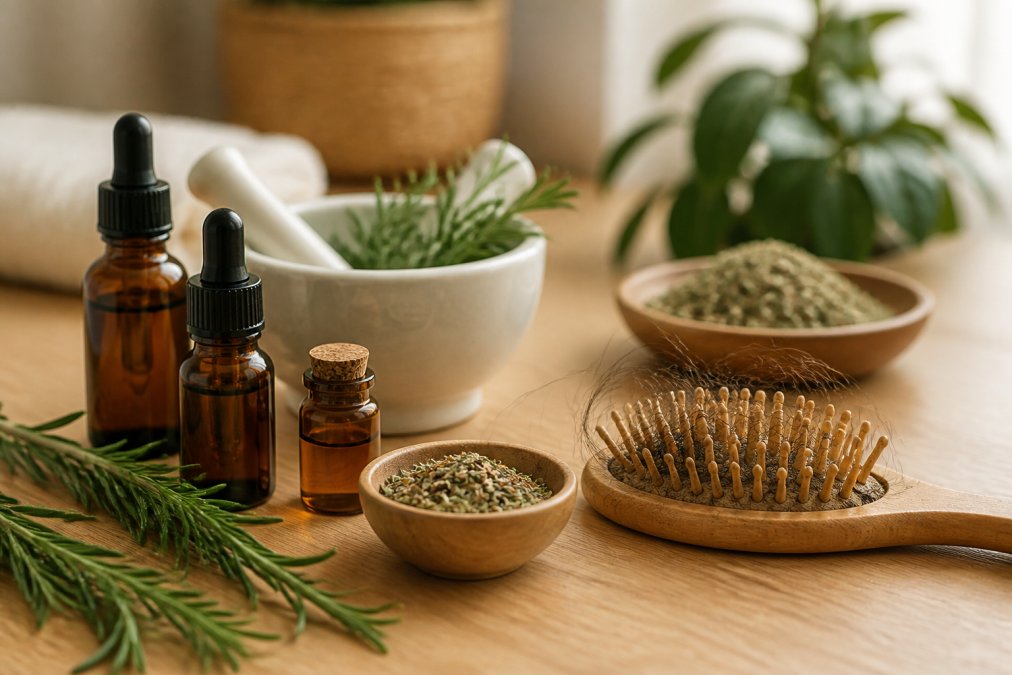
Essential oils for scalp health work through anti-inflammatory properties and improved blood flow. A traditional rosemary, lavender, thyme, and cedarwood blend has shown encouraging results in massage-based studies.
TCM for Hair Loss: Acupuncture and Herbal Support
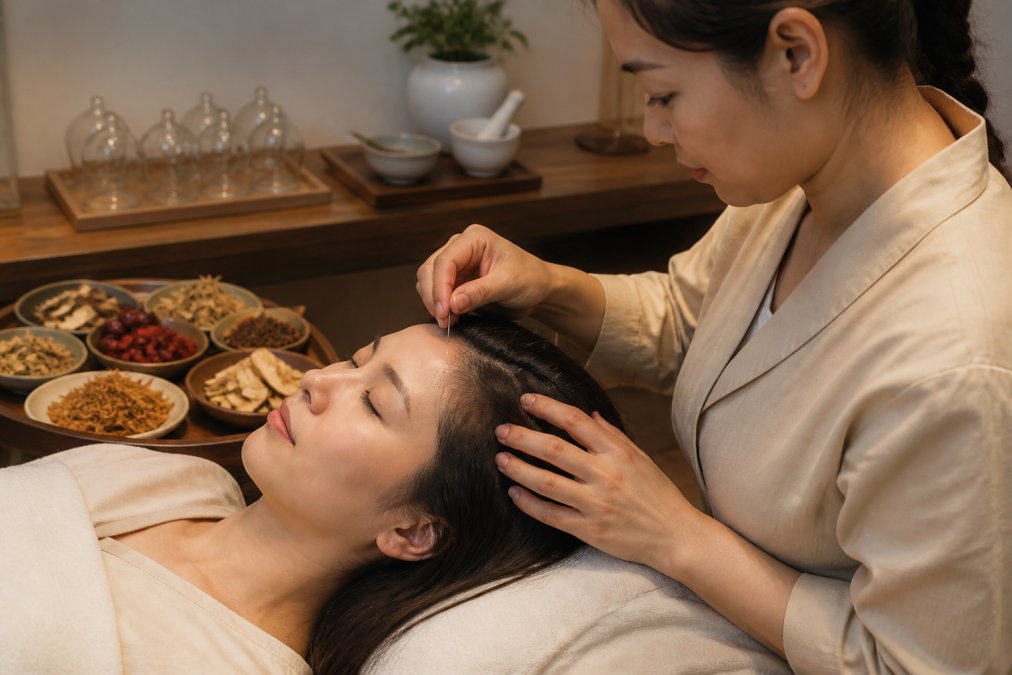
TCM for hair loss treats thinning as a signal of internal imbalance rather than a localized scalp problem. Acupuncture aims to improve circulation, regulate the nervous system, and support hormonal interaction pathways conventional topicals rarely address.
Evidence-Based Holistic Hair Loss Treatment: What the Research Says
An evidence based holistic hair loss treatment is not a single product but a stack of interventions, each with its own mechanism, study quality, and timeline. The strongest evidence covers rosemary oil, red light therapy, topical caffeine, topical melatonin, and correction of nutrient deficiency through supplementation. Everything else ranges from promising to anecdotal.
What "Evidence-Based" Actually Means Here
Evidence quality sits on a ladder, not a binary:
- Strong: multiple randomized controlled trials, consistent results, replication across populations. Nutrient correction in documented deficiency sits here.
- Moderate: at least one randomized trial plus supporting mechanistic data. Rosemary oil, red light therapy, and topical caffeine sit here.
- Emerging: small trials, pilot studies, or strong mechanistic rationale without large human data. Acupuncture and most herbal formulas sit here.
- Anecdotal: traditional use, influencer claims, or single case reports. Most "hair growth" supplements and proprietary blends sit here.
A holistic protocol built only from the top two tiers is defensible. A protocol built from the bottom two is a gamble.
Mechanism Matters More Than the Ingredient Name
Two remedies can both be called "natural" yet work through completely different pathways. The pathway tells you what each can and cannot do.
- DHT inhibition: rosemary oil, pumpkin seed oil, saw palmetto, and topical caffeine all show some anti-androgenic activity at the follicle. These target androgenetic alopecia specifically. They do nothing for telogen effluvium.
- Vasodilation and microcirculation: rosemary oil, topical caffeine, and scalp massage increase blood flow to the dermal papilla. This supports the anagen phase but does not reverse miniaturization on its own.
- Anti-inflammatory: essential oil blends, azelaic acid, and red light therapy calm oxidative stress at the follicle. These help when seborrheic dermatitis or scalp psoriasis is driving the shedding.
- Hormonal modulation: acupuncture and adaptogenic herbs act on the hypothalamic-pituitary-adrenal axis and, indirectly, on androgen and cortisol balance. This is the least direct pathway and the hardest to measure.
Dosing and Concentration: Where Most Guides Stay Vague
Specifics matter, and most holistic guides skip them. What the research actually used:
Start Your Hair & Scalp Healing Journey →
- Rosemary oil: typically diluted to roughly 2-3% in a carrier oil, applied daily with massage, for at least six months. Undiluted rosemary oil is a contact irritant.
- Topical caffeine: studied at concentrations around 0.2% in leave-on formulations, often twice daily. Higher concentrations are not automatically better and can irritate.
- Topical melatonin: studied at 0.0033% to 0.1% solutions, applied once daily in the evening. This is a very low concentration, most over-the-counter melatonin serums are far stronger and not what the trials used.
- Red light therapy: devices studied for hair growth typically use red wavelengths in the 630-670 nm range, applied for 15-25 minutes per session, three to five times per week. Consistency matters more than total minutes.
- Oral pumpkin seed oil: studied at 400 mg per day in men with pattern loss. Female-specific data is thinner.
What the Research Does Not Support
Honesty here separates an evidence-based guide from a supplement ad.
- Biotin supplementation in non-deficient people has no demonstrated effect on hair growth. It is the most oversold ingredient in the category.
- "Hair, skin, and nails" gummies rarely contain therapeutic doses of anything, and the few trials on multi-ingredient supplements are industry-funded and short.
- Essential oil blends have one small, older massage-based trial behind them. Encouraging, not definitive.
- Any single remedy replacing medical evaluation is not supported. Persistent or patchy loss needs a dermatological assessment.
| Approach | Best Supported For | Typical Timeline | Evidence Strength |
|---|---|---|---|
| Rosemary oil (2-3% diluted) | Pattern thinning, circulation | 3-6 months | Moderate |
| Red light therapy (630-670 nm) | Follicle stimulation | 3-6 months | Moderate |
| Caffeine topical (~0.2%) | DHT-related thinning | 2-4 months | Moderate |
| Topical melatonin (0.0033-0.1%) | Pattern thinning | 3-6 months | Emerging |
| Nutrient correction | Diffuse shedding with documented deficiency | 3-6 months | Strong (if deficient) |
| Acupuncture | Stress-driven shedding | 2-3 months | Emerging |
| Biotin (non-deficient) | Not supported | , | Weak |
Integrating Holistic Care with Medical Treatments
Holistic care and medical treatment are not competitors, and treating them as rivals is the most common mistake I see.
The Three Standard Medical Options
- Topical minoxidil: a vasodilator that prolongs the anagen phase and widens the follicle, available over the counter at 2% and 5%. Works on androgenetic alopecia and, off-label, some telogen cases. Requires continuous use, shedding resumes within months of stopping.
- Oral finasteride: a 5-alpha-reductase inhibitor that lowers DHT conversion. Prescription only, generally avoided in women during reproductive years because of fetal risk; some practitioners use it off-label postmenopause.
- PRP therapy: uses growth factors from your own blood, injected into the scalp to stimulate the dermal papilla. Typically three sessions spaced about a month apart, then maintenance every three to six months.
Where Holistic Approaches Genuinely Add Value
- Scalp preparation before PRP. A calmer scalp tolerates injections better and may improve comfort and healing. Anti-inflammatory scalp care, gentle cleansing, azelaic acid, diluted essential oil massage, is a reasonable pre-treatment routine.
- Circulation support alongside minoxidil. Topical caffeine and rosemary oil both improve scalp microcirculation, the same general pathway minoxidil works through. They do not replace it, but they can complement it.
- Nutrient correction as a foundation. If ferritin, vitamin D, or zinc are low, no topical or prescription therapy performs at its best. Correcting a documented deficiency is the highest-yield holistic step regardless of what else is in the protocol.
- Stress and sleep support. Chronic cortisol elevation pushes follicles into the telogen phase. Acupuncture, breathwork, and sleep hygiene do not regrow hair directly, but they remove a driver that undermines everything else.
Where the Real Risks Sit
- Blood-thinning botanicals. High-dose fish oil, ginkgo, garlic, ginger, and turmeric can increase bleeding risk. Pause these one to two weeks before PRP or any scalp procedure, and confirm with your practitioner.
- Hormonal herbs. Saw palmetto, spearmint, and chasteberry have anti-androgenic or hormonal effects. They can interact with oral contraceptives, hormone replacement therapy, and thyroid medication. Do not stack them with finasteride without medical oversight.
- Liver-metabolized interactions. Many herbal formulas use the same liver enzymes as prescription drugs. St. John's Wort in particular reduces the effectiveness of a long list of medications.
- Topical irritation stacking. Minoxidil itself causes contact dermatitis in a meaningful share of users. Adding undiluted essential oils on top is a recipe for a scalp reaction blamed on the wrong product.
- Shedding confusion. Minoxidil causes a well-known temporary shed in the first weeks as follicles cycle. Start three holistic remedies in the same window and you cannot tell which caused what.
A Sensible Sequencing Framework
- Diagnose first. Confirm whether you have androgenetic alopecia, telogen effluvium, or an inflammatory scalp condition. The treatment path diverges sharply from here.
- Correct deficiencies. Bloodwork for ferritin, thyroid, vitamin D, and zinc. Address anything low before adding new topicals.
- Start one medical intervention if indicated. Minoxidil or PRP, not both at once, so you can attribute results and side effects.
- Layer holistic support after four to six weeks. Add one thing at a time, a diluted rosemary oil massage, then topical caffeine, then red light therapy, with at least two weeks between additions.
- Reassess at three months and six months. Most evidence-based approaches need three to six months before you can judge whether they are helping.
Diagnostic Self-Assessment: When to Seek Professional Help
A diagnostic self-assessment helps you decide whether to self-treat or book a professional evaluation. It is a triage tool, not a diagnosis.
Ask yourself these questions:
- Is my shedding diffuse across the whole scalp, or concentrated at the part and crown?
- Did the shedding start suddenly, or has it progressed gradually over a year or more?
- Do I have scaling, itching, redness, or oily patches on my scalp?
- Has it been more than three months since childbirth, major surgery, or significant stress?
- Have I had bloodwork for ferritin, thyroid, vitamin D, and zinc in the past year?
Conclusion: Your Next Steps for Holistic Hair Recovery
Hair recovery progress is slow and easy to abandon before it works. Most evidence-based approaches need three to six months before you can judge whether they are helping.
Frequently Asked Questions
What are the evidence-based holistic approaches to managing hair thinning?
Evidence-based holistic hair loss treatment combines clinically studied natural ingredients with lifestyle adjustments. Rosemary oil has shown comparable results to minoxidil in some trials, while pumpkin seed oil and caffeine may help with DHT inhibition and scalp microcirculation. Acupuncture and TCM address underlying imbalances. A holistic approach also includes correcting nutrient deficiencies, managing stress, and improving scalp health through gentle massage and anti-inflammatory botanicals. Always consult a qualified professional for personalized guidance.
How does Traditional Chinese Medicine support scalp health and hair regrowth?
TCM for hair loss focuses on restoring internal balance. Acupuncture can improve blood flow to the scalp, reduce inflammation, and regulate hormones that contribute to follicular miniaturization. Herbal formulas may address underlying patterns like blood deficiency or kidney weakness, which TCM associates with hair health. While research is growing, many women find TCM helpful alongside conventional care. A licensed acupuncture physician can tailor treatment to your specific presentation.
What role does internal balance play in treating female hair loss?
Internal balance is central to holistic hair regrowth. Hormonal shifts, nutrient deficiencies, and chronic stress can push hair follicles into the telogen phase prematurely. Addressing root causes such as low ferritin, thyroid imbalances, or elevated androgens supports the anagen phase. Lifestyle factors like sleep, diet, and stress management directly affect scalp microcirculation and oxidative stress. A holistic plan aims to correct these imbalances rather than just treating symptoms.
Are there clinical studies supporting holistic scalp treatments?
Yes, several studies support natural ingredients. Rosemary oil has been compared to minoxidil with similar hair count improvements after six months. Pumpkin seed oil taken orally increased hair count by 40% in one trial. Caffeine, melatonin, and red light therapy also have clinical backing for hair follicle stimulation. Acupuncture studies show mixed but promising results for alopecia. Always look for peer-reviewed research and consult a dermatological assessment for personalized advice.
How can women distinguish between evidence-based holistic care and unproven trends?
Check for clinical efficacy data, safety profiles, and whether the approach targets root causes. Evidence-based holistic hair loss treatment relies on ingredients like rosemary oil, pumpkin seed oil, and azelaic acid that have been studied in human trials. Be wary of products claiming instant results or using proprietary blends without disclosure. A qualified trichologist or dermatologist can help you evaluate options and integrate holistic methods with medical treatments when needed.