 Ultimate guide
Choosing a Trichologist: How to Vet Credentials Before You Book
Last Updated: November 4, 2026
Quick Summary
To choose a trichologist for hair loss, verify their training program, professional membership, any state license, and scope of practice before booking, because the title is not legally protected in the United States. Ask for specific credentials you can check independently. Refer to a dermatologist or physician first if your hair loss is sudden, patchy, or scarring.
- Ask for the name of the training program, the credential awarded, and the completion year.
- Confirm any professional membership in the organization's own public member directory.
- Verify any related health or cosmetology license through the relevant state board.
- Ask for a written statement of what the practitioner can and cannot do.
- See a dermatologist or physician promptly for sudden, patchy, or scarring hair loss.
Table of Contents
- What a Trichologist Does and How They Differ From a Dermatologist
- Conditions and Hair-Loss Patterns a Trichologist Assesses
- How to Verify a Trichologist's Qualifications and Professional Membership
- Step 1: Ask for the specific training program and credential
- Step 2: Check professional membership against the organization's own directory
- Step 3: Check any underlying health or cosmetology license at the state level
- Step 4: Confirm scope of practice in writing
- Step 5: Cross-check the public record
- What a verified profile looks like
- What Happens During a Trichology Consultation
- Questions to Ask a Hair Loss Expert Before Booking
- Costs, Insurance and What a Consultation Fee Includes
- When to See a Dermatologist or Doctor Instead, and Where Holistic Hair Loss Care Fits
- Booking Your First Hair Loss Assessment With Sophiatrichoholistic
- Frequently Asked Questions
Choosing a trichologist for hair loss is harder than it should be, because the title is unregulated in most places and anyone can print it on a business card.
Trichology is a field focused on the hair and scalp. In the United States, the title "trichologist" is not a protected professional license, so the quality of practitioners varies widely. The practical steps below will help you separate well-trained specialists from people who simply use the name.
What a Trichologist Does and How They Differ From a Dermatologist
A trichologist is a practitioner who assesses the hair and scalp and looks for patterns that point to possible causes of shedding, thinning or scalp discomfort. Their work usually centers on history-taking, scalp and hair examination, and lifestyle and routine review.
A dermatologist is a medical doctor who has completed medical school and dermatology residency (the American Academy of Dermatology). Dermatologists can diagnose disease, order blood tests, prescribe medication and perform procedures.
Conditions and Hair-Loss Patterns a Trichologist Assesses
Trichologists typically look at patterns such as diffuse thinning, patchy hair loss, scalp inflammation, dandruff, oiliness and general shedding. They pay attention to the timeline: when the shedding started, whether it followed a pregnancy, illness or a stressful period, and whether it is ongoing.
Describing your pattern accurately helps a practitioner decide whether a medical referral is needed. Bring notes on when the loss began and any changes in your routine, medications or health.
How to Verify a Trichologist's Qualifications and Professional Membership
Because the title is not legally protected in the United States, verification is the single most important step in choosing a trichologist. Our guide on how to choose a certified clinical trichologist explains each credential to check. Most top-ranking guides skip this entirely, so treat the checklist below as the core of your vetting process rather than an afterthought.
Step 1: Ask for the specific training program and credential
Request the name of the school or program, the exact credential awarded, the year of completion, and whether the program included supervised clinical hours.
Watch out: some programs are short online courses with no clinical component; a certificate from one of these is not equivalent to supervised training, so ask directly whether hands-on clinical hours were required.
Step 2: Check professional membership against the organization's own directory
Membership claims are only useful if you can confirm them independently. Ask which organization the practitioner belongs to, then look up that organization's public member directory and confirm the name and credential match. If the organization has no public directory, ask the practitioner for a membership certificate or verification letter and confirm it with the organization directly. Treat any membership you cannot independently verify as unverified, regardless of how it is displayed on a website or business card.
Step 3: Check any underlying health or cosmetology license at the state level
Many trichologists hold a separate license, cosmetology, acupuncture, nursing, or medicine, and that license is issued by a state board. Ask for the license type and number, then verify status and any disciplinary history through the relevant state board's public license lookup. Licenses are state-specific, so confirm the license is current in the state where you will be seen. A current, verifiable license in a related health field is a meaningful signal; an expired or out-of-state-only license is not.
Step 4: Confirm scope of practice in writing
Ask the practitioner to state, in writing or in the pre-booking email, what they can and cannot do: whether they can diagnose medical conditions, order lab work, or prescribe medication. In most states, trichologists cannot do these things, and a practitioner who is clear about their limits is more trustworthy than one who implies medical authority they do not have.
Step 5: Cross-check the public record
Search the practitioner's name and business name against state professional board disciplinary records and your state attorney general's consumer complaint database. Also check whether the business holds a current state business registration. These checks take minutes and surface problems that a polished website will not.
What a verified profile looks like
A practitioner who passes these checks can typically provide, on request: the training program name and completion year, a verifiable membership in a recognized professional organization, a current state license number where applicable, and a written scope-of-practice statement. If any of these cannot be produced, that absence is itself useful information when you compare providers.
What Happens During a Trichology Consultation
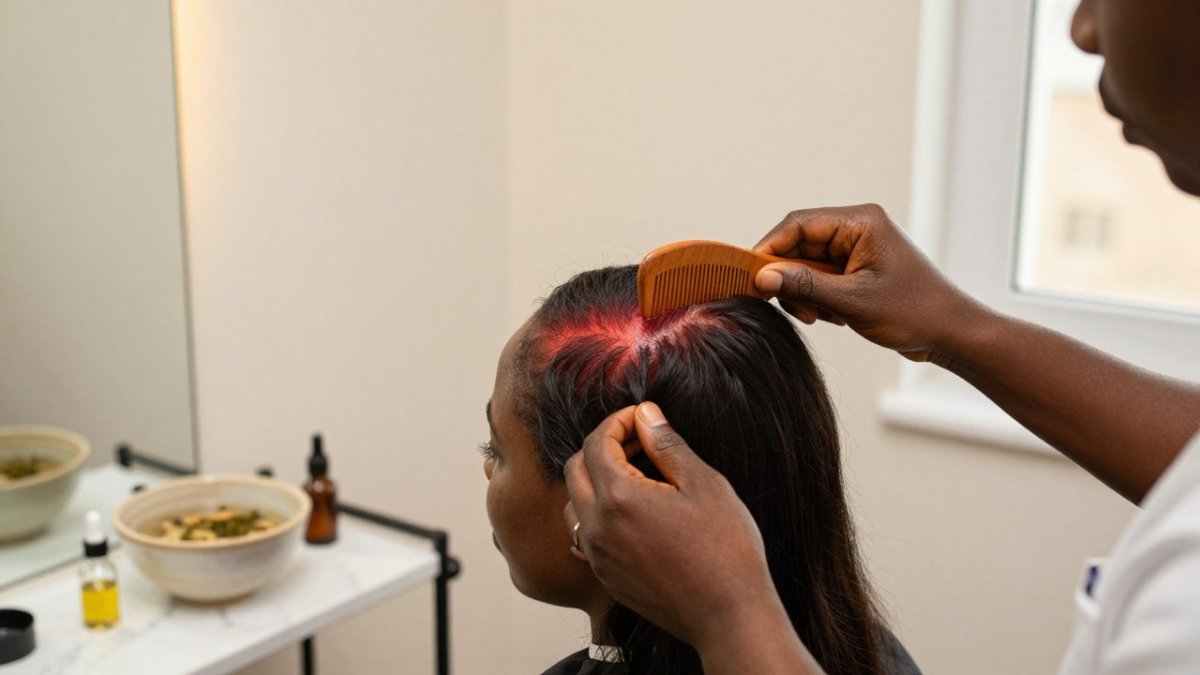
A typical first visit starts with a detailed history: your shedding timeline, family history, diet, stress levels, medications and hair-care habits. The practitioner then examines your scalp and hair, often with magnification, and may ask about recent illnesses or hormonal changes.

A thorough consultation ends with a clear summary of what was observed, what might be contributing and what the next steps are.
Questions to Ask a Hair Loss Expert Before Booking
Before you book, ask these questions to gauge the practitioner's approach:
Start Your Hair & Scalp Healing Journey →
- What training and credentials do you hold, and where did you earn them?
- Which professional body, if any, do you belong to?
- What does a first consultation include, and how long does it take?
- When would you refer me to a doctor or dermatologist?
- What outcomes are realistic for my pattern, and how will we measure progress?
- Do you recommend products or packages, and are they required?
Vague or defensive answers are useful information. Clear, specific answers suggest a practitioner who is comfortable being held accountable.
Costs, Insurance and What a Consultation Fee Includes
Cost is where selection intent most often goes unmet, because most guides avoid the topic. Use the framework below to compare providers on price and value rather than on the headline consultation fee alone.
What a consultation fee should cover
Ask for a written breakdown before booking. A complete initial consultation fee should typically cover: the history-taking session, a scalp and hair examination (including magnification where used), a written summary of findings, and a clear statement of recommended next steps.
Watch out: a low advertised consultation fee paired with a required product or treatment package is not a low-cost option; ask whether any purchase is required to receive the assessment findings.
How fees are typically structured
Pricing varies by market and scope, so there is no single national rate. In practice, providers commonly structure fees in one of three ways: a flat initial consultation fee; a fee that includes a follow-up visit within a set window; or a separate fee for the assessment plus per-visit charges for follow-up. Ask which structure applies and get the follow-up cost in writing, because the second and third visits are where total spend is usually decided.
Insurance and reimbursement
Most trichology services are not covered by health insurance because the field is generally treated as complementary rather than medical. Check with your insurer before booking and ask the provider whether they supply a superbill or itemized receipt you can submit for possible out-of-network reimbursement. If a medical workup is recommended, the physician or dermatology visit may be covered under your plan, so keep the two costs separate when you budget.
Questions that make quotes comparable
Ask every provider the same four questions so you can compare like with like: What is the total cost of the first visit, including any written report? What does a follow-up visit cost, and how many are typically recommended? Are products or treatments required, and what do they cost? Do you provide an itemized receipt for insurance submission? A provider who answers all four in writing is easier to compare, and easier to hold to the quoted price.
Budgeting for the full course, not the first visit
Hair-loss assessment is usually a process, not a single appointment. Ask for the provider's typical follow-up schedule and the total estimated cost over the first three to six months, then compare that total across providers rather than comparing first-visit fees.
The table below compares the questions to ask each provider so you can weigh quotes on the same basis.
| Question to ask | What a complete answer covers | Why it matters |
|---|---|---|
| Total cost of first visit | Consultation fee plus any written report | Shows the true starting price |
| Follow-up visit cost | Price per visit and how many are recommended | Follow-up visits often decide total spend |
| Are products required | Whether a purchase is needed to receive findings | A low fee can hide a required package |
| Itemized receipt available | Superbill or receipt for insurance submission | Supports possible out-of-network reimbursement |
| Typical plan length | Estimated cost over the first three to six months | Compares total cost, not first-visit fee |
When to See a Dermatologist or Doctor Instead, and Where Holistic Hair Loss Care Fits
See a dermatologist or physician promptly if you notice sudden or patchy hair loss, scarring, painful or spreading scalp lesions, or loss that follows a major illness, medication change or pregnancy.
Holistic hair loss care can complement medical evaluation. Sophiatrichoholistic Hair Spa LLC focuses on this kind of integrated approach for women, and you can read more about the clinical background in our clinical evidence guide.
When you are ready to compare practitioners, our guide to finding a local holistic hair specialist walks through the steps to narrow your options.
Booking Your First Hair Loss Assessment With Sophiatrichoholistic
Sophiatrichoholistic Hair Spa LLC offers holistic trichology assessments for women aged 18 to 65, combining Traditional Chinese Medicine principles with clinical trichology.
To learn what the assessment costs and how it works, see our guide to fees and insurance or check our current pricing guide. When you are ready, contact Sophiatrichoholistic Hair Spa LLC to schedule your consultation and start the conversation about your hair and scalp health.
Frequently Asked Questions
What is the difference between a dermatologist and a trichologist?
A dermatologist is a medical doctor who has completed medical school and a dermatology residency, and can diagnose disease, prescribe medication and order lab tests. A trichologist focuses on the hair and scalp, usually through non-medical training, and typically assesses hair and scalp condition, lifestyle factors and care routines. Trichologist training and credentials vary widely in the United States because the title is not a protected medical license. For suspected medical causes, scarring hair loss or conditions such as psoriasis, a dermatologist is the appropriate first contact. Many people see both.
What qualifications should a reputable trichologist have?
Look for formal training from a recognized program with a defined curriculum, supervised clinical hours, and a final examination. Membership in a professional body that sets standards and requires continuing education is a further sign of accountability. Ask for the name of the training institution, the year of qualification and the body that issued the certificate, then check that these can be confirmed independently. A trichologist should be clear about the limits of their scope and refer you to a physician when a medical condition is suspected.
How do I know if a trichologist is legitimate?
Legitimate trichologists state their training openly, can name their professional membership, and describe their assessment process before you pay. They do not promise to cure hair loss, do not claim their treatment is risk-free or guaranteed, and do not discourage you from seeing a doctor. Verify credentials directly with the issuing body rather than relying on a certificate displayed in the clinic. If the answers are vague or the pressure to buy products is high, consider that a warning sign.
Does insurance cover visits to a trichologist?
Health insurance in the United States generally covers care provided by licensed medical professionals, but many trichology consultations are private, self-paid visits and are not reimbursed. Coverage depends on your specific plan, the provider's licensing and the diagnosis involved. Contact your insurer before booking to ask whether a visit would be covered and what documentation you would need. Ask the clinic in advance what its consultation fee includes and whether it provides receipts you could submit yourself.