 How-to
How Do You Choose a Certified Clinical Trichologist?
Last Updated: October 29, 2026
Quick Summary
To choose a certified clinical trichologist, verify the exact credential name, the certifying organization's full legal name, your certification number and expiration date, and confirm the body publishes training-hour requirements, an exam, and continuing education. Also verify any related state license directly with the state board and confirm current professional liability coverage. A clinical trichologist cannot diagnose systemic disease, prescribe medication, or order a scalp biopsy, so treat any provider who implies otherwise as misrepresenting their scope.
- Ask for the exact credential name and the certifying organization's full legal name before booking.
- Request the practitioner's certification number and expiration date and confirm the credential is still active.
- Verify any related state license, such as cosmetology or nursing, directly with the state board.
- Confirm the certifying body publishes training hours, a proctored exam, and continuing education requirements.
- A weekend workshop or online certificate mill is not the same as a clinical credential.
Table of Contents
- What a Certified Clinical Trichologist Actually Does
- How to Verify Professional Credentials and Accreditation
- Trichologist vs Dermatologist for Hair Loss: Which Do You Need?
- What to Expect at a Trichology Appointment
- Trichology Consultation Cost and Insurance Coverage
- In-Person vs Remote Assessment: What Changes
- Questions to Ask Before You Book
- Start Your Hair and Scalp Healing Journey
- Frequently Asked Questions
What a Certified Clinical Trichologist Actually Does
Finding a qualified practitioner starts with knowing what the title means.
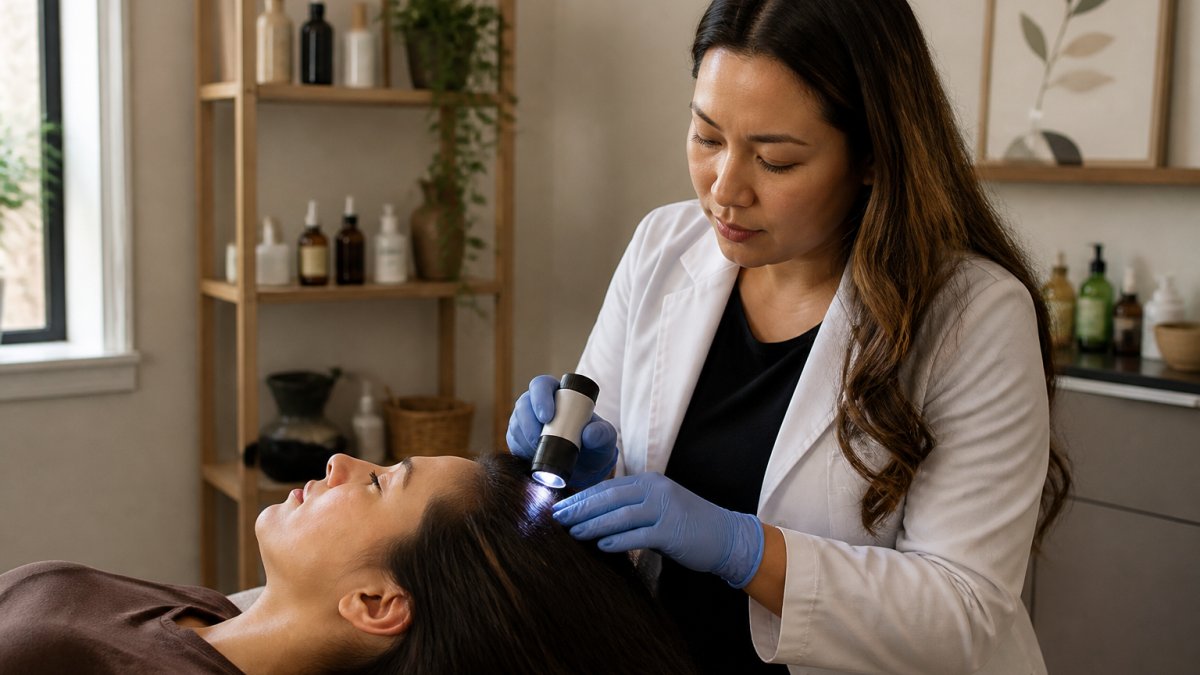
Trichology is the study of the hair and scalp, and clinical practice applies that study to real problems. Hair thinning, alopecia, hair breakage, scalp inflammation, and chronic scalp conditions are common concerns it addresses.
A good trichologist reads the whole picture. That means the hair growth cycle, your medical history, lifestyle factors, and the state of the scalp itself.
Scope of Practice: What They Can and Cannot Do
A trichologist can assess, educate, and build a personalized treatment plan. They can track hair density over time and recommend topical or in-spa care.
What they cannot do is practice medicine. A trichologist does not diagnose systemic disease, prescribe medication, or order a scalp biopsy.
Watch out: some providers blur this line. A provider who promises a medical cure or offers prescriptions outside their scope should raise concern about their training.
How to Verify Professional Credentials and Accreditation
Verification is the step most people skip, and it is the one that protects you. A certificate on a wall means little if the issuing organization does not exist, sets no real standard, or has lapsed. The goal is to confirm three things: who issued the credential, what the credential actually required, and whether it is still active.
Here is the vetting sequence we would use before booking anyone:
- Ask for the exact credential name and the full legal name of the certifying organization
- Request the practitioner's certification number and expiration date
- Confirm the certifying body publishes training-hour requirements, an exam, and continuing education
- Verify any related state license (cosmetology, acupuncture, nursing, medicine) directly with the state board
Certification Bodies and What to Check Against Them
Most articles say "look for a certified trichologist" and stop there. The useful step is knowing which organizations actually set standards you can read.
When checking any certifying body, read its requirements page yourself rather than relying on the provider's summary. Look for:
- A defined minimum number of training hours, including anatomy, physiology, and scalp pathology
- A proctored examination rather than a self-paced quiz
- A continuing education requirement for renewal
- A published scope-of-practice statement that distinguishes assessment from medical diagnosis
A weekend workshop, an online certificate mill, or a "board certification" from an organization with no public curriculum is not the same as a clinical credential. If the certifying body's website has no requirements page, no directory, and no contact information, treat the credential as unverified.
Verifying State Licenses and Medical Credentials
Trichology itself is not a licensed profession in most states, which is exactly why the adjacent license matters. If the practitioner also holds a cosmetology license, confirm it through your state's cosmetology board or the state's professional license lookup tool.
For medical credentials specifically, ask whether the practitioner is a physician (MD or DO) and, if so, whether they are board-certified in dermatology. You can confirm dermatology board certification through the American Board of Dermatology's public verification tool (Is My Dermatologist Board Certified?).
Bring the credential names and numbers to your first call and ask the front desk to confirm them in writing. A practice that can produce this within a day is organized; one that cannot is telling you something.
What a Strong Credential Stack Looks Like
The strongest practitioners often hold more than one credential, and the combination tells you what kind of care you will get.
You can confirm a cosmetology license through your state's licensing board. For medical credentials, check the state medical or acupuncture board.
Before booking, run through this vetting sequence to confirm who issued the credential, what it required, and whether it is still active.
| Step | What to do |
|---|---|
| 1 | Ask for exact credential name and certifying organization's full legal name |
| 2 | Request certification number and expiration date |
| 3 | Confirm the body publishes training hours, an exam, and continuing education |
| 4 | Verify any related state license directly with the state board |
| 5 | Ask how many supervised clinical hours the training included |
| 6 | Confirm current professional liability coverage |
| 7 | Check membership in an association with a code of ethics |
Trichologist vs Dermatologist for Hair Loss: Which Do You Need?
The short answer: it depends on what is causing the loss. A dermatologist is a physician who diagnoses and treats skin, hair, and nail disease (the American Academy of Dermatology).
Choose a dermatologist first when you have sudden, patchy, or scarred hair loss. The same goes for scalp sores, or loss linked to a medical condition.
Choose a trichologist when you want a detailed scalp and hair assessment and a long-term care plan. For a deeper look at clinical trichology for hair regeneration, see our guide.
What to Expect at a Trichology Appointment
A first visit is mostly listening and looking. Expect questions about your patient history: medications, hormones, diet, stress, and family patterns.
Start Your Hair & Scalp Healing Journey →
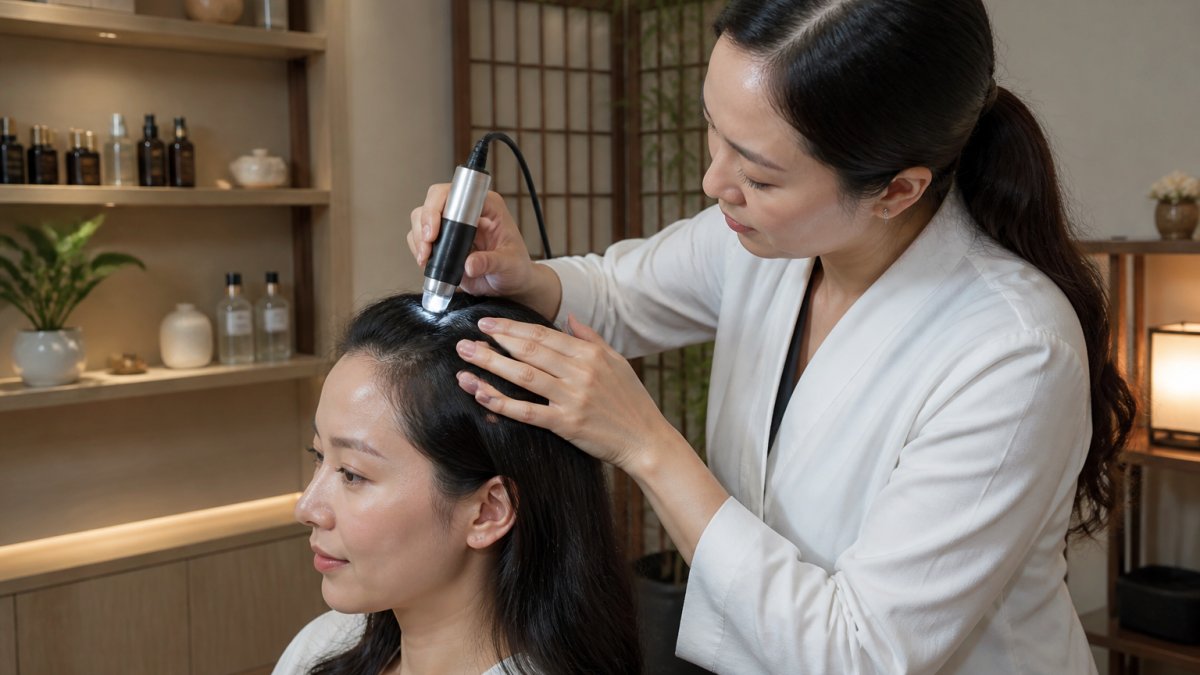
The practitioner will part your hair in sections and check the hair shaft, scalp inflammation, and hair density.
You should leave with a written plan. To learn what a personalized scalp health consultation involves before you book, read our guide.
Standardized Diagnostic Tools Used in Assessment
Consistent tools across visits make results easier to compare. Common tools in clinical assessment include:
- A digital trichoscope or scalp camera for magnified images
- A dermatoscope for checking scalp inflammation and skin patterns
- Standardized photography to track hair density over months
- A hair pull test to estimate active shedding
Consistency is what makes progress visible. If a clinic never photographs or measures, ask how they will show you change.
Trichology Consultation Cost and Insurance Coverage
Pricing depends on the visit, the testing included, and the treatment plan, so the exact cost should be confirmed directly with the provider or through the Sophiatrichoholistic Hair Spa LLC website for current pricing or a quote.
What Drives the Price of a Trichology Visit
A first consultation can include several components that affect the total:
- Assessment time. A thorough first visit runs longer than a follow-up because it includes history-taking, a physical scalp exam, and imaging.
- Imaging and diagnostic tools. Digital trichoscopy, dermatoscopy, and standardized photography add equipment time and interpretation.
- Lab work. Blood work is usually ordered through a physician and billed separately by the lab, not by the trichologist.
- Treatment plan complexity. A plan built around in-spa treatments, topical protocols, and lifestyle changes costs more to deliver than a home-care routine alone.
- Follow-up cadence. Progress tracking requires repeat visits; ask how many are expected in the first six months.
Ask for a written breakdown that separates the consultation fee, the imaging fee, the cost of any in-spa treatment package, and the cost of products. Confirm what a follow-up costs and whether there is a cancellation or no-show fee.
A provider who cannot explain their fees clearly is a warning sign. Get the total in writing, including the number of sessions they expect, before you pay a deposit.
Does Insurance Cover a Trichologist?
Insurance coverage varies by plan and by the reason for the visit. Check with your insurer before booking, as coverage depends on how the service is classified.
Coverage may depend on whether a physician is involved and whether the service is coded as medically necessary. Confirm the specific conditions and codes with your insurer.
Before you book, call your insurer and ask these questions:
- Is a trichology consultation covered under my plan, and under what CPT or service code?
- Is a referral from my primary care physician required?
- Is the provider in network, or would this be out of network?
- Does my deductible apply, and what would my out-of-pocket estimate be?
- Are lab tests ordered by a physician covered separately?
Reading the Explanation of Benefits
If any part of the visit is submitted to insurance, you will receive an explanation of benefits (EOB). The EOB is not a bill (How to read a health insurance explanation of benefits). It shows what was billed, what the insurer allowed, what they paid, and what you owe.
Ask for the full written estimate before the first appointment, and plan your budget around that estimate rather than any expected insurance reimbursement.
For a detailed look at what drives pricing, see our holistic hair restoration cost guide.
In-Person vs Remote Assessment: What Changes
In-person visits allow a practitioner to feel scalp texture, part the hair precisely, and run a physical pull test, which a remote visit cannot do.
Questions to Ask Before You Book
Bring a short list and take notes. The answers tell you more than any website.
- What certification do you hold, and who issued it?
- How many years have you worked with hair and scalp conditions?
- What diagnostic tools do you use, and will I see the images?
- How do you track progress between visits?
- What is the full cost, and how many sessions do you expect?
- When would you refer me to a dermatologist?
- How personalized is the plan, and what changes it over time?
A practitioner should be willing to answer these questions clearly. Vague answers about credentials or cost are a reason to keep looking.
Start Your Hair and Scalp Healing Journey
Sophiatrichoholistic Hair Spa LLC provides specialized holistic hair and scalp treatments designed for women ages 18 to 65, integrating Traditional Chinese Medicine with clinical trichology. The brand offers both in-spa treatments and home hair growth solutions.
Frequently Asked Questions
What does it mean to be a certified clinical trichologist?
A certified clinical trichologist has completed formal trichology training and passed an assessment through a recognized certification body, then applies that training to scalp and hair shaft disorders. Certification is not a medical license, so a clinical trichologist cannot diagnose systemic disease or prescribe medication. Ask which body issued the certificate, when it was issued, and whether the practitioner maintains continuing education. A credible clinical trichologist will answer those questions directly and explain where their scope ends and a physician's begins.
How do I verify a trichologist's certification?
Ask for the certifying organization's name and check its public directory or contact the body directly to confirm the practitioner is in good standing. Look for accreditation from a recognized trichology institute rather than a certificate issued by the practitioner's own training program. Confirm the credential is current, since some require renewal. Also verify any state-issued licenses, such as cosmetology or acupuncture, through the state's professional licensing board. A practitioner who hesitates to share these details is a warning sign worth taking seriously.
Are trichology treatments covered by health insurance?
Insurance treatment of trichology consultations varies by plan. Some plans may reimburse dermatology visits or scalp biopsy when ordered by a physician, so check your policy's definition of covered services before booking. Ask the practice for a written summary of fees and any cancellation terms. Because pricing varies by provider and treatment plan, request a quote directly rather than relying on averages you find online.
When should I see a clinical trichologist for hair thinning?
Book an assessment if you notice increased shedding, a widening part, visible scalp density changes, or persistent scalp inflammation that has not responded to over-the-counter products. Sudden or patchy hair loss, or loss accompanied by fatigue, weight change, or rash, warrants a physician visit first to rule out medical causes. A clinical trichologist can then assess hair density, hair shaft condition, and scalp health, and build a personalized treatment plan. Bring a patient history of products, medications, and recent stressors to your first appointment.
The hardest part is not finding information. It is trusting the person you choose. Start with credentials, ask about tools and cost, and insist on a plan built for you. Get started with Sophiatrichoholistic Hair Spa LLC and build a care plan around your scalp, your history, and your goals.