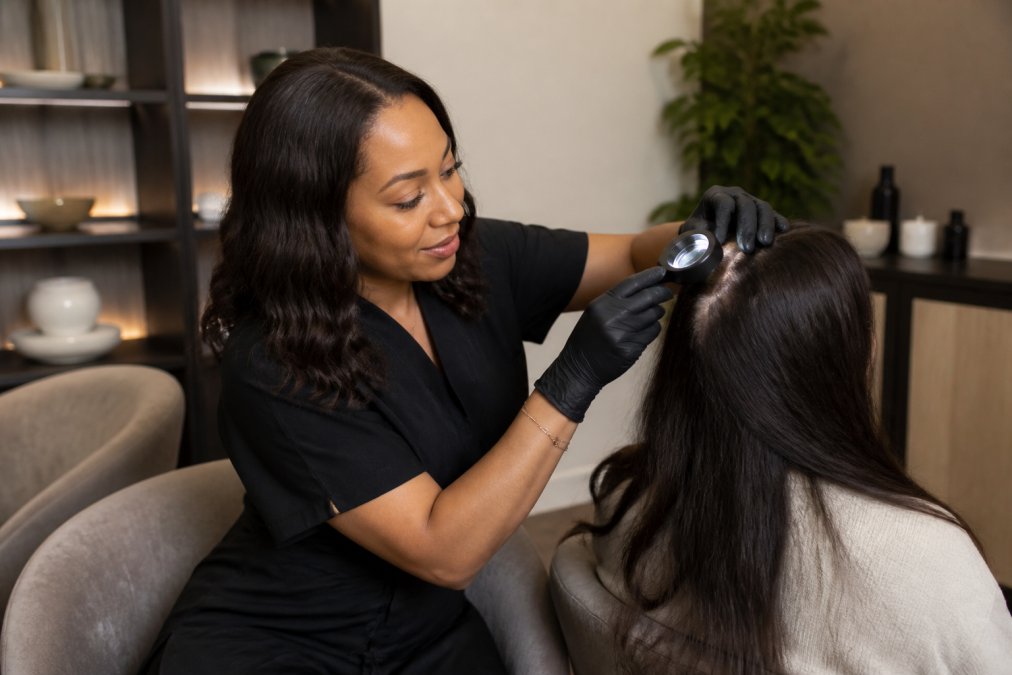
 how-to
Personalized Scalp Health Consultation Guide 2026
Table of Contents
- What Is a Personalized Scalp Health Consultation?
- Signs of Poor Scalp Health You Shouldn't Ignore
- What to Expect During a Clinical Trichology Assessment
- How Holistic Hair Restoration Services Differ from Standard Dermatology
- How to Find a Clinical Trichologist Near You
- The Cost-Benefit of Professional Scalp Analysis vs. At-Home Self-Assessment
- Conclusion: Is a Personalized Scalp Health Consultation Worth It in 2026?
- Frequently Asked Questions
Last Updated: September 9, 2026
What Is a Personalized Scalp Health Consultation?
A personalized scalp health consultation is a comprehensive, one-on-one assessment that examines the condition of your scalp, hair follicles, and hair shaft to identify the root causes of issues like thinning, inflammation, or chronic flaking. Unlike a quick product recommendation, this process combines diagnostic imaging, a review of your medical history, and lifestyle analysis to build a treatment plan tailored to your biology. At Sophiatrichoholistic Hair Spa LLC, we see this as the essential first step for anyone who has tried generic shampoos or standard dermatology without lasting relief.
The value here is precision. A generic consultation might glance at your scalp and suggest a medicated wash. A personalized approach measures scalp hydration, sebum production, pH balance, and hair density to understand why your scalp barrier is struggling. The difference between guessing and diagnosing is the difference between temporary relief and sustainable hair wellness.
Signs of Poor Scalp Health You Shouldn't Ignore
Many women dismiss early warnings as "just a dry scalp" or "normal shedding," but persistent symptoms signal deeper problems. Common signs of poor scalp health include chronic itching, visible flaking that resists over-the-counter treatments, tenderness, excessive oiliness within hours of washing, and hair thinning that follows a noticeable pattern.
Other red flags are less obvious. A scalp that feels tight or burns after washing may indicate a compromised scalp barrier. Hair that breaks off mid-shaft rather than shedding from the root points to structural weakness, not typical hair loss. If you notice these signs of poor scalp health persisting for more than a few weeks, a professional assessment is warranted.
What to Expect During a Clinical Trichology Assessment
A clinical trichology assessment is a structured evaluation that typically lasts between 45 and 90 minutes, depending on the depth of analysis required. The process is more involved than a standard visual check, and knowing what happens at each stage helps you evaluate whether a provider is offering genuine diagnostic value or just a sales pitch in a white coat.
Stage 1: Intake Interview (10-15 minutes)
The session opens with a detailed conversation about your health history, stress levels, nutrition, medications, and every product you currently apply to your scalp or hair. A skilled trichologist will also ask about recent hormonal events, pregnancy, childbirth, menopause, or thyroid changes, because these are common triggers for shedding patterns. Be prepared to answer questions about your washing frequency, heat styling habits, and any history of scalp infections or skin conditions like eczema or psoriasis.
Stage 2: Visual and Instrumental Examination (20-30 minutes)
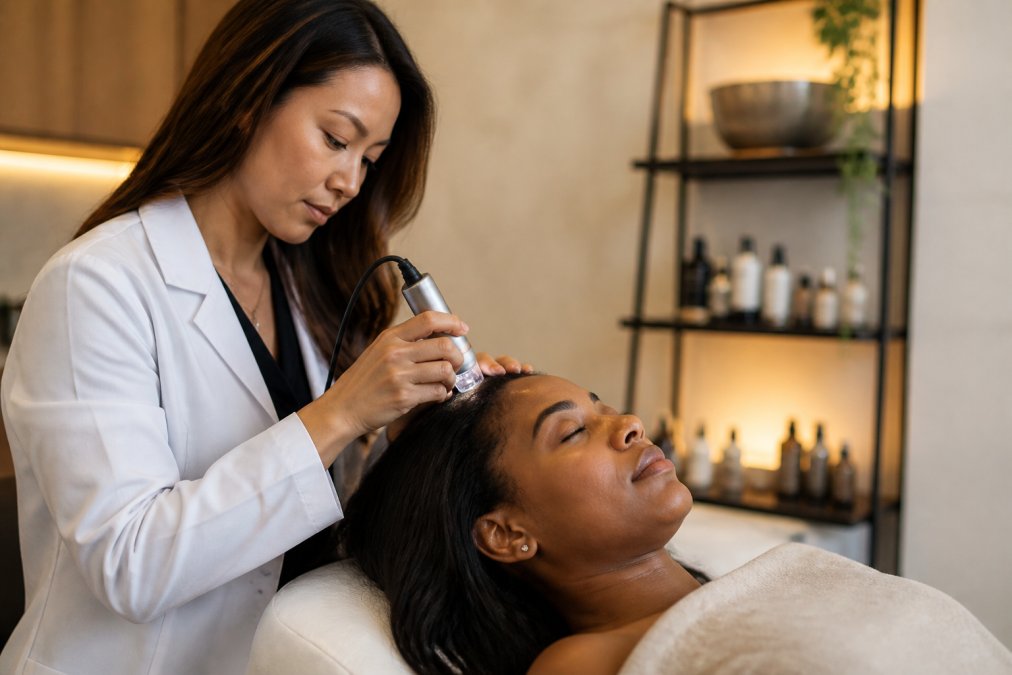
This is where the clinical assessment diverges sharply from a dermatology appointment. The practitioner will part your hair in multiple sections and examine the scalp under magnification. The most common tools include:
- Digital trichoscope or videodermoscope: Provides 20x to 70x magnification, allowing the practitioner to see the scalp surface, follicle openings, and hair shaft texture in detail.
- USB scalp cameras: Often used to capture baseline images that can be compared at follow-up visits to track progress objectively.
- Wood's lamp: A specialized UV light used to identify fungal infections, which appear as a distinct fluorescence pattern.
During this phase, the trichologist is looking for specific markers: perifollicular erythema (redness around follicles), scaling patterns, sebum distribution, and the ratio of terminal (thick) to vellus (fine) hairs in thinning areas. A pull test may also be performed, where the practitioner gently tugs on small clusters of hairs to estimate active shedding severity.
Stage 3: Diagnostic Measurements (10-15 minutes)
Depending on the clinic's equipment, you may undergo additional quantitative measurements:
- Hair density scanning: Using phototrichogram software, the practitioner counts hairs per square centimeter across different scalp zones to establish a baseline density number.
- Scalp hydration and sebum analysis: Some advanced devices measure transepidermal water loss (TEWL) to assess barrier function and oil production levels.
- pH assessment: A probe measures the acidity of your scalp surface, which should typically fall in the 4.5 to 5.5 range (peer-reviewed research). Readings outside this band indicate barrier compromise.
Stage 4: Explanation and Treatment Roadmap (15-20 minutes)
The final portion is educational. A thorough practitioner will walk you through what was found, show you the magnified images, and explain the likely root causes, whether that is hormonal fluctuation, nutritional deficiency, product buildup, or a chronic inflammatory condition. You should leave with a written or digital summary of your baseline measurements and a phased treatment plan, not just a verbal recommendation to buy a shampoo.
A common pattern among reputable practitioners is to schedule a follow-up at 8 to 12 weeks to re-measure density and adjust the protocol. This interval aligns with the natural hair growth cycle and allows enough time for topical or nutritional interventions to show measurable effects. Without this baseline-to-follow-up comparison, you cannot objectively know whether a treatment is working.
How Holistic Hair Restoration Services Differ from Standard Dermatology
Standard dermatology excels at diagnosing and treating skin diseases, including severe scalp conditions like psoriasis. However, its focus is often symptom suppression through topical steroids or medicated shampoos. Holistic hair restoration services take a different path. They treat the scalp as a reflection of internal health, integrating approaches like Traditional Chinese Medicine to balance hormones and improve energy flow that supports hair growth from the root.
The distinction matters for women who have not found success with conventional treatments. A dermatologist may confirm seborrheic dermatitis and prescribe a wash that works temporarily. A holistic trichologist asks why the scalp became inflamed in the first place, examining diet, stress, and digestive health as contributing factors. This integrative approach often incorporates scalp exfoliation, microbiome restoration, and non-surgical solutions like PRP therapy or LLLT (Low-Level Laser Therapy) alongside herbal protocols.
Start Your Hair & Scalp Healing Journey →
How to Find a Clinical Trichologist Near You
Finding a qualified clinical trichologist requires more diligence than a typical Google search. Start by verifying credentials. A reputable practitioner should hold certification from a recognized trichology institution and have supervised clinical experience. In the United States, trichology is not a federally regulated medical specialty, so credentials and experience are your primary quality signals.
When you search for a clinical trichologist near you, look beyond the website. Ask about their diagnostic tools, their approach to conditions like alopecia or scalp inflammation, and whether they offer a personalized treatment plan or a one-size-fits-all protocol. Read reviews from clients with similar concerns, particularly women dealing with postpartum shedding or chronic conditions like seborrheic dermatitis. A practitioner who integrates multiple modalities, such as combining clinical trichology with acupuncture or herbal medicine, may offer more comprehensive solutions for stubborn cases.
The Cost-Benefit of Professional Scalp Analysis vs. At-Home Self-Assessment
The decision to book a professional scalp analysis often comes down to cost. The decision to book a professional scalp analysis often comes down to cost. Dermatology visits with insurance copays may cost $30 to $60, but they rarely include the same depth of scalp-specific imaging (healthcare.gov). The question is not whether professional analysis is better, it almost always is, but whether you need it right now, and how to avoid paying for services that do not add diagnostic value.
What you are actually paying for
A professional analysis provides three things you cannot replicate at home: magnification, baseline quantification, and expert interpretation. Magnification reveals follicle-level inflammation, early signs of seborrheic dermatitis, and fungal involvement that the naked eye cannot see. Baseline quantification, such as hairs per square centimeter, gives you a number to re-test against in 3 months. Expert interpretation connects what is visible on the scalp to systemic factors like iron status, thyroid function, or stress hormones.
What is marketing fluff
Be cautious about add-on services that inflate the bill without changing the treatment plan. Common examples include:
- Proprietary "scalp detox" rituals priced at $100 or more that are essentially exfoliation with a steam treatment, effective for buildup but not a diagnostic step.
- Custom-blended serums sold at the consultation at a 200-300% markup over equivalent retail ingredients.
- Unlimited follow-up packages that lock you into visits every 2 weeks when the hair growth cycle makes monthly or quarterly re-assessment more clinically meaningful.
A reasonable initial consultation should include the intake interview, magnified imaging, density measurement, and a written plan (the American Academy of Dermatology). If the provider cannot explain what each component of the fee covers, ask for an itemized breakdown before booking.
The at-home pre-consultation checklist
Before spending money on a professional, run through this self-assessment to determine whether you need one and to make the eventual session more productive:
- Shedding count: Collect hair from your brush, shower drain, and pillow for 3 consecutive days. Count the total. More than typical daily shedding across all sources warrants professional attention.
- Visible flaking test: Part your hair in several sections and look for white or yellow scales on the scalp surface, not just in the hair. If flakes appear only after washing and vanish with a standard dandruff shampoo, you may not need a trichologist yet.
- Tenderness or burning map: Note any areas that feel sore, itchy, or burning. Draw a simple diagram of your scalp and mark the zones. Persistent tenderness in one spot for more than 2 weeks is a red flag.
- Product inventory audit: List every product you have used in the last 30 days, including styling products. Many chronic scalp issues are caused by cumulative buildup or an allergic reaction to a specific ingredient like fragrance or methylisothiazolinone.
- Photo baseline: Take a series of photos in consistent lighting, top, left, right, and crown, with your hair parted in the same place. Store them with a date stamp. This gives you a visual record to compare against in 8-12 weeks.
| Assessment Type | What It Measures | Best For | Limitation | Typical Cost Range (USD) |
|---|---|---|---|---|
| At-Home Self-Check | Shedding count, visible flaking, itch level | Early awareness, tracking between visits | Cannot see follicle or scalp barrier health | $0 |
| Professional Trichology | Hair density, sebum, scalp microbiome, inflammation | Root-cause diagnosis, treatment planning | Higher initial cost, requires qualified provider | $150-$400 initial |
| Standard Dermatology | Disease diagnosis, infection, severe conditions | Medical treatment of diagnosed conditions | Often limited to symptom management | $30-$60 with insurance copay |
A professional scalp analysis is an investment in avoiding years of trial-and-error spending. Many women spend money on shampoos, serums, and supplements that address the wrong problem. One accurate consultation that redirects that budget toward targeted treatments, whether that is a prescription-strength topical, a specific nutritional protocol, or a laser therapy device, can provide significant value. The key is to know what you are paying for, skip the fluff, and arrive prepared with your own baseline data.
Conclusion: Is a Personalized Scalp Health Consultation Worth It in 2026?
A personalized scalp health consultation is worth the investment for anyone who has struggled with persistent scalp issues or hair thinning that has not responded to conventional approaches. The combination of advanced diagnostic tools, individualized treatment planning, and a focus on root-cause resolution offers a path that generic product recommendations cannot match. In 2026, the trend toward preventative and integrative care continues to grow, and scalp health is finally receiving the clinical attention it deserves.
If you are tired of cycling through medicated shampoos and treatments that only mask the problem, a consultation that examines your scalp at the follicle level is the logical next step. Sophiatrichoholistic Hair Spa LLC integrates Traditional Chinese Medicine with clinical trichology to address alopecia, scalp inflammation, and hormonal imbalances that affect hair growth. Our approach is led by a Licensed Acupuncture Physician and Certified Holistic Trichologist with over three decades of experience, and we design every treatment plan around your specific biology. Get started with Sophiatrichoholistic Hair Spa LLC and begin your hair and scalp healing journey with a plan built for you.
Frequently Asked Questions
Is it worth seeing a trichologist for thinning hair?
For many women, yes. A clinical trichology assessment goes beyond what a standard visual exam provides. It uses diagnostic imaging to examine the hair follicle and scalp barrier at a level you cannot see at home. This helps identify whether thinning stems from hormonal shifts, nutritional deficiency, or scalp inflammation. Unlike a generic recommendation, the result is a personalized treatment plan. If you have tried over-the-counter products without improvement, a trichologist offers a different diagnostic pathway worth exploring.
What should I expect during a clinical trichology assessment?
Expect a detailed process that starts with your health history and lifestyle questions. The practitioner examines your scalp under magnification to assess sebum production, hydration, and follicle condition. Some clinics use digital imaging to track hair density over time. You may discuss recent stress, dietary habits, and hair care routines. The session ends with a personalized treatment plan. It is not a one-size-fits-all protocol. You should leave with a clear understanding of contributing factors and recommended next steps.
Does insurance cover a trichologist consultation?
Coverage varies widely. Trichology is often considered a wellness or cosmetic service rather than a medical necessity, so many insurance plans do not reimburse it. However, if your scalp condition involves diagnosed inflammation or a medical issue like psoriasis, part of the visit might qualify. Contact your insurance provider directly to ask about coverage for nutritional counseling or dermatology referrals. It is wise to confirm costs before booking. Many clinics offer transparent pricing for consultations, but you must verify with the specific practice.
How often should I schedule a professional scalp health consultation?
It depends on your condition and treatment plan. For chronic issues like seborrheic dermatitis or active thinning, an initial consultation is often followed by a follow-up at 8 to 12 weeks to measure progress. This timeframe allows for visible changes in hair growth cycles. Once your scalp health stabilizes, an annual check-up may be sufficient. Your practitioner will recommend a schedule based on your specific response to treatment. Consistency matters more than frequency for long-term results.