 How-to
How to Prevent Hair Loss from Scalp Psoriasis
Last Updated: November 18, 2026
Quick Summary
Preventing scalp psoriasis hair loss means calming scalp inflammation first, since scratching and scale buildup, not the hair itself, cause most shedding. Soften scales gently before washing, avoid picking or tight styles, and follow a dermatologist's treatment plan. This shedding is usually temporary and regrowth can follow once the scalp heals.
- Apply scale-softener to plaques on dry hair for 15 minutes to overnight under a shower cap.
- Use medicated shampoo two or three times a week and a gentle shampoo on other days.
- Do a softening session once or twice a week while scales are thick, tapering to once a week.
- Skip tight hairstyles, tight braids, and heat styling near the scalp while it heals.
- See a doctor promptly if shedding is sudden, patchy, or paired with scalp pain or open sores.
Table of Contents
- Why Scalp Psoriasis Causes Hair Shedding
- Is Scalp Psoriasis Hair Loss Reversible?
- Scalp Psoriasis Treatment That Protects Your Hair
- Choosing a Scalp Psoriasis Hair Loss Shampoo
- A Step-by-Step Scale-Softening and Washing Routine
- Psoriasis Hair Loss Regrowth: Timeline and Tracking
- When Shedding Needs Prompt Medical Evaluation
- Start Your Hair and Scalp Healing Journey
- Frequently Asked Questions
Why Scalp Psoriasis Causes Hair Shedding
Scalp psoriasis causes hair shedding because thick scales trap hair at the surface and constant scratching pulls strands loose at the root. The hair itself is rarely the problem. The inflamed scalp around it is.
Women often arrive convinced they are going bald, when the real issue may be an angry, scaly scalp that needs calming first. Once inflammation settles, shedding often slows.
Inflammation, Scratching, and the Hair Follicle
Scalp inflammation is the driver here. Psoriasis speeds up skin cell turnover, so dead cells pile into thick plaques instead of shedding quietly (Psoriasis Symptoms, Causes, & Risk Factors).
Repeated scratching is often a major source of damage, sometimes more than the condition itself. Repeated scratching irritates the hair follicles and can cause hair breakage near the surface. The follicle is not destroyed.
- Scale buildup can mat hair and make gentle combing harder
- Scratching can pull loose strands before they finish their growth cycle
- Picking at plaques can leave small sore spots that slow healing
Is Scalp Psoriasis Hair Loss Reversible?
Shedding linked to scalp inflammation is often temporary, and regrowth can occur once the scalp calms down.
The key word is most. Temporary hair loss from inflammation and scratching usually reverses.
A common mistake is waiting months for scales to "clear on their own." Meanwhile, the scratching continues.
The encouraging news: hair regrowth can follow scalp recovery. Treating the scalp, protecting the hair, and giving follicles time to recover are the usual priorities.
Scalp Psoriasis Treatment That Protects Your Hair
Scalp psoriasis treatment is generally aimed at inflammation first, while protecting the hair you have. The goal is to calm the scalp without roughing up fragile strands.
Treatment options your dermatologist may discuss include topical corticosteroids, medicated shampoo, scale-softening products, and for more stubborn cases, steroid injections, systemic treatment, or biologic treatment (the American Academy of Dermatology). A dermatologist can tailor a treatment plan to your scalp sensitivity.
Topical Treatments and How to Apply Them Safely
How you apply a topical treatment matters as much as what you use. Rough application causes the exact physical irritation you are trying to avoid.
- Part hair in small sections instead of raking through tangles
- Apply with fingertips, not fingernails
- Follow the label or your doctor's instructions on how long to leave it on
If you are unsure whether a scale-softening acid suits a sensitive scalp, it helps to read up on whether salicylic acid is safe for sensitive scalps before adding it to your routine.
Watch out: picking or scraping off softened scales can tear the skin and trigger a flare. Let the product do the lifting.
Choosing a Scalp Psoriasis Hair Loss Shampoo
A suitable scalp psoriasis shampoo is generally a gentle, medicated formula that softens scales without stripping or tugging hair. Look for products made for sensitive, inflamed scalps, not harsh clarifying shampoos.
What to check on the label:
- Scale-softening ingredients such as salicylic acid, where tolerated
- No heavy fragrances or drying alcohols that sting open skin
- A formula your dermatologist approves for regular use
Scalp care shampoos are not a cure. They are one tool in plaque management, and work best alongside a treatment plan.
A common mistake is scrubbing hard to "get the flakes out." That backfires. Gentle wins.
A Step-by-Step Scale-Softening and Washing Routine
A gentle routine loosens scales over time without pulling hair. Consistency beats intensity, and slow is safer than fast.
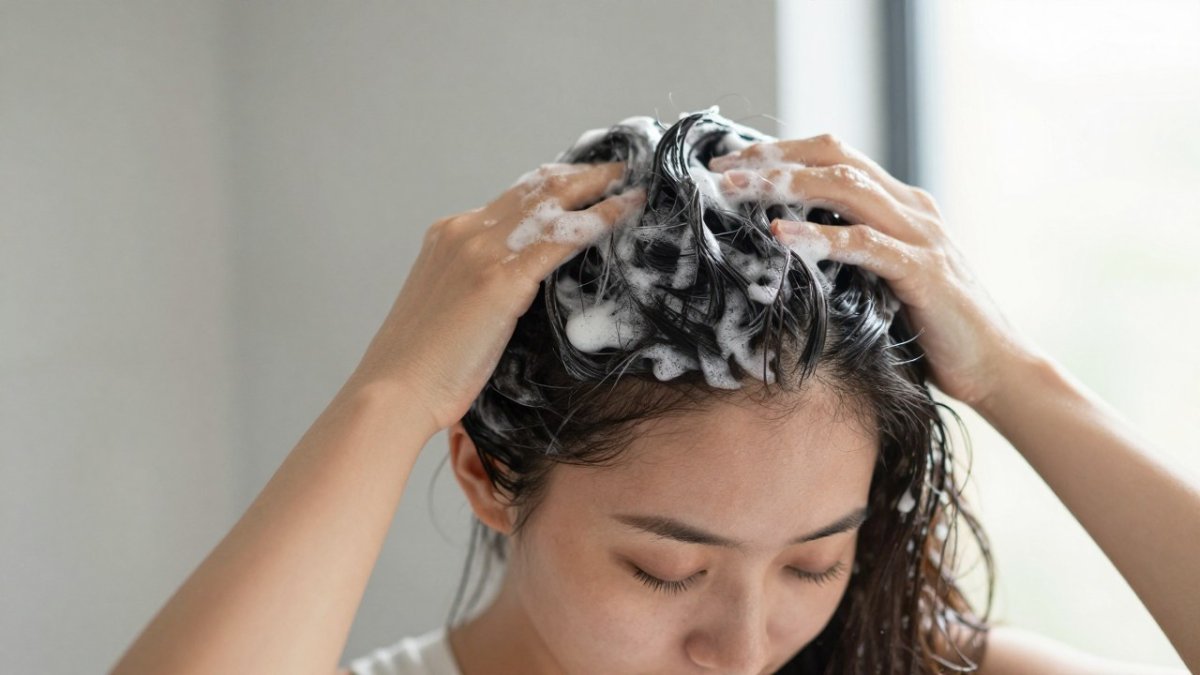
If you want a fuller lifestyle routine to follow at home, this guide on clearing scalp psoriasis naturally with lifestyle changes walks through it step by step.
Step 1: Pre-Soften the Scales
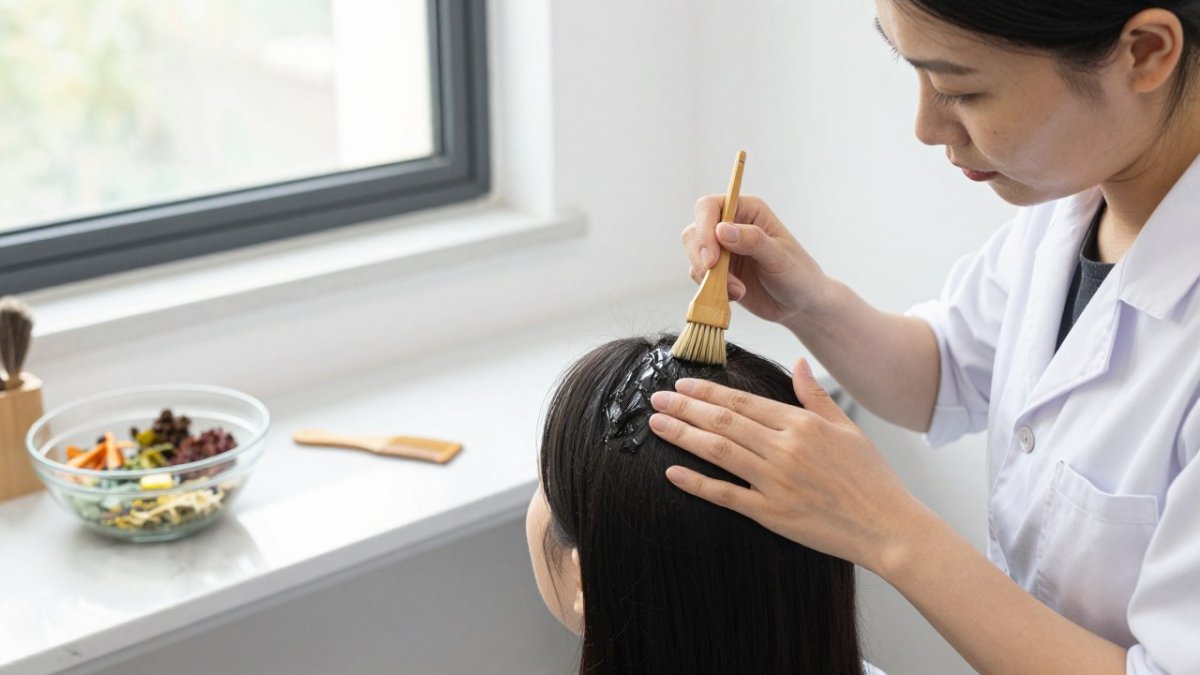
Start on dry hair before you get in the shower. Apply a scale-softening product, a salicylic acid ointment, a mineral-oil-based preparation, or a medicated oil your clinician recommends, directly to the plaques, parting the hair in small sections so the product reaches the scalp rather than sitting on top of the hair.
- Leave it on for the time stated on the label or by your clinician; common instructions range from 15 minutes to overnight under a shower cap.
- Do not rub the product in aggressively. Dab or press it onto the scale.
- If a plaque is thick and crusted, one application will not dissolve it. Plan on several sessions across a week or two.
Watch out: applying a strong scale-softener to broken or freshly scratched skin can sting and cause more irritation, so skip any open spots and tell your clinician if the scalp is raw.
Step 2: Loosen With Fingertips, Not Fingernails
Once the product has had its contact time, step into the shower and use the pads of your fingers in slow circles over the softened areas. The goal is to lift edges of scale, not to remove every flake in one wash.
- Work in small sections, one quadrant of the scalp at a time.
- Keep the pressure light enough that you are not dragging the hair.
- Stop if a scale resists. Reapply softener another day rather than picking.
Watch out: combing out dry, crusted scales is the fastest way to snap strands. Always soften first.
Step 3: Wash With a Medicated or Gentle Shampoo
Rinse the softener thoroughly with lukewarm water, then shampoo. If you use a medicated shampoo, coal tar, salicylic acid, or a prescription formula, follow its label for how often to use it, since many are designed for two or three times a week rather than daily.
- Massage shampoo with fingertips, not nails, for about a minute.
- Let the lather sit for the contact time the label specifies before rinsing.
- Rinse until the water runs clear; leftover product can irritate the scalp.
A common pattern is to alternate a medicated wash with a plain gentle wash so the scalp is not stripped on the days between treatments.
Step 4: Condition the Ends, Not the Scalp
Apply conditioner from mid-shaft to ends, avoiding the scalp so you do not add heavy residue to plaques. Rinse with lukewarm water. Hot water feels good on an itchy scalp but tends to worsen dryness and irritation.
Step 5: Dry and Detangle Gently
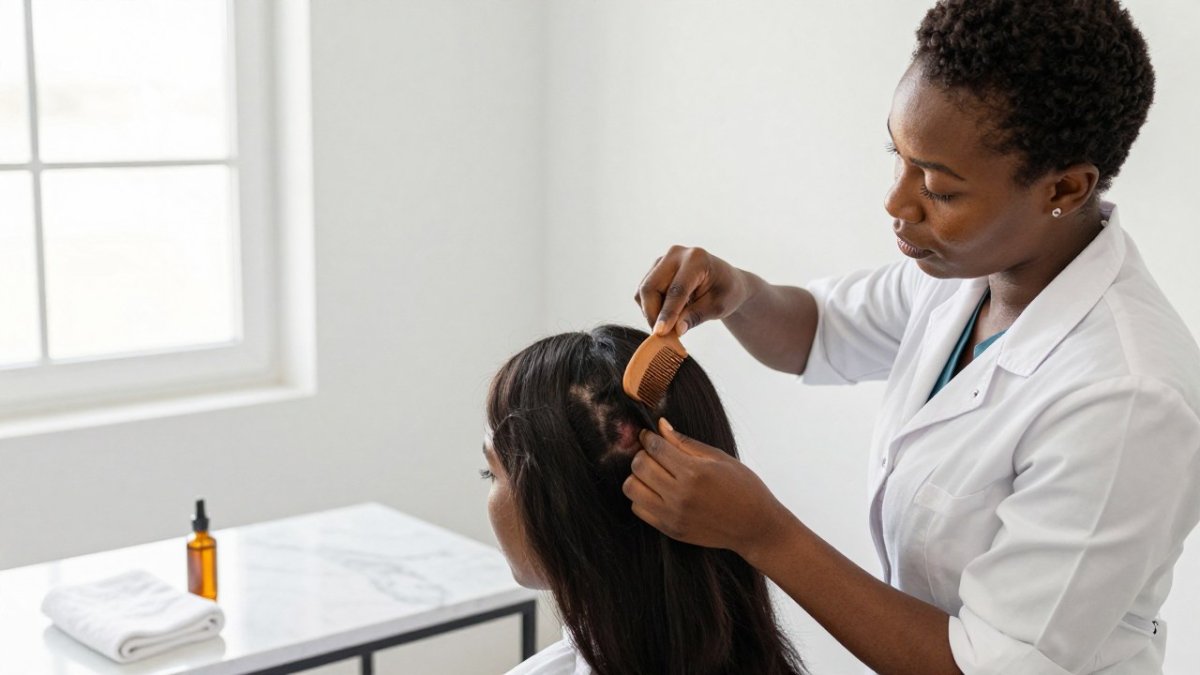
Pat hair dry with a soft towel. Do not rub. When detangling, use a wide-tooth comb on damp hair and start at the ends, working upward in small sections.
- Skip tight hairstyles, tight braids, and heat styling near the scalp. These add physical irritation on top of inflammation.
- Loose protective styling gives fragile hair a break while the scalp heals.
- Let hair air-dry when you can, and avoid pulling it back while it is still wet and fragile.
How Often to Repeat
Most people do best with a softening session once or twice a week while scales are thick, tapering to once a week or as needed as the scalp clears. Washing frequency depends on your hair type and styling: daily washing suits some scalps, while others do better every two to three days with a gentle shampoo.
Here is the sequence to follow, from softening scales on dry hair to gentle detangling after washing.
| Step | What to do | Time or frequency |
|---|---|---|
| 1. Pre-soften | Apply scale-softener to plaques on dry hair, parting in sections | 15 minutes to overnight under a shower cap |
| 2. Loosen | Use pads of fingers in slow circles over softened areas | One quadrant of the scalp at a time |
| 3. Wash | Rinse softener, then shampoo with fingertips | Medicated shampoo two or three times a week |
| 4. Condition | Apply conditioner mid-shaft to ends, avoid the scalp | Rinse with lukewarm water |
| 5. Dry and detangle | Pat dry, use wide-tooth comb on damp hair from ends up | Skip tight styles and heat styling |
| Repeat sessions | Softening session while scales are thick | Once or twice a week, tapering to once a week |
Psoriasis Hair Loss Regrowth: Timeline and Tracking
Regrowth timelines vary by person, so any estimate should be treated as a general range, not a promise. Hair grows slowly, and follicles need time to recover after inflammation settles.
A realistic tracking plan:
- Photograph the same scalp areas monthly in similar light
- Note shedding amounts when washing and brushing
- Log flares, treatments, and routine changes
What most guides miss: regrowth is not linear. Some months look flat, then improve. Judge trends over several months, not weeks.
If you want the deeper link between inflammation and thinning, read about scalp inflammation and hair thinning.
When Shedding Needs Prompt Medical Evaluation
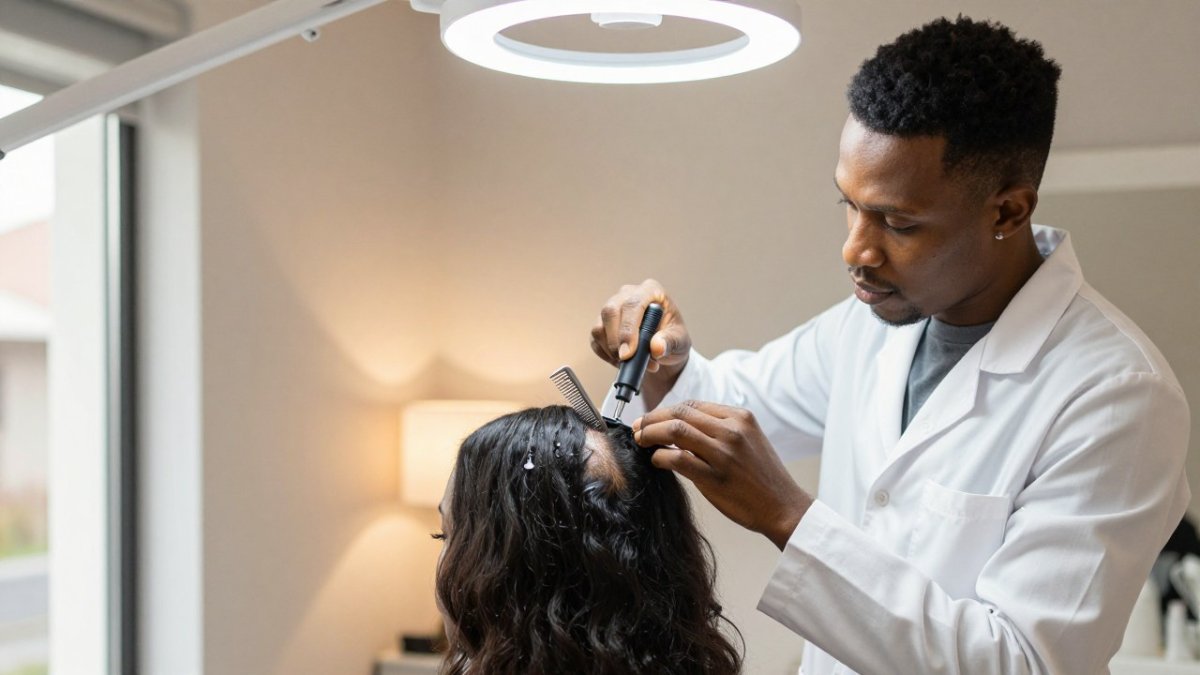
See a doctor promptly if shedding is sudden, patchy, or paired with scalp pain, open sores, or signs of infection. Rapid or one-sided loss deserves a professional look.
Other reasons to seek care quickly:
- Persistent shedding that does not slow with gentle care
- New bald patches or widening part
- Joint pain or stiffness, which can point to psoriatic arthritis
How to Tell Psoriasis-Related Shedding From Other Causes
Hair loss has many causes, and assuming psoriasis is the only one can delay the right care. A few patterns help narrow it down, though only a clinician can confirm a diagnosis.
- Psoriasis-related shedding often tracks with scalp flares: shedding rises when plaques are active and itching is intense, and eases as inflammation settles. The loss tends to be diffuse rather than in clean patches.
- Telogen effluvium, shedding triggered by illness, surgery, childbirth, rapid weight loss, or severe stress, typically appears two to three months after the trigger and resolves on its own over several months. It is not tied to scalp scale.
- Androgenetic alopecia (pattern hair loss) shows gradual thinning at the part or crown over years, not the flare-linked shedding seen with psoriasis.
It also helps to confirm what you are actually dealing with. Scalp psoriasis and seborrheic dermatitis can look alike, so compare the key symptom differences before assuming. A dermatologist can confirm the diagnosis and adjust your treatment plan.
What to Bring to the Appointment
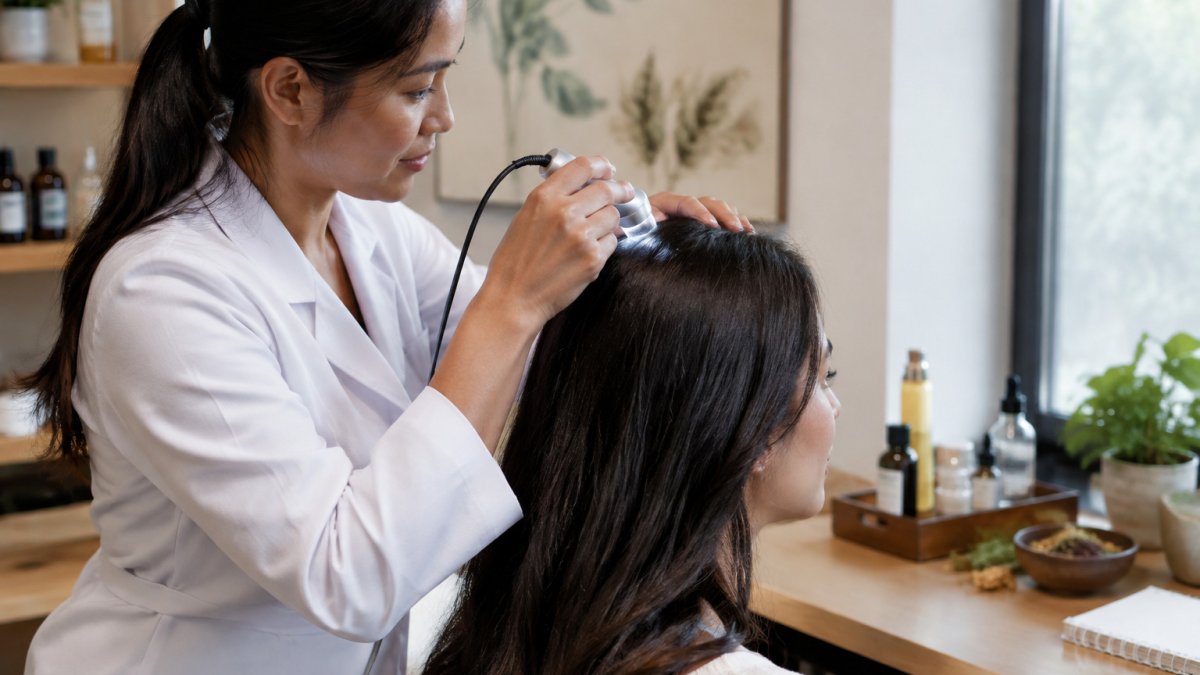
A short log makes the visit more useful: note when shedding started, whether it tracks with flares, how much you see on wash day, any recent illness, stress, or medication changes, and photos of the scalp taken in similar light. If loss is patchy or scarring is suspected, ask whether a scalp biopsy or trichoscopy is warranted.
Start Your Hair and Scalp Healing Journey
Protecting your hair from scalp psoriasis comes down to calming inflammation, removing scales gently, and giving follicles time to recover. None of it requires harsh scrubbing or guesswork.
If you want personalized, root-cause care, Sophiatrichoholistic Hair Spa LLC offers holistic treatments for women that blend Traditional Chinese Medicine with clinical trichology. A clinical trichologist can map the cause of your thinning and tell you when a dermatologist should step in, which is exactly what a trichology consultation is for.
Shedding from scalp psoriasis is stressful, but it is rarely permanent when you act early and treat the scalp gently. If you are tired of guessing which shampoo, treatment, or routine will actually help, we can build a plan around your scalp, your hair, and your history.
Frequently Asked Questions
Can hair loss from scalp psoriasis grow back?
In most cases, yes. When shedding is driven by scalp inflammation, scratching, or scale buildup rather than permanent follicle damage, hair typically returns once the flare is controlled. Regrowth usually becomes visible over several months, not weeks, because hair grows slowly. If you pick or scratch heavily, or scratch the same spots repeatedly, you raise the risk of scarring that can make loss permanent. Getting inflammation under control early is the single most important step for protecting regrowth.
What shampoo is best for scalp psoriasis and hair loss?
Look for a gentle, fragrance-free shampoo that softens scales without stripping the scalp. Products containing salicylic acid, coal tar, or ketoconazole are commonly used for scalp psoriasis, but which one suits you depends on your scalp sensitivity and how much hair you have. Rotate a medicated shampoo with a mild everyday cleanser so you do not over-dry the scalp. Ask a dermatologist or trichologist before combining treatments, and patch test new products on a small area first.
Should I wash my hair often if I have scalp psoriasis?
Washing regularly is usually better than avoiding it. Gentle washing removes loose scales, reduces buildup, and lets topical treatments reach the scalp. Most people do well washing every two to three days with lukewarm water and a soft, circular fingertip motion. Avoid hot water, harsh scrubbing, and tight styles right after washing. If your scalp feels raw or irritated after washing, reduce frequency or switch to a milder shampoo and check with a clinician.
How can I remove scalp psoriasis scales without pulling out hair?
Soften first, then remove gently. Apply a scale-softening oil or medicated product to the scalp, leave it on as directed, and let it loosen the scale before washing. Use fingertips, not fingernails, and never pick or peel scales off dry. Comb only after conditioning, starting at the ends and working up with a wide-tooth comb. If a scale will not lift, leave it and treat again later. Forceful removal is what damages follicles and causes breakage.