 Comparison
Benefits of Seeing a Clinical Trichologist for Scalp and Hair Concerns
Last Updated: November 6, 2026
Quick Summary
A clinical trichologist assesses the health of your hair and scalp, examining shedding, breakage and scalp conditions in detail and building a care plan. Unlike a dermatologist, they cannot diagnose disease or prescribe medication, so they suit people who want thorough hair-care guidance after medical causes have been considered.
- A trichology consultation often runs longer than a dermatology visit and centers on your history and daily routine.
- A clinical trichologist cannot diagnose medical conditions or prescribe drugs, so refer to a physician when needed.
- Trichology is not a single licensed profession in the United States, so verify the practitioner's training and credentials.
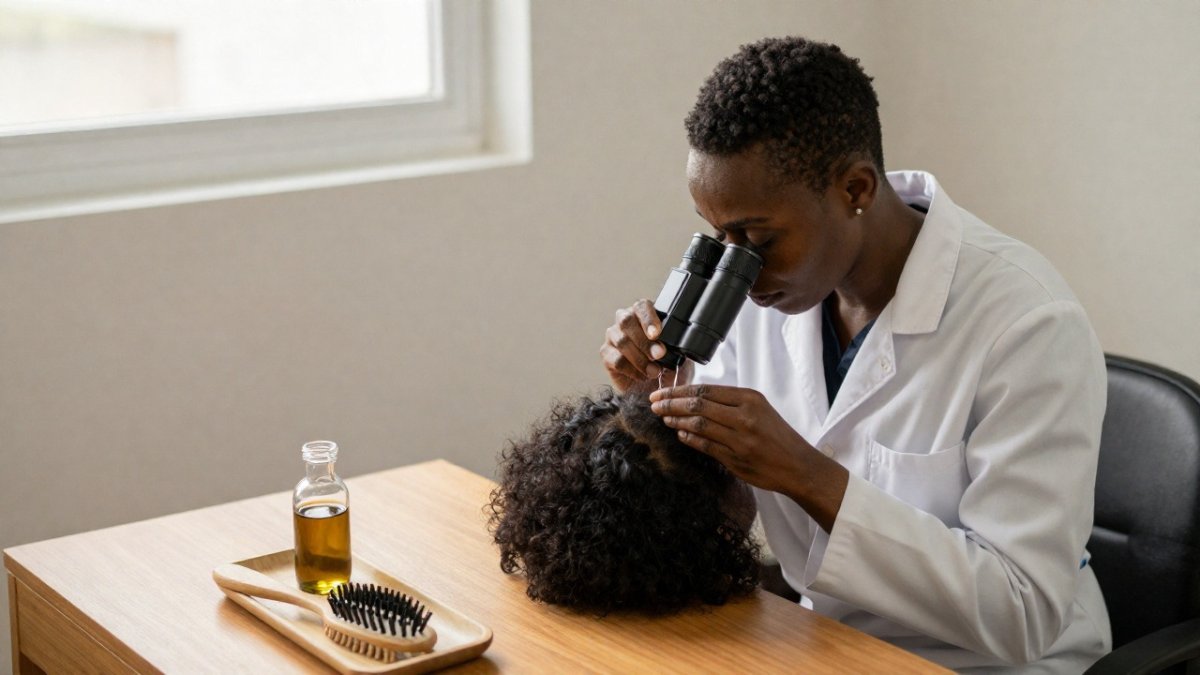
- Consultations usually include a scalp examination, sometimes with magnification, a scalp camera or a pull test.
- Sudden or patchy hair loss, scalp pain, bleeding or spreading redness warrants prompt medical assessment.
Table of Contents
- What a Clinical Trichologist Does and Who Benefits Most
- Trichologist vs Dermatologist: Who to See for Your Hair and Scalp
- What Happens During a Trichology Consultation
- Can a Trichologist Regrow Hair? Evidence and Realistic Outcomes
- Trichologist-Recommended Hair Products and Home Care
- Costs, Insurance, and How to Verify Credentials
- Red Flags That Need a Medical Assessment and Your Next Step
- Frequently Asked Questions
Benefits of Seeing a Clinical Trichologist for Scalp and Hair Concerns
If you have tried shampoos, prescription creams and multiple visits to a dermatologist without lasting relief, you may be wondering whether a different kind of specialist could help. This guide explains what a clinical trichologist does, how the role differs from a dermatologist, and what to expect before you book. It also covers evidence, costs, and the warning signs that mean you should see a medical doctor first.
What a Clinical Trichologist Does and Who Benefits Most
A clinical trichologist is a practitioner who assesses and supports the health of the hair and scalp. The role focuses on how hair grows, sheds and breaks, and on the conditions of the scalp that surround it. Trichology is not a single licensed profession with one state board in the United States, so the credentials behind the title matter a great deal.
Many women come to a trichologist after years of scalp itching, flaking, oiliness or diffuse thinning. People who tend to benefit most are those who want a detailed look at their hair and scalp history, not just a product recommendation.
Common concerns include:
- Shedding after childbirth, illness or stress
- Dandruff and seborrheic dermatitis that keep returning
- Scalp psoriasis that has not responded well to standard treatment
- Oily, inflamed scalp and hair breakage
Trichologist vs Dermatologist: Who to See for Your Hair and Scalp
The shortest way to decide is to ask what you need: a diagnosis and a prescription, or a detailed assessment and a care plan. A dermatologist is a physician licensed to practice medicine who can diagnose skin, hair and nail disease, order lab work and biopsies, and prescribe medication. A clinical trichologist is a hair and scalp specialist who assesses, educates and recommends supportive care, but does not diagnose disease or prescribe drugs.
That difference is not a technicality. In the United States, trichology is not a licensed profession with a single state board, so the title alone tells you little. Credentials vary widely: some practitioners hold a medical or nursing license and add trichology training, some hold a cosmetology license, and some hold a certificate from a private trichology program. A dermatologist, by contrast, has completed medical school, a residency in dermatology and, often, a fellowship in hair disorders.
Use this comparison to sort out who to book first:
- Diagnostic authority. A dermatologist can confirm a diagnosis such as androgenetic alopecia, alopecia areata, telogen effluvium, lichen planopilaris or a fungal infection. A trichologist can describe what they observe and flag patterns, but cannot establish a medical diagnosis.
- Prescribing and procedures. Prescription topical or oral medications, corticosteroid injections, and in-office procedures are within a dermatologist's scope. A trichologist's recommendations are typically non-prescription: cleansing routines, scalp care, styling habits and product selection.
- Testing. A dermatologist can order blood tests (ferritin, thyroid, vitamin D, hormones) and, when needed, a scalp biopsy. A trichologist may use magnification, a scalp camera or a pull test, but those are observational tools, not diagnostic tests.
- Time and focus. A trichology consultation often runs longer and centers on history, routine and day-to-day management. A dermatology visit is usually shorter and oriented toward diagnosis and treatment.
- Coverage. Dermatology visits are commonly billed to health insurance when medically necessary. Trichology consultations are usually paid out of pocket.
A practical sequence can help many people decide where to start. If you have sudden shedding, patches of missing hair, scalp pain, scaling with redness, or symptoms elsewhere in the body, start with a dermatologist or primary care doctor. If you already have a diagnosis and want help with the daily scalp and hair-care side, or if your concern is persistent flaking, oiliness, breakage or slow thinning without red flags, a clinical trichologist can be a reasonable first stop.
The two roles also work well in sequence. A trichologist who sees something outside their scope should refer you to a physician rather than treat it. Ask any trichologist you consider how they handle referrals and whether they have working relationships with dermatologists.
Watch out: a practitioner who discourages you from seeing a doctor, or who claims to diagnose and cure a medical condition, is a reason to consider other options.
The two specialists differ in training, scope and what they can offer, as summarised below.
| Factor | Dermatologist | Clinical trichologist |
|---|---|---|
| Diagnostic authority | Confirms diagnoses such as alopecia areata | Describes patterns but cannot diagnose disease |
| Prescribing and procedures | Prescription medications and in-office procedures | Non-prescription care: cleansing, scalp care, styling |
| Testing | Blood tests and scalp biopsy | Magnification, scalp camera, pull test |
| Time and focus | Shorter, diagnosis and treatment | Longer, history and day-to-day management |
| Coverage | Often billed to health insurance | Usually paid out of pocket |
What Happens During a Trichology Consultation
Most first consultations follow a predictable arc, and knowing it in advance removes much of the uncertainty. Visit length varies by practitioner and whether scalp treatments are included. Here is the sequence most clinical trichologists follow.

1. Intake and history. Expect detailed questions about when the problem started, how it has changed, and what you have already tried. Bring a list of medications and supplements, your hair-care routine, recent illnesses or surgeries, childbirth, significant weight change, and stress events from the past year. Family history of hair loss matters too. If you have recent blood work, bring it.
2. Scalp and hair examination. The practitioner parts the hair in several places and looks at density, shedding patterns, breakage, follicle openings and scalp condition. Many use a magnifying lamp, a handheld dermatoscope or a scalp camera to capture images. A pull test, gently tugging a small section of hair to see how many strands come loose, is common. None of these are painful.
3. Possible tests. Some practitioners offer tests such as a hair mineral analysis or a scalp microbiome swab. These are not standard medical diagnostics, and their usefulness is debated. A trichologist cannot order the blood panels or biopsy a dermatologist can, so if those are needed you will be referred.
4. Findings and explanation. A good consultation ends with a plain-language summary: what was observed, what pattern it resembles, what may be contributing, and what the practitioner can and cannot conclude. Ask them to write it down or email it.
5. Plan and follow-up. You should leave with specific home-care steps, a realistic timeline, and a date to check back. Some practitioners suggest a follow-up after a few weeks, since changes in hair growth can take time to show. Ask what improvement would look like and what would prompt a referral.
6. What to bring and what to skip. Arrive with clean, product-free hair if possible, and avoid coloring, relaxing or heat treatments for a week before the visit so the practitioner can see your hair in its natural state. Bring photos from before the problem started if you have them.
Watch out: if a consultation ends with a product purchase as the only next step, with no explanation of findings and no follow-up plan, you have received a sales pitch rather than an assessment.
Can a Trichologist Regrow Hair? Evidence and Realistic Outcomes
Hair regrowth depends on the cause. Some forms of shedding resolve on their own once a trigger like stress or postpartum hormonal change passes. Other forms, such as certain types of alopecia, may need medical treatment and may not fully reverse.
A trichologist cannot promise regrowth. Realistic goals include a healthier scalp, less breakage and better-managed shedding. Ask any practitioner who promises guaranteed results to explain the evidence behind that claim.
Trichologist-Recommended Hair Products and Home Care
Home care is often the most practical part of a trichology plan. Gentle cleansing, avoiding harsh heat styling, and choosing products suited to your scalp type can all help. Ask your practitioner which products fit your concern rather than buying based on marketing.
Costs, Insurance, and How to Verify Credentials
Consultation pricing depends on the practitioner and whether treatments are included. Compare typical figures in a holistic hair restoration pricing guide. Please check the provider's website or contact them for a current quote. Ask in advance whether a session is covered by health insurance, since most trichology visits are paid out of pocket. You can read whether holistic trichology is covered by insurance and what out-of-pocket costs to expect.
Before you book, verify credentials. A vetting guide covers what to confirm before you book. Ask what training the practitioner completed, which professional bodies they belong to, and whether they are licensed in another health field. Clear answers to these questions are a good sign.
Red Flags That Need a Medical Assessment and Your Next Step
See a doctor promptly if you notice sudden or patchy hair loss, scalp pain, bleeding, spreading redness, or rapid shedding that does not settle. These can point to conditions that need medical care.
If your scalp issue is ongoing but not urgent, a consultation with a qualified clinical trichologist can help you understand your options. Contact a qualified clinical trichologist to ask about a consultation and to learn which services fit your concern. You can also find a clinical trichologist near you to book a consultation.
Frequently Asked Questions
Is it worth seeing a trichologist for hair loss?
It can be, especially if you want a detailed assessment of your hair and scalp before deciding on treatment. A clinical trichologist typically reviews your history, examines the scalp, and looks at shedding patterns and hair condition. Whether it is worth the cost depends on your concern. If you have sudden or patchy loss, or a scalp condition that has not improved, a dermatologist should usually be consulted first, since they can diagnose medical causes and prescribe treatment. A trichologist can complement that care with guidance on hair and scalp health.
Is it better to see a trichologist or a dermatologist?
It depends on the problem. A dermatologist is a licensed medical doctor who can diagnose and treat skin and scalp disease, including conditions such as psoriasis, seborrheic dermatitis, and alopecia areata, and can prescribe medication. A trichologist focuses on hair and scalp health and offers assessment and non-medical guidance, and may work alongside a medical clinician. For sudden hair loss, scalp pain, or suspected disease, start with a dermatologist. Ask any trichologist about their qualifications and whether they refer patients to medical care when needed.
Can a trichologist regrow hair?
A trichologist cannot guarantee regrowth. Outcomes depend on the underlying cause, how long the hair loss has been happening, and whether the cause can be addressed. Some shedding, such as temporary postpartum or stress-related shedding, often resolves on its own over time. Other forms, such as certain types of alopecia, require medical diagnosis and treatment. A consultation can help clarify the likely cause and realistic expectations, which is more useful than promises of regrowth from any provider.
Do you need a referral to see a trichologist?
In most cases you do not need a medical referral to book a trichology consultation, but this varies by practice and by the type of service. Trichologists are not medical doctors, so if your concern may involve a medical condition, it is wise to see a dermatologist or primary care clinician as well. Ask the practice whether they work with medical clinicians and whether they will refer you if your symptoms need medical evaluation.