 comparison
Is Holistic Hair Treatment Worth It in 2026?
Table of Contents
- What Is Holistic Hair Treatment?
- How Does a Holistic Approach to Hair Loss Differ From Conventional Treatment?
- The Real Cost and Timeline: What to Expect
- Does Holistic Hair Treatment Actually Work? Evidence and Results
- Finding a Clinical Trichologist Near You: What Credentials Matter
- Holistic Hair Treatment vs. Supplements, Topicals, and Professional Services
- Is It Worth It? The Verdict
- Frequently Asked Questions
Last Updated: September 27, 2026
What Is Holistic Hair Treatment?
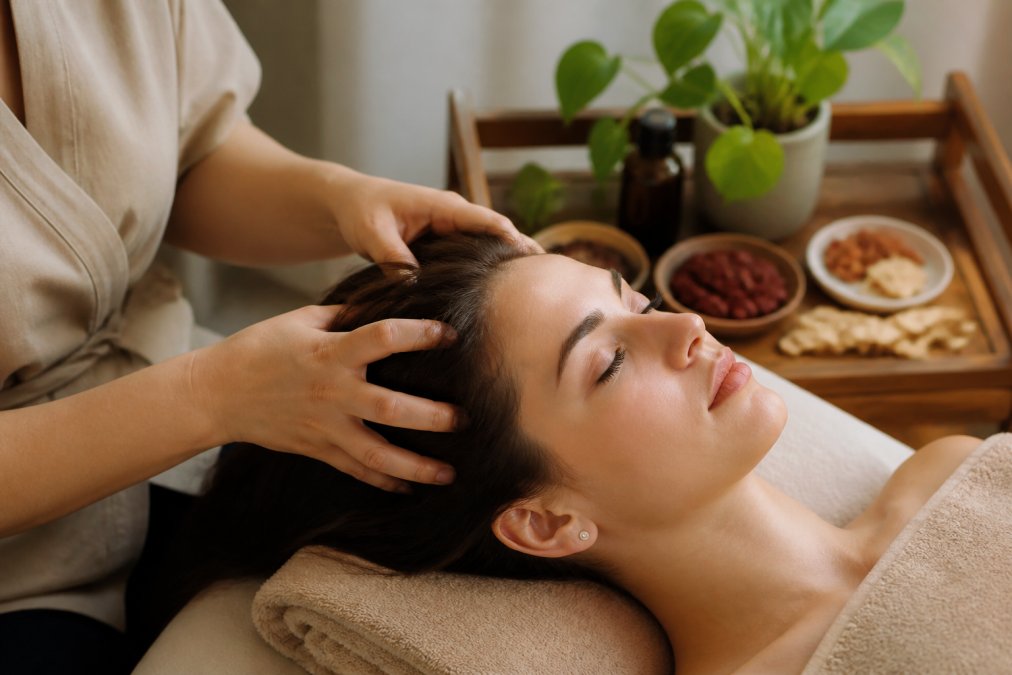
Holistic hair treatment is an integrated approach to addressing hair loss and scalp conditions by treating the whole person rather than just the symptoms. Instead of applying topical solutions alone, this method combines internal wellness practices, nutritional support, stress management, and targeted scalp therapies to activate hair growth from the root.
Holistic hair treatment merges Traditional Chinese Medicine principles with modern clinical trichology to restore scalp microbiome balance, reduce inflammation, regulate sebum production, and support the hair growth cycle by addressing underlying hormonal, nutritional, and energetic imbalances.
Hair health reflects internal wellness. A person experiencing postpartum hair loss, chronic scalp inflammation, or alopecia often manages hormonal shifts, nutritional deficiencies, oxidative stress, or conditions like seborrheic dermatitis. Holistic treatment targets these root causes rather than masking symptoms with medicated shampoos or temporary topical fixes.
The framework includes scalp stimulation, herbal supplementation, dietary adjustments, stress reduction, and acupuncture to improve circulation to hair follicles. Results depend on consistency and how well a person integrates lifestyle changes alongside professional treatments.
How Does a Holistic Approach to Hair Loss Differ From Conventional Treatment?
Conventional dermatological treatment focuses on pharmaceutical interventions like minoxidil, finasteride, or corticosteroid injections. These address the mechanism directly but often don't resolve why the body developed the problem.
Holistic treatment investigates root causes: Why is the scalp inflamed? What nutritional gaps exist? Is stress triggering shedding? Are synthetic chemicals disrupting the scalp microbiome? This framework personalizes treatment to the individual's constitution and specific imbalance.
A person with seborrheic dermatitis might receive a prescription antifungal shampoo, addressing fungal overgrowth but not why the scalp became hospitable for it. A holistic practitioner assesses whether the issue stems from hormonal imbalance, poor circulation, dietary triggers, or a weakened microbiome, then builds treatment around those factors.
Conventional treatments show results within 3-6 months for androgenetic alopecia. Holistic approaches require 3-4 months minimum as internal systems rebalance. However, people report sustained improvements and fewer relapses because the underlying cause is addressed rather than masked.
The Real Cost and Timeline: What to Expect
Initial consultations typically take 60-90 minutes. Follow-up sessions range from 45-75 minutes. Frequency recommendations start at twice monthly for 3-4 months, then taper to monthly maintenance as the condition stabilizes.
At-home components, supplements, herbal teas, scalp oils, dietary adjustments, represent ongoing costs separate from professional services. Consistency with home care drives results; skipping supplementation undermines the approach.
Visible results take 12-16 weeks minimum for hair thinning or postpartum shedding. For chronic scalp conditions, inflammation reduction may begin within 4-6 weeks, but full healing typically takes 4-6 months depending on condition duration and scalp microbiome compromise.
At-home components, supplements, herbal teas, scalp oils, dietary adjustments, represent ongoing costs separate from professional services. Consistency with home care drives results; skipping supplementation undermines the approach.
Does Holistic Hair Treatment Actually Work? Evidence and Results
Acupuncture for hair loss has been studied in peer-reviewed research, with some trials showing improved hair growth when combined with other interventions. Traditional Chinese Medicine principles around scalp circulation and hormone balance have centuries of clinical observation.
Clinical trichology uses diagnostic tools like trichoscopy and scalp analysis to identify specific conditions: follicle miniaturization, scalp microbiome imbalance, sebum dysfunction, or inflammation markers. Treatment addressing these findings produces measurable outcomes.
Start Your Hair & Scalp Healing Journey →
People with postpartum hair loss often see stabilization and regrowth improvement. Those with seborrheic dermatitis may report reduced flaking and normalized sebum. Individuals with androgenetic alopecia may see modest results; holistic treatment typically slows progression and improves hair quality rather than reversing significant loss.
Holistic treatment is inherently individualized, making large-scale clinical trials difficult to design. However, practitioners tracking outcomes over years, measuring scalp health markers, hair density, shedding rates, and client-reported improvement, often see positive change when people commit to the full protocol.
Holistic treatment is not a replacement for medical diagnosis. Sudden, severe hair loss requires dermatological evaluation to rule out thyroid dysfunction, autoimmune conditions, or systemic issues. Holistic treatment works best as a complement to conventional care when the underlying condition is understood.
Finding a Clinical Trichologist Near You: What Credentials Matter
A Certified Trichologist has completed formal education from recognized trichology schools covering hair biology, scalp pathology, diagnostic techniques, and treatment protocols. Look for certification from organizations maintaining rigorous standards and continuing education requirements.
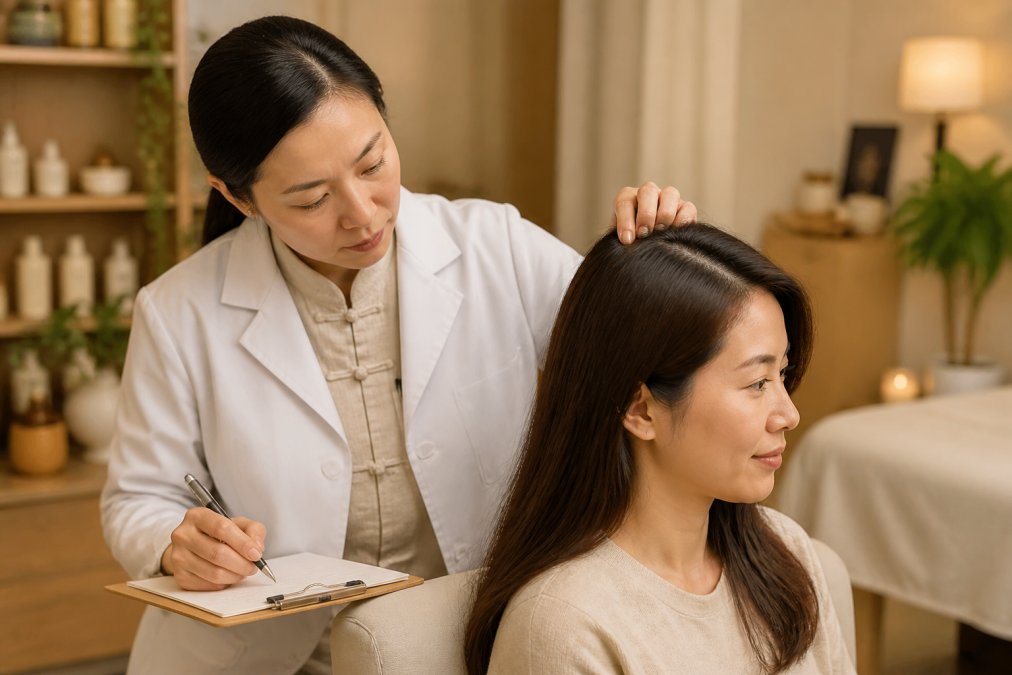
A Licensed Acupuncture Physician or Doctor of Acupuncture and Oriental Medicine (DAOM) has completed extensive training, typically 3,000+ hours of classroom and clinical work, in acupuncture theory, Traditional Chinese Medicine diagnostics, and point selection.
When evaluating a practitioner, ask these specific questions:
- What is your formal training in trichology or hair science? (Look for completion of a recognized trichology program, not just general cosmetology background.)
- Are you licensed in acupuncture? If so, in which state? (Verify through your state's acupuncture or medical board.)
- How do you diagnose scalp conditions? (They should use tools like trichoscopy, scalp analysis, or dermatoscopy, not just visual assessment.)
- What is your experience treating conditions similar to mine? (Specific experience with postpartum hair loss, alopecia, or seborrheic dermatitis matters.)
- Do you work with dermatologists or medical doctors for complex cases? (Good practitioners maintain professional relationships for referral and consultation.)
Holistic Hair Treatment vs. Supplements, Topicals, and Professional Services
Understanding how holistic treatment compares to other available options helps clarify whether the investment makes sense for your situation.
| Approach | Best For | Realistic Timeline | Cost Range | Key Limitation |
|---|---|---|---|---|
| Holistic professional treatment | Chronic scalp conditions, postpartum loss, alopecia with lifestyle integration | 12-16 weeks minimum | $3,000-6,000 over 6 months | Requires active participation and consistency |
| Supplements alone (e.g., Nutrafol) | Mild thinning, nutritional support, preventive care | 3-4 months | $88-150/month | Addresses internal factors only; no scalp-specific treatment |
| Topical treatments (e.g., Moroccanoil) | Scalp irritation, shedding, immediate relief | 4-8 weeks for symptom relief | $30-50 one-time | Temporary relief; doesn't address root causes |
| Professional salon treatments (e.g., OWAY) | Chemical-sensitive scalp, general hair health | Ongoing maintenance | $100-200 per session | Primarily cosmetic; limited therapeutic depth |
| Conventional dermatology (minoxidil, finasteride) | Androgenetic alopecia, severe loss, urgent intervention | 3-6 months | $20-100/month | Symptom suppression; may not address underlying imbalance |
Is It Worth It? The Verdict
It's worth it if:
- You've had a scalp condition or hair loss for 6+ months without improvement from conventional treatments
- You're dealing with chronic inflammation, psoriasis, seborrheic dermatitis, or postpartum shedding that keeps recurring
- You're willing to commit to 4-6 months of consistent professional visits and home care protocols
- You want to understand and address the root cause rather than suppress symptoms indefinitely
- You're open to integrating dietary adjustments, stress management, and supplementation alongside professional treatment
It may not be worth it if:
- Your hair loss is recent (under 3 months) and you haven't yet tried conventional dermatology
- You're seeking a quick fix without lifestyle integration
- Your condition is mild and manageable with over-the-counter topicals or supplements
- You can't commit to regular professional appointments or consistent home care
- Your budget is extremely limited and you need results within 2-3 months
For someone with chronic scalp psoriasis flaring despite medicated shampoos, holistic treatment addressing microbiome dysfunction can be a sound investment. For mild, recent thinning, starting with a supplement or topical treatment may be a more accessible initial step.
Frequently Asked Questions
What is the difference between holistic hair treatment and conventional dermatology for hair loss?
Holistic hair treatment addresses root causes such as scalp microbiome imbalance, hormonal dysregulation, oxidative stress, and nutritional deficiencies using natural ingredients, acupuncture, and personalized protocols. Conventional dermatology typically focuses on topical or oral medications like minoxidil or finasteride that target specific symptoms. Holistic practitioners integrate clinical trichology with Traditional Chinese Medicine to restore internal balance, while dermatologists emphasize pharmaceutical intervention. Both approaches have merit; the choice depends on your preference for natural methods versus evidence-based pharmaceuticals and your willingness to address systemic factors alongside scalp health.
How long does it take to see results from holistic hair treatment?
Most people notice initial improvements in scalp health, reduced inflammation, and decreased shedding within 4 to 8 weeks. Visible hair density and growth improvements typically appear within 3 to 6 months of consistent treatment. The hair growth cycle means new hair takes time to mature; results depend on the severity of your condition, consistency with treatments, and adherence to lifestyle changes. Postpartum hair loss may improve faster than chronic alopecia. A qualified practitioner can estimate your timeline during an initial consultation based on your specific condition.
Can holistic hair treatment work for chronic conditions like psoriasis or seborrheic dermatitis?
Yes. Holistic treatment addresses scalp inflammation and the scalp microbiome, which are central to both conditions. By reducing inflammation, restoring sebum regulation, and balancing hormones through acupuncture and herbal protocols, many people experience relief from itching, flaking, and discomfort. However, results vary. Some chronic conditions respond well to the combination of clinical trichology and Traditional Chinese Medicine, while others may require ongoing management. Consult a licensed practitioner to assess whether your condition is suitable for holistic care or if it requires concurrent dermatological supervision.
What should I look for when finding a clinical trichologist near me?
Verify credentials: look for a Certified Holistic Trichologist, Licensed Acupuncture Physician, or Doctor of Acupuncture & Oriental Medicine (DAcCHM /DAOM). Check for professional affiliations, years of experience, and whether they offer personalized assessments rather than generic protocols. Ask whether they integrate clinical trichology with Traditional Chinese Medicine or other modalities. Read client testimonials focused on specific conditions you have. Request a consultation to assess whether their approach aligns with your needs. Avoid practitioners who make absolute cure claims or pressure you into long-term contracts without a clear assessment phase.