 How-to
7 TCM Herbal Hair Masks for Volume That Actually Work
Last Updated: November 16, 2026
Quick Summary
TCM herbal hair masks for volume support scalp circulation and strand strength from the root instead of coating hair with heavy product. Our base recipe blends ginseng, He Shou Wu, and goji berry powders with warm water or rosemary tea, applied to the scalp line and rinsed thoroughly. Use it twice weekly and allow twelve weeks before judging results.
- Skip the carrier oil for fine or oily hair and rinse until the water runs clear.
- Patch test a small amount behind the ear and wait 24 hours before full application.
- Massage the paste into the scalp for five minutes, then rest 20 to 30 minutes.
- Two applications per week is the sweet spot; more frequent use risks irritation.
- Track shedding count, scalp comfort, and weekly root lift photos to measure results.
Table of Contents
- Why TCM Herbal Hair Masks for Volume Beat Heavy Conditioners
- TCM Herbal Hair Masks for Volume Ingredients: What Goes In and Why
- Chinese Herbs for Hair Growth and Thickness: What the Evidence Says
- TCM Herbal Hair Masks for Volume How to Use: A Step-by-Step Recipe
- TCM Herbal Hair Masks for Volume Side Effects and Safety
- DIY Mask vs. Ready-Made TCM Products: A Practical Comparison
- Building a Repeatable Routine: Frequency, Timing, and What to Track
- Start Your Hair and Scalp Healing Journey
- Frequently Asked Questions
Why TCM Herbal Hair Masks for Volume Beat Heavy Conditioners
Most volumizing products coat the hair shaft, adding temporary bulk that leaves fine hair limp by day two. TCM herbal hair masks for volume work differently: they support scalp circulation and strand strength from the root, so lift comes from healthier hair rather than product residue.
A conditioner makes hair look thicker for a few hours. A well-formulated herbal mask, used consistently, supports the conditions that let hair grow in stronger over months, a slower promise, and an honest one.
The difference between cosmetic volume and actual hair regrowth
Cosmetic volume is a styling effect: root lift sprays, mousses and heavy conditioners alter how strands sit, and the effect rinses out. Actual regrowth is biological: follicles cycling from a resting phase back into growth, producing thicker terminal hair rather than fine vellus hair.
A herbal mask can support the second goal, but it will not fake the first. To see how a mask fits into a broader plan, read our guide on how to support hair regrowth naturally with TCM.
TCM Herbal Hair Masks for Volume Ingredients: What Goes In and Why
The best TCM herbal hair masks for volume ingredients fall into two groups: a core trio that supports follicle function, and supporting herbs that manage oil and circulation. A focused three-herb blend beats a crowded pantry shelf, and form matters as much as the herb.
Ginseng, He Shou Wu, and goji berry: the core trio
He Shou Wu, also called Fo-Ti, is a traditional herb used in TCM, and it needs the most caution of the three. Keep it topical unless a qualified practitioner prescribes otherwise, because oral He Shou Wu supplements have been linked to reported cases of liver injury (Liver Damage Associated with Polygonum multiflorum Thunb.).
Goji berry rounds out the trio as a traditional TCM ingredient. In a mask it is a supporting ingredient rather than the star: one teaspoon of powder is enough. Goji is a nightshade-family fruit, so anyone with a known sensitivity to that family should patch test first.
Supporting herbs for scalp circulation and oil control
Ginger is sometimes added to herbal masks for its warming, tingling sensation. Use it sparingly, since too much can irritate some scalps.
False daisy, known as bhringraj in Ayurvedic practice, is used in many herbal hair oils.
Henna adds body and shine but is a dye, so skip it if you color your hair.
Rosemary is a common botanical addition to scalp-care recipes.
Which herbs have topical evidence, which are traditional, and how to prepare them
These ingredients have different levels of traditional use and modern research, and most have limited trial data for topical hair use. Check any herb against a qualified professional before relying on it.
Preparation follows the same logic. Powdered roots and fruits disperse best in warm water or brewed tea; whole or sliced roots need steeping and straining first.
If you want to know which of these herbs have actual research behind them and where the safety limits sit, our guide on which Chinese herbs actually help scalp health breaks down the evidence herb by herb.
Chinese Herbs for Hair Growth and Thickness: What the Evidence Says
Chinese herbs used for hair have a long traditional record and a thinner modern research base.
Treat strong regrowth claims with skepticism, and judge a mask by how your scalp feels and how your hair looks over time.
Herbal masks are a personal-care routine, not a medical treatment, and anyone with patchy loss or sudden shedding should see a qualified clinician before self-treating.
TCM Herbal Hair Masks for Volume How to Use: A Step-by-Step Recipe
Here is the base recipe we teach clients for a lightweight, volume-friendly mask. It makes enough for one application on shoulder-length hair, and the proportions are built to rinse clean so fine hair is not left limp.
What you need:
- 1 tablespoon ginseng powder
- 1 tablespoon He Shou Wu powder
- 1 teaspoon goji berry powder
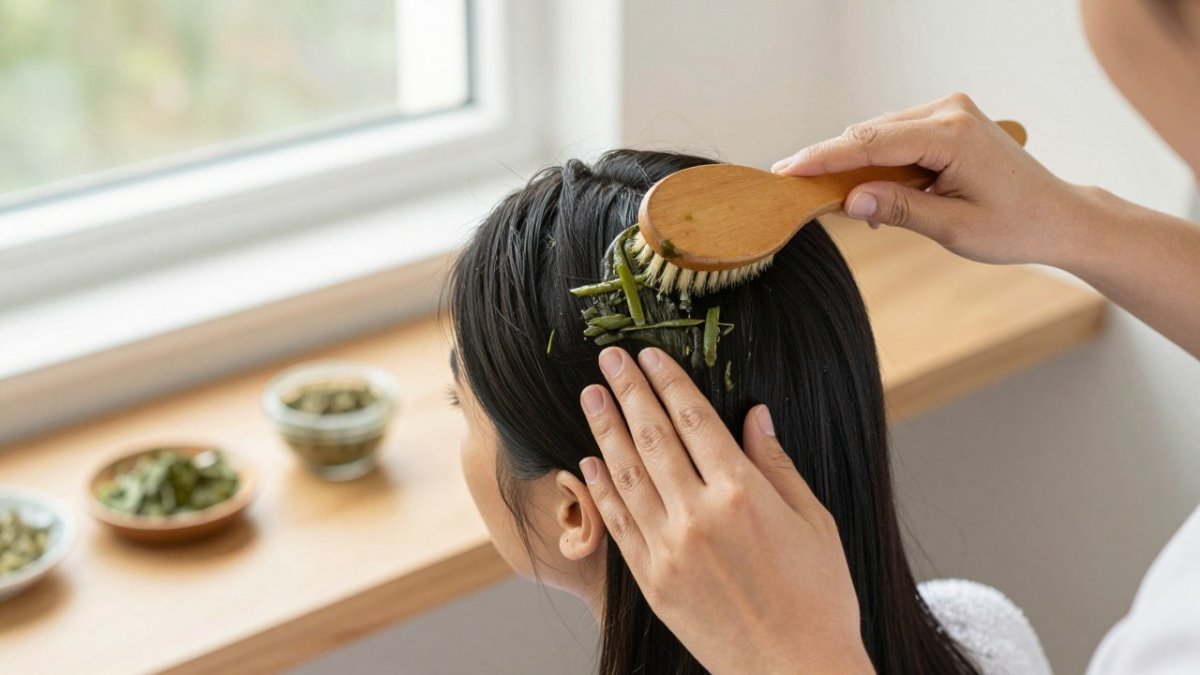
Steps:
- Patch test first. Mix a small amount and apply it behind your ear. Wait 24 hours. Skip this and you risk a reaction across your whole scalp.
- Combine the powders in the bowl and add water slowly until you have a yogurt-like paste. Lumps mean uneven application.
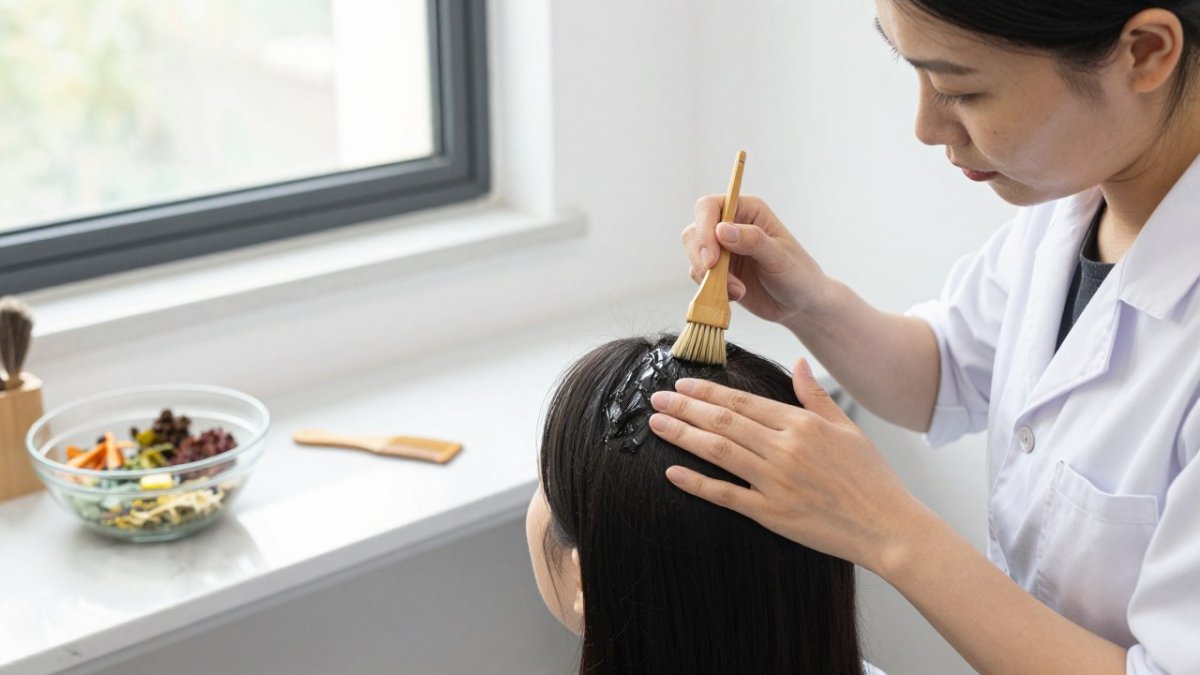
- Section dry hair into four parts and apply the paste along the scalp line, not the lengths. Volume starts at the root.
- Massage for five minutes with fingertips, working in small circles. Our guide to scalp massage techniques for hair growth covers the pressure points worth targeting.
- Rest for 20 to 30 minutes. Cover with a shower cap if you want to keep it warm.
- Rinse thoroughly with warm water, then shampoo once. Leftover powder residue weighs hair down.
- Let hair air-dry to see the true volume result.
Expected result: a cosmetic change in how hair looks at the root with regular use. This is not a regrowth treatment.
How to get volume without weighing down fine or oily hair
The volume in the keyword is the part most recipes get wrong. A mask that conditions well can still flatten fine hair if it leaves residue at the root. Three adjustments keep the result light:
- Skip the carrier oil for fine or oily hair. The powders and tea carry the herbs; oil is for dry scalps only.
- Use rosemary tea as the base for oily scalps. It adds a light astringent effect and rinses cleaner than water mixed with oil.
- Rinse longer than feels necessary. Powder residue is the main cause of day-two limpness, so rinse until the water runs clear, then shampoo once at the scalp only.
A common pattern is that people who see the best root lift apply only to the scalp line and keep the lengths out of the mask entirely.
Adapting the mask for fine, curly, color-treated, dry, or sensitive scalps
Fine hair needs the lightest version: skip the carrier oil entirely and rinse longer. Oily scalps benefit from a rosemary tea base instead of water and a drop of tea tree, though tea tree should never be applied undiluted. Curly hair should apply the mask to the scalp only and detangle with conditioner afterward, because herbal powders can catch in curls.
A repeatable routine with frequency, timing, and measurable outcomes
Two applications per week is the sweet spot for most people. More frequent use risks over-cleansing and irritation without adding benefit. Give the routine twelve weeks before judging results, since hair grows slowly and scalp changes take time to show.
Track three things in a simple note on your phone:
- Shedding count during wash day, roughly
- Scalp comfort, rated from itchy to calm
- Root lift in a photo taken on the same day each week, same lighting
If oiliness and flaking are your main problem, pair the mask with a proper cleansing routine. Our step-by-step guide on how to treat oily scalp and dandruff covers the wash-day sequence that keeps sebum in check.
TCM Herbal Hair Masks for Volume Side Effects and Safety
Side effects from herbal hair masks are most often mild skin irritation. Consult a qualified professional before using any herb, especially those with reported safety concerns such as He Shou Wu.
Other safety points worth knowing:
- Henna can trigger reactions in people sensitive to it and will alter hair color.
- Essential oils need dilution in a carrier oil before touching skin.
- Pregnancy and breastfeeding warrant a conversation with your provider before starting any herbal routine.
If your scalp is actively irritated or inflamed, consult a qualified professional before applying herbal masks.
DIY Mask vs. Ready-Made TCM Products: A Practical Comparison
DIY wins on cost control and ingredient transparency. Ready-made products win on consistency, preservation, and convenience. Here is how the two compare on the factors that actually decide it.
| Factor | DIY Herbal Mask | Ready-Made TCM Product |
|---|---|---|
| Cost per use | Low, bulk powders last months | Higher per application |
| Ingredient control | Full, you choose every herb | Limited to label |
| Consistency | Varies by batch and measuring | Standardized formula |
| Shelf life | Mix fresh each time | Preserved, months unopened |
| Time required | 30-40 minutes including prep | 10-15 minutes |
| Best for | Tinkerers, known tolerances | Busy schedules, sensitive scalps |
Neither option replaces a proper assessment. If you are weighing herbal routes against other regrowth approaches, our holistic guide to herbal alternatives for hair regrowth compares timelines and safety across options.
Best for DIY: anyone who enjoys the ritual and wants to control every ingredient. Skip DIY if: you have a sensitive scalp, a known allergy, or no time for patch testing.
Building a Repeatable Routine: Frequency, Timing, and What to Track
Two applications per week is the sweet spot for most people. More frequent use risks over-cleansing and irritation without adding benefit. Give the routine twelve weeks before judging results, since hair grows slowly and scalp changes take time to show.
Track three things in a simple note on your phone:
- Shedding count during wash day, roughly
- Scalp comfort, rated from itchy to calm
- Root lift in a photo taken on the same day each week, same lighting
For women dealing with thinning, postpartum shedding, or chronic scalp conditions, a personalized plan beats a generic recipe. A licensed practitioner can assess whether your loss pattern calls for topical herbs, acupuncture, or a clinical referral.
Start Your Hair and Scalp Healing Journey
The hardest part of any herbal routine is knowing whether you are treating the right problem. Thinning from hormonal shifts, shedding after pregnancy, and inflammation from seborrheic dermatitis all look similar in the mirror and need different approaches.
At Sophiatrichoholistic Hair Spa LLC, we combine Traditional Chinese Medicine with clinical trichology to find the root cause before recommending a plan.
Get started with Sophiatrichoholistic Hair Spa LLC and give your scalp a plan built for your hair.
Frequently Asked Questions
What is the most commonly used Chinese herb for thinning hair?
He Shou Wu (Fo-Ti) is the most frequently cited Chinese herb for thinning hair in TCM literature. It is a traditional TCM herb with a long record of use. He Shou Wu is also the herb most often linked to liver-related side effects, so it should only be used under professional guidance, especially in a TCM herbal hair mask for volume.
How do you use a Chinese herbal hair mask for volume without weighing hair down?
Apply the mask only to the scalp and mid-lengths, avoiding the ends where product builds up. Use a lightweight base such as aloe vera gel or a thin conditioner instead of heavy oils. Leave it on for 20 to 30 minutes, then rinse thoroughly with lukewarm water. For fine or oily hair, limit use to once a week and follow with a volumizing shampoo.
Can herbal hair masks cause scalp irritation or other side effects?
Yes. Essential oils, ginger, and henna can trigger contact dermatitis, and He Shou Wu has been associated with liver toxicity in rare cases. Always patch-test a small amount behind the ear 24 hours before full application. Avoid masks on broken or inflamed skin. If you have psoriasis, seborrheic dermatitis, or a known allergy to plants in the parsley family, consult a qualified professional before trying a TCM herbal hair mask for volume.
Can a hair mask make fine hair look more voluminous?
Some people find that a herbal hair mask changes the appearance of their hair at the root. However, it will not change the number of hair follicles or cure androgenetic alopecia. Cosmetic volume comes from coating the hair shaft and lifting the root, while true regrowth requires addressing underlying causes. Set realistic expectations: use masks as part of a routine and track changes in shedding and scalp health over eight to twelve weeks.