 How-to
7 Ways to Treat Oily Scalp and Dandruff
Last Updated: November 2, 2026
Quick Summary
To treat an oily scalp with dandruff, wash every day or every other day and use a medicated shampoo with actives like zinc pyrithione or ketoconazole, leaving it on the scalp for three to five minutes before rinsing. Rotate ingredients if flakes stop improving, and step down to one medicated wash per week once symptoms are controlled.
- Oil feeds the Malassezia yeast that triggers flakes, itch, and grease together.
- Oily dandruff usually shows greasy, yellowish flakes, while dry dandruff flakes are small and white.
- Skip heavy coconut oil masks and thick castor oil treatments that add oil to an oily scalp.
- Use a clarifying wash once every week or two and rinse with lukewarm, not hot, water.
- See a professional if symptoms persist after several weeks of consistent home care.
Table of Contents
- Why Oily Scalp and Dandruff Happen Together
- Step 1: Build an Oily Scalp Treatment at Home
- Step 2: Choose and Rotate Anti-Dandruff Active Ingredients
- Step 3: How to Treat Oily Scalp and Dandruff Home Remedies That Help
- Step 4: Scalp Cleansing and Removing Buildup Without Stripping
- Oily Scalp, Dandruff, and Hair Loss: What the Link Means
- Troubleshooting Irritation, Dryness, or Worsening Flakes
- When to See a Professional for Oily Scalp and Dandruff
- Frequently Asked Questions
Why Oily Scalp and Dandruff Happen Together
An oily scalp and dandruff often show up as a pair, and that is not a coincidence. The reason comes down to one simple relationship: oil feeds the yeast that causes flakes.
Seborrheic dermatitis is a common inflammatory skin condition that causes flaking, redness, and itching on oily areas of the body, including the scalp (the American Academy of Dermatology). When your scalp pumps out excess oil, that oil becomes food for a naturally occurring yeast called Malassezia. The yeast multiplies. Your skin reacts with inflammation. You get flakes, itch, and grease all at once.
The Sebum-Yeast Connection
Sebum is the oil your scalp produces to protect skin and hair. Some oil is healthy. Too much creates a feeding ground.
Here is the cycle in plain terms:
- Your scalp produces excess sebum
- Malassezia yeast feeds on that oil
- The yeast triggers inflammation and faster skin cell turnover
- Dead cells shed as visible flakes
- Scratching and harsh products make irritation worse
Break any link in that chain and symptoms calm down. That is the whole logic behind the steps below.
Oily vs. Dry Dandruff: How to Tell the Difference
The two look similar in a mirror but need different care. Oily dandruff often comes with greasy, yellowish flakes, while dry dandruff tends to produce small white flakes.
If you are unsure which one you have, or whether your symptoms point to something else entirely, our guide on scalp psoriasis vs seborrheic dermatitis walks through the key symptom differences.
Step 1: Build an Oily Scalp Treatment at Home
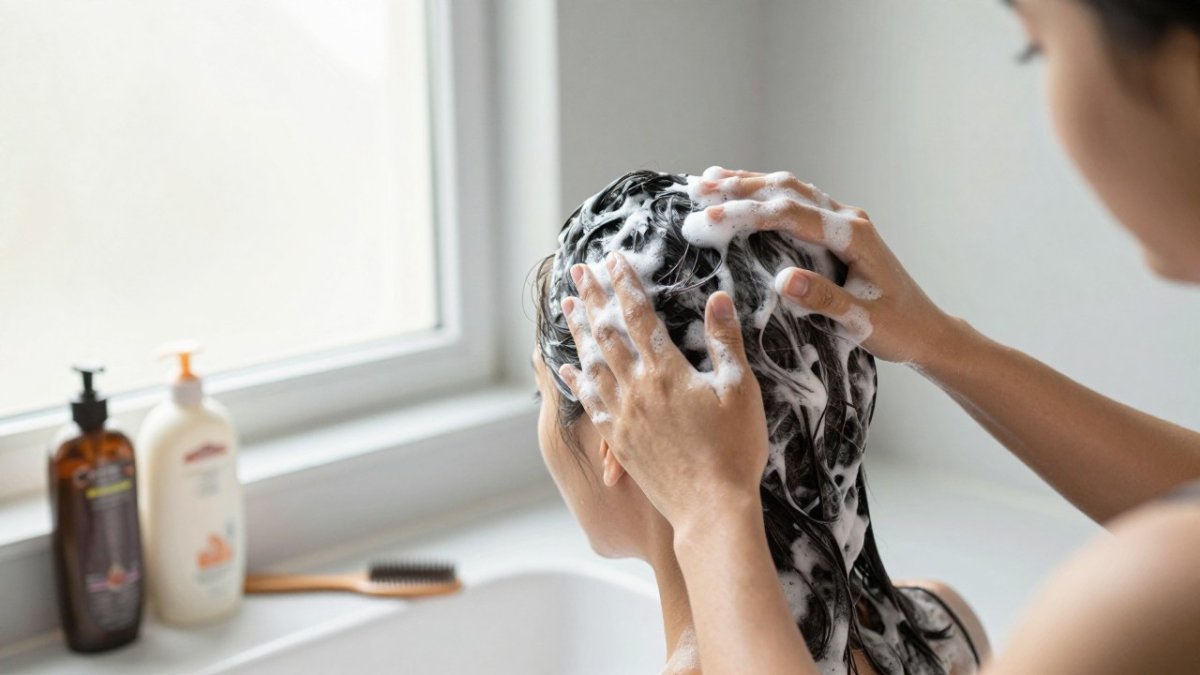
A home routine for an oily, flaky scalp rests on three habits: wash often enough, rinse completely, and keep products light. Most people get the washing frequency wrong in one direction or the other.
How Often to Wash Oily, Dandruff-Prone Hair
Wash every day or every other day if your scalp gets greasy fast. Skipping washes lets oil and dead skin pile up, which gives yeast more to feed on. Daily shampooing with a gentle formula is generally considered unlikely to damage healthy hair when done carefully.
A few habits make each wash count:
- Focus shampoo on the scalp, not the ends
- Massage with fingertips, never nails
- Rinse longer than feels necessary
- Apply conditioner only from mid-shaft down
- Skip heavy oils, butters, and thick serums near the roots
Step 2: Choose and Rotate Anti-Dandruff Active Ingredients
The right shampoo depends on which active ingredient suits your scalp, and rotation keeps yeast from adapting. Common over-the-counter options include zinc pyrithione, ketoconazole, selenium sulfide, and salicylic acid. Each works a little differently, and how you use it matters as much as which one you pick.
Common over-the-counter anti-dandruff ingredients include zinc pyrithione, ketoconazole, selenium sulfide, and salicylic acid, and each is formulated for different scalp concerns. Coal tar, found in some older formulas, is an option some people use, but it can be drying and has a strong scent.
A practical rotation looks like this:
| Active Ingredient | Main Job | Typical Use |
|---|---|---|
| Zinc pyrithione | Slows yeast, mild flakes | 2-3 washes per week |
| Ketoconazole | Stronger yeast control | 2 washes per week |
| Selenium sulfide | Reduces scaling | 1-2 washes per week |
| Salicylic acid | Loosens buildup | 1-2 washes per week |
How to Actually Use a Medicated Shampoo
Most people rinse anti-dandruff shampoo out too fast. The active needs contact time to work. A common pattern is to lather, leave it on the scalp for three to five minutes, then rinse thoroughly. Read the label on your specific product, because contact times vary by ingredient and formula.
A few habits make each medicated wash count:
- Apply to a wet scalp, not soaking-wet hair, so the product is not diluted
- Work it into the scalp with fingertips and let it sit before rinsing
- Use a plain gentle shampoo on the days between medicated washes
- Keep conditioner from mid-shaft down so it does not coat the scalp
Why Rotate, and When
Yeast can become less responsive to a single active over time, and rotating ingredients is one way to stay ahead of that. A common approach is to use one active for several weeks, then switch to a different one if flakes are not improving or start returning. Rotation is not a requirement for everyone; many people do well on one product used consistently. The point is to have a plan if the first choice stops working.
Watch out: layering several medicated shampoos or leaving a strong active on for far longer than the label says can irritate the scalp and make flakes worse, so change one variable at a time.
How Long Treatment Takes
Do not judge a new routine by the first wash. A common pattern is that itching and flaking begin to ease within one to two weeks of consistent use, with fuller improvement over several weeks. Dandruff tends to recur, so once symptoms are controlled, most people step down to a maintenance schedule of one medicated wash per week or every other week rather than stopping entirely.
If you want specific product ideas, our list of natural shampoos for seborrheic dermatitis covers options that clean without stripping.
Start Your Hair & Scalp Healing Journey →
Step 3: How to Treat Oily Scalp and Dandruff Home Remedies That Help
Home remedies can support your routine, but they work best as helpers, not replacements. Two have reasonable support behind them: apple cider vinegar rinses and tea tree oil. The unique angle here is knowing exactly where home care stops and professional care begins, because most guides skip that line.
Apple Cider Vinegar Rinse
Dilute apple cider vinegar with water, roughly one part vinegar to three or four parts water, and use it as a final rinse once a week. Some people use it as a rinse for its feel after washing. Apply it to the scalp after shampooing, let it sit for a minute or two, then rinse. Undiluted vinegar is too acidic for most scalps and can sting.
Tea Tree Oil
Some people use tea tree oil in a mild shampoo or diluted in a carrier oil, since concentrated essential oil can irritate skin. Do a small patch test first if your scalp is sensitive.
What to Skip
Heavy coconut oil masks, thick castor oil treatments, and anything that sits on the scalp for hours add oil to an already oily scalp and can make flaking worse. The same goes for occlusive styling butters and gels applied close to the roots.
When Home Remedies Are Not Enough
Home care is a reasonable first step, but it has limits. If flakes, itching, or redness are not improving after several weeks of consistent washing and medicated shampoo use, or if symptoms keep coming back quickly after you stop, that is a sign to move beyond home remedies. Persistent scalp conditions are best discussed with a qualified clinician, who can advise on whether a prescription option is appropriate.
Watch out: if a home remedy causes burning, swelling, or spreading redness, stop it and treat that as a reason to seek care rather than a sign to try a stronger version.
Step 4: Scalp Cleansing and Removing Buildup Without Stripping
Deep cleansing removes product buildup, but harsh clarifying treatments can backfire. Strip the scalp too hard and it may produce more oil to compensate.
Try this approach:
- Use a clarifying wash once every week or two
- Choose gentle surfactants over harsh sulfates if your scalp stings
- Rinse with lukewarm water, not hot
- Pat dry with a towel instead of rubbing
- Give your scalp a few minutes of air before styling
A consistent scalp-care routine matters more than any single product.
Oily Scalp, Dandruff, and Hair Loss: What the Link Means
Persistent scalp inflammation can affect the hair follicle over time. When the scalp stays irritated, the environment for healthy growth weakens, and some women notice more shedding along with their flakes.
This does not mean dandruff causes permanent hair loss. It means an inflamed, unbalanced scalp deserves attention. If you are seeing both flaking and thinning, our article on scalp inflammation and hair thinning explains the connection and what helps.
Troubleshooting Irritation, Dryness, or Worsening Flakes
If your scalp stings, burns, or flakes more after starting a new product, stop and reassess. Irritation often comes from using an active ingredient too often, leaving it on too long, or layering too many treatments at once.
Common fixes:
- Cut back to one anti-dandruff wash every three days
- Alternate with a plain gentle shampoo
- Drop other actives until irritation settles
- Check whether a styling product is the culprit
If you are worried an active ingredient is too harsh for your skin, read our breakdown on whether salicylic acid is safe for sensitive scalps.
When to See a Professional for Oily Scalp and Dandruff
See a professional when symptoms persist after several weeks of consistent home care, when flakes come with redness, swelling, or pain, or when you notice hair thinning alongside scalp problems. Those signs point to something that needs a closer look.
At Sophiatrichoholistic Hair Spa LLC, we combine Traditional Chinese Medicine with clinical trichology in our holistic approach to hair and scalp care. For guidance on what to expect from a consultation, speak with a qualified professional.
Frequently Asked Questions
Why can you have an oily scalp and dandruff at the same time?
The same sebum that makes hair look greasy feeds the yeast Malassezia that lives on most scalps. When oil builds up, that yeast multiplies and triggers inflammation that shows up as flakes and itching. So an oily scalp does not rule out dandruff; it often sets the stage for it. That is why oil control and anti-dandruff treatment usually need to happen together rather than as two separate routines.
How often should you wash oily hair with dandruff?
Most people with an oily scalp and dandruff do best washing every day or every other day with a gentle or anti-dandruff shampoo. Skipping washes lets oil and product buildup collect, which gives yeast more to feed on. If your scalp feels tight or irritated after washing, switch to a gentler formula rather than washing less often, and rinse thoroughly to remove all residue.
Can an oily scalp with dandruff cause hair loss?
Dandruff itself does not usually cause permanent hair loss, but constant scratching, inflammation, and buildup can weaken hair and increase shedding. Conditions like seborrheic dermatitis can also flare on an oily scalp and add to irritation. If you notice thinning, patchy loss, or shedding that does not settle after a few weeks of consistent care, see a dermatologist or scalp-care professional for an assessment.
When should you see a dermatologist or scalp-care professional for dandruff?
Book a professional evaluation if flakes, itching, or redness persist after four to six weeks of consistent anti-dandruff shampoo use, if you have painful or bleeding patches, or if hair loss is progressing. A clinician can distinguish ordinary dandruff from seborrheic dermatitis, psoriasis, or other scalp conditions and recommend treatment that matches what is actually happening on your scalp.
A stubborn, oily, flaky scalp can feel like a problem you will never solve alone. Sophiatrichoholistic Hair Spa LLC offers personalized scalp assessments, holistic treatments rooted in Traditional Chinese Medicine and clinical trichology, and home care plans designed for women dealing with seborrheic dermatitis, psoriasis, and thinning hair. Get started with Sophiatrichoholistic Hair Spa LLC and build a scalp routine that finally addresses the cause.