 blog
9 Natural Shampoos for Seborrheic Dermatitis Worth Trying
Quick Summary
The best natural shampoos for seborrheic dermatitis are those with proven antifungal actives like ketoconazole, selenium sulfide, or zinc pyrithione, paired with gentle botanicals such as colloidal oatmeal or aloe. Natural formulas work best for everyday care, while medicated versions help during flares, and a dermatologist should confirm the diagnosis.
- Proven antifungal actives include ketoconazole, selenium sulfide, and zinc pyrithione.
- Colloidal oatmeal and aloe vera soothe the scalp but do not control yeast.
- Use a medicated shampoo two to three times a week during a flare.
- Leave medicated shampoo on for about 5 minutes before rinsing.
- See a dermatologist for persistent symptoms, spreading redness, or crusting.
Table of Contents
- What Seborrheic Dermatitis Is and How It Affects the Scalp
- What "Natural" Actually Means on a Shampoo Label
- Shampoo Ingredients for Seborrheic Dermatitis: Proven Actives vs. Soothing Botanicals
- 9 Natural Shampoos Worth Considering, Compared by Ingredient and Scalp Sensitivity
- Medicated Shampoo for Seborrheic Dermatitis: Where Natural Products Fit
- How Often to Wash Hair With Seborrheic Dermatitis and How Long to Leave Shampoo On
- Natural Remedies for Seborrheic Dermatitis Beyond the Shampoo Bottle
- Building a Scalp Care Routine and Knowing When to See a Dermatologist
- Frequently Asked Questions
What Seborrheic Dermatitis Is and How It Affects the Scalp
Seborrheic dermatitis is a common, chronic inflammatory skin condition that shows up most often on the scalp, face, and other oil-rich areas (the American Academy of Dermatology). Many people notice it first as white or yellowish flakes, redness, and itching. This guide is written to help you sort through the options.
The condition is linked to yeast-like organisms that naturally live on the skin, combined with an inflammatory response in some people. It tends to flare and settle over time rather than disappearing for good.
Scalp symptoms often include:
- Greasy or dry flakes that can be white or yellow
- Itching and burning sensations
- Redness, especially at the hairline, behind the ears, or along the part
- Tenderness when brushing or washing
Because the symptoms overlap with dandruff, psoriasis, and eczema, a clear diagnosis from a dermatologist matters. Shampoo can support symptom control, but it should not replace professional evaluation for persistent or worsening symptoms.
What "Natural" Actually Means on a Shampoo Label
"Natural" has no single legal definition on U.S. shampoo labels. The FDA regulates cosmetics, but it does not define the word "natural" for personal care products, so brands use it in very different ways. One bottle may contain plant-derived surfactants and essential oils, while another uses the same word for a product that also contains synthetic preservatives and fragrance.
When you read a label, look at the full ingredient list rather than the front-of-bottle claim. Check for:
- Fragrance or "parfum," which can irritate sensitive scalps
- Essential oils, which are plant-based but still potential sensitizers
- Preservatives and surfactants, which keep the product stable and clean the scalp
- Any active antifungal ingredient, listed by name
Shampoo Ingredients for Seborrheic Dermatitis: Proven Actives vs. Soothing Botanicals
| Ingredient | Type | How It Works | Evidence Level | Irritation and Trade-Off Notes |
|---|---|---|---|---|
| Ketoconazole | Proven active | Antifungal that targets the yeast-like organism linked to the condition | Strong; available OTC and by prescription | Can dry hair with frequent use; follow label contact time |
| Selenium sulfide | Proven active | Slows skin cell turnover and reduces yeast | Strong | Can discolor light or color-treated hair; rinse thoroughly |
| Zinc pyrithione | Proven active | Antifungal and antibacterial | Strong | Gentle enough for maintenance; avoid eyes |
| Salicylic acid | Proven active (exfoliating) | Loosens scale so flakes lift away | Moderate for scale, not antifungal | Can sting broken skin; not for very dry scalps |
| Tea tree oil | Botanical with some antifungal data | Contains terpinen-4-ol, which has shown activity against yeast | Moderate but weaker than medicated actives | Essential oil; can sensitize, especially at high concentrations |
| Colloidal oatmeal | Soothing botanical | Forms a protective film and reduces itch signaling | Good for comfort, not for yeast control | Rare irritation; useful between medicated washes |
| Aloe vera | Soothing botanical | Hydrates and cools the scalp | Limited for flaking; good for comfort | Generally well tolerated; patch test |
| Glycerin | Humectant | Pulls water into the scalp and hair | Supportive only | Non-irritating for most; can feel tacky in humidity |
| Coconut oil | Botanical emollient | Softens scale and reduces water loss | Weak for yeast control; some yeast can metabolize fatty acids | Can worsen buildup on oily scalps |
| Rosemary extract | Botanical | Antioxidant and mild circulation support | Weak as a stand-alone treatment | Essential-oil forms can irritate |
9 Natural Shampoos Worth Considering, Compared by Ingredient and Scalp Sensitivity
| Shampoo Type | Proven Antifungal Included | Fragrance-Free | Best For |
|---|---|---|---|
| Tea tree-based shampoo | Sometimes, check label | Varies | Mild flaking, oily scalp |
| Botanical oatmeal shampoo | No | Often | Dry, itchy, sensitive scalp |
| Ketoconazole-based shampoo | Yes | Varies | Moderate to active flaking |
| Selenium sulfide shampoo | Yes | Varies | Stubborn, recurring flakes |
| Zinc pyrithione shampoo | Yes | Varies | Everyday maintenance |
| Salicylic acid shampoo | No (exfoliating) | Varies | Thick scale buildup |
| Aloe and glycerin shampoo | No | Often | Dry, irritated sensitive scalps |
| Coconut-based gentle cleanser | No | Often | Mild, sensitive skin |
| Medicated herbal blend | Sometimes, check label | Varies | Users who prefer plant-based formulas |
Fragrance-Free and Sensitive-Scalp Formulas
Hypoallergenic claims are not regulated, so rely on the ingredient list and your own experience instead of the label alone (the FDA).
Start Your Hair & Scalp Healing Journey →
Medicated Shampoo for Seborrheic Dermatitis: Where Natural Products Fit
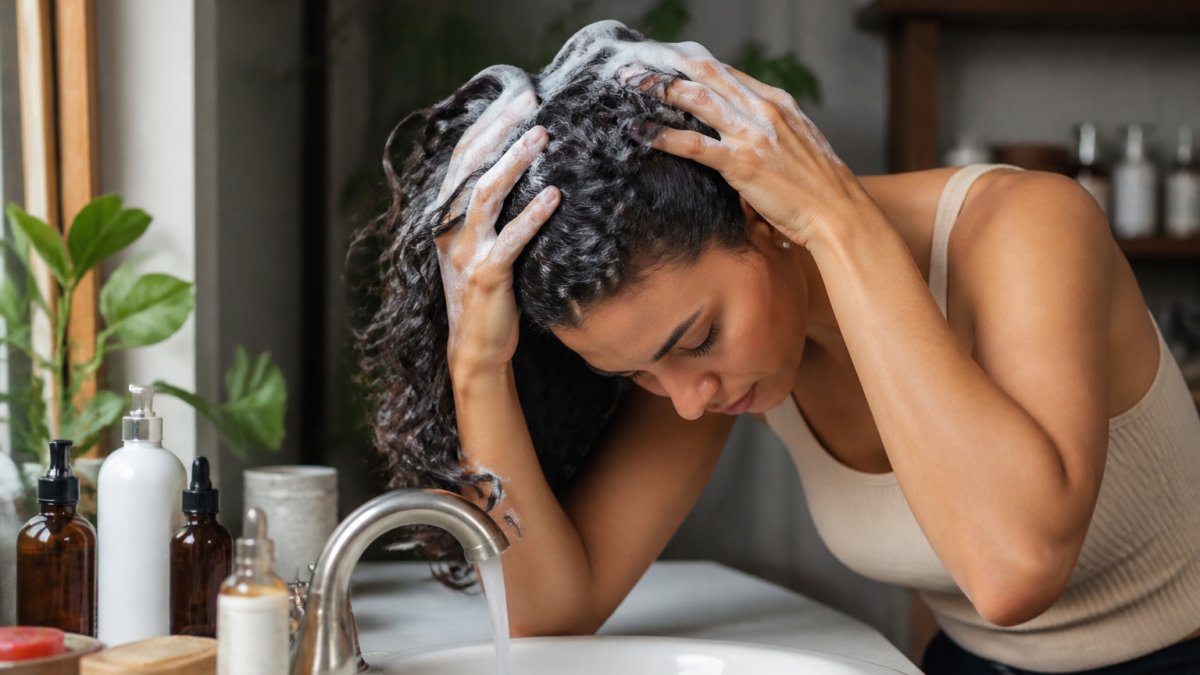
A common pattern is to use a medicated shampoo two to three times a week during a flare, then switch to a gentler natural formula on other days. This rotation can reduce the drying effects of frequent medicated use while keeping symptoms under control.
How Often to Wash Hair With Seborrheic Dermatitis and How Long to Leave Shampoo On
| Hair and Scalp Situation | Suggested Wash Frequency | Contact Time for Medicated Shampoo | Notes |
|---|---|---|---|
| Oily scalp, straight or wavy hair | Every 1 to 2 days | About 5 minutes | Medicated wash 2 to 3 times a week during a flare |
| Dry scalp, curly hair | Every 3 to 7 days | About 5 minutes | Pre-detangle; focus shampoo on scalp, conditioner on lengths |
| Coily hair | Every 7 to 14 days, or as needed | About 5 minutes | Section hair; use nozzle bottle to reach scalp without saturating lengths |
| Protective styles (braids, twists, wigs) | Every 7 to 14 days, or per style | About 5 minutes | Cleanse the scalp along part lines; avoid pulling on edges |
| Sensitive scalp | Start every 2 to 3 days | 3 to 5 minutes | Patch test; fragrance-free formulas first |
A Practical Rotation Schedule
A common pattern is to use a medicated shampoo two to three times a week during a flare, then switch to a gentler natural formula on other days. This rotation can reduce the drying effects of frequent medicated use while keeping symptoms under control.
Natural Remedies for Seborrheic Dermatitis Beyond the Shampoo Bottle
These remedies support the scalp but rarely replace treatment for a significant flare. Explore a dedicated guide to natural remedies for seborrheic dermatitis if you want non-shampoo options.
Building a Scalp Care Routine and Knowing When to See a Dermatologist
See a dermatologist if you notice any of these:
- Symptoms that persist for more than a few weeks despite consistent care
- Spreading redness, swelling, or pain
- Hair loss or patches that concern you
- Crusting, oozing, or signs of infection
Sophiatrichoholistic Hair Spa LLC offers holistic hair and scalp care for women aged 18 to 65, combining Traditional Chinese Medicine with clinical trichology.
Frequently Asked Questions
What is the best natural shampoo for seborrheic dermatitis?
No single natural shampoo suits everyone, because scalp sensitivity, hair texture and symptom severity all change the answer. Look for fragrance-free formulas with soothing ingredients such as colloidal oatmeal, aloe vera or glycerin if your scalp is irritated. For active control of flaking and yeast-related inflammation, compare labels for ingredients with research behind them, such as ketoconazole, selenium sulfide or zinc pyrithione. Patch test any new product on a small area first, and consult a dermatologist if symptoms persist after several weeks.
Can natural shampoo treat seborrheic dermatitis?
Natural shampoos can soothe itching, reduce irritation and help manage mild flaking, but they generally do not clear seborrheic dermatitis on their own. The condition is linked to Malassezia yeast and inflammation, and botanical ingredients have less evidence behind them than established antifungal actives. Many people use a natural shampoo for day-to-day care alongside a medicated product. If you see no improvement, redness spreads, or the scalp becomes painful or weepy, see a dermatologist for individual assessment.
Can I use natural shampoo with medicated shampoo?
Yes, many people alternate the two, using a medicated shampoo a few times a week and a gentle natural formula on other washes. Rotating products can keep the scalp comfortable while the medicated shampoo does the active work. Avoid layering several strong products in one wash, since that can increase dryness and irritation. If you are unsure how to combine them, ask a dermatologist or pharmacist to review your current products.