 blog
Herbal Supplements for Managing Chronic Skin Conditions
Last Updated: November 7, 2026
Quick Summary
Herbal supplements for managing chronic skin conditions have some lab and small-trial support for anti-inflammatory and antimicrobial activity, but few have large, well-controlled trials behind them. Treat herbs as tools with real limits, match the herb to your specific condition, and check with a clinician first because interactions and product quality vary widely.
- Turmeric and curcumin can interfere with blood thinners, so check with your doctor first.
- Standardization means the product states a specific percentage of the active compound, such as curcuminoids.
- Topical tea tree oil reduced seborrheic dermatitis severity compared with placebo in a small trial.
- Most herbal supplements lack safety data in pregnancy; treat them as contraindicated unless a clinician clears them.
- Seek care promptly for spreading rash, open or weeping skin, or signs of infection such as fever.
Table of Contents
- Herbs for Skin Inflammation: What the Evidence Shows
- Herbal Medicine for Skin Rashes and Itching
- Best Herbs for Skin Repair and Wound Healing
- Dermatologist Recommended Supplements for Skin: What to Look For
- Condition-by-Condition Evidence: Psoriasis, Eczema, Acne, and Seborrheic Dermatitis
- Safety, Drug Interactions, and When to Seek Dermatologic Care
- Building a Personalized Herbal Plan with Sophia Trichoholistic
- Frequently Asked Questions
Herbs for Skin Inflammation: What the Evidence Shows
Herbal supplements for managing chronic skin conditions sit at an awkward crossroads: widely used, widely sold, and far less studied than the marketing suggests. Herbs are best treated as tools with real limits, not miracles. This guide grades what the evidence actually supports, separates oral supplements from topical preparations, and flags the safety issues most listicles skip.
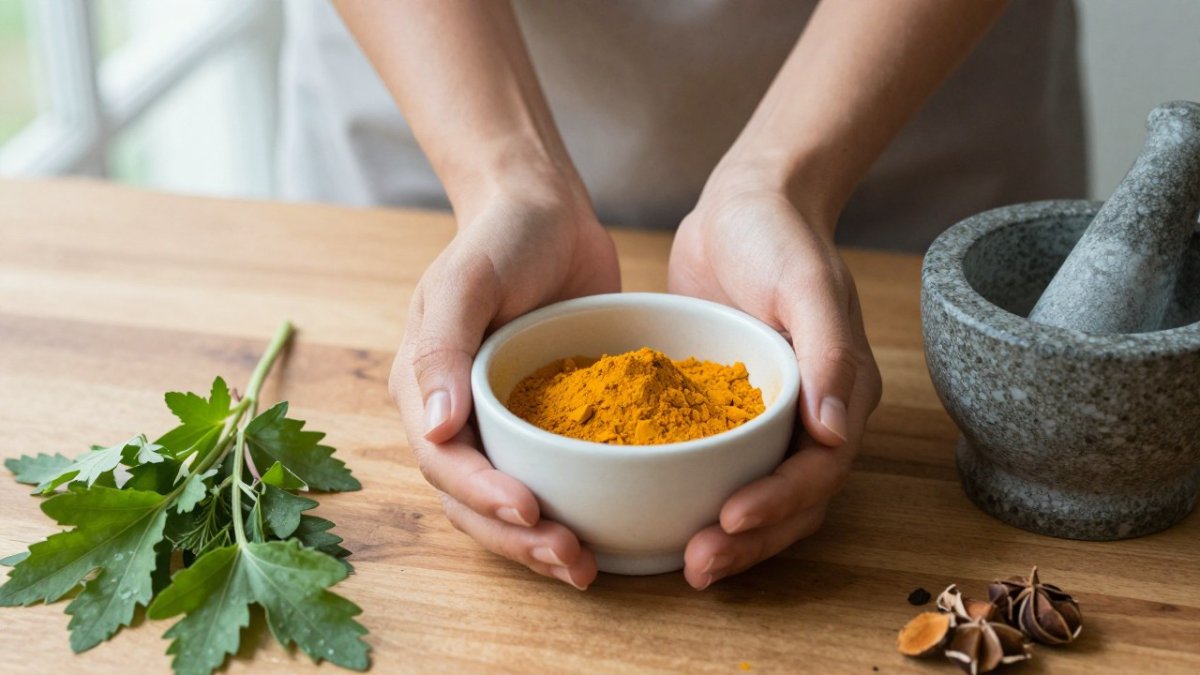
The honest summary: some herbs have meaningful anti-inflammatory and antimicrobial activity in lab and small clinical studies, but few have large, well-controlled trials behind them. That gap matters when you're deciding what to take for years, not weeks.
Turmeric and Curcumin
Curcumin, the active compound in turmeric, is one of the more studied herbs. Research points to anti-inflammatory and antioxidant activity, largely from lab work and small human trials. Plain turmeric powder is poorly absorbed, and most studies use standardized extracts. Curcumin can interfere with blood thinners, so check with your doctor first.
Aloe Vera and Chamomile
Aloe vera and chamomile are better known as topical ingredients than oral supplements. Aloe gels are used for soothing irritated skin, while chamomile has a long traditional use. Oral evidence is thin.
Herbal Medicine for Skin Rashes and Itching
Herbal medicine for skin rashes and itching works best when you match the herb to the symptom. Some calm inflammation, others dry out weeping skin, and a few do both. The mistake most people make is buying a single "skin blend" instead of targeting the actual problem.
Calendula and Licorice Root
Calendula is a traditional herb often used topically. Licorice root is a herb used in some topical products. Both are common in creams and rinses. Neither is a substitute for treating an underlying condition like eczema or seborrheic dermatitis, which needs a proper diagnosis.
Witch Hazel and Yarrow
Witch hazel is an astringent that can be drying with overuse. Yarrow has a history of traditional use. For readers dealing specifically with an itchy, flaky scalp, we cover rinse options in more detail in our guide to herbal rinses for itchy scalp relief.
Best Herbs for Skin Repair and Wound Healing
Herbs used for skin are often chosen for their traditional use and safety profile, though evidence varies.
Gotu Kola and Centella Asiatica
Gotu kola, also called centella asiatica, is a herb that has been studied in various contexts.
Neem and Propolis
Neem has a history of traditional use, mostly topically. Propolis, a resin bees produce, appears in some topical skin products. Neither should be taken orally without checking interactions, especially if you have allergies to bee products.
Dermatologist Recommended Supplements for Skin: What to Look For
Supplements for skin vary in quality. Here's how to judge one before you buy.
Standardization and Dosing
Standardization means the product states a specific percentage of the active compound, such as curcuminoids in turmeric. Dosing and duration should come from a clinician or a study protocol, not a bottle label. Start low, track results for a set period, and stop if nothing changes.
Oral vs. Topical Herbal Preparations
Oral supplementation affects the whole body and carries interaction risks. Topical application targets the skin directly with fewer systemic concerns but limited penetration.
| Preparation | Best For | Main Risk | Who Should Avoid |
|---|---|---|---|
| Oral supplement | Systemic inflammation support | Drug interactions | People on blood thinners |
| Topical cream or gel | Localized rash, itching | Contact irritation | Sensitive or broken skin |
| Herbal rinse | Scalp flaking, oiliness | Drying with overuse | Very dry scalps |
| Standardized extract | Consistent dosing | Cost, variable quality | Anyone without medical clearance |
Condition-by-Condition Evidence: Psoriasis, Eczema, Acne, and Seborrheic Dermatitis
Evidence quality varies sharply by condition, and treating all four the same is where most herbal advice fails. Below is a condition-by-condition grade of what the evidence actually supports, what it does not, and where the risk sits. The grades reflect the strength of human clinical evidence, not traditional use or lab findings.
Psoriasis
Psoriasis is an immune-mediated condition. Herbal supplements should not be relied on in place of prescribed treatment, and a clinician can advise on appropriate therapy.
- Turmeric (curcumin): Small trials and case reports suggest curcumin may modestly reduce psoriasis severity scores when used alongside standard treatment. Evidence grade: low to moderate, adjunctive only.
- Aloe vera: Topical aloe has been studied in small trials for psoriasis plaques with mixed results. Evidence grade: low, topical only.
- Watch out: People with psoriasis are at higher risk of psoriatic arthritis and cardiovascular disease; relying on supplements instead of prescribed therapy can allow joint damage to progress silently.
Eczema (Atopic Dermatitis)
Eczema is primarily a skin-barrier and immune-dysregulation condition. The strongest evidence here is for topical barrier repair, not oral herbs.
- Chamomile: Topical chamomile preparations have small-trial support for reducing itch and redness. Evidence grade: low to moderate, topical.
- Oral evening primrose oil and borage oil: Studied for itch and inflammation with inconsistent results; most reviews find no clear benefit over placebo. Evidence grade: low, not recommended as primary therapy.
- Watch out: Eczema skin is often broken and more permeable, so topical herbal products can sting or sensitize; patch-test first.
Acne
Acne involves sebum production, follicular plugging, Cutibacterium acnes colonization, and inflammation. Oral herbs have not been shown to replace benzoyl peroxide, retinoids, or hormonal therapy.
- Tea tree oil (topical): Small trials suggest topical tea tree oil can reduce lesion counts, though slower than benzoyl peroxide. Evidence grade: low to moderate, topical.
- Oral zinc: Some low-quality evidence supports zinc for inflammatory acne; gastrointestinal upset is common. Evidence grade: low.
- Watch out: Oral herbs marketed for "hormonal acne" are largely unstudied and can interact with oral contraceptives or spironolactone.
Seborrheic Dermatitis
Seborrheic dermatitis is tied to Malassezia yeast and inflammation, especially on the scalp and face.
- Tea tree oil: A small trial found topical tea tree oil reduced seborrheic dermatitis severity compared with placebo. Evidence grade: low to moderate, topical.
- Oral herbs: No meaningful human evidence supports oral herbs as primary therapy. Evidence grade: very low.
- Watch out: Antifungal shampoos remain first-line; herbal rinses can complement but not replace them.
What the Grades Mean
Herbal evidence for skin conditions is generally limited, and herbs should not be considered established treatments.
For scalp psoriasis specifically, our TCM care guide for chronic scalp psoriasis covers herbal, acupuncture, and bath routines. If you're unsure whether your flaking is psoriasis or seborrheic dermatitis, this symptom comparison helps you tell them apart. And for seborrheic dermatitis, we've gathered natural remedies for seborrheic dermatitis that target itching and flaking directly.
Safety, Drug Interactions, and When to Seek Dermatologic Care
Safety comes before enthusiasm. Herbal supplements are not risk-free: they can interact with medications, cause allergic reactions, and vary widely in quality. What most listicles skip is the specific, actionable interaction guidance below.
Medication Interactions by Herb
- Turmeric and curcumin: Can affect blood clotting and may increase bleeding risk when combined with warfarin, clopidogrel, aspirin, or other anticoagulants and antiplatelets. It can also interfere with some chemotherapy regimens and reduce iron absorption.
- Gotu kola (centella asiatica): Has sedative effects in some people and may interact with sleep medications, anxiolytics, and liver-metabolized drugs. Avoid combining with hepatotoxic medications without clinician review.
- Licorice root: Can raise blood pressure and lower potassium; risky for people with hypertension, kidney disease, or those taking diuretics or digoxin.
- Propolis: Can trigger allergic reactions in people with bee-product allergies and may interact with anticoagulants.
- Tea tree oil: Topical use can cause contact dermatitis; never ingest essential oils.
Condition-Specific Risks
- Autoimmune conditions (psoriasis, lupus, rheumatoid arthritis): Some herbs stimulate immune activity, which may work against immunosuppressant therapy. Do not start immune-modulating herbs without rheumatology or dermatology input.
- People on immunosuppressants (methotrexate, cyclosporine, biologics): Herbs that affect liver enzymes can change drug levels. St. John's wort, for example, is a well-known enzyme inducer and can reduce the effectiveness of many medications.
- Pregnancy and breastfeeding: Most herbal supplements lack safety data in pregnancy; treat them as contraindicated unless a clinician clears them.
Product Quality and Labeling
Supplement quality varies widely. Look for clear labeling and be cautious of products that make drug-like claims such as "cures eczema" or "eliminates psoriasis."
When to Seek Dermatologic Care
Seek dermatologic care promptly if you notice:
- A spreading rash, open or weeping skin, or signs of infection such as warmth, pus, or fever
- Sudden hair loss or scalp sores
- A condition that is not improving after several weeks of consistent care
- Joint pain or stiffness alongside a skin condition (possible psoriatic arthritis)
- Any reaction after starting a new supplement, including hives, swelling, or difficulty breathing
A diagnosis first, herbs second, is the order that keeps you safe. The American Academy of Dermatology publishes guidance on when skin symptoms warrant a professional visit, and the National Center for Complementary and Integrative Health maintains plain-language safety summaries and interaction information for common herbs.
Building a Personalized Herbal Plan with Sophia Trichoholistic
Generic plans fail because skin conditions aren't generic. At Sophiatrichoholistic Hair Spa LLC, we build herbal plans around your specific scalp and skin picture, combining Traditional Chinese Medicine with clinical trichology. Our approach focuses on root causes, from inflammation and scalp microbiome imbalance to hormonal factors, and pairs in-spa treatments with home care. If you're ready for a plan built around your condition rather than a bottle label, book a consultation and we'll map the next steps together.
The real challenge isn't finding herbs, it's finding the right ones for your skin and your body. Sophiatrichoholistic Hair Spa LLC offers personalized assessments, TCM-informed herbal guidance, and scalp-focused care for women, all built around your condition rather than a one-size-fits-all blend. Get started with Sophiatrichoholistic Hair Spa LLC and build a plan that actually fits your skin.
Frequently Asked Questions
Can herbal supplements help manage chronic skin conditions?
Some herbal supplements may help manage chronic skin conditions by reducing inflammation and supporting skin barrier function, but evidence varies widely by herb and condition. Herbal supplements work best as part of a comprehensive plan that includes proper diagnosis and monitoring by a healthcare professional.
Are herbal supplements safe to take with prescription skin treatments?
Not always. Some herbs can interact with prescription medications. Some herbs can interact with medications. Always tell your dermatologist and pharmacist about any herbal supplements you take, and do not stop or change prescription treatments without medical guidance. A qualified herbalist or integrative practitioner can help assess interactions.
What should I ask a dermatologist before trying an herbal supplement?
Ask about potential interactions with your current medications, whether the supplement has evidence for your specific condition, and what dose and duration are appropriate. Also ask if any blood tests are needed before starting, and whether the supplement could affect other health conditions you have. Bring the actual product label so your dermatologist can review the ingredients and standardization.
Which herbs may help with skin inflammation?
Turmeric (curcumin), aloe vera, chamomile, licorice root, and witch hazel are commonly used for skin inflammation. Aloe vera is often used topically, and witch hazel is a traditional astringent. Always consult a healthcare provider before starting any herbal supplement.