 How-to
TCM for Chronic Scalp Psoriasis: A Care Guide
Table of Contents
- Scalp Psoriasis Treatment Options: Where TCM Fits
- TCM Pattern Diagnosis: Blood Heat, Blood Dryness, and Wind
- Chinese Herbal Medicine for Psoriasis: Formulas and Ingredients
- Acupuncture for Psoriasis: What to Expect in a Session
- Psoriasis Herbal Bath Treatment: A Step-by-Step Home Routine
- Safety, Interactions, and When to See a Doctor
- Tracking Progress and Setting Realistic Timelines
- Frequently Asked Questions
Last Updated: October 6, 2026
Scalp Psoriasis Treatment Options: Where TCM Fits
Finding relief from tcm for chronic scalp psoriasis can feel like a puzzle with missing pieces. At Sophiatrichoholistic Hair Spa LLC, we understand the frustration of chronic scalp conditions. Traditional Chinese Medicine (TCM) offers a different path.
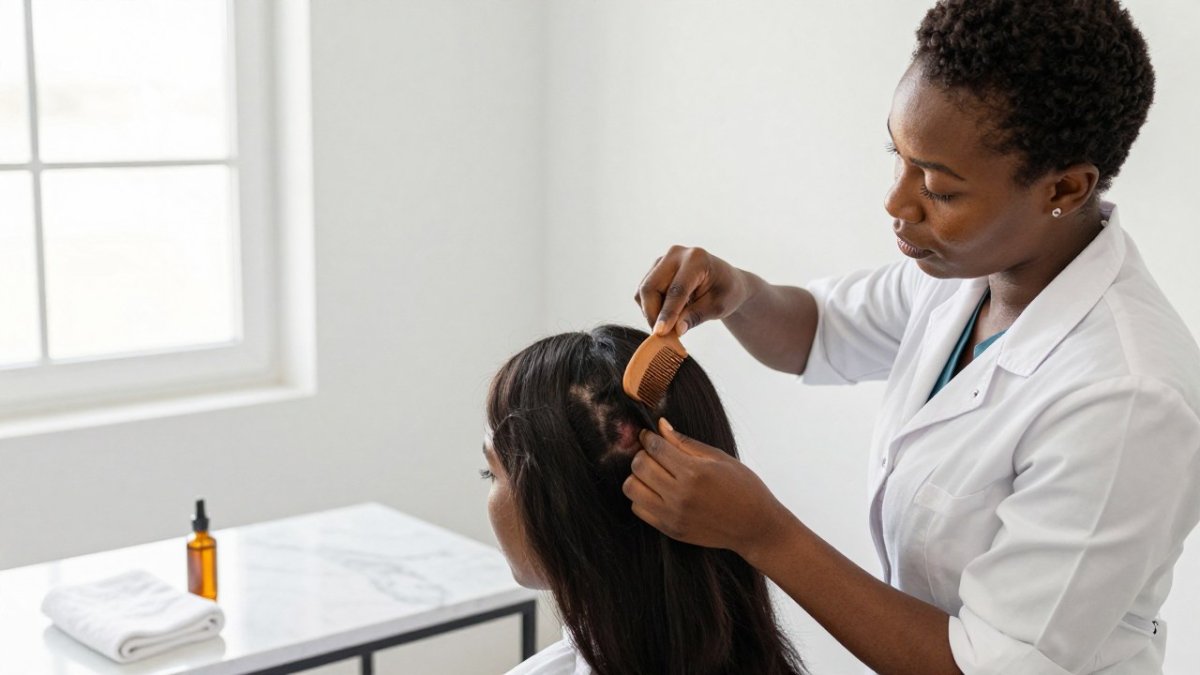
Scalp psoriasis is a chronic autoimmune condition that speeds up skin cell turnover, causing thick, silvery scales and red, itchy patches on the scalp.
What Chronic Scalp Psoriasis Looks Like
Chronic scalp psoriasis tends to stick around for months or years. Main signs include:
- Thick white or silvery flakes on the scalp
- Red patches, sometimes with bleeding when scratched
- Itching that gets worse at night
These symptoms cycle through flares and quiet periods, making the condition frustrating to manage.
How TCM Approaches Chronic Scalp Psoriasis
TCM treats chronic scalp psoriasis as a whole-body pattern, not just a skin problem. Practitioners see the scalp as a mirror of internal balance: when heat, dryness, or stagnation builds up inside, the skin reacts.
A common approach is to cool excess heat, nourish dry blood, and clear wind from the skin through herbs, acupuncture, diet shifts, and lifestyle changes.
TCM Pattern Diagnosis: Blood Heat, Blood Dryness, and Wind
TCM pattern diagnosis matches your symptoms to an internal imbalance so treatment can be tailored to you. Two people with the same scalp psoriasis diagnosis may need very different herbal formulas.
Common patterns include:
- Blood heat: Red, inflamed patches that feel hot and itch intensely. Flares often follow stress or spicy food.
- Blood dryness: Thin, dry scales, tight skin, and dull hair. More common in long-standing cases.
- Wind in the skin: Sudden itching that moves around the scalp, with flaking that shifts location.
Some women also show liver qi stagnation, which links emotional stress to flare-ups. Others have excess heat from diet or hormones.
This is where a personalized plan matters. A one-size-fits-all shampoo cannot address pattern differences.
Chinese Herbal Medicine for Psoriasis: Formulas and Ingredients
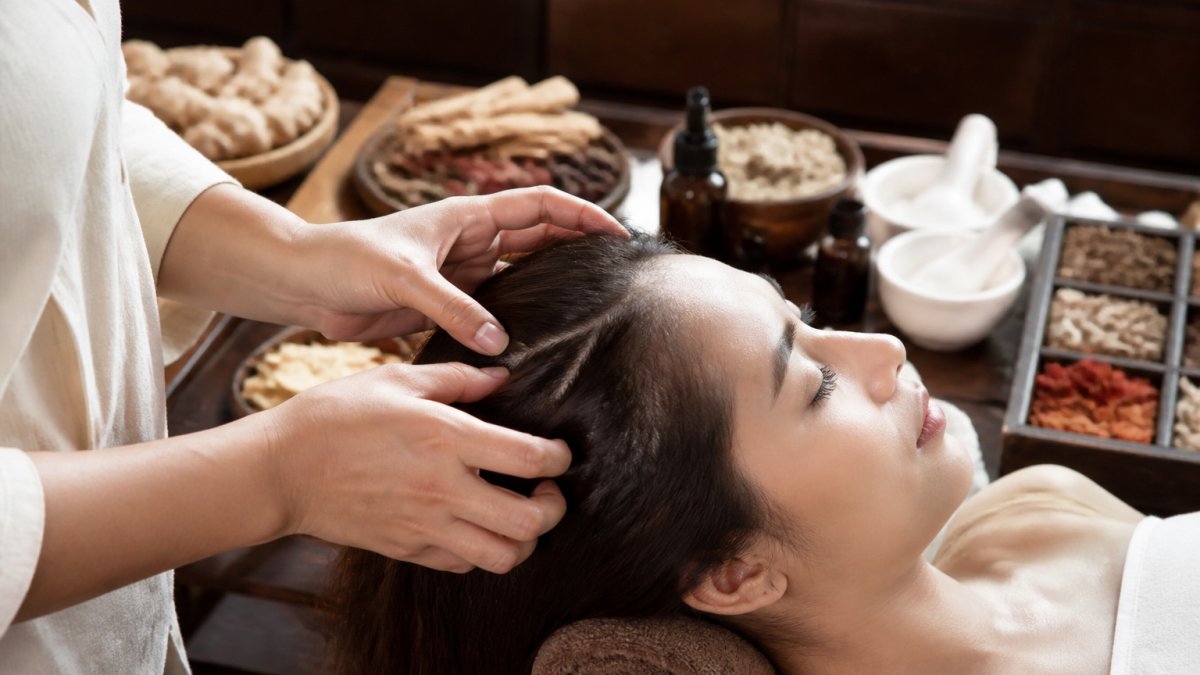
Chinese herbal medicine for psoriasis is built on pattern matching, not a single psoriasis formula. Once your pattern is identified, a practitioner assembles a custom formula, usually 8 to 15 herbs, in which a few chief herbs do the main work and the rest modify, support, or balance them. Two people with the same scalp diagnosis often walk out with completely different formulas.
How Formulas Are Built
A typical formula has three layers:
- Chief herbs that target the main pattern (for example, clearing blood heat)
- Deputy herbs that reinforce the chief action or address a secondary pattern
- Assistant and envoy herbs that reduce side effects, aid digestion, or guide the formula to the skin
This layering is why self-prescribing a single herb rarely works. Ku Shen alone is not a psoriasis treatment; Ku Shen inside a balanced formula might be.
Commonly Used Herbs and What They Are For
| Herb (Pinyin) | Common Name | Traditional Action | Typical Pattern |
|---|---|---|---|
| Sheng Di Huang | Rehmannia root | Cool blood, nourish yin | Blood heat with dryness |
| Mu Dan Pi | Tree peony bark | Clear heat, cool blood | Blood heat, redness |
| Bai Xian Pi | Dictamnus root | Clear heat, relieve itching | Itching, skin lesions |
| Ku Shen | Sophora root | Clear heat, dry dampness | Inflamed, weeping patches |
| Dang Gui | Angelica root | Nourish and move blood | Blood dryness, dull hair |
| Ji Xue Teng | Millettia vine | Move blood, unblock channels | Stagnation, stubborn plaques |
| Huang Qin | Scutellaria root | Clear heat, dry dampness | Excess heat, inflammation |
Most practitioners rotate or adjust the formula every 2 to 4 weeks as your pattern shifts; what worked in month one is often not what you need in month four.
How It Is Taken
- Decoction (tea): Raw herbs simmered at home. Most flexible, strongest, and the most work, typically 30 to 60 minutes of preparation per day.
- Granules or powder: Dissolved in hot water. Nearly as flexible as a decoction, far more convenient.
- Pills or capsules: Convenient and consistent, but the formula is fixed and cannot be adjusted week to week.
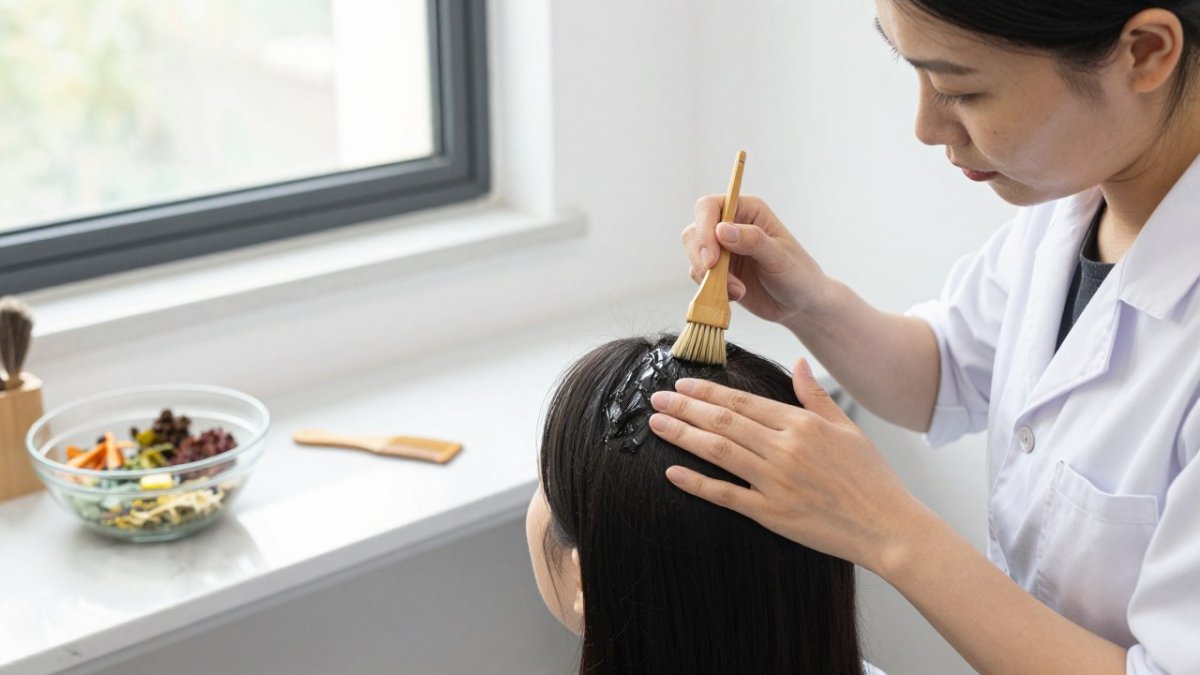
For scalp psoriasis specifically, oral formulas do the internal work while a topical wash or oil handles scale and itch between doses. Ask whether your formula can double as a scalp rinse, not all can, and some irritate broken skin.
What the Evidence Actually Shows
Chinese herbal medicine for psoriasis has been studied, but the research base is uneven:
- Several small randomized trials and reviews suggest some herbal formulas may reduce psoriasis severity scores compared with placebo.
- Most trials are small, short, and conducted outside the United States, which limits how well the results generalize.
- Blinding is difficult because herbs have a distinctive taste and smell, so placebo-controlled results should be read with caution.
In short: there is plausible mechanism and some supportive research, but not the large, replicated, scalp-specific evidence that would let anyone promise a result. Treat herbal medicine as a reasonable complementary option, not a proven cure.
Realistic Timelines
- Weeks 1-2: Little visible change. Some people notice better sleep or less stress reactivity first.
- Weeks 3-6: Itching often eases before scaling does.
- Weeks 6-12: Scale softens and plaques begin to thin in responders.
If nothing has changed by week 12, the formula or diagnosis likely needs revisiting, not more of the same.
Acupuncture for Psoriasis: What to Expect in a Session
Acupuncture for psoriasis uses thin, sterile, single-use needles placed at specific points to influence the nervous system, local blood flow, and the immune response. For scalp psoriasis, treatment usually combines local points on and around the scalp with distal points on the arms, legs, and ears that address the underlying pattern.
How It Is Thought to Work
From a TCM perspective, needles at channel points move qi and blood, clear heat, and release stagnation, the same drivers behind blood heat and blood dryness patterns. From a biomedical perspective, needling may modulate local blood flow, influence inflammatory signaling, and affect how the nervous system regulates itch and stress. These mechanisms are plausible and partly supported by small studies, but not fully established for psoriasis specifically.
What the Evidence Shows
- Small trials and reviews suggest acupuncture may reduce itch and plaque severity in some people with psoriasis.
- Most studies are small, short, and vary widely in how many points are used and for how long.
- Blinding is difficult, so placebo effects cannot be ruled out.
A reasonable read: acupuncture is low-risk with a licensed practitioner, some people clearly respond, and the evidence is promising but not definitive. It is not a replacement for dermatologic treatment of moderate-to-severe psoriasis.
Start Your Hair & Scalp Healing Journey →
What a Session Actually Looks Like
- Intake (5-10 minutes): Flares, sleep, stress, medications, and any changes since last visit.
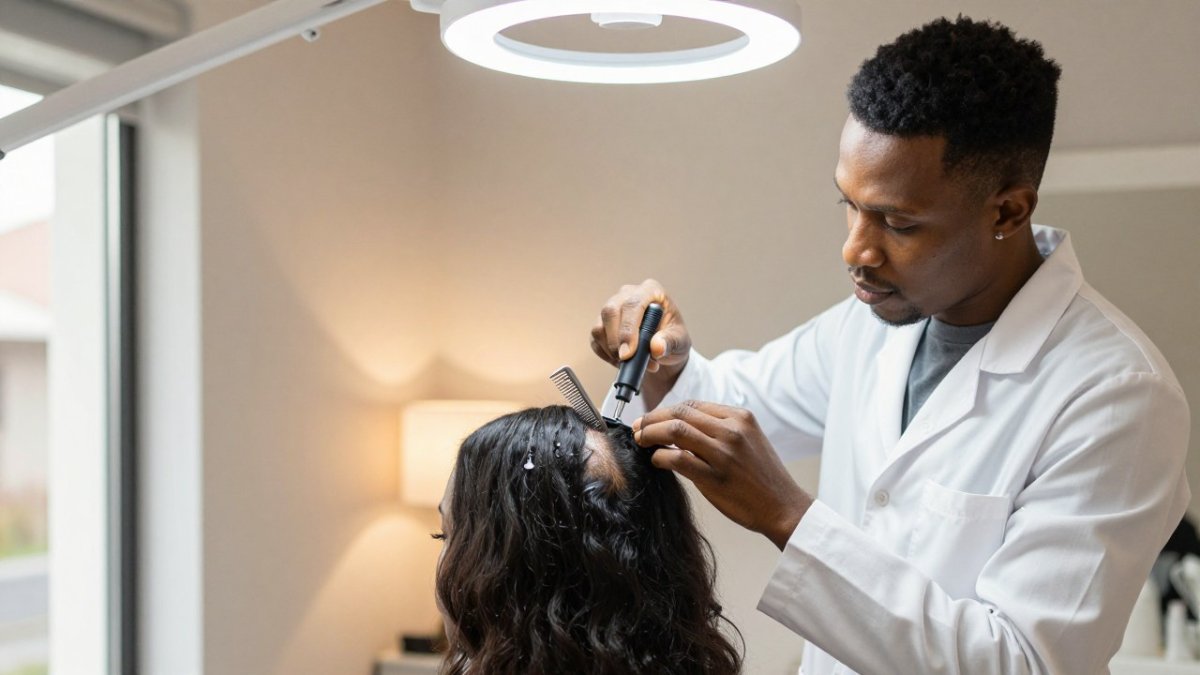
- Pattern confirmation: Pulse and tongue reading, plus a look at the scalp under good light.
- Point selection: Typically 10 to 20 points, including local scalp points near the affected areas and distal points on the arms, legs, and ears.
- Needling: Hair-thin needles inserted just under the skin. Most people feel a brief pinch or a dull ache, then nothing.
- Rest (20-30 minutes): Needles stay in while you lie still. Many people fall asleep.
- Removal and notes: Needles are removed, and your practitioner records what changed and what to watch for.
A session usually runs 30 to 45 minutes of table time, plus intake.
Scalp-Specific Considerations
- Needles are placed around the hairline and in thinning areas, not through thick plaques.
- If you have open sores, bleeding, or an active infection on the scalp, those areas are avoided.
- Wash your hair before the session if you can. Oils and heavy product make point placement harder and increase the small risk of infection.
Frequency and Realistic Expectations
- First month: Weekly sessions are common.
- Months 2-3: Every 1 to 2 weeks if you are responding.
- Maintenance: Monthly or as needed once flares settle.
Some people notice less itching within a day or two of a session. Others need four to six sessions before any change. If nothing has shifted after eight sessions, it is reasonable to reassess whether acupuncture is the right tool for you.
National Center for Complementary and Integrative Health overview of acupuncture
Psoriasis Herbal Bath Treatment: A Step-by-Step Home Routine
A psoriasis herbal bath treatment is a warm soak using herbs and minerals to calm itching and soften scales on the scalp and body, one of the easiest TCM practices to do at home.
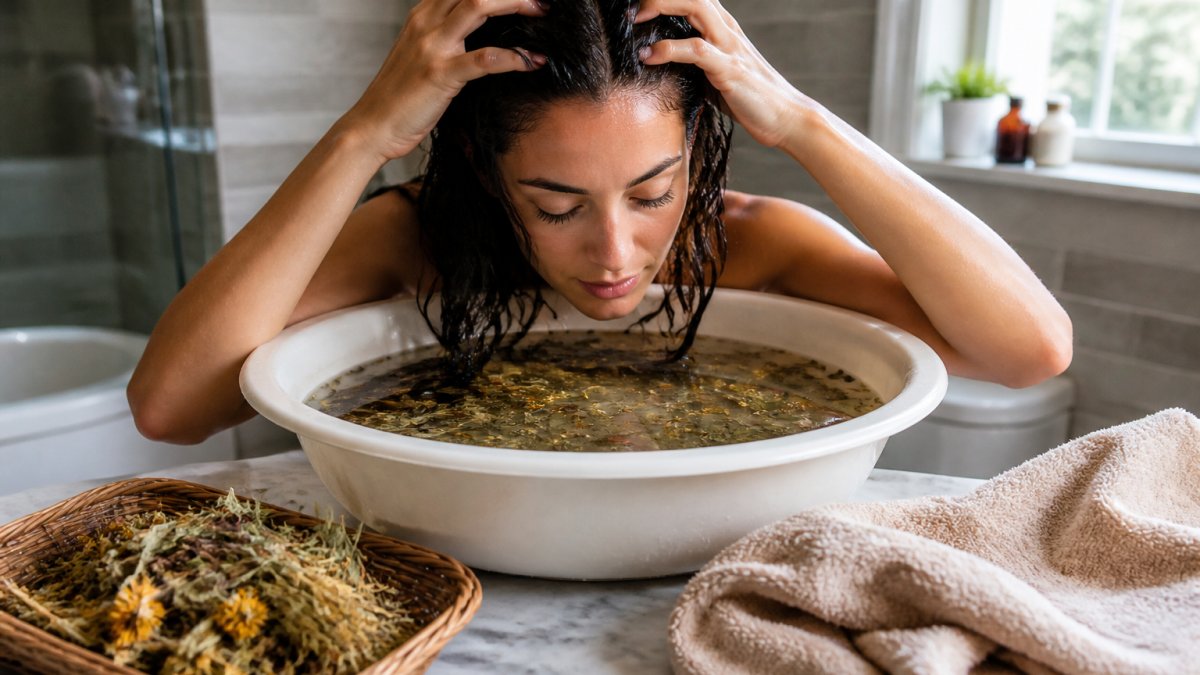
Here is a simple routine we share with clients:
- Fill a basin or tub with warm, not hot, water
- Add 1 to 2 cups of Epsom salts and a handful of dried herbs like chamomile or mugwort
- Soak a soft cloth and press it against the scalp for 5 minutes
- Gently massage the scalp with fingertips, never nails
- Rinse with cool water and pat dry
- Apply a light oil like aloe vera gel or jojoba to lock in moisture
Do this 2 to 3 times a week. Skip it during open or bleeding flares.
Safety, Interactions, and When to See a Doctor
TCM for chronic scalp psoriasis is generally well tolerated with a licensed practitioner, but safety comes first and there are real limits.
Talk to your doctor before starting TCM if you:
- Take immunosuppressants, blood thinners, or diabetes medication
- Are pregnant or breastfeeding
- Have liver or kidney conditions
Stop any herbal product that causes nausea, rash, or stomach upset, and call your provider.
See a dermatologist promptly if you have:
- Pus or foul smell from the scalp
- Fever with a flare
- Joint pain or swelling
TCM works best as part of a team approach. Your dermatologist handles the medical side. Your TCM practitioner handles the internal patterns.
American Academy of Dermatology guidance on psoriasis
Tracking Progress and Setting Realistic Timelines
Progress with TCM is steady, not instant. Most women notice less itching in 2 to 4 weeks. Scaling often softens by week 6 to 8.
Track these markers weekly:
| What to Track | How to Measure | What Progress Looks Like |
|---|---|---|
| Itching | Rate 0-10 each night | Score drops by 2+ points |
| Flaking | Count visible flakes after brushing | Fewer flakes on dark clothing |
| Redness | Photo in the same light weekly | Patches fade toward skin tone |
| Hair shedding | Count hairs after wash | Fewer hairs in the drain |
| Sleep quality | Note wake-ups from itching | Fewer night wakings |
At Sophiatrichoholistic Hair Spa LLC, we combine TCM with clinical trichology to build a personalized plan around your pattern, your hair, and your goals.
If you have tried everything and nothing has held, this approach may finally give you a path forward.
Frequently Asked Questions
Can acupuncture help with scalp psoriasis?
Acupuncture for psoriasis is used in TCM to support the body's balance and may help ease itching and scaling for some people, but study quality is low. It works best as part of a broader plan that includes topical care and medical follow-up. Ask a licensed acupuncturist about needle placement, session frequency, and how results will be tracked before starting.
What Chinese herbs are used for psoriasis?
Common herbs in Chinese herbal medicine for psoriasis include cooling and blood-moving ingredients, often grouped into formulas based on TCM pattern diagnosis rather than one universal recipe. Because herbs can interact with medications and affect liver function, use only practitioner-prescribed products and tell both your dermatologist and herbalist about everything you take.
Can TCM treatments interact with psoriasis medications?
Yes, some herbs and supplements can interact with prescription psoriasis medications, including biologics, methotrexate, and cyclosporine. Interactions may affect liver enzymes, immune response, or drug levels. Always share your full medication list with your TCM practitioner and dermatologist, and never stop or change a prescription without medical guidance.
How long might it take to notice a change in scalp psoriasis symptoms?
Some people report less itching or scaling within a few weeks of consistent care, while visible changes in plaques often take longer. Chronic psoriasis tends to flare and settle, so progress is best judged over months with photos, symptom notes, and clinician input. If symptoms worsen or spread, stop home treatments and seek medical care.