 how-to
How to Treat Chronic Scalp Psoriasis Naturally
Table of Contents
- Why Chronic Scalp Psoriasis Keeps Coming Back
- How to Treat Chronic Scalp Psoriasis Naturally: The Holistic Framework
- How to Stop Scalp Itching Fast: Soothing Acute Flare-Ups
- Dietary Changes for Scalp Psoriasis That Reduce Inflammation
- Holistic Hair and Scalp Care: Integrating Natural Remedies with Medical Treatment
- Managing Flare-Ups vs. Long-Term Maintenance
- When to See a Dermatologist
- Conclusion: A Sustainable Path to Scalp Health
- Frequently Asked Questions
Last Updated: September 4, 2026
Why Chronic Scalp Psoriasis Keeps Coming Back
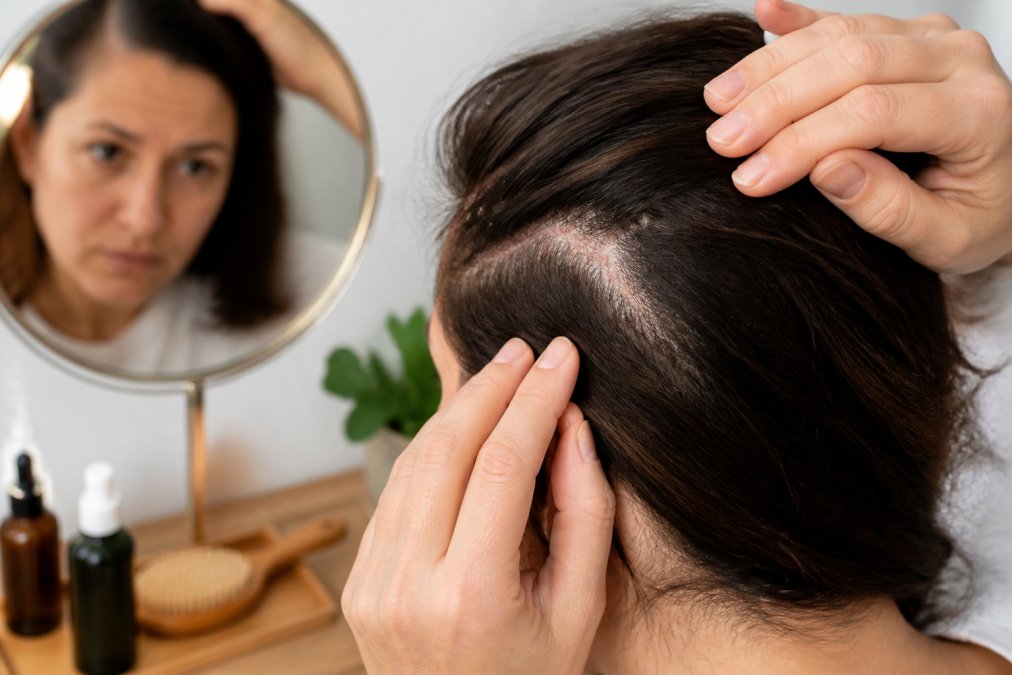
Chronic scalp psoriasis is an autoimmune condition where the skin's cell production cycle speeds up dramatically, causing thick, silvery plaques to form on the scalp (the NIH). Most conventional treatments suppress visible symptoms, which is why the condition tends to return shortly after treatment stops.
The root of the problem lies in inflammation beneath the skin surface. When the immune system mistakenly attacks healthy skin cells, it triggers rapid turnover and scaling. Topical steroids calm this response temporarily but do little to address the underlying triggers that reignite the inflammatory cascade.
A common mistake is treating every flare-up as an isolated event. Scalp psoriasis follows patterns tied to stress, diet, hormonal shifts, and environmental factors, so identifying these patterns is essential.
How to Treat Chronic Scalp Psoriasis Naturally: The Holistic Framework
Treating chronic scalp psoriasis naturally requires a layered approach that addresses triggers, daily habits, and targeted remedies simultaneously. No single oil or shampoo will resolve a condition driven by internal inflammation.
Step 1: Identify Your Flare-Up Triggers
Keep a simple journal for two to three weeks, noting when flare-ups worsen, what you ate, your stress levels, and which hair products you used. Many women discover their flare-ups correlate with high-stress periods, certain foods, or weather changes.
Common triggers include emotional stress, alcohol, processed sugar, and harsh hair care ingredients like sulfates and fragrances. Seasonal changes, particularly cold, dry air, also tend to worsen scalp psoriasis symptoms.
Step 2: Build a Daily Scalp Care Routine
A consistent routine is the backbone of natural scalp psoriasis management. Wash your scalp with a gentle, fragrance-free shampoo two to three times per week, and follow with a lightweight moisturizer to support the skin barrier. Avoid scratching or picking at plaques, as this worsens inflammation and can lead to secondary infections.
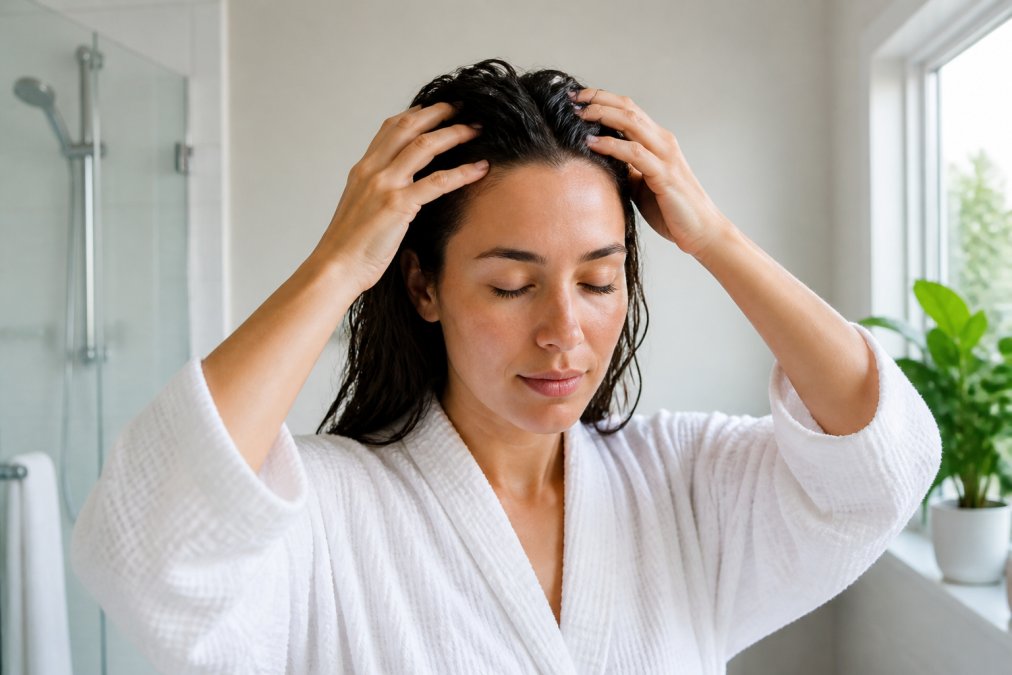
Daily scalp massage for five minutes stimulates circulation and helps loosen scaling. Use your fingertips, not nails, and work in small circular motions across the entire scalp.
Step 3: Apply Targeted Natural Remedies with Hair Type in Mind
Several natural ingredients show promise for calming scalp psoriasis symptoms. Coconut oil moisturizes the skin barrier and has mild anti-inflammatory properties. Aloe vera gel provides cooling relief and soothes redness. Tea tree oil, diluted in a carrier oil, offers antiseptic and anti-fungal benefits that may reduce scaling.
The way you apply these treatments matters as much as the ingredient itself. Most advice assumes a single hair texture, which is why so many people give up on oil treatments, they either leave hair greasy, cause breakage, or fail to reach the scalp.
For straight or fine hair: Thick oils like coconut can easily weigh hair down. Warm only one teaspoon of oil, apply it directly to the scalp using a squeeze bottle with a narrow tip, and avoid the mid-lengths and ends entirely. Wash twice if needed to remove all residue.
For curly or coily hair: The scalp is harder to reach because of the hair's density. Section your hair into four to eight quadrants using clips. Apply oil to each part line first, then massage it in with your fingertips. Work in small sections, lifting hair at the root rather than smoothing it down the shaft. This prevents breakage and ensures the oil reaches the plaques where it is needed.
For chemically treated or color-treated hair: Coconut oil can penetrate the hair shaft and may strip color over time. Use jojoba or squalane oil instead, both are lighter, non-comedogenic, and less likely to interfere with chemical treatments. Apply as a pre-wash treatment and rinse thoroughly.
For a simple treatment that works across hair types: Warm two tablespoons of coconut oil and massage it into your scalp. Leave it on for 30 minutes, then wash thoroughly. Repeat three times per week. If you have fine hair, reduce the amount to one teaspoon and focus only on the scalp.
Step 4: Patch Test Every New Ingredient
Before applying any new oil, essential oil, or botanical extract to your scalp, perform a patch test on your inner forearm. Apply a small amount of the diluted product to a one-inch area, cover it with a bandage, and leave it for 24 hours. If redness, burning, or itching develops, do not use that ingredient on your scalp.
This step is non-negotiable for scalp psoriasis. The skin on your scalp is thinner than the skin on your arm, and psoriasis-affected skin is more permeable and reactive. An ingredient that seems harmless on your forearm can cause a severe contact dermatitis flare on your scalp.
Tea tree oil requires special caution. It is a potent essential oil that must always be diluted to a 5% concentration or lower, roughly 3 drops per tablespoon of carrier oil. Undiluted tea tree oil can cause chemical burns and severe irritation, especially on compromised skin.
Step 5: Track Your Results
After two to three weeks of consistent care, evaluate what changed. Did scaling or itching decrease? Did any ingredient cause an unexpected reaction? Adjust your routine based on what you observe, as chronic scalp psoriasis requires ongoing tuning as seasons change, stress levels shift, and your scalp's condition evolves.
How to Stop Scalp Itching Fast: Soothing Acute Flare-Ups
When an acute flare-up strikes, the priority shifts to stopping the itch before scratching causes further damage. Cold compresses applied directly to the scalp for five to ten minutes can numb the area and reduce the urge to scratch, interrupting the itch-scratch cycle.
Apple cider vinegar diluted with water in a one-to-one ratio can rebalance the scalp's pH and provide temporary itch relief. Apply it with a cotton ball, leave for five minutes, then rinse thoroughly. Do not use this on broken or bleeding skin, as the acidity will sting.
Aloe vera gel is another immediate soother. Its cooling properties calm the burning sensation that often accompanies scalp psoriasis, and it hydrates without clogging hair follicles.
Dietary Changes for Scalp Psoriasis That Reduce Inflammation
Dietary changes for scalp psoriasis focus on reducing systemic inflammation, which directly influences how active the condition becomes. Many practitioners recommend an anti-inflammatory eating pattern rich in vegetables, fatty fish, nuts, and olive oil, which provide omega-3 fatty acids and antioxidants that support immune regulation.
Foods that commonly trigger flare-ups include refined sugars, dairy, gluten, and alcohol. While individual responses vary, removing one category at a time for four weeks can help you identify your personal sensitivities. The National Psoriasis Foundation's diet and nutrition guidance emphasizes that no single diet works for everyone, but many people find symptom relief by reducing inflammatory foods.
Start Your Hair & Scalp Healing Journey →
Consider adding turmeric and ginger to your meals, as both have documented anti-inflammatory properties. Staying well hydrated also supports skin health from the inside out.
| Dietary Change | Purpose | Timeframe to Notice |
|---|---|---|
| Reduce refined sugar | Lower inflammation | 2-4 weeks |
| Increase omega-3s (fish, flaxseed) | Support immune regulation | 4-6 weeks |
| Eliminate alcohol | Reduce flare triggers | 2-3 weeks |
| Add turmeric and ginger | Anti-inflammatory support | 3-4 weeks |
Holistic Hair and Scalp Care: Integrating Natural Remedies with Medical Treatment
Holistic hair and scalp care does not mean abandoning medical treatment. The most effective approach integrates natural remedies with whatever your dermatologist has prescribed, creating a complementary strategy rather than an either-or choice.
If you use a prescription topical, apply it as directed and use natural remedies on alternating days to avoid interference. Coconut oil, for instance, can actually enhance the penetration of some topical treatments, but always confirm with your dermatologist first.
Traditional Chinese Medicine offers additional tools through acupuncture and herbal formulations that aim to rebalance internal energy flow and reduce inflammation from within. Clinical trichology adds a scientific lens, analyzing scalp health at the follicular level.
Managing Flare-Ups vs. Long-Term Maintenance
A critical distinction separates acute flare-up management from long-term maintenance. Flare-ups require intensive soothing measures: cold compresses, diluted apple cider vinegar, and short-term use of stronger remedies. Maintenance is about consistency and prevention through daily habits, stress management, and trigger avoidance.
Most people make the mistake of treating scalp psoriasis only when it flares, which guarantees the cycle continues. Long-term maintenance means committing to a gentle hair care routine even when your scalp looks clear, managing stress proactively, and staying consistent with anti-inflammatory dietary habits.
Stress management deserves particular attention. The American Academy of Dermatology's resources on psoriasis triggers notes that stress is a well-recognized trigger for psoriasis flare-ups. Practices like meditation, regular exercise, and adequate sleep are not optional extras; they are core components of managing chronic scalp psoriasis naturally.
The 4-Phase Maintenance Protocol
To move beyond reactive care, structure your maintenance around a rotating protocol that adapts to your scalp's current state, preventing the burnout that comes from doing the same intensive treatment every week.
Phase 1: Active Flare (Days 1-7) During an active flare, focus on soothing and reducing inflammation. Use cold compresses twice daily for 10 minutes. Apply diluted apple cider vinegar (one part vinegar to three parts water) every other day, leaving it on for no more than five minutes before rinsing. Use aloe vera gel as a leave-on treatment on non-wash days. Wash with a gentle shampoo every other day to keep plaques soft.
Phase 2: Early Resolution (Days 8-21) When the flare begins to settle, transition to gentle exfoliation. Use a soft silicone scalp brush in the shower to loosen remaining scales, never a fine-tooth comb, which can tear the skin. Apply a salicylic acid-based scalp treatment once per week to help dissolve stubborn plaques. Continue with aloe vera gel on alternate days.
Phase 3: Maintenance (Weeks 3-8) Once your scalp is clear or nearly clear, reduce treatment frequency. Wash two to three times per week with a fragrance-free shampoo. Apply a lightweight oil like jojoba or squalane as a pre-wash treatment once per week. Stop using apple cider vinegar and salicylic acid unless a new flare begins. This is the phase where most people abandon their routine, the scalp looks fine, so they stop. That is exactly when the next flare begins to build silently beneath the surface.
Phase 4: Prevention (Ongoing) The prevention phase is about identifying your personal flare window. Most people notice that flares follow high-stress periods by two to three weeks or appear during seasonal transitions. If you know your triggers, you can preemptively increase maintenance frequency during high-risk windows, for example, if winter dryness triggers your flares, start using a humidifier and switch to a cream-based shampoo in October rather than waiting for the first plaque.
The 72-Hour Rule
A practical guideline is the 72-hour rule: if you notice a new patch of scaling or itching that does not resolve within 72 hours of your normal routine, treat it as the beginning of a flare. Do not wait for it to become a full plaque, apply a targeted treatment immediately, such as a dab of diluted tea tree oil or a cold compress that evening. Early intervention is far more effective than trying to reverse a fully developed plaque.
Building a Maintenance Calendar
Consider creating a simple monthly calendar that maps out your maintenance routine. Week one: pre-wash oil treatment, gentle shampoo twice. Week two: salicylic acid treatment once, gentle shampoo twice. Week three: pre-wash oil treatment, gentle shampoo twice. Week four: assess, if clear, continue; if not, move back to Phase 1. This structure removes the guesswork and makes maintenance a habit rather than a reaction.
When to See a Dermatologist
Natural approaches are valuable, but certain signs require professional medical evaluation. See a dermatologist if your scalp psoriasis spreads beyond the scalp, if plaques become painful or bleed, or if you develop signs of infection such as swelling, warmth, or pus. Joint pain alongside skin symptoms could indicate psoriatic arthritis, which requires prompt medical attention.
Seek medical guidance if natural remedies produce no improvement after eight to twelve weeks of consistent use. Some cases require prescription treatments, including topical corticosteroids, vitamin D analogs, or biologic medications. A dermatologist can also confirm that your condition is actually scalp psoriasis, as it can resemble seborrheic dermatitis or fungal infections.
Conclusion: A Sustainable Path to Scalp Health
Learning how to treat chronic scalp psoriasis naturally is a process of consistent, layered care rather than a quick fix. The path forward combines trigger identification, a gentle daily routine, targeted natural remedies, and honest coordination with medical professionals.
At Sophiatrichoholistic Hair Spa LLC, we specialize in exactly this kind of integrative care. Our approach combines Traditional Chinese Medicine with clinical trichology to address the root causes of scalp inflammation, not just the surface symptoms. Integrative strategies that combine conventional and natural methods often provide sustainable relief for chronic skin conditions.
If you are ready to move beyond the cycle of temporary fixes, our team offers personalized treatment plans designed to restore your scalp microbiome, reduce inflammation, and promote lasting scalp health. Start your hair and scalp healing journey with us and discover what a truly holistic approach feels like.
Frequently Asked Questions
Is there a way to permanently get rid of scalp psoriasis?
There is no permanent cure for scalp psoriasis, but natural treatment combined with medical care can produce long periods of remission. The goal is managing the condition, not eliminating it. A consistent routine that includes gentle exfoliation, moisturizing, stress reduction, and identifying your personal triggers offers the best chance of keeping flare-ups at bay for months or longer.
What is the root cause of scalp psoriasis?
Scalp psoriasis is an autoimmune condition where the immune system attacks healthy skin cells, speeding up their production. Genetics play a major role, but environmental factors like stress, infections, cold weather, and certain medications can trigger flare-ups. The inflammation that results causes the rapid buildup of skin cells, leading to the thick, silvery plaques and itching characteristic of scalp psoriasis.
Can natural remedies provide long-term relief for chronic scalp psoriasis?
Yes, many people find that natural remedies help manage symptoms and extend remission periods. Ingredients like tea tree oil, aloe vera, and apple cider vinegar have anti-inflammatory properties that soothe the scalp. However, natural remedies work best as part of a holistic approach that includes dietary changes, stress management, and collaboration with a dermatologist. Consistency is key: sporadic use yields limited results.
How does scalp inflammation impact hair health?
Chronic inflammation disrupts the scalp's natural barrier and can affect the hair growth cycle. It creates an environment where hair follicles struggle to function properly, potentially leading to increased shedding and slower regrowth. Managing inflammation through natural remedies and gentle scalp care helps restore a healthier environment for hair, supporting stronger, more resilient growth over time.
Frequently Asked Questions
Q: Is there a way to permanently get rid of scalp psoriasis?
A: There is no permanent cure for scalp psoriasis, but natural treatment combined with medical care can produce long periods of remission. The goal is managing the condition, not eliminating it. A consistent routine that includes gentle exfoliation, moisturizing, stress reduction, and identifying your personal triggers offers the best chance of keeping flare-ups at bay for months or longer.
Q: What is the root cause of scalp psoriasis?
A: Scalp psoriasis is an autoimmune condition where the immune system attacks healthy skin cells, speeding up their production. Genetics play a major role, but environmental factors like stress, infections, cold weather, and certain medications can trigger flare-ups. The inflammation that results causes the rapid buildup of skin cells, leading to the thick, silvery plaques and itching characteristic of scalp psoriasis.
Q: Can natural remedies provide long-term relief for chronic scalp psoriasis?
A: Yes, many people find that natural remedies help manage symptoms and extend remission periods. Ingredients like tea tree oil, aloe vera, and apple cider vinegar have anti-inflammatory properties that soothe the scalp. However, natural remedies work best as part of a holistic approach that includes dietary changes, stress management, and collaboration with a dermatologist. Consistency is key: sporadic use yields limited results.
Q: How does scalp inflammation impact hair health?
A: Chronic inflammation disrupts the scalp's natural barrier and can affect the hair growth cycle. It creates an environment where hair follicles struggle to function properly, potentially leading to increased shedding and slower regrowth. Managing inflammation through natural remedies and gentle scalp care helps restore a healthier environment for hair, supporting stronger, more resilient growth over time.