 How-to
How to Prepare for a Holistic Trichology Assessment
Last Updated: November 13, 2026
Quick Summary
A trichology assessment is a structured evaluation that combines history-taking, visual inspection, and magnified trichoscope examination to find the underlying causes of shedding, thinning, and scalp conditions. The intake and history portion often takes 20 to 30 minutes, and you leave with baseline images and a written plan.
- The intake and history block is the longest part of the visit, often 20 to 30 minutes.
- A trichoscope captures density per square centimeter, shaft diameter, and follicle-level inflammation.
- Blood work and genetic testing are not part of a standard trichology assessment.
- Skip heavy oils, gels, and dry shampoo on the day and arrive with hair loose.
- A first follow-up is typically scheduled at four to twelve weeks to compare against baseline.
Table of Contents
- Why a Holistic Trichology Assessment Starts With Your Story
- What Trichology Is and What an Assessment Evaluates
- Your Hair and Scalp Analysis: The Visual and Magnified Examination
- Your First Hair Loss Appointment: A Step-by-Step Walkthrough
- Trichology Consultation Duration, Cost, and What Happens After
- How Findings Become a Trichology Treatment Plan
- Where a Trichology Assessment Stops and Medical Care Begins
- Booking Your Assessment and Building Your Baseline
- Frequently Asked Questions
Why a Holistic Trichology Assessment Starts With Your Story
A holistic trichology assessment begins long before anyone looks at your scalp. Our personalized scalp health consultation guide walks through what that consultation involves.
Most women arrive at their first hair loss appointment after months of guessing. They have tried medicated shampoos, supplements, and internet advice.
A trichology assessment is not a quick scalp check. It is a structured investigation, and your history is where the answers usually hide.
National Institute of Arthritis and Musculoskeletal and Skin Diseases hair loss overview
What Trichology Is and What an Assessment Evaluates
A full assessment typically evaluates:
- Your medical and medication history, including past diagnoses and current prescriptions
- Family history of thinning or alopecia
- Your hair-loss timeline and pattern, meaning when it started and where it shows
The goal is to identify contributing factors, not to slap a label on you in ten minutes. A clinical trichologist can often spot when a scalp problem needs a dermatologist instead, and a good one will say so.
If you want the fuller picture of what a clinical trichologist does and when a dermatologist is the better call, read our guide to the benefits of seeing a clinical trichologist.
Your Hair and Scalp Analysis: The Visual and Magnified Examination
The physical examination has two layers: what the eye can see and what magnification reveals. Your hair and scalp analysis starts with a plain visual examination under good light, then moves to a trichoscope.
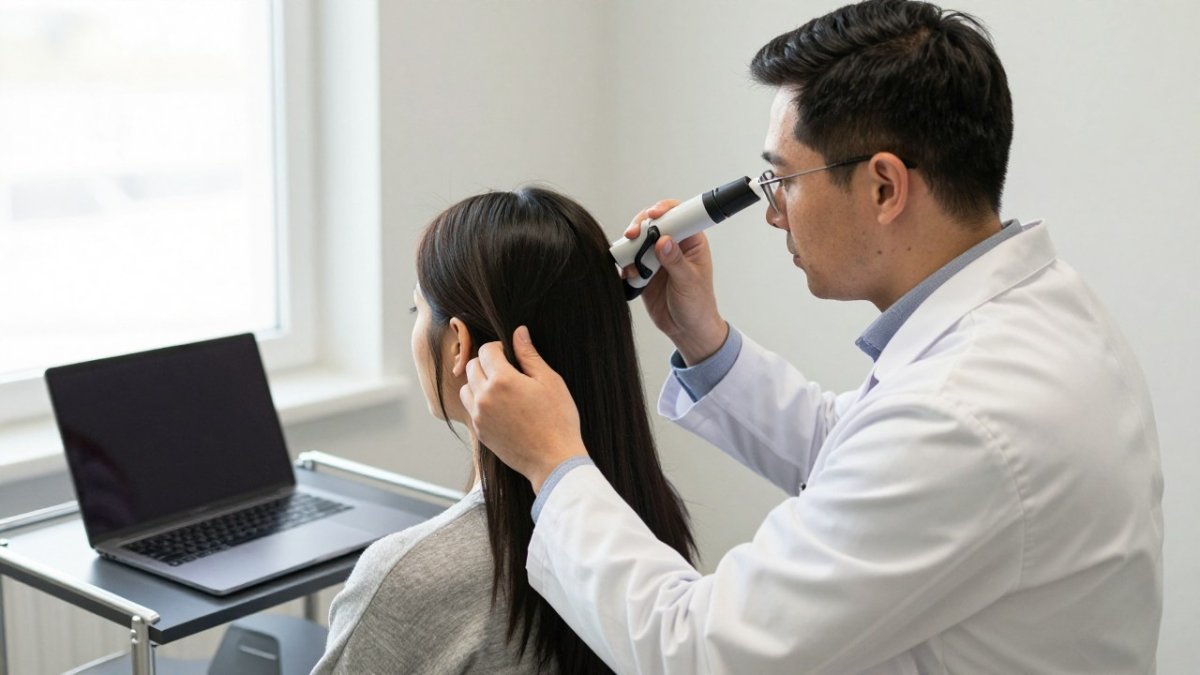
During the visual pass, we note hair density, parting width, and any areas of thinning. We check the scalp for redness, scaling, and inflammation. We look at the hair shafts themselves for breakage or uneven texture.
Then comes the magnified examination.
What a Trichoscope Reveals About Density, Shafts, and Scalp Health
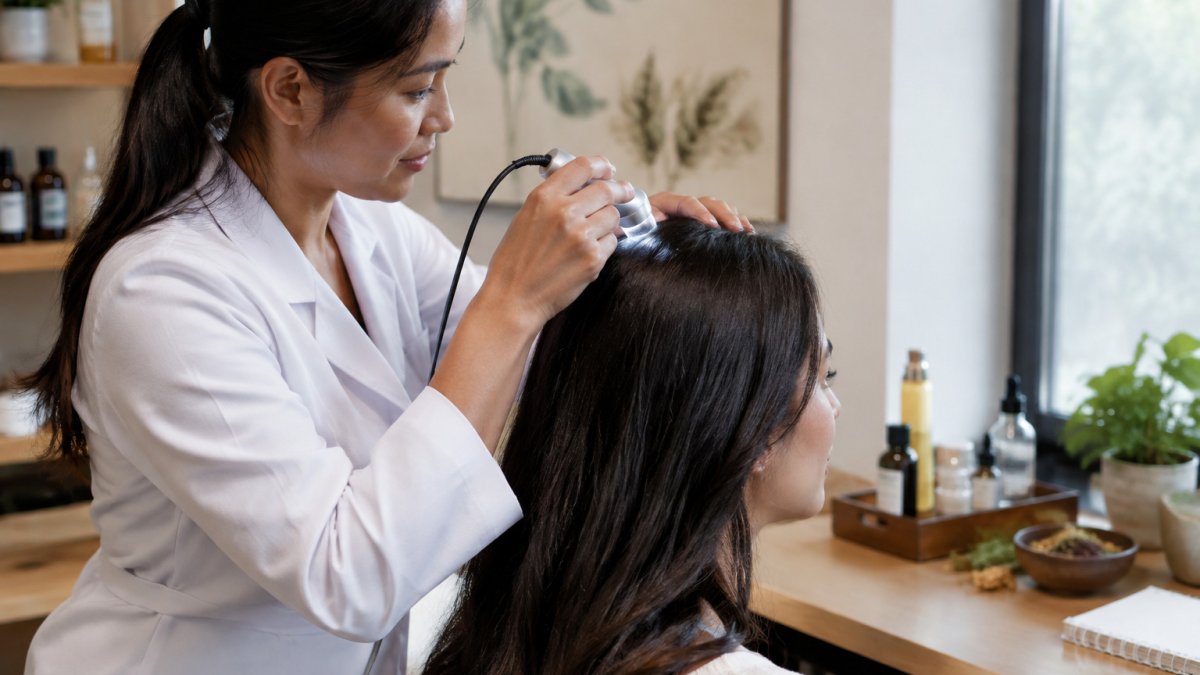
A trichoscope is a handheld magnifying device that captures detailed images of the scalp and hair.
Under magnification, we can assess:
- Follicle prominence and how many follicles are active in a given area
- Hair density per square centimeter, which gives us a baseline number
- Shaft diameter and whether hairs are miniaturizing
Your First Hair Loss Appointment: A Step-by-Step Walkthrough
Here is a general walkthrough of what a trichology assessment typically involves.
- Intake and history. You describe your concerns, timeline, and goals. We ask about medications, stress, diet, and family history. This is the longest single block of the appointment, often 20 to 30 minutes.
- Hair-care and styling review. We go through your routine: washing frequency, heat tools, chemical treatments, braids, weaves, and how tightly you pull your hair back.
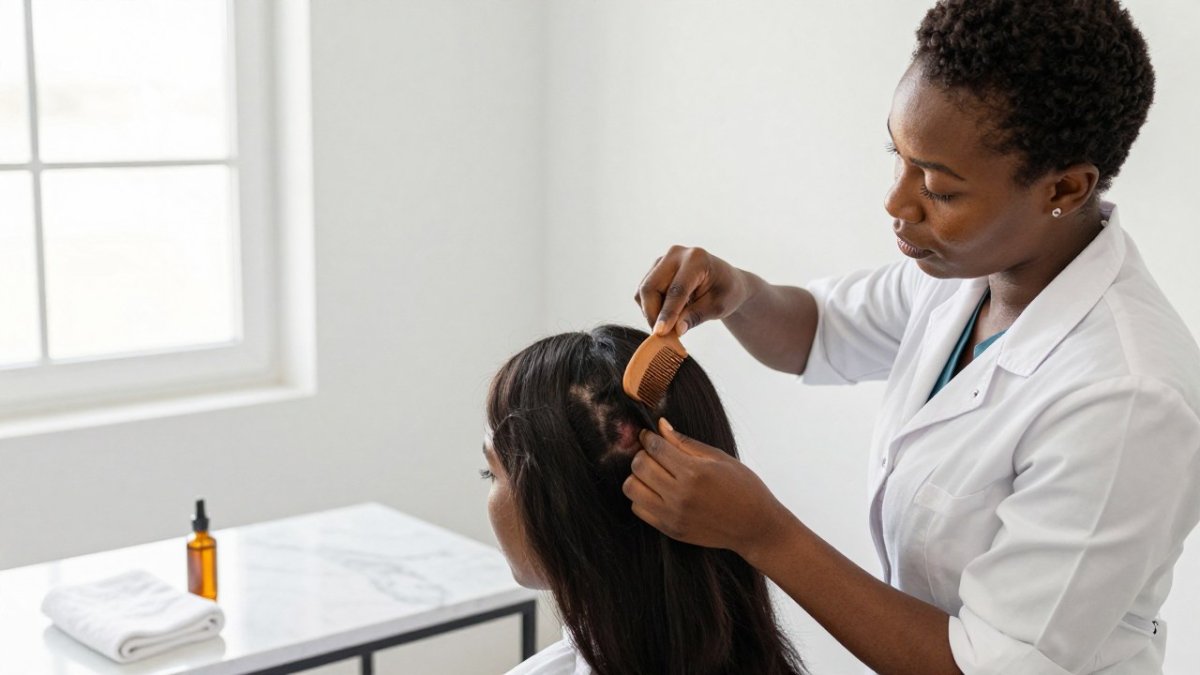
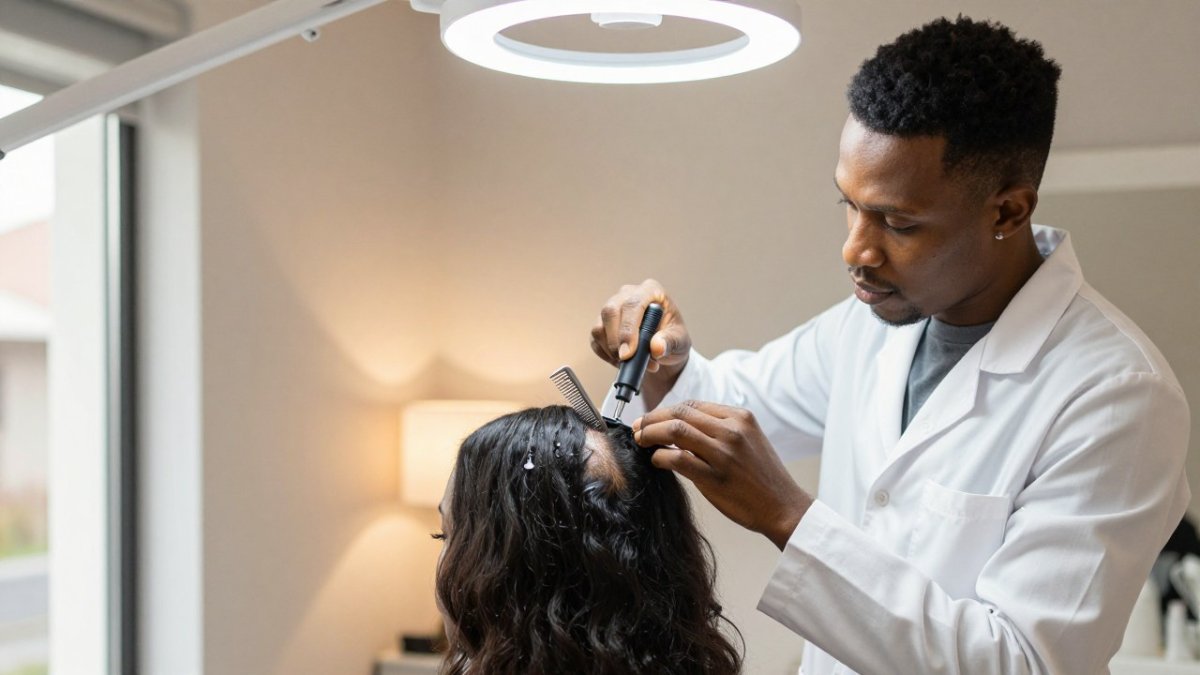
- Visual examination. A close look at your scalp and hair under bright light, parted in several sections so no area is missed.
- Magnified examination. Trichoscope images are captured at several scalp sites and saved as your baseline.
- Optional tests, only if indicated. Some visits include a pull test (gently tugging a small cluster of hairs to see how many come loose), a shed-hair count, or a scalp swab. Most assessments do not require blood work, and a trichologist cannot order labs in every state, when a lab test is warranted, you will usually be referred to a physician.
- Findings discussion and written plan. We explain what we see, what it may mean, and what happens next, in plain language, and you leave with a written summary.
What Tests May Be Used, and What They Can and Cannot Establish
A common misconception is that a trichology assessment is a battery of genetic or blood tests. In most practices it is not. The core is history plus visual and magnified examination; anything beyond that is optional and case-dependent.
- Trichoscopy is routine. It can show density per square centimeter, shaft diameter variation, follicle prominence, and signs of inflammation or scaling at the follicle. It cannot by itself confirm a hormonal, thyroid, or autoimmune cause.
- A pull test is quick and routine in many clinics. It can suggest active shedding versus a stable pattern, but it does not identify why the shedding is happening.
- A shed-hair count (collecting hairs over a set period, usually a few days) can help establish a baseline shedding rate. It is only as reliable as the collection method.
Watch out: any provider who promises that a single magnified image or a hair test will "identify the root cause" is overstating what the technology can do.
What to Bring and How to Prepare
Preparation is simple, and it makes the appointment far more useful.
- A list of medications and supplements you currently take, with doses
- Photos showing your hair at its fullest, if you have them
- Notes on when you first noticed shedding or thinning, and whether it was sudden or gradual
Wash your hair the night before or the morning of. Skip heavy oils, gels, and dry shampoo on the day, and arrive with your hair loose, not in a tight bun or braid.
Before you book anywhere, it helps to know how to vet a provider. Our guide on choosing a trichologist covers the credentials to check and the questions worth asking.
How the Visit Converts Into a Measurable Plan
The point of the walkthrough is not the appointment itself, it is the baseline it produces. Before you leave, you should be able to point to four things:
- Baseline images and density numbers captured at defined scalp sites, so future visits compare like with like
- A short list of contributing factors, ranked by how strongly the evidence supports each one
- A review interval, typically four to twelve weeks depending on the plan, with a clear date
If a provider cannot tell you what will be measured at the follow-up, the plan is not measurable yet. That is the difference between a scalp check and a trichology assessment.
Here is the typical sequence of a trichology assessment, step by step.
| Step | What happens | Time or frequency |
|---|---|---|
| Intake and history | Concerns, timeline, goals, medications, stress, diet, family history | 20 to 30 minutes |
| Hair-care and styling review | Washing frequency, heat tools, chemical treatments, braids, weaves, tight styles | Part of the visit |
| Visual examination | Scalp and hair checked under bright light, parted in several sections | Part of the visit |
| Magnified examination | Trichoscope images captured at several scalp sites and saved as baseline | Part of the visit |
| Optional tests | Pull test, shed-hair count, or scalp swab only if indicated | Case-dependent |
| Findings discussion and written plan | What was seen, what it may mean, next steps, written summary | Before you leave |
Trichology Consultation Duration, Cost, and What Happens After
Cost depends on what the visit includes, and current pricing is available from Sophiatrichoholistic Hair Spa LLC's website or on request. What you can do is ask for the full fee structure before you book, in writing, and confirm four things:
- Whether magnified imaging is included or billed separately
- Whether a written plan and baseline photos are part of the fee
- What a follow-up costs, and how many are typically recommended
Imaging, lab work ordered by a physician, and follow-up appointments are the items most often billed separately. A quote that only covers the first visit is not a full quote.
For a detailed breakdown of what holistic treatment typically involves financially, see our holistic hair restoration cost guide.
What Happens After the Appointment
After the appointment, you should leave with three things: a written summary of findings, a clear next step, and a realistic sense of timeline. If a provider cannot tell you what happens next, that is a warning sign.
A common pattern is a first follow-up at four to twelve weeks, timed to when you would expect to see a change in shedding or scalp condition.
Where the Assessment Stops and Medical Care Begins
A trichology assessment is not a medical diagnosis, and it does not replace medical care. Some findings need a physician, and a responsible provider refers out when they see:
- Sudden, patchy hair loss that suggests an autoimmune condition
- Scalp lesions, sores, or changes that need a biopsy
- Signs of thyroid, hormonal, or nutritional disorders
This is not a weakness in the holistic approach. It is how responsible care works.
The American Academy of Dermatology hair loss resource center is a useful starting point if you want to understand which conditions sit firmly in medical territory.
Watch out: be wary of anyone who promises a fixed outcome or a set number of sessions before they have examined your scalp.
How Findings Become a Trichology Treatment Plan
A trichology treatment plan is a written, personalized care plan built from your assessment findings.
At Sophiatrichoholistic Hair Spa LLC, we blend clinical trichology with Traditional Chinese Medicine, so a plan may address scalp health and internal balance together.
A good plan includes:
- The main contributing factors identified
- Which treatments are recommended, and why
- How often you come in, and for how long
Personalization is the whole point. A generic plan that ignores your history is not worth paying for. Our 7-step holistic scalp health treatment plan walks through the structure we use.
Where a Trichology Assessment Stops and Medical Care Begins
- Sudden, patchy hair loss that suggests an autoimmune condition
- Scalp lesions, sores, or changes that need a biopsy
- Signs of thyroid, hormonal, or nutritional disorders
This is not a weakness in the holistic approach. It is how responsible care works. A provider who claims to handle everything alone is telling you something important about their judgment.
The American Academy of Dermatology hair loss resource center is a useful starting point if you want to understand which conditions sit firmly in medical territory.
Booking Your Assessment and Building Your Baseline
Your baseline is the set of measurements and images taken at your first assessment. Everything that follows is measured against it.
Book with a provider who explains the process before you arrive, captures magnified images, and gives you a written plan.
At Sophiatrichoholistic Hair Spa LLC, we work with women ages 18 to 65.
Chronic scalp conditions and stubborn shedding rarely resolve on guesswork.
Frequently Asked Questions
What happens during a holistic trichology assessment?
A holistic trichology assessment combines a detailed history with a physical exam. The trichologist asks about your hair-loss timeline, pattern, family history, medications, diet, stress, and styling habits. Then they perform a visual and magnified scalp examination, often using a trichoscope to check density, shaft condition, scaling, and inflammation. Findings are discussed with you, and a personalized care plan is built around the contributing factors identified. In a holistic setting, the plan may also address internal balance and lifestyle factors rather than scalp symptoms alone.
How long does a trichology consultation take?
Most initial trichology consultations run longer than a standard dermatology visit because of the history-taking involved. Expect a thorough first appointment that covers your hair-loss timeline, medical and medication history, hair-care routine, and lifestyle factors before any examination begins. The trichology consultation duration also depends on whether magnified imaging or baseline photographs are taken. Ask the clinic when you book so you can plan your day, and note that follow-up visits are usually shorter than the first.
What should I bring to my first hair loss appointment?
Bring a list of medications and supplements, including dosages, plus any relevant lab work or notes from other providers. Come with clean, product-free hair if the clinic asks, and avoid tight styles, heavy oils, or coloring in the days before. Photos showing your hair at different stages help establish your hair-loss timeline. Write down your questions and your top concerns, and be ready to describe your hair-care routine, styling practices, and stress levels honestly. That context shapes the trichology treatment plan more than any single test.
Can a trichologist diagnose hair loss or prescribe medication?
A certified holistic trichologist assesses hair and scalp health and identifies contributing factors. A trichologist does not replace a physician, so check the scope of any provider with your state's official licensing source. When findings suggest a condition that needs medical treatment, such as active scalp inflammation, thyroid concerns, or suspected alopecia subtypes, the ethical step is a referral to a dermatologist or physician. A trichology assessment works alongside medical care, not in place of it, and a good practitioner will be clear about those boundaries during your consultation.