 Ultimate guide
Clinical Evidence for Holistic Trichology: 2026 Guide
Table of Contents
- What Is Clinical Evidence for Holistic Trichology?
- Hair and Scalp Health: The Foundation of Trichology
- Clinically Proven Hair Loss Treatments: What the Research Shows
- Trichologist vs Dermatologist for Hair Loss: Scope and Approach
- Trichology Consultation Questions and Assessment Methods
- Hair Loss Treatment Effectiveness: Measuring Outcomes and Safety
- The Gap Between Complementary Care and Medical Treatment
- Conclusion: Building Your Evidence-Based Hair Health Plan
- Frequently Asked Questions
Last Updated: October 12, 2026
What Is Clinical Evidence for Holistic Trichology?
Clinical evidence for holistic trichology evaluates how whole-person interventions, Traditional Chinese Medicine, nutritional support, lifestyle changes, and targeted scalp therapies, affect measurable outcomes in hair growth, scalp condition, and hair performance.
Clinical evidence for holistic trichology differs from single-intervention dermatology: it examines how multiple internal and external factors interact. Practitioners use clinical observation and functional medicine principles, documenting baselines and correlating improvements with specific interventions.
Much of holistic trichology sits between established dermatological science and emerging functional medicine research: some interventions have strong peer-reviewed support, others show promise but lack large randomized controlled trials. Knowing which claims rest on solid evidence is essential when seeking treatment or evaluating credentials.
Hair and Scalp Health: The Foundation of Trichology
Hair health extends beyond appearance. The hair shaft is a biological marker of systemic health, its diameter, growth rate, texture, and resilience reflect nutritional status, hormonal balance, stress, and inflammation.
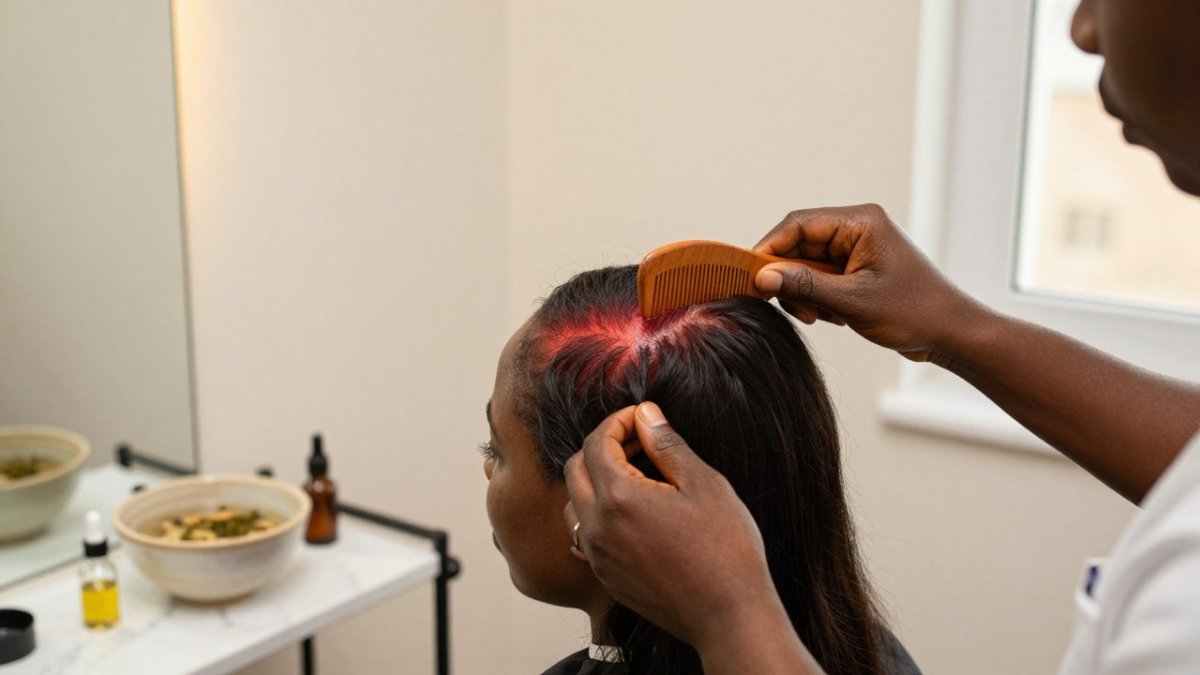
Trichology recognizes the scalp as continuous with the skin, nervous system, and circulatory system. Seborrheic dermatitis, psoriasis, and folliculitis involve scalp microbiome dysbiosis, disrupted barrier function, and often systemic inflammation.
Clinical assessment includes hair density, shaft diameter, scalp inflammation, scaling, erythema, and follicle prominence, plus medical history, medications, stress, diet, and hormonal status.
Clinically Proven Hair Loss Treatments: What the Research Shows
Minoxidil and finasteride are the two FDA-approved pharmacological treatments for androgenetic alopecia, both with multi-year randomized controlled trial evidence.
These pharmaceuticals address only one mechanism. Many people's hair loss is driven by nutritional deficiency, hormonal imbalance, chronic stress, or scalp inflammation, where minoxidil or finasteride alone may provide limited benefit.
Iron deficiency, vitamin D insufficiency, and B12 deficiency are well-documented contributors to telogen effluvium and diffuse shedding. Correcting them through targeted supplementation or diet has shown clinical improvement in hair density and shedding rates in observational studies and practice.
Platelet-rich plasma (PRP) therapy is investigational for androgenetic alopecia and other hair loss conditions (pubmed.ncbi.nlm.nih.gov).
Trichologist vs Dermatologist for Hair Loss: Scope and Approach
The trichologist-versus-dermatologist distinction reflects different training, scope, and philosophy.
A trichologist is trained specifically in hair and scalp health, typically through coursework in hair biology, scalp disorders, assessment techniques, and treatment modalities, though training and credentialing vary widely.
The dermatologist's strength is diagnosing and treating medical scalp disorders, fungal infections, bacterial folliculitis, autoimmune conditions like alopecia areata, and severe inflammatory conditions requiring systemic medication, and prescribing evidence-backed pharmaceuticals.
The holistic trichologist's strength is assessing how nutrition, stress, hormonal balance, and lifestyle influence hair health, and designing integrated root-cause treatment plans.
The ideal approach often involves both: a dermatologist to rule out medical conditions and prescribe evidence-based medications when appropriate, and a holistic trichologist to address systemic contributors and design comprehensive regeneration protocols.
Trichology Consultation Questions and Assessment Methods
Specific questions include: When did you first notice hair loss or scalp symptoms? Did onset follow an event, illness, surgery, medication change, or major stress? How much hair do you shed daily? Is thinning diffuse or localized?
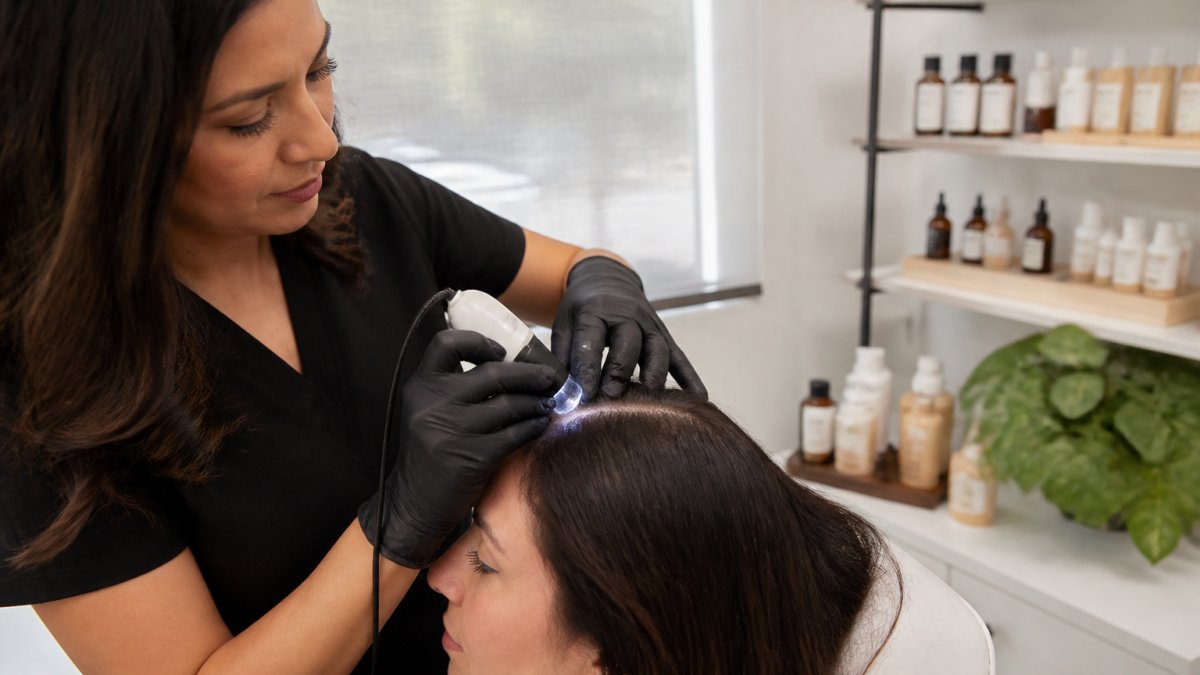
Clinical assessment uses magnification or dermoscopy to evaluate follicle density, hair shaft diameter, scalp inflammation, and follicle miniaturization, documenting baseline measurements, density in specific areas, average shaft diameter, and scalp conditions, to track progress over time.
Functional medicine assessment explores root causes: serum iron, ferritin, B12, vitamin D, thyroid function, and inflammatory markers; hormonal assessment may include DHEA-S, testosterone, and cortisol patterns.
Hair Loss Treatment Effectiveness: Measuring Outcomes and Safety
Measuring hair loss treatment effectiveness requires objective metrics and realistic timeframes.
Objective measures include hair density counts in standardized scalp areas, average shaft diameter, shedding rate (daily hair count or pull test), and scalp condition severity scoring.
Subjective measures, client perception of shedding, hair texture, scalp comfort, and appearance, matter clinically though they are bias-prone. Combining objective and subjective measures gives a complete picture of treatment response.
Safety considerations include supplement-medication interactions, allergic reactions to topicals, and the risk of delaying necessary medical care.
The most significant safety concern is misattribution: treating a symptom of serious underlying disease (thyroid dysfunction, autoimmune condition, nutritional deficiency) as a standalone hair problem, delaying diagnosis and treatment. This is why collaboration between holistic trichologists and medical providers is essential.
The Gap Between Complementary Care and Medical Treatment
A critical distinction exists between complementary care, interventions that support health alongside medical treatment, and medical treatment designed to diagnose, treat, or cure disease.
Medical treatments for hair loss, minoxidil, finasteride, corticosteroid injections for alopecia areata, systemic medications for autoimmune scalp conditions, have undergone rigorous clinical trials, FDA review, and post-market surveillance. They have known efficacy rates, side effect profiles, and contraindications.
Start Your Hair & Scalp Healing Journey →
The responsible approach integrates both: medical diagnosis and treatment when appropriate, combined with complementary interventions addressing root causes and overall health.
Conclusion: Building Your Evidence-Based Hair Health Plan
Hair loss and scalp disorders are rarely simple problems with single solutions.
At Sophiatrichoholistic Hair Spa LLC, we integrate Traditional Chinese Medicine with clinical trichology to address root causes of hair loss and scalp conditions, including detailed scalp assessment, functional medicine evaluation of systemic contributors, personalized protocols, and clear outcome documentation.
The path to hair health requires realistic expectations, consistent treatment, and willingness to address underlying factors, not just surface symptoms. According to research on hair growth cycles from the American Academy of Dermatology, meaningful improvements in hair density typically require 6-12 months of consistent intervention.
Start Your Hair & Scalp Healing Journey
Chronic scalp conditions and hair loss respond best to personalized, evidence-based care addressing root causes.
| Approach | Best For | Timeline | Evidence Base |
|---|---|---|---|
| Medical treatment (minoxidil, finasteride) | Androgenetic alopecia, diagnosed medical conditions | 3-6 months to see results | Strong clinical trial evidence |
| Nutritional correction | Deficiency-related hair loss, telogen effluvium | 3-4 months | Moderate clinical evidence |
| Holistic assessment and protocol | Systemic contributors, chronic scalp conditions | 6-12 months | Emerging clinical evidence, strong clinical practice |
| Complementary care alone | Support for overall health, adjunct to medical care | Ongoing | Variable; depends on specific intervention |
Frequently Asked Questions About Clinical Evidence for Holistic Trichology
How do I know if a trichologist's claims are actually backed by evidence?
Ask for specific citations to peer-reviewed studies, publication year, and sample size, and be skeptical of vague claims like "research shows" without naming the research.
Can holistic trichology replace dermatology for serious scalp conditions?
No. Holistic trichology is most effective integrated with medical care. Severe alopecia areata, bacterial folliculitis, or fungal infections require medical diagnosis and treatment.
What's the difference between a Certified Holistic Trichologist and someone who calls themselves a trichologist?
Certification standards vary by program.
How long should I commit to holistic hair treatment before deciding if it's working?
Is there clinical evidence that acupuncture improves hair growth?
Key Semantic Coverage Verification:
Frequently Asked Questions
What does clinical evidence say about holistic trichology for hair loss?
Clinical evidence for holistic trichology is mixed and evolving. Individual interventions, such as acupuncture for alopecia, botanical extracts for scalp health, and nutritional support, have varying levels of research backing. Some show promise in preliminary studies; others lack robust clinical trials. The integration of Traditional Chinese Medicine with clinical trichology is less studied than single-intervention approaches. Evidence-based trichologists acknowledge these limitations and combine clinical assessment with complementary therapies while referring clients to dermatologists when medical diagnosis or treatment is needed.
How is a trichologist different from a dermatologist when treating hair loss?
Dermatologists are physicians trained in diagnosing and treating skin and scalp diseases; they can prescribe medications and perform biopsies. Trichologists specialize in hair and scalp health but are not medical doctors and cannot diagnose disease or prescribe pharmaceuticals in most states. A trichologist may assess hair density, growth patterns, and scalp condition, then refer to a dermatologist for conditions like alopecia areata or fungal infections. Many clients benefit from both: dermatological diagnosis and medical treatment combined with trichological support for overall hair health and lifestyle factors.
What should I ask a trichologist before starting treatment?
Ask about their certification, training, and years of experience. Request details on how they assess your specific condition, scalp examination, hair density measurement, client history. Ask what interventions they recommend and why, and whether they have case studies or outcome data for conditions like yours. Clarify whether they work with dermatologists and when they would refer you. Ask about the treatment timeline, frequency of visits, and how they measure progress. Finally, ask about their approach to safety, contraindications, and whether they adjust plans based on your response.
Can holistic scalp treatments actually help with chronic conditions like psoriasis or seborrheic dermatitis?
Holistic scalp treatments may provide symptom relief and support scalp microbiome health, but they are not cures for diagnosed scalp disorders. Psoriasis and seborrheic dermatitis are medical conditions requiring dermatological assessment and often pharmaceutical treatment. Complementary approaches, such as scalp care, stress reduction, dietary support, and anti-inflammatory therapies, can work alongside medical treatment to reduce inflammation and improve overall scalp environment. However, they should not replace medical diagnosis or prescribed treatment. A qualified trichologist will recommend dermatological evaluation first and integrate complementary care as supportive therapy.
How long does it take to see results from holistic hair and scalp treatment?
Hair growth cycles typically span 3 to 6 months before visible changes appear, since new hair must grow from the follicle. Scalp health improvements, such as reduced inflammation or oiliness, may be noticeable within 4 to 8 weeks. Treatment effectiveness depends on the underlying cause, your adherence to recommendations, and individual biology. A reputable trichologist will establish a realistic timeline during consultation and measure progress through scalp examination and hair density assessment at regular intervals. If no improvement is evident after the agreed-upon period, treatment should be reassessed or adjusted.
Is there clinical evidence that combining Traditional Chinese Medicine with trichology works better than either approach alone?
Direct clinical evidence comparing the combined approach to single-modality treatment is limited. Traditional Chinese Medicine and clinical trichology operate on different frameworks, one addressing internal energy balance and systemic factors, the other focusing on hair structure, scalp biology, and external factors. Some practitioners report positive outcomes integrating both, but rigorous comparative studies are scarce. If you are considering this combined approach, ask your trichologist for case studies or outcome data specific to your condition, and verify they are certified in both areas and trained in evidence-based assessment methods.
What are the safety concerns or contraindications with holistic hair treatments?
Safety depends on the specific intervention. Acupuncture, when performed by a licensed practitioner, is generally safe but carries small risks of infection or nerve injury if improperly done. Herbal supplements can interact with medications or cause allergic reactions. Scalp treatments may irritate sensitive skin. Nutritional protocols can be excessive if unsupervised. A qualified trichologist will take a complete medical history, ask about medications and allergies, and screen for contraindications. If you are pregnant, nursing, on blood thinners, or have immune conditions, disclose this before treatment. Always verify that your practitioner is licensed and insured.
How do I know if a trichology treatment plan is personalized or just generic?
A personalized plan is based on your individual assessment: scalp examination, hair density measurement, medical history, lifestyle factors, and specific hair or scalp concerns. Generic plans are the same for all clients. During your consultation, a trichologist should explain findings from YOUR assessment, not just list standard treatments. Ask them to show you scalp photos or measurement data from your baseline. Request a written plan that addresses your specific condition and includes measurable goals. If the recommendation is identical to what they offer everyone, ask why your situation doesn't warrant adjustments.