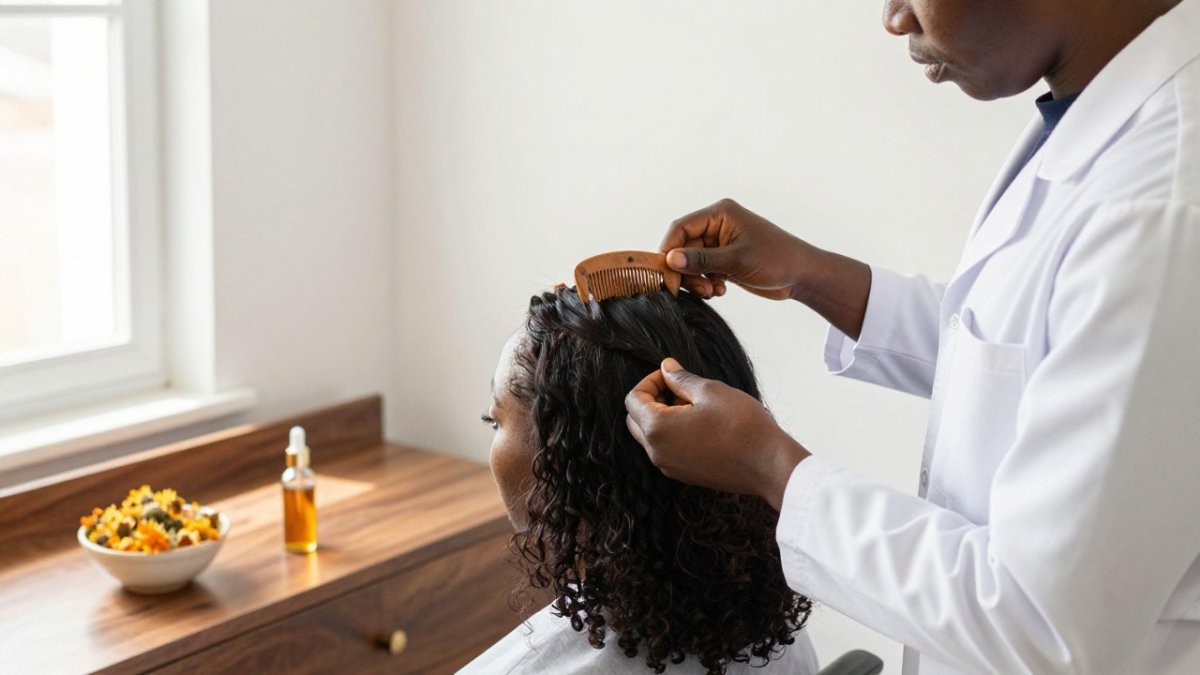
 blog
TCM vs Clinical Trichology: Results Compared
Table of Contents
- What Trichology Is and What Trichologists Do
- Clinical Trichology for Hair Loss: Methods and Scope
- Traditional Chinese Medicine Approaches to Hair Loss
- Acupuncture for Hair Loss: Evidence and Treatment Plans
- Trichologist vs Dermatologist: When to See Each
- Hair Loss Diagnosis and Scalp Analysis: TCM and Clinical Approaches
- TCM vs Clinical Trichology: Outcomes, Timelines, and Combined Care
- Frequently Asked Questions
Last Updated: October 10, 2026
What Trichology Is and What Trichologists Do
Trichology is the clinical study of hair and scalp health. A trichologist is a trained specialist who diagnoses and treats hair loss, thinning, and scalp disorders using science-based methods. Unlike general dermatologists, trichologists focus exclusively on hair and scalp conditions.
Trichologists assess hair density, follicle health, and scalp microbiome balance. They examine patterns of hair loss, identify root causes, and create treatment plans based on clinical findings. The field combines biology, chemistry, and dermatology to address issues like androgenetic alopecia, alopecia areata, and chronic scalp inflammation.
At Sophiatrichoholistic Hair Spa LLC, we integrate Traditional Chinese Medicine with advanced clinical trichology to address the root causes of conditions such as alopecia, thinning, and scalp inflammation to promote sustainable hair regeneration. Our expert-led approach ensures that every client receives personalized care to restore internal balance, improve scalp health, and renew confidence.
Clinical Trichology for Hair Loss: Methods and Scope
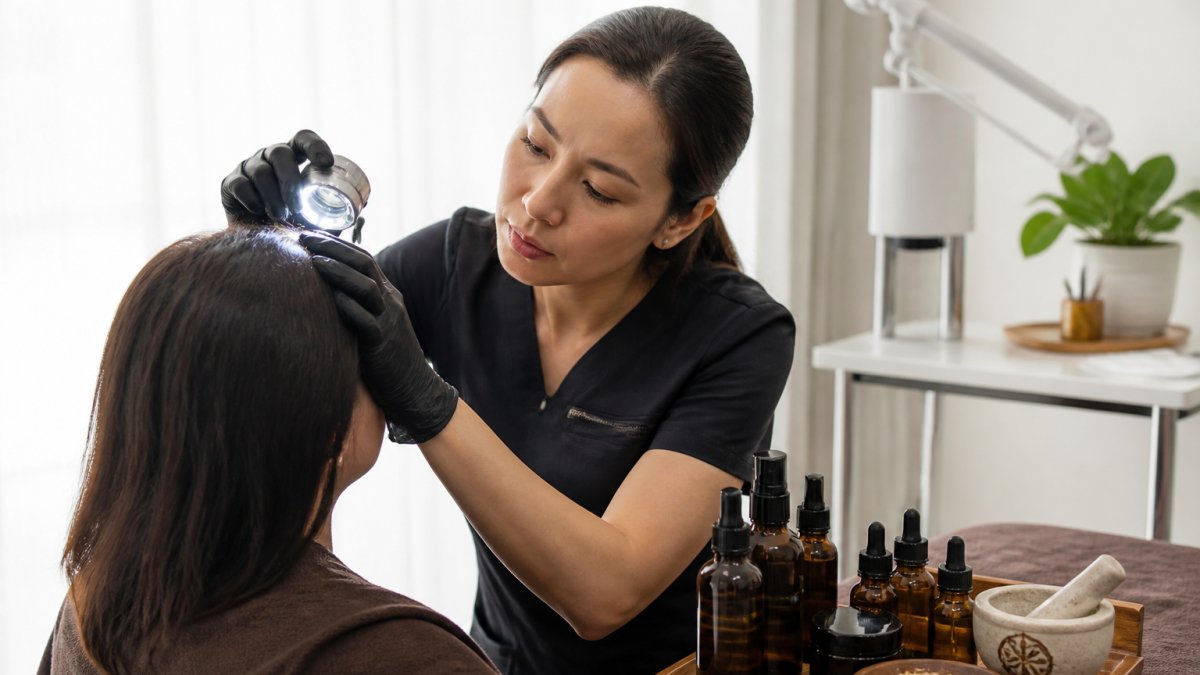
Clinical trichology uses diagnostic tools and evidence-based protocols to treat hair and scalp conditions. Trichologists perform scalp assessments, analyze hair-growth cycles, and recommend targeted interventions.
Common clinical trichology methods include:
- Scalp microscopy to examine follicle structure and health
- Hair-loss pattern analysis to identify androgenetic alopecia or other forms
- Microbiome evaluation to assess bacterial and fungal balance
- Nutritional assessment to identify deficiencies affecting hair growth
- Scalp treatment protocols using clinical-grade topicals
Clinical trichology excels at identifying structural problems and mechanical causes of hair loss. It provides measurable data through scalp analysis and hair-density mapping. However, clinical trichology alone does not address systemic factors like hormonal imbalance, emotional stress, or chronic inflammation rooted in internal energy disruption.
This is where many clients hit a wall. They receive a diagnosis but no explanation for why their body is producing that condition in the first place.
Traditional Chinese Medicine Approaches to Hair Loss
Traditional Chinese Medicine views hair loss through the lens of internal balance. In TCM, hair health reflects the state of the kidneys, liver, and blood circulation. Hair loss signals an imbalance, often Yin depletion, blood stagnation, or disrupted energy flow.
TCM addresses hair loss by:
- Restoring kidney and liver function through herbal medicine
- Improving circulation and energy flow to the scalp
- Balancing hormones through acupuncture and herbs
- Reducing inflammation caused by emotional stress or trauma
- Strengthening the body's foundational energy to support hair growth
TCM practitioners conduct detailed intake assessments. They ask about energy levels, digestion, sleep, menstrual cycles, and emotional state. These factors inform diagnosis and treatment in ways clinical trichology does not systematically explore.
The strength of TCM is addressing root causes, the systemic imbalances driving the condition. The limitation is that TCM lacks the scalp-specific diagnostic tools clinical trichology provides. A TCM practitioner may not identify follicle damage or scalp microbiome dysfunction.
Acupuncture for Hair Loss: Evidence and Treatment Plans
Acupuncture for hair loss works by stimulating circulation, reducing inflammation, and rebalancing energy flow to support hair-growth activation. Acupuncture needles are placed at specific points to target kidney and liver meridians, which TCM associates with hair health.
Treatment plans typically involve:
- Weekly or twice-weekly acupuncture sessions for 8-12 weeks
- Herbal supplements to support kidney and liver function
- Scalp massage or moxibustion to enhance local circulation
- Lifestyle adjustments to reduce stress and support healing
Evidence for acupuncture in hair loss:
The evidence base for acupuncture in androgenetic alopecia and alopecia areata comes primarily from small randomized controlled trials and observational studies conducted in Asia and Europe. Most published studies involve 30-100 participants and measure outcomes through hair-count photography, patient-reported improvement, or both. Effect sizes vary: some trials report 60-70% of participants experiencing visible hair regrowth or reduced shedding after 12-16 weeks; others show more modest improvements or no significant difference versus sham acupuncture.
A key limitation is that many studies lack blinding (patients know they received acupuncture), which can inflate perceived benefit. Additionally, most research combines acupuncture with herbal medicine, making it difficult to isolate acupuncture's independent effect. The National Institutes of Health acknowledges acupuncture's role in pain management and nausea but does not classify hair-loss treatment as an established indication.
In contrast, clinical trichology interventions, such as minoxidil or finasteride, have been tested in large, double-blind, placebo-controlled trials involving thousands of participants over multiple years. These studies document precise hair-count changes and long-term safety profiles. Topical and oral medications for androgenetic alopecia show consistent, reproducible results across diverse populations.
Realistic outcomes from acupuncture:
Results vary significantly based on the underlying cause, individual response, and whether acupuncture is combined with herbal support or scalp-specific treatment. Acupuncture alone is less likely to reverse established follicle miniaturization than pharmaceutical interventions; it may be most effective for stress-related shedding, postpartum hair loss, or early-stage thinning.
Trichologist vs Dermatologist: When to See Each
A dermatologist is a medical doctor trained in skin and scalp disease. A trichologist is a specialist focused exclusively on hair and scalp health. A TCM practitioner addresses systemic imbalance underlying scalp and hair dysfunction.
See a dermatologist if:
- You have a suspected scalp infection or fungal condition
- You need prescription medication for hair loss
- You have severe inflammation or open sores on the scalp
- You require medical diagnosis of alopecia areata or other autoimmune conditions
See a trichologist if:
- You want detailed scalp and hair analysis without medication
- You're experiencing gradual thinning or pattern hair loss
- You want a personalized treatment plan addressing your specific scalp condition
- You're interested in non-pharmaceutical approaches to hair regeneration
See a TCM practitioner if:
Start Your Hair & Scalp Healing Journey →
- You suspect your hair loss stems from hormonal imbalance or stress
- You've tried conventional treatments without lasting results
- You want to address the systemic cause, not just the symptom
- You're open to herbal medicine and acupuncture
Many clients benefit most from seeing both. A dermatologist rules out infection or serious disease. A trichologist provides scalp-specific diagnosis. A TCM practitioner addresses the underlying imbalance.
Hair Loss Diagnosis and Scalp Analysis: TCM and Clinical Approaches
Hair loss diagnosis differs significantly between clinical trichology and TCM. Clinical trichology identifies the pattern and mechanism of loss. TCM identifies the systemic imbalance driving it.
Clinical scalp analysis includes:
- Microscopic examination of hair shaft and follicle structure
- Assessment of hair density and diameter
- Evaluation of scalp pH and sebum production
- Identification of androgenetic alopecia, telogen effluvium, or other patterns
- Analysis of scalp microbiome health
TCM diagnosis includes:
- Detailed history of energy levels, digestion, and menstrual health
- Examination of tongue and pulse to assess organ function
- Assessment of emotional state and trauma history
- Evaluation of sleep quality and stress response
- Identification of Yin depletion, blood stagnation, or liver dysfunction
Clinical analysis gives you a map of what's happening on the scalp. TCM analysis explains why your body is producing that condition. Both matter.
| Diagnostic Method | What It Reveals | Best For | Limitation |
|---|---|---|---|
| Clinical trichology | Scalp condition, hair-growth pattern, follicle health | Identifying structural damage and microbiome issues | Doesn't address systemic causes |
| TCM assessment | Hormonal balance, circulation, emotional stress impact | Finding root cause of hair loss | Lacks scalp-specific diagnostic tools |
| Combined approach | Complete picture of scalp health AND systemic imbalance | Comprehensive treatment planning | Requires access to both specialists |
TCM vs Clinical Trichology: Outcomes, Timelines, and Combined Care
The real question isn't which approach is better, it's which approach addresses your specific problem. Here's what you can realistically expect from each, along with important safety considerations.
Clinical trichology outcomes:
- Visible scalp improvement within 4-8 weeks
- Reduced shedding within 2-3 months
- Hair regrowth within 3-6 months (depending on follicle damage)
- Best results for pattern hair loss and scalp microbiome dysfunction
- Results plateau if underlying systemic imbalance remains unaddressed
TCM outcomes:
- Improved energy and sleep within 2-4 weeks
- Reduced scalp inflammation within 4-6 weeks
- Hair regrowth beginning within 2-3 months
- Continued improvement over 6-12 months as systemic balance restores
- Results deepen over time as root causes resolve
Combined TCM and clinical trichology outcomes:
- Faster visible improvement (scalp health + systemic support)
- More sustainable results (addressing both local and systemic causes)
- Reduced likelihood of relapse after treatment ends
- Clients typically see measurable progress within 8-12 weeks
- Hair-growth activation continues for 6-12 months as internal balance deepens
Safety, contraindications, and when to seek immediate medical care:
While both TCM and clinical trichology are generally low-risk, certain conditions require prompt medical evaluation and may contraindicate or complicate treatment:
Seek a dermatologist immediately if you experience:
- Sudden, rapid hair loss (more than 100-150 hairs per day) lasting more than 2 weeks, may indicate telogen effluvium, thyroid dysfunction, or nutritional deficiency
- Scalp pustules, oozing, or crusting with pain or warmth, signs of bacterial infection (folliculitis) or fungal infection requiring prescription treatment
- Circular or patchy hair loss with visible scalp, may indicate alopecia areata (autoimmune) or ringworm (fungal), both requiring medical diagnosis
- Scalp rash, severe itching, or burning that worsens despite home care, may indicate seborrheic dermatitis, psoriasis, or contact dermatitis requiring topical medication
- Hair loss accompanied by fatigue, weight changes, or irregular menstrual cycles, suggests systemic illness (thyroid, anemia, hormonal disorder) requiring blood work
Acupuncture contraindications and precautions:
- Avoid acupuncture if you take blood thinners (warfarin, apixaban) without consulting your prescribing physician, as needling can increase bruising risk
- Inform your acupuncturist if you have a bleeding disorder, are pregnant, or have a pacemaker
- Scalp acupuncture carries a small risk of infection if needles are not sterile; ensure your practitioner uses single-use, sterile needles
- Some herbal supplements recommended in TCM can interact with medications (e.g., certain herbs affect blood pressure or blood clotting); disclose all supplements to your doctor
Clinical trichology considerations:
- Topical treatments (minoxidil) may cause scalp irritation or contact dermatitis in sensitive individuals; patch-test first
- Oral medications (finasteride) carry risks for sexual side effects and require ongoing medical monitoring; not appropriate during pregnancy
- Scalp treatments should not be applied to open wounds, severe inflammation, or active infection
What to expect from combined care:
- Week 1-2: Scalp assessment and TCM intake; acupuncture and herbal support begin
- Week 3-4: Reduced scalp tenderness and improved sleep
- Week 5-8: Visible scalp improvement and reduced shedding
- Week 9-12: Hair regrowth becoming visible; energy and hormonal balance improving
- Month 4-6: Continued hair growth; scalp health normalized; systemic symptoms resolved
Results depend on the severity of your condition, how long it's been present, your individual response, and whether any underlying medical conditions are present.
The importance of professional coordination:
The clients who see the most dramatic and sustainable results are those who commit to the full timeline, address both the scalp and the underlying imbalance driving it, and ensure that any medical red flags are ruled out by a dermatologist before beginning TCM or intensive scalp treatment. If you are considering both approaches, inform each practitioner about the other's involvement and any medications or supplements you are taking.
Frequently Asked Questions
What is the difference between TCM and clinical trichology for hair loss?
Clinical trichology focuses on scalp and hair health through microscopic analysis, topical treatments, and lifestyle modifications based on hair biology and follicle receptors. TCM addresses hair loss as a symptom of internal imbalance, often Yin depletion or blocked circulation, and uses acupuncture, herbal medicine, and moxibustion to restore energy flow. Clinical trichology targets the scalp directly; TCM targets systemic causes. Both can address hair and scalp health, but through different frameworks and evidence bases.
Can acupuncture help stop hair thinning?
Acupuncture for hair loss is based on TCM theory that stimulating specific points improves circulation and balances hormones. Some studies show modest hair regrowth in participants with alopecia areata and androgenetic alopecia, though sample sizes are often small and control groups limited. Results vary significantly between individuals. Acupuncture may work best when combined with herbal medicine and addressing emotional stress or trauma, which TCM recognizes as root causes of thinning hair.
How long does it take to see results from TCM vs clinical trichology for hair loss?
Hair growth occurs in phases; the anagen phase lasts 2-7 years, so visible regrowth typically takes 3-6 months minimum with either approach. TCM often requires a longer commitment because it aims to rebalance internal systems before hair density improves. Realistic timelines depend on the underlying cause, treatment response, and consistency.
Should I see a trichologist, dermatologist, or acupuncture physician for hair loss?
Start with a dermatologist if you suspect a medical condition (alopecia areata, seborrheic dermatitis, psoriasis, or hormonal imbalance). A trichologist specializes in scalp and hair health and can assess hair density, follicle receptors, and scalp disorders without diagnosing disease. An acupuncture physician addresses systemic causes like emotional stress, Yin depletion, or circulation problems. Many people benefit from combining approaches: dermatology for diagnosis, clinical trichology for scalp wellness, and TCM for root-cause treatment.