 ultimate-guide
Does Acupuncture Help Postpartum Hair Loss? A 2026 Guide
Table of Contents
- Understanding Postpartum Hair Loss and the Postpartum Hair Loss Timeline
- Can Acupuncture Stop Hair Thinning? The Evidence and Mechanisms
- Acupuncture for Hormonal Balance After Birth
- The Role of Hormones and Chinese Medicine in Hair Health
- What to Expect During an Acupuncture Session for Hair Loss
- Is Acupuncture a Guaranteed Cure? Managing Expectations
- Combining Acupuncture with Diet, Lifestyle, and Home Care
- Frequently Asked Questions
Last Updated: September 14, 2026
Understanding Postpartum Hair Loss and the Postpartum Hair Loss Timeline
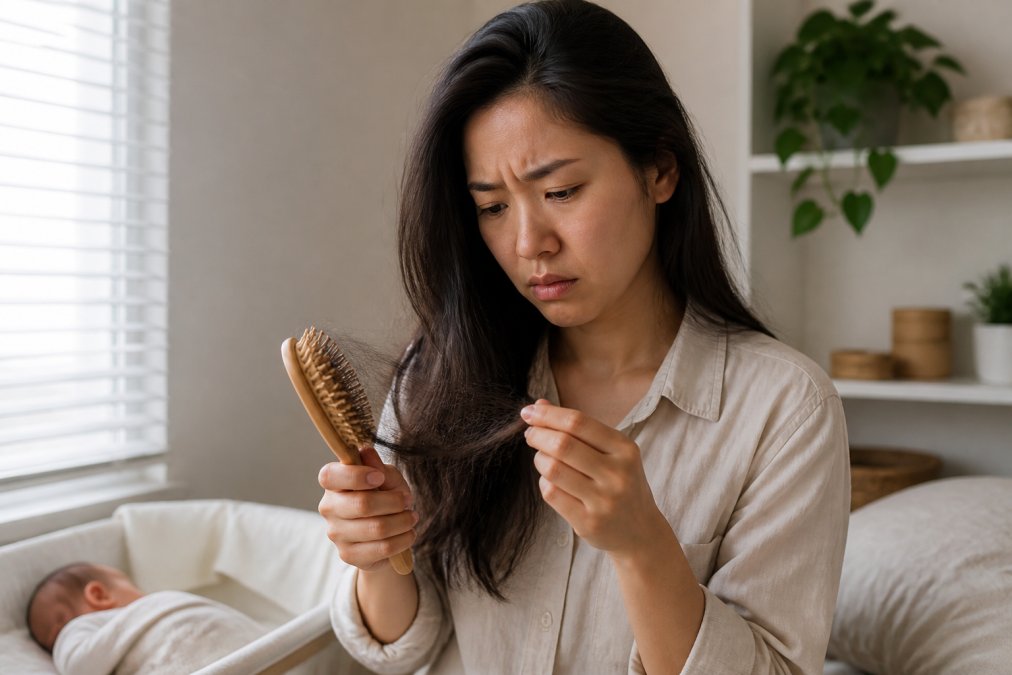
Does acupuncture help postpartum hair loss? For many women, it can reduce shedding and support regrowth when used as part of a broader holistic plan, though results vary and it works best alongside diet and stress management. Postpartum hair loss is a temporary shedding condition that typically begins two to four months after delivery and resolves within six to twelve months as hormone levels stabilize (pubmed.ncbi.nlm.nih.gov).
The timeline matters because it shapes expectations. Most women notice the heaviest shedding around month three or four, when estrogen drops back toward pre-pregnancy levels. This type of shedding is called telogen effluvium, a stress-driven shift in the hair cycle that pushes follicles into their resting phase earlier than usual (pubmed.ncbi.nlm.nih.gov).
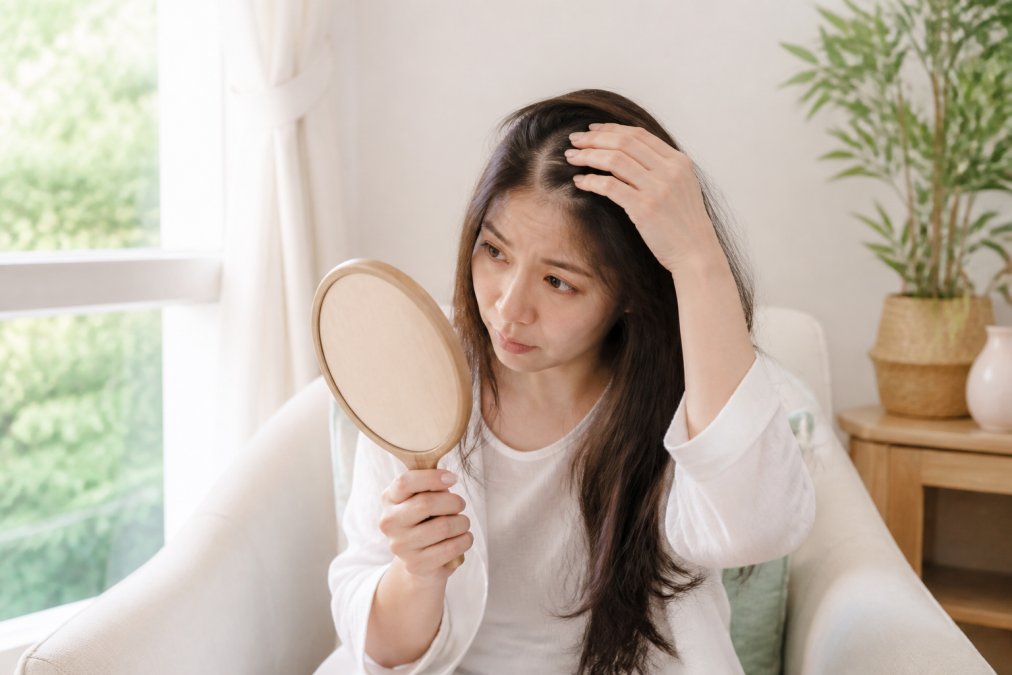
The good news is that the postpartum hair loss timeline usually resolves on its own. The better news is that targeted support can shorten the wait.
Can Acupuncture Stop Hair Thinning? The Evidence and Mechanisms
Acupuncture can help slow hair thinning by improving blood flow to the scalp and calming the stress response, but it does not stop shedding overnight. The mechanism is twofold: needling specific points increases local microcirculation, and the treatment itself lowers cortisol, which is a known contributor to stress-related hair loss.
Here is what that looks like in practice. A licensed practitioner typically needles a mix of local scalp points along the hairline, temple, and crown, plus distal points on the arms, legs, and ears. Common selections include points the World Health Organization recognizes for hair loss and stress, such as Baihui (GV20) at the top of the head, Fengchi (GB20) at the base of the skull, Hegu (LI4) on the hand, and Zusanli (ST36) below the knee. Needles are usually retained 20 to 30 minutes. Some practitioners add electroacupuncture, a low-frequency microcurrent passed between paired needles, which is the version most often studied for circulation effects.
The honest evidence picture: research on acupuncture for hair loss is real but modest. Most published studies are small, and many combine acupuncture with other therapies, which makes it hard to isolate the needle's contribution. A frequently cited review in the Journal of Acupuncture and Meridian Studies and later systematic reviews report improved hair density and reduced shedding in treated groups, but the authors themselves flag small sample sizes and inconsistent protocols. No large randomized controlled trial has isolated acupuncture as a standalone treatment for postpartum telogen effluvium specifically. That does not mean it does not work. It means the strongest claim the evidence supports is "promising adjunct," not "proven cure."
A common mistake is expecting one session to reverse months of shedding. In practice, consistency over several weeks is what moves the needle. Many practitioners find that combining acupuncture with scalp-focused care produces better results than either approach alone. At Sophiatrichoholistic Hair Spa LLC, we pair needling with clinical trichology assessments so we can track hair density and scalp health over time.
A realistic treatment roadmap
Most articles on this topic stay vague about how many sessions you actually need. Here is the structure most practitioners use:
- Weeks 1-4: Weekly sessions, 30 to 45 minutes each. Goal is to establish a baseline and begin modulating the stress response. Shedding usually has not changed yet.
- Weeks 5-8: Many women notice reduced shedding in the brush and shower drain. This is the first checkpoint where the treatment is either working or the protocol needs adjusting.
- Months 3-4: Sessions taper to every other week. Visible regrowth along the part line and hairline typically appears here, because the hair cycle has to complete its resting phase before new growth emerges.
- Months 5-6: Maintenance sessions every three to four weeks, paired with home care, until shedding stabilizes near your pre-pregnancy baseline.
A reasonable planning range is 10 to 16 sessions over four to six months for a first course. If you see no change in shedding by week eight, that is useful information, it usually points to an underlying driver (thyroid, ferritin, or a medication) that needs a medical workup rather than more needles.
Acupuncture for Hormonal Balance After Birth
Acupuncture for hormonal balance targets the body's regulation of estrogen, progesterone, and cortisol, all of which shift dramatically after birth. The goal is not to force hormone levels back to a pre-pregnancy state, but to support the body's own return to equilibrium.
From a Chinese medicine perspective, this is often described as addressing qi deficiency and blood stagnation. When qi and blood move freely, the hair follicle receives the nutrients it needs to re-enter the growth phase. When they do not, shedding lingers longer than it should.
A common mistake is treating hormonal imbalance as a single problem with a single fix. In reality, sleep deprivation, breastfeeding demands, and stress all feed into the same system. Acupuncture points are selected based on the individual pattern, not a one-size-fits-all protocol.
Safety while breastfeeding: what most articles skip
This is the question nursing mothers actually search for, and it deserves a direct answer. Acupuncture is generally considered low-risk during breastfeeding when performed by a licensed practitioner, for three concrete reasons:
- No drug interaction. Acupuncture introduces no compounds into the bloodstream, so it cannot pass into breast milk. This is the main reason it appeals to women who want to avoid medications while nursing.
- Needle placement is adjusted. Certain points traditionally used to strongly move qi, including LI4 (Hegu) and SP6 (Sanyinjiao), are avoided or used cautiously during pregnancy. After delivery, most practitioners still modify point selection for nursing mothers, particularly around the breast and upper chest, and will substitute distal points instead.
- Positioning matters. Sessions are typically done lying on your back or side. If you are nursing frequently or engorged, tell your practitioner so they can adjust positioning and session length.
What to disclose before your first session:
- That you are breastfeeding, and how old your baby is
- Any prescription medications, including postpartum antidepressants or blood pressure medication
- Any blood thinners or anticoagulants, which raise bruising risk at needle sites
- A history of mastitis, plugged ducts, or breast surgery
- Any thyroid condition, diagnosed or suspected
What acupuncture does not do for hormones
It is worth being precise here, because the marketing around "hormone balancing" outruns the evidence. Acupuncture does not directly raise estrogen, lower prolactin, or replace thyroid hormone. What it can plausibly influence is the stress axis, cortisol and the sympathetic nervous system, and local circulation. For a nursing mother whose shedding is driven by the normal postpartum estrogen drop plus sleep deprivation, that stress-axis effect is the meaningful lever. For someone with postpartum thyroiditis, no amount of needling corrects the underlying hormone deficiency, and that requires a physician and lab work.
American Academy of Dermatology guidance on postpartum hair loss
Start Your Hair & Scalp Healing Journey →
If you are nursing and considering treatment, the practical next step is a consultation that includes your breastfeeding status, your medication list, and a scalp assessment. That combination is what lets a practitioner build a plan that is both effective and appropriate for this stage.
The Role of Hormones and Chinese Medicine in Hair Health
Hormones and Chinese medicine intersect most clearly in how they explain hair follicle health. Estrogen levels drop sharply after delivery, which triggers the shedding phase. Chinese medicine frames the same event as a disruption in the meridian system that governs blood and energy flow to the scalp.
Neither framework is wrong. They describe the same process in different languages. What matters for treatment is that both point toward the same interventions: improving circulation, reducing stress, and correcting nutrient deficiency.
| Factor | Conventional View | Chinese Medicine View | Practical Fix |
|---|---|---|---|
| Estrogen drop | Triggers telogen effluvium | Blood and qi imbalance | Support hormonal recovery |
| Poor scalp blood flow | Reduces follicle nutrition | Qi deficiency | Microcirculation support |
| Chronic stress | Raises cortisol, disrupts cycle | Stagnant qi | Stress-reduction protocol |
| Nutrient gaps | Weakens hair shaft | Blood deficiency | Dietary correction |
What to Expect During an Acupuncture Session for Hair Loss
A typical session lasts 30 to 45 minutes and involves thin needles placed at points on the scalp, ears, and body. Most people feel minimal discomfort. The first visit usually includes a health history review and a scalp assessment so the practitioner can tailor the plan.
Sessions are often scheduled weekly for the first month, then spaced out as shedding slows. This is not a quick fix. It is a wellness protocol that builds over time, and the timeline depends on how long you have been shedding and how your body responds.
Is Acupuncture a Guaranteed Cure? Managing Expectations
No, acupuncture is not a guaranteed cure for postpartum hair loss. It is a supportive therapy that many women find helpful, but it works alongside the body's natural recovery rather than replacing it. Anyone promising a guaranteed outcome is overselling.
The honest answer is that most postpartum shedding resolves on its own within a year. Acupuncture may shorten that window and reduce the intensity, but it cannot override genetics, thyroid issues, or severe nutrient deficiency. That is why a proper intake matters more than the number of needles used.
Where acupuncture falls short is in cases with an undiagnosed underlying condition. If shedding continues past twelve months or comes with fatigue, brittle nails, or unusual scalp inflammation, that warrants a medical workup before assuming it is purely postpartum.
Combining Acupuncture with Diet, Lifestyle, and Home Care
Acupuncture works best when paired with dietary and lifestyle changes that support hair regrowth. Protein, iron, zinc, and vitamin D all play direct roles in the hair cycle, and many postpartum women are running low on at least one of them.
A common mistake is focusing only on the scalp while ignoring what is on the plate. Hair is a non-essential tissue from the body's perspective, so when nutrients are scarce, hair is one of the first things to suffer.
Home care matters too. Gentle cleansing, avoiding harsh heat styling, and using scalp-friendly products reduce the inflammatory response that can slow regrowth. For women dealing with seborrheic dermatitis or psoriasis on top of postpartum shedding, this layer of care is not optional.
Frequently Asked Questions
What is the best treatment for postpartum hair loss?
There is no single best treatment because postpartum hair loss has multiple causes, including hormonal shifts, nutrient depletion, and stress. A holistic approach that combines acupuncture, dietary support, and gentle scalp care often works well. Acupuncture may help regulate blood flow and hormonal balance, while nutrients like iron and protein support follicle recovery. Always consult a qualified professional to build a plan that fits your health history and breastfeeding status.
Does postpartum hair loss grow back on its own?
For most women, postpartum hair loss does grow back. Shedding typically peaks around three to six months after birth and gradually slows as estrogen levels stabilize, often within 12 months. However, regrowth can be slower if you have nutrient deficiencies, thyroid issues, or high stress. Acupuncture and lifestyle changes may support the process, but individual results vary. A consultation can help identify factors that might delay recovery.
Can acupuncture stop hair thinning during the postpartum period?
Acupuncture may help slow hair thinning by improving microcirculation to the scalp and supporting hormonal balance, but it is not a guaranteed cure. Research on acupuncture for hair loss is limited, and results depend on the underlying cause. For postpartum thinning, acupuncture is best used as part of a broader plan that includes nutrition, stress management, and gentle hair care. Talk with a licensed acupuncturist about realistic expectations.
Is acupuncture safe while breastfeeding?
Acupuncture is generally considered safe during breastfeeding when performed by a licensed practitioner who uses sterile, single-use needles. However, some acupuncture points are traditionally avoided during the postpartum period, so inform your acupuncturist that you are breastfeeding. They can adapt the treatment to your needs. Always check with your healthcare provider before starting any new therapy, especially if you have underlying health conditions.