 Ultimate guide
Holistic Scalp Inflammation Treatment: A Complete Guide
Quick Summary
A holistic approach to scalp inflammation combines gentle scalp hygiene, lifestyle adjustments and professional evaluation into one coordinated plan, rather than only covering up visible symptoms. Because dry scalp, dandruff, dermatitis, psoriasis and infection look similar, confirming the cause comes first.
- Confirm the underlying condition, since dry scalp, dandruff, dermatitis, psoriasis and infection look alike.
- Wash the scalp with lukewarm water and a shampoo matched to its condition, massaging for one to two minutes.
- Keep conditioner off the scalp and apply it only to the lengths and ends.
- Introduce one new product at a time so you can tell what helps.
- See a dermatologist if symptoms persist beyond four to six weeks of consistent care.
Table of Contents
- What Holistic Treatment of Scalp Inflammation Means
- Scalp Inflammation Symptoms and How to Tell Them Apart
- Underlying Causes of Scalp Inflammation
- Choosing a Scalp Inflammation Shampoo and Scalp-Cleansing Routine
- Foods That May Help Reduce Scalp Inflammation
- Natural Remedies, Oils and Scalp Massage: What the Evidence Shows
- Scalp Inflammation Hair Loss Treatment and Realistic Timelines
- Building Your Plan and Knowing When to See a Doctor
- Frequently Asked Questions
What Holistic Treatment of Scalp Inflammation Means
Last Updated: November 14, 2026
Scalp inflammation is rarely a single-cause problem, and that is why a holistic approach to treating it matters. A holistic approach looks at the scalp as part of the whole body: how it is cleansed, what it is exposed to, how stress and sleep affect it, and whether an underlying condition is driving the irritation. Holistic treatment does not mean replacing medical care. It means combining reasonable scalp hygiene, lifestyle adjustments and, where appropriate, professional evaluation into one coordinated plan.
Holistic scalp care is the practice of addressing scalp inflammation through its contributing factors rather than only its visible symptoms. In practice, that means asking why the scalp is red, flaky or itchy before choosing a product to cover it.
A holistic plan usually covers four areas:
- Scalp care: gentle cleansing, a shampoo matched to the scalp's condition, and avoiding products that trigger irritation
- Medical evaluation: confirming what the condition actually is, since dry scalp, dandruff, dermatitis, psoriasis and infection all look similar
- Diet and general health: eating patterns, hydration and nutrient status, which can influence skin inflammation
- Stress and sleep: stress is widely discussed as a factor in flare-ups, though the evidence for direct effects on scalp inflammation is still developing
Many people try one of these areas in isolation and are disappointed. A medicated shampoo may calm flaking while stress keeps the scalp reactive, or a diet change may help while the scalp is still being irritated by heavy styling products. Looking at the full picture usually produces steadier results than chasing one fix.
Holistic care also comes with a realistic time frame. Scalp skin turns over slowly, so changes in redness and itch often take several weeks to show. Anyone with persistent, painful, spreading or bleeding scalp symptoms should be evaluated by a dermatologist or other qualified clinician before relying on home approaches.
Scalp Inflammation Symptoms and How to Tell Them Apart
Scalp inflammation shows up as itching, burning, tenderness, redness, flaking, or scaling, and these signs overlap across very different conditions. The comparison below highlights the features that most reliably distinguish them.
| Condition | Flake Appearance | Distribution | Key Clues |
|---|---|---|---|
| Dry scalp | Fine, white, dust-like | Diffuse | Tightness, itch, little redness |
| Dandruff | Larger, yellowish, oily | Crown and hairline | Oily patches, mild itch |
| Seborrheic dermatitis | Greasy yellow scale | Scalp, eyebrows, nasolabial folds | Redness, itching, responds to antifungals |
| Psoriasis | Thick silvery plaques | Hairline, behind ears, elbows | Sharp borders, nail pitting, joint pain |
| Fungal infection (tinea capitis) | Crusting, broken hairs | Patchy | Patchy hair loss, tender lumps, scaling |
| Bacterial infection | Pus, oozing, crusts | Localized | Pain, warmth, swelling |
| Allergic contact dermatitis | Variable | Where product touched | Burning, itching, recent new product |
Warning signs that require medical care. See a dermatologist or other qualified clinician promptly if you notice any of the following:
- Bleeding, oozing, or crusting that does not heal
- Pain, swelling, or warmth in the scalp
- Pus or tender lumps
- Sudden patchy hair loss
- Spreading redness or symptoms that persist beyond several weeks of consistent care
- Involvement of the nails (pitting, separation) or joints, which can accompany psoriasis
- Fever or feeling unwell alongside scalp symptoms
Why self-treatment can backfire. Using an anti-dandruff shampoo on a psoriasis plaque may irritate it further. Applying a moisturizing oil to a fungal infection can feed the organism. Treating an allergic reaction with more of the triggering product prolongs the flare. A correct diagnosis is the foundation of any care plan, and a clinician can evaluate the scalp to confirm the condition.
When home care is reasonable. Mild, diffuse flaking and itch without pain, pus, spreading redness, or hair loss can often be managed with a gentle cleansing routine and a short trial of an over-the-counter antifungal shampoo. If symptoms do not improve within four to six weeks, or worsen at any point, escalate to professional evaluation.
Watch out: Patchy hair loss with scaling is a classic sign of tinea capitis and requires prescription antifungal treatment, topical products alone will not resolve it.
Underlying Causes of Scalp Inflammation
Scalp inflammation usually has several contributors working together. Identifying which ones apply to you is the foundation of a holistic plan.
Common contributors include excess oil production, which can feed yeast overgrowth, and dry, tight skin that cracks and itches. Build-up from styling products, dry shampoo and infrequent washing can irritate the scalp and trap dead skin. Allergic or irritant reactions to fragrances, preservatives, hair dyes and some hair-care ingredients are another frequent source of flare-ups. Immune-driven conditions such as psoriasis and seborrheic dermatitis follow their own course and need medical management.
Hormonal shifts, including those after pregnancy, can change oil production and hair cycling, and some people notice changes in scalp sensitivity during these periods. Stress and poor sleep are often reported alongside flare-ups, although the research linking them directly to scalp inflammation is limited, so treat them as likely contributors rather than proven causes.
Choosing a Scalp Inflammation Shampoo and Scalp-Cleansing Routine
The shampoo you choose should match what is driving your scalp problem. Mild, fragrance-free cleansers suit dry or sensitive scalps. Shampoos containing zinc pyrithione, ketoconazole, selenium sulfide, salicylic acid or coal tar are used for dandruff and seborrheic dermatitis, and some are available without a prescription in the United States. Medicated shampoos should be used as directed.
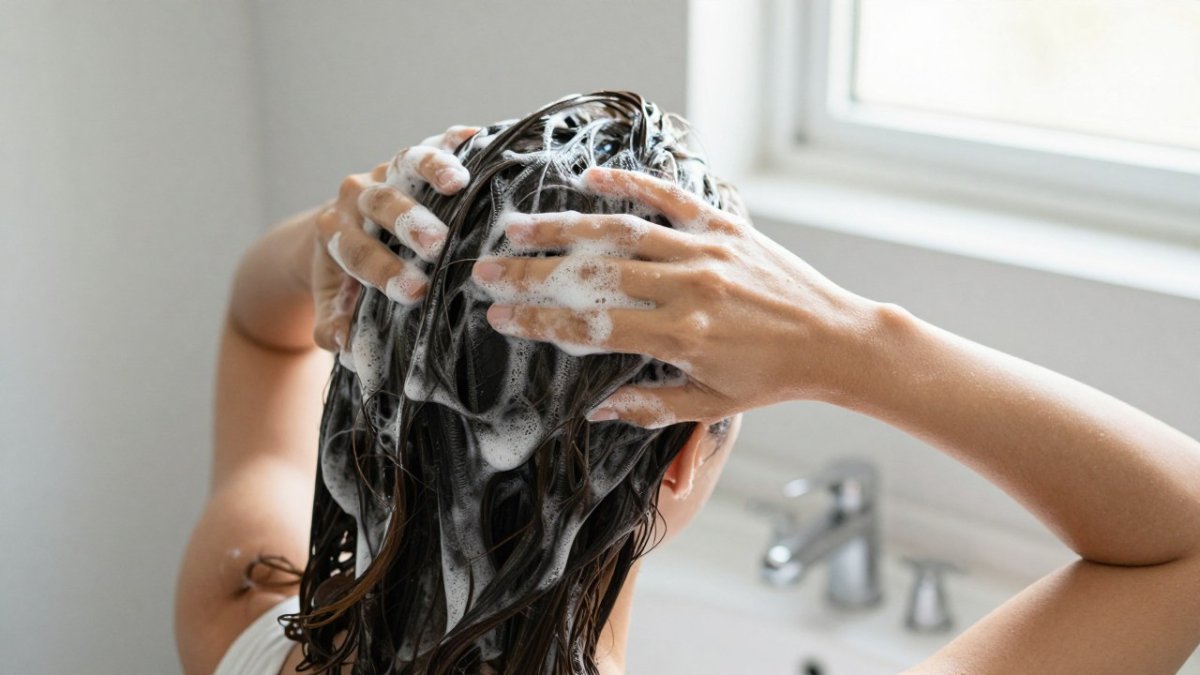
A practical routine looks like this:
- Wet the scalp thoroughly with lukewarm water, not hot.
- Apply shampoo to the scalp, not the lengths, and massage with the fingertips for one to two minutes.
- Rinse fully, since leftover product can irritate.
- Use a conditioner on the lengths and ends only, keeping it off the scalp.
- Wash every two to three days for oily scalps, and less often if the scalp is dry, adjusting based on response.
Watch for irritation after switching products, and introduce one new item at a time so you can tell what helps.
Foods That May Help Reduce Scalp Inflammation
Diet is a supporting factor, not a cure. Diet is a supporting factor, and a balanced eating pattern is part of general skin health. Consult a qualified clinician about your individual nutritional needs.
If you have a known deficiency, such as low iron or vitamin D, correcting it under medical guidance may matter more than any single food. Supplements should be discussed with a clinician, since some can interact with medications.
Natural Remedies, Oils and Scalp Massage: What the Evidence Shows
Natural remedies for scalp inflammation are not interchangeable, and the evidence behind them is generally limited. Discuss any remedy with a qualified clinician before relying on it.
| Remedy | Evidence Level | Best For | Key Risk |
|---|---|---|---|
| Tea tree oil | Moderate for dandruff (small trials) | Mild flaking and itch | Irritation and allergic contact dermatitis; must be diluted |
| Coconut oil | Limited; moisturizing | Dry, tight scalp | Can feed Malassezia and worsen oily dandruff |
| Jojoba oil | Limited; emollient | Dry scalp, flake softening | Build-up on oily scalps |
| Olive oil | Limited; occlusive | Very dry scalp | Heavy residue; may trap yeast |
| Aloe vera | Limited; soothing | Calming redness and itch | Rare allergy; check preservatives |
| Apple cider vinegar rinse | Weak; anecdotal | Temporary flake removal | Stings broken skin; acidic pH can irritate |
| Scalp massage | Limited; comfort and circulation | Tension, general comfort | Nail scratching can break skin |
Dilution and patch testing. Essential oils should never be applied neat. A common safe dilution for scalp use is 1-2% in a carrier oil, roughly 6-12 drops of essential oil per ounce of carrier. Perform a patch test on the inner forearm 24-48 hours before first use, and stop immediately if burning, rash, or swelling appears.
Why some remedies backfire. Oils that soothe a dry scalp can worsen seborrheic dermatitis because Malassezia yeast thrives on lipid-rich environments. Acidic rinses may sting inflamed or broken skin. Essential oils such as peppermint and eucalyptus can cause contact dermatitis in sensitive individuals.
Scalp massage technique. Use fingertips, not nails, in slow circular motions for 5-10 minutes. A light carrier oil or no product at all is sufficient. Massage supports relaxation and temporary comfort but is not a stand-alone treatment for an underlying condition. You can follow a practical scalp massage technique and simple routine to get started.
Watch out: A remedy that feels soothing at first can trigger delayed allergic contact dermatitis 24-72 hours later; if redness spreads beyond the application area, stop and see a clinician.
Scalp Inflammation Hair Loss Treatment and Realistic Timelines
Scalp inflammation can be associated with hair shedding, particularly when flare-ups are intense or prolonged. In many cases, hair loss improves as the underlying inflammation is controlled, but the timeline is slow. Hair grows in cycles, so visible regrowth commonly takes several months. Diffuse shedding after a stressful event, illness or childbirth often resolves on its own over several months.
Realistic expectations matter. Within the first two to four weeks of a consistent routine, many people notice less itching and flaking. Changes in shedding and density usually take three to six months to assess properly. If hair loss continues or is patchy, see a dermatologist or trichologist for a proper evaluation, which may include blood tests or a scalp examination before any treatment is chosen. You can explore clinical trichology services for hair regeneration to see what a professional assessment involves.
Building Your Plan and Knowing When to See a Doctor
Start with a simple, consistent plan: gentle cleansing with a suitable shampoo, minimal build-up from products, adequate sleep and a manageable approach to stress. Track your symptoms and what you changed, so you can see what helps. Give any change several weeks before judging it.
See a doctor or dermatologist if symptoms are severe, painful, spreading, bleeding or not improving after about four to six weeks of consistent care, or if you have hair loss in patches. Always work with a qualified professional for an individual diagnosis and treatment decision.
Living with a scalp that keeps flaring is exhausting, and a holistic plan can make the difference between guessing and steady progress. Sophiatrichoholistic Hair Spa LLC helps women aged 18 to 65 combine trichology and Traditional Chinese Medicine into a personalized approach to scalp and hair health. Start your hair and scalp healing journey with a consultation at Sophiatrichoholistic Hair Spa LLC.
Frequently Asked Questions
What naturally removes scalp inflammation?
Gentle, consistent scalp care usually does more than any single product. Washing with a mild or medicated shampoo suited to your condition, avoiding very hot water, reducing heavy styling products, and keeping the scalp clean and dry all lower irritation over time. Some people find soothing topicals such as aloe vera helpful for mild redness. Evidence for most home remedies is limited, so treat them as supportive rather than curative, and see a dermatologist if inflammation persists beyond a few weeks.
Can scalp inflammation be reversed?
Mild scalp inflammation caused by dryness, product buildup or irritation often improves once the trigger is removed. Chronic conditions such as psoriasis or seborrheic dermatitis are usually managed rather than cured, meaning flare-ups can be reduced and controlled. A holistic plan that combines scalp care, medical treatment where needed, diet and stress management can improve how the scalp feels and looks, but results vary and a qualified professional should assess your specific condition.
Can scalp inflammation cause hair loss?
Yes, persistent inflammation can contribute to hair shedding and thinning in some people, particularly when scratching or chronic irritation damages the follicle environment. Hair loss has many possible causes, including hormonal changes after childbirth, thyroid problems and certain types of alopecia. Because the causes differ, a clinician should evaluate new or worsening hair loss before you assume inflammation is the reason.
When should you see a dermatologist for scalp inflammation?
See a dermatologist if scalp inflammation lasts more than a few weeks, spreads beyond the scalp, causes pain, bleeding, pus, crusting or significant hair loss, or does not respond to over-the-counter shampoos. Anyone with a known skin condition such as psoriasis, or who notices signs of infection, should also seek care. A dermatologist can distinguish dry scalp, dandruff, dermatitis, psoriasis, infection and allergic reactions, which often look similar but need different treatment.