 listicle
Best Holistic Treatments for Alopecia: 7 Natural Options
Table of Contents
- How to Choose the Best Holistic Treatments for Alopecia
- 1. Essential Oils for Alopecia: What the Research Shows
- 2. Dietary Changes for Hair Loss: Nutrients That Matter
- 3. Stress Management and Mindfulness for Hair Regrowth
- 4. Acupuncture and Traditional Chinese Medicine for Follicle Stimulation
- 5. Scalp Massage and Aromatherapy for Natural Hair Regrowth for Women
- Safety First: Patch Testing and When to See a Dermatologist
- Conclusion: Building Your Integrative Treatment Plan
- Frequently Asked Questions
Last Updated: September 7, 2026
Alopecia is an autoimmune condition where the immune system attacks hair follicles, leading to patchy or widespread hair loss. For millions seeking alternatives, the best holistic treatments for alopecia combine evidence-informed natural therapies with lifestyle changes that address underlying triggers.
Below, we break down seven holistic treatments for alopecia, grade the science behind each, and explain how to layer them into a realistic plan.
How to Choose the Best Holistic Treatments for Alopecia
The best holistic treatments for alopecia are matched to your specific type of hair loss and its triggers. Alopecia areata involves autoimmune inflammation, stress-induced hair loss follows a different pathway, and postpartum shedding is hormonal.
Quick Picks:
- Best Overall Approach: A layered plan combining rosemary oil, targeted nutrition, and stress reduction
- Best for Autoimmune-Related Loss: Acupuncture paired with anti-inflammatory dietary changes
- Best Low-Cost Starting Point: Daily scalp massage with essential oils
1. Essential Oils for Alopecia: What the Research Shows
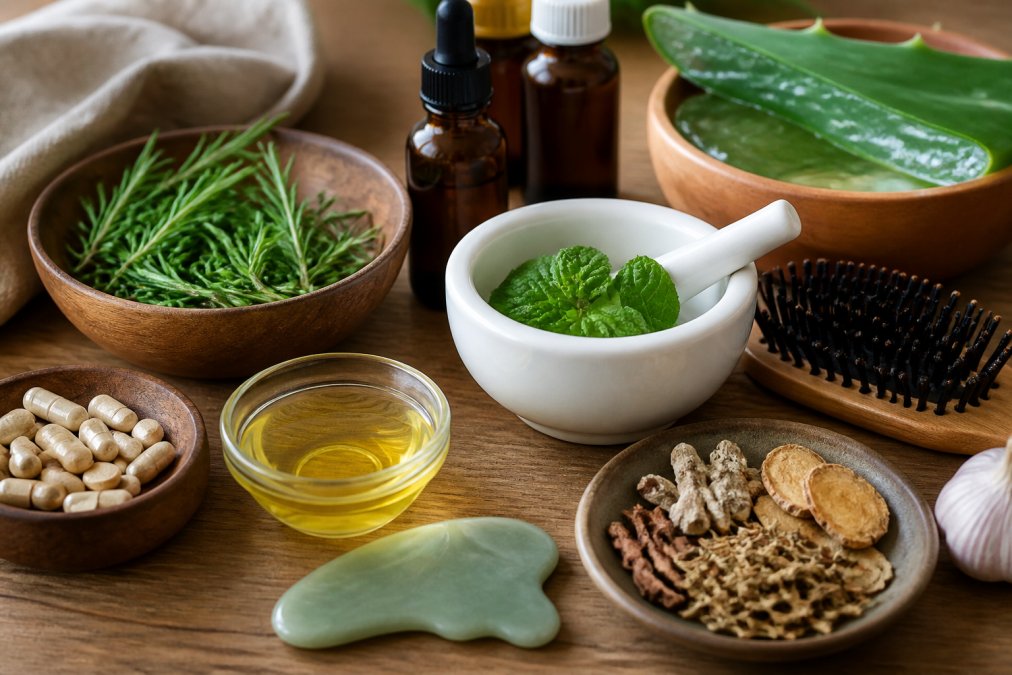
Essential oils are among the most studied natural interventions for hair loss. These concentrated plant extracts are applied topically, usually diluted in a carrier oil, to stimulate the scalp and support follicle health.
Rosemary Oil vs. Minoxidil: The Evidence
Rosemary oil is the standout. A clinical trial compared it directly against minoxidil and found comparable hair regrowth after six months, with less scalp itching (PubMed). The mechanism appears to be improved scalp circulation and reduced inflammation, primarily through carnosic acid.
Peppermint and Pumpkin Seed Oil
Peppermint oil creates a cooling sensation that signals increased blood flow. Pumpkin seed oil is thought to inhibit 5-alpha reductase, the enzyme that converts testosterone into DHT. One study in men with androgenetic alopecia found significant increases in hair count over 24 weeks compared to placebo (PubMed).
| Oil | Primary Mechanism | How to Use | Realistic Timeline |
|---|---|---|---|
| Rosemary | Improves scalp circulation | Diluted topical, nightly | 3-6 months |
| Peppermint | Increases blood flow sensation | Diluted topical, 2-3x weekly | 2-4 months |
| Pumpkin Seed | May block DHT production | Oral supplement or topical | 4-6 months |
Safety Protocols: Dilution, Patch Testing, and Contraindications
Essential oils are potent; undiluted application can cause chemical burns, severe contact dermatitis, and systemic toxicity. The National Eczema Association recommends a maximum dilution of 1-2 percent for sensitive skin; for scalp use, 3-5 percent is generally safe (nationaleczema.org). Always mix into a carrier oil, jojoba, argan, or fractionated coconut oil, never apply directly.
Before full application, perform a patch test: dilute the oil to intended strength, apply a dime-sized amount to your inner forearm, and cover with a bandage for 48 hours. Redness, itching, swelling, or blistering means your skin is reacting, do not use that oil on your scalp.
Peppermint oil is contraindicated for infants and young children due to risk of respiratory distress. Rosemary oil may interact with blood pressure medications and anticoagulants. Pregnant or nursing women should consult their obstetrician before use. If you have a known allergy to plants in the Lamiaceae family (mint, basil, sage), rosemary and peppermint oils are likely to trigger a reaction.
Evidence Grading: What We Know vs. What We Hope
A critical look at the research reveals a hierarchy of evidence:
- Clinically proven (human trials): Rosemary oil (one comparative trial against minoxidil), pumpkin seed oil (one placebo-controlled trial)
- Promising but preliminary (animal or small pilot studies): Peppermint oil (mouse model showing increased follicle depth), lavender oil (small human case series)
- Anecdotal only (tradition or practitioner reports): Tea tree oil, clary sage, cedarwood
This grading sets realistic expectations. The oils with the strongest evidence are rosemary and pumpkin seed; the others should be viewed as adjuncts. When a product claims to contain "seven essential oils for hair growth," ask which ones have human data behind them.
Cost-Benefit: Time Investment vs. Realistic Results
A nightly rosemary oil routine costs roughly $15-$25 per month and about 5 minutes per day. After six months, the realistic outcome for mild to moderate thinning is stabilization of shedding and possible fine regrowth. Compared to low-level laser therapy ($200-$600) or platelet-rich plasma ($500-$1,500 per session), essential oils are among the most cost-effective evidence-based natural options.
The trade-off is compliance. Oils require daily application without exception; a sporadic routine will produce no measurable result. If you cannot commit to a nightly ritual, apply a once-daily leave-in blend in the morning instead, consistency matters more than timing.
2. Dietary Changes for Hair Loss: Nutrients That Matter
Hair is one of the most metabolically active tissues in the body. Dietary changes for hair loss focus on correcting deficiencies and reducing inflammation rather than relying on any single "miracle" food.
Addressing Nutrient Deficiencies: Iron, Vitamin D, and Zinc
A common thread among women with chronic shedding is a deficiency in iron, vitamin D, or zinc. Rather than guessing, ask your doctor for a blood panel before supplementing. Taking iron without a confirmed deficiency can cause digestive distress, and excessive zinc can trigger copper deficiency.
Herbal Supplements: Saw Palmetto and Korean Red Ginseng
Saw palmetto, like pumpkin seed oil, is believed to inhibit DHT production. Korean red ginseng has shown promise in clinical research; one study reported increased hair density and thickness compared to placebo. Quality varies widely between brands, so choose products verified by third-party testing.
3. Stress Management and Mindfulness for Hair Regrowth
Stress does not cause alopecia areata, but it can trigger flare-ups and prolong shedding. Elevated cortisol pushes hair follicles into the resting phase prematurely, which is why many women notice increased hair loss two to three months after a stressful event.
Mindfulness-based practices measurably lower stress hormones. Regular meditation, deep breathing, and gentle movement like yoga can reduce cortisol and systemic inflammation. A daily ten-minute practice outperforms an intense weekend retreat.
4. Acupuncture and Traditional Chinese Medicine for Follicle Stimulation
Acupuncture, a cornerstone of Traditional Chinese Medicine, offers systemic regulation. By inserting fine needles at specific points, a practitioner aims to reduce inflammatory activity, improve scalp blood flow, and rebalance the body's energy flow. The National Alopecia Areata Foundation references it as a complementary therapy for autoimmune inflammation.
Start Your Hair & Scalp Healing Journey →
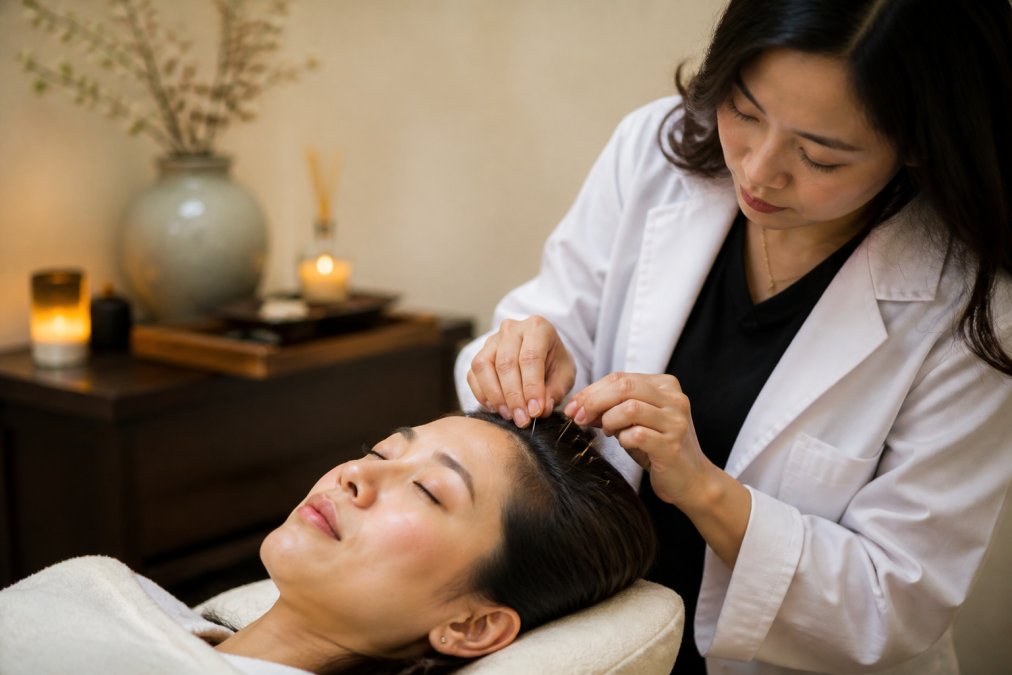
A typical course involves weekly sessions for eight to twelve weeks, each lasting 45 to 60 minutes. Results are gradual, and acupuncture works best as part of a broader plan, addressing the internal terrain that allows hair to regrow for those who have not responded to topical treatments alone.
5. Scalp Massage and Aromatherapy for Natural Hair Regrowth for Women
Scalp massage is the most accessible holistic treatment on this list. Regular massage increases scalp blood flow and may help stretch the cells lining hair follicles. One study found that daily scalp massages for 24 weeks led to noticeably thicker hair.
For natural hair regrowth for women, combining massage with aromatherapy amplifies the effect. A blend of lavender and rosemary oils in a carrier base, massaged into the scalp for five minutes daily, addresses both circulation and stress, at almost no cost and virtually no risk.
Safety First: Patch Testing and When to See a Dermatologist
Before applying any essential oil to your scalp, perform a patch test to rule out contact dermatitis. Dilute the oil as intended, apply a small amount to your inner forearm, and cover with a bandage for 48 hours. If redness, itching, or swelling develops, that oil is not safe for you.
The Full Patch Testing Protocol
A proper patch test requires more than a quick dab:
- Prepare the dilution exactly as you plan to use it on your scalp. Testing an undiluted oil gives a false positive; testing a weaker dilution than intended gives a false negative.
- Choose the test site, the inner forearm or behind the ear. The skin there is thinner and more reactive than the scalp, so it will show a reaction earlier.
- Apply and cover with an adhesive bandage. Leave it in place for 48 hours without getting it wet.
- Observe for 24 hours after removal. Some reactions appear only after the bandage comes off and the area is exposed to air.
- Repeat the test twice over two weeks. A single negative test can miss a delayed sensitization reaction that develops with repeated exposure.
If you have a history of allergic contact dermatitis, eczema, or sensitive skin, consider a formal patch test from a dermatologist. Many essential oils share allergenic compounds, limonene and linalool are common sensitizers in lavender, citrus, and many "hair growth" blends.
Integrating Holistic Treatments with Medical Care
Most articles present natural and medical treatments as opposing choices. In practice, the safest approach is integration, but it requires coordination. The American Academy of Dermatology advises patients to inform their dermatologist about all supplements and topical products they use.
What can be safely combined:
- Rosemary oil applied topically alongside minoxidil, the two work through different mechanisms (circulation vs. follicle stimulation) and do not interfere
- Scalp massage and stress reduction alongside topical corticosteroids, massage improves penetration and stress reduction may reduce flare frequency
- Iron or vitamin D supplementation (when deficient) alongside any medical treatment, correcting deficiencies supports the follicle's ability to respond
What requires caution:
- Saw palmetto and pumpkin seed oil both inhibit DHT. Combining them with prescription 5-alpha reductase inhibitors like finasteride may cause additive effects, including libido changes and breast tenderness, a risk that is rarely discussed in natural health content
- High-dose zinc supplements can interfere with copper absorption and may reduce the effectiveness of certain antibiotics
- Korean red ginseng can lower blood sugar and blood pressure; if you take diabetes medication or antihypertensives, monitor closely
- St. John's Wort, sometimes included in "stress support" blends for hair loss, accelerates the breakdown of many medications, including oral contraceptives and immunosuppressants used for alopecia areata
Red Flags: When Natural Care Is Not Enough
See a board-certified dermatologist before starting any holistic regimen if you experience:
- Sudden, rapid hair loss, more than 100 hairs per day or visible thinning over 2-3 weeks
- Bald patches spreading quickly, especially if they merge into larger areas
- Scalp pain, burning, or redness, this can indicate inflammatory conditions like lichen planopilaris that require biopsy and prescription treatment
- Hair loss accompanied by fatigue, weight changes, or joint pain, this may signal an underlying systemic condition like lupus or thyroid disease
- Hair loss in children, pediatric alopecia requires specialized evaluation
These symptoms can indicate conditions where delayed medical treatment leads to permanent follicle damage. Holistic treatments work best as complementary medicine, not as a replacement for dermatological care.
Building Your Safety Checklist
Before adding any new natural treatment, run this checklist:
- Have I had a dermatological diagnosis?, Treating "hair loss" without knowing the type is like treating "fever" without knowing the infection.
- Have I reviewed this with my doctor?, Especially if I take prescription medications or have chronic health conditions.
- Have I patch tested the product?, Twice, over two weeks, at the exact dilution I plan to use.
- Do I know the expected timeline?, If a product promises results in under 6 weeks, it is marketing, not medicine.
- Am I tracking progress objectively?, Take monthly photos in the same lighting and angle. Subjective memory is unreliable for hair regrowth.
Conclusion: Building Your Integrative Treatment Plan
The most effective holistic treatments for alopecia share three traits: they are evidence-informed, personalized, and sustained over months. Essential oils like rosemary offer a proven topical starting point. Dietary corrections and stress management address the internal environment. Acupuncture and scalp massage support circulation and immune balance. None work overnight, and none should replace a dermatological diagnosis.
What sets an integrative approach apart is addressing multiple pathways at once. At Sophiatrichoholistic Hair Spa LLC, we combine Traditional Chinese Medicine with clinical trichology to create personalized plans. Whether you are navigating postpartum shedding, chronic scalp inflammation, or an alopecia diagnosis, the goal is the same: restore balance from the root and support sustainable regrowth.
Start Your Hair & Scalp Healing Journey with a consultation that looks at the whole picture, not just the symptoms.
Frequently Asked Questions
What vitamin deficiency causes alopecia?
Several deficiencies are linked to hair loss. A lack of vitamin D is common in people with alopecia areata. Low iron levels (ferritin) can also trigger shedding, as can insufficient zinc and biotin. A simple blood test can identify these gaps. Rather than self-supplementing, ask your doctor to check your levels so you can correct a true deficiency with targeted dietary changes for hair loss.
Which essential oil is best for alopecia?
Rosemary oil has the strongest clinical evidence. One study found it performed as well as 2% minoxidil for hair regrowth over six months. Peppermint oil and pumpkin seed oil also show promise for follicle stimulation. Always dilute essential oils for alopecia in a carrier oil, such as jojoba or argan, and perform a patch test 24 hours before use to rule out contact dermatitis.
Can acupuncture help with alopecia areata?
Acupuncture is used to support the body's stress response and reduce systemic inflammation, which are relevant for autoimmune conditions like alopecia areata. While research is still emerging, many patients find it a valuable part of a broader plan. It is considered a complementary therapy, so keep your dermatologist informed and continue prescribed medical treatments while exploring this option.
How long before I see results from holistic treatments?
Hair grows slowly, so you will not see a difference overnight. Expect to stay consistent for at least three to six months before judging whether a natural approach is working. Track progress with monthly photos in the same lighting. If you see no change after six months, or if shedding increases, schedule a consultation with a dermatologist to reassess your treatment plan.