 Listicle
Which Foods Actually Promote Female Hair Regrowth?
Quick Summary
Eggs, wild-caught salmon, spinach, lentils and walnuts are a practical base for female hair regrowth because together they supply protein, iron, zinc, biotin, omega-3s and vitamin C. Food supports the follicle best as part of a plan that also addresses hormones and scalp health.
- Cook eggs rather than eating them raw, since raw egg white reduces biotin absorption.
- Pair spinach and lentils with vitamin C sources like bell pepper or citrus to improve iron absorption.
- Leave about an hour between coffee or tea and an iron-rich meal to avoid blocking iron absorption.
- Spread protein across three meals rather than one large serving at dinner for a steadier supply.
- Expect gradual changes over several months, and consult a professional if shedding is heavy or sudden.
Table of Contents
- Why Nutrition Matters for Female Hair Regrowth
- Nutrients for Female Hair Density: What Your Hair Needs
- Top 5 Foods to Prevent Hair Loss
- Iron, Zinc and Protein Sources for Shedding and Thinning
- Omega-3s, Vitamin E and Antioxidant Foods for the Scalp
- How Hormones and Nutrient Absorption Shape Your Results
- What to Eat to Stop Hair Fall Immediately, and What Takes Time
- Booking a Consultation to Build Your Hair Regrowth Plan
- Frequently Asked Questions
Why Nutrition Matters for Female Hair Regrowth
Last Updated: November 4, 2026
Hair regrowth in women is shaped by far more than shampoo and styling. What women eat, how well their bodies absorb it, and how their hormones are balanced all affect the health of the follicle. Foods that promote female hair regrowth work best as part of a broader plan that addresses the root cause.
Hair is built from protein, and it depends on a steady supply of vitamins and minerals to keep growing. When intake falls short, the body tends to prioritize vital organs over hair, which can show up as thinning or increased shedding. Hair and scalp generally respond best when nutrition is steady over several months rather than adjusted in short bursts.
Nutrition is also only one piece of the picture. Stress, hormonal shifts and chronic scalp conditions such as seborrheic dermatitis or psoriasis can all interfere with how the follicle functions, even when the diet looks adequate on paper. Readers curious about how stress interferes with hair growth and nutrient uptake can find the deeper explanation there.
Nutrients for Female Hair Density: What Your Hair Needs
Hair density depends on a handful of nutrients working together. Protein supplies the amino acids the hair shaft is made from, while iron, zinc and B vitamins support the cells that produce new hair. Omega-3 fatty acids and vitamin E help keep the scalp environment healthy.
A practical way to think about it: protein builds the strand, minerals and vitamins support the growth cycle, and healthy fats keep the scalp supple. Missing any one of these can slow the process.
Top 5 Foods to Prevent Hair Loss
A short list is useful only if it explains why each food earns its place. These five foods are a sensible base for most women because each one delivers several of the nutrients the follicle needs at once, and each has a clear mechanism behind it.
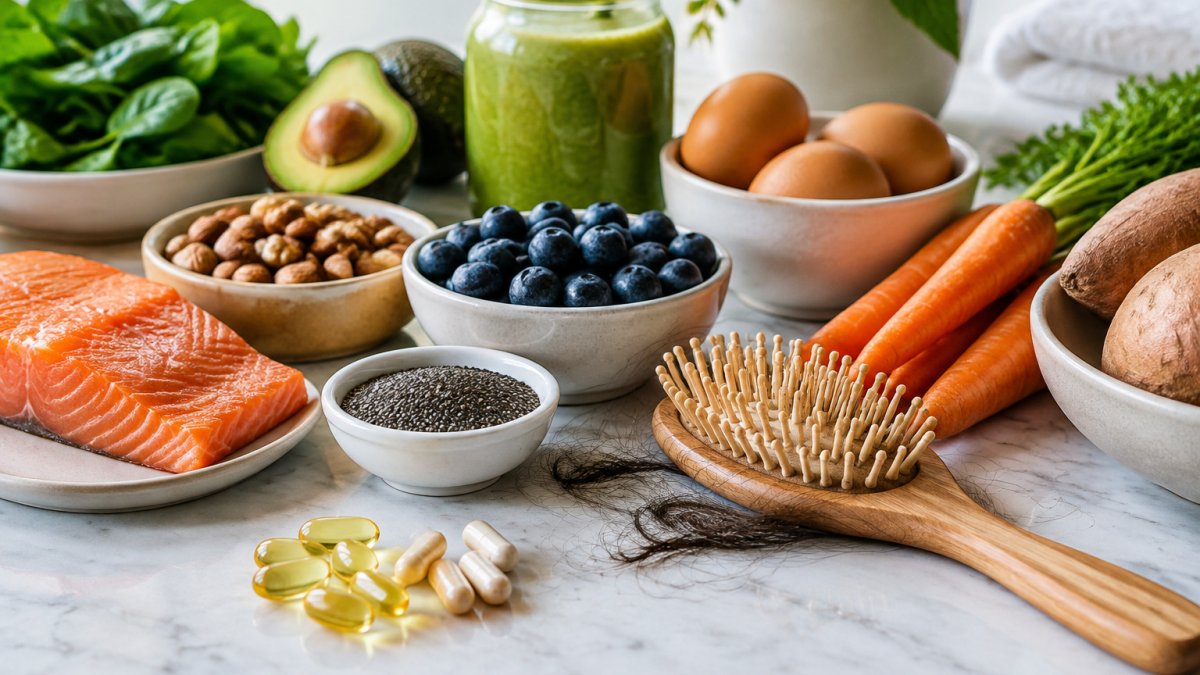
- Eggs, The yolk is one of the few common food sources of biotin and choline, and the white supplies a complete amino acid profile for keratin production. Cook them rather than drinking them raw; raw egg white contains avidin, which binds biotin and reduces absorption.
- Wild-caught salmon, Provides omega-3 fatty acids (EPA and DHA) that support the scalp's lipid barrier and help calm inflammation around the follicle, plus high-quality protein and vitamin D.
- Spinach, Supplies non-heme iron, folate, and vitamin C in the same leaf, which matters because the vitamin C in spinach improves absorption of its own iron. Pairing it with a squeeze of lemon or a few strips of bell pepper can help improve absorption.
- Lentils, A plant protein that also carries iron, zinc, and folate. Lentils are also a fermentable fiber, which feeds gut bacteria that influence how well nutrients are absorbed.
- Walnuts, One of the few nuts with a meaningful omega-3 content (alpha-linolenic acid), plus biotin, vitamin E, and polyphenols. Keep them cool and sealed; the oils go rancid at room temperature over months.
What separates these five from a generic list is that they cover protein, iron, zinc, biotin, omega-3s, and vitamin C across a week without requiring supplements. No single food prevents hair loss on its own, and the overall dietary pattern generally matters more than any one food.
Watch out: Loading up on raw spinach and lentils without any vitamin C source at the same meal is a common mistake; the iron passes through largely unabsorbed.
The five foods below each supply several nutrients the follicle needs, as the list above explains.
| Food | Key nutrients | Why it helps |
|---|---|---|
| Eggs | Biotin, choline, complete amino acids | Supports keratin production; cook them |
| Wild-caught salmon | Omega-3s (EPA, DHA), vitamin D | Supports scalp lipid barrier, calms inflammation |
| Spinach | Non-heme iron, folate, vitamin C | Vitamin C in the leaf improves its own iron absorption |
| Lentils | Plant protein, iron, zinc, folate | Covers protein, iron and zinc in one food |
| Walnuts | Alpha-linolenic acid, biotin, vitamin E | Adds omega-3s and antioxidants; store cool and sealed |
Iron, Zinc and Protein Sources for Shedding and Thinning
Low iron is one of the more common dietary links to shedding in women. Lentils and spinach supply iron, and absorption improves when they are paired with vitamin C sources such as bell peppers or citrus. Eggs and Greek yogurt are sources of protein.
Zinc plays a role in the follicle's normal growth cycle. Lentils, eggs and chia seeds all contribute zinc, and combining them across the week is an easy way to cover the need.
Omega-3s, Vitamin E and Antioxidant Foods for the Scalp
Wild-caught salmon, walnuts and chia seeds are strong sources. A science-based guide to eating for scalp inflammation and hair growth explores this anti-inflammatory food angle in more depth. Avocados contain vitamin E and monounsaturated fats. Sweet potatoes provide beta-carotene, which the body converts to vitamin A.
Start Your Hair & Scalp Healing Journey →
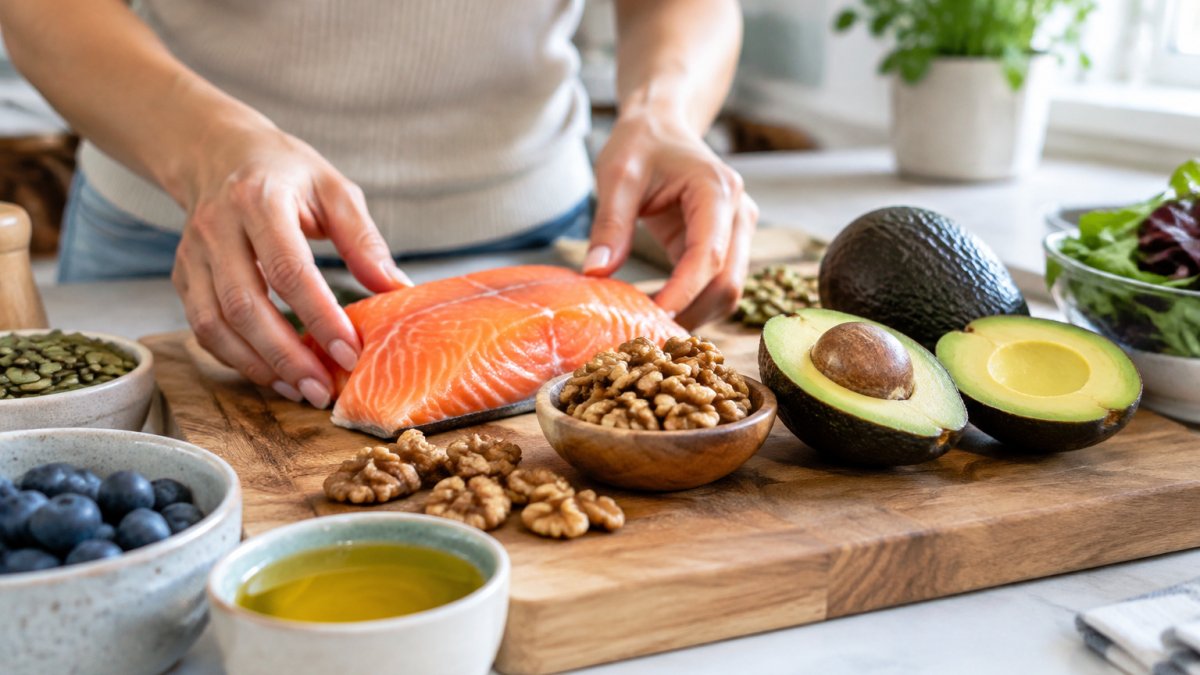
A varied plate that includes colorful vegetables and fruit is a reasonable approach.
How Hormones and Nutrient Absorption Shape Your Results
Most food lists for hair regrowth stop at the nutrient and skip the two factors that decide whether that nutrient ever reaches the follicle: the hormonal context unique to women, and the bioavailability of the food itself.
Hormonal influence on the follicle. Hair growth follows a cycle of growth (anagen), transition (catagen), and rest (telogen). Estrogen tends to prolong anagen, which is why many women notice thicker hair during pregnancy. A detailed guide to balancing hormones for hair growth explains these influences further. When estrogen falls sharply after childbirth, a large share of follicles shift into telogen at once, and shedding peaks roughly two to four months postpartum. Perimenopause brings a more gradual estrogen decline alongside fluctuating progesterone, and some women see thinning at the part and temples. Polycystic ovary syndrome (PCOS) raises androgen levels, which can shrink follicles at the front of the scalp. In each case, food supports the follicle but does not override the hormonal signal; that is why a nutritional plan works best alongside a clinician who is tracking the hormonal piece.
Bioavailability: how to combine foods. The same iron-rich meal can deliver very different amounts of usable iron depending on what else is on the plate.
- Iron plus vitamin C. Non-heme iron from spinach, lentils, and beans is absorbed poorly on its own. Pairing it with vitamin C, bell pepper, citrus, tomato, broccoli, can multiply absorption. A lentil soup with diced tomatoes is a better iron meal than lentils alone.
- Iron minus inhibitors. Tea, coffee, and cocoa contain polyphenols that bind iron. Drinking coffee with a meal can cut iron absorption substantially; leave an hour between the cup and the plate.
- Zinc and phytates. Whole grains and legumes carry phytates that bind zinc. Soaking, sprouting, or fermenting (as with sourdough or soaked oats) reduces phytates and frees the zinc.
- Fat-soluble vitamins need fat. Vitamins A, D, E, and K from sweet potato, leafy greens, and salmon are absorbed far better with a little fat in the same meal, olive oil, avocado, or the fat already in salmon.
- Protein spread across the day. The body does not store amino acids for hair the way it stores fat; spreading protein across three meals supports a steadier supply than one large serving at dinner.
Gut health and inflammation.
A food list applied without considering hormonal balance, absorption, and scalp health together may produce disappointing results.
What to Eat to Stop Hair Fall Immediately, and What Takes Time
No food stops hair fall overnight. Hair grows slowly, and nutritional changes typically take several months to show. In the short term, focus on consistent protein, iron-rich meals and omega-3 sources. Over the longer term, steady intake of the full range of nutrients supports density.
Expect gradual improvement rather than instant results, and consult a qualified professional if shedding is heavy or sudden.
Booking a Consultation to Build Your Hair Regrowth Plan
Every woman's hair loss has its own cause, so a general food list is only a starting point. If you want a personalized plan that considers your scalp condition, hormones and nutrition together, you can book a consultation with our team at Sophiatrichoholistic Hair Spa LLC.
Frequently Asked Questions
What foods stimulate hair regrowth?
No single food forces hair to regrow, but foods that supply protein, iron, zinc, biotin and omega-3 fatty acids support the cells that build hair. Eggs, wild-caught salmon, lentils, spinach and walnuts each supply several of these nutrients. Regrowth depends on the underlying cause of loss, so a clinician should evaluate persistent shedding before you rely on diet alone.
What vitamin am I lacking if my hair is falling out?
Low iron, low vitamin D, low zinc and low biotin are among the deficiencies most often linked to shedding, but a blood test is the only reliable way to know. Ferritin, the stored form of iron, is commonly checked in women with thinning hair. Ask a physician to order labs rather than starting high-dose supplements on your own.
Can a deficiency in iron or zinc cause female hair loss?
Yes, low iron and low zinc are both associated with increased shedding in women, and low iron is one of the more common nutritional contributors. Spinach, lentils and eggs supply these minerals. Pairing iron-rich plant foods with vitamin C sources such as peppers or citrus improves how well the body absorbs iron.
How long does it take to see hair growth results from dietary changes?
Hair grows roughly half an inch per month, and the visible effects of a dietary change typically take three to six months because of the hair growth cycle. Most people judge results over several months rather than weeks. If shedding continues beyond that window, consult a qualified professional.