 Listicle
Trichology Treatment Options for Thinning Hair
Last Updated: November 5, 2026
Quick Summary
Trichology treatment for thinning hair begins with a clinical diagnosis, not a product recommendation. A trichologist examines the scalp under magnification, reviews your health history, and identifies which stage of the hair cycle has gone wrong before suggesting options such as minoxidil, prescription topicals, PRP, or low-level laser therapy.
- Topical minoxidil comes in 2% and 5% strengths and is available without a prescription.
- Increased shedding in the first two to six weeks of minoxidil use is common and usually temporary.
- Spironolactone is commonly prescribed off-label for female pattern thinning linked to hormonal imbalance.
- PRP is often combined with minoxidil or low-level laser therapy rather than used alone.
- Holistic hair restoration services pair Traditional Chinese Medicine with clinical trichology for women aged 18 to 65.
Table of Contents
- How Trichology Approaches Thinning Hair
- Causes of Female Hair Thinning a Trichologist Will Check
- 1. Topical Minoxidil: The Over-the-Counter Standard
- 2. Prescription Options: Finasteride, Spironolactone, and Custom Topicals
- 3. Platelet-Rich Plasma (PRP) Therapy for Follicle Stimulation
- 4. Low-Level Laser Therapy and Photobiomodulation
- 5. Holistic Hair Restoration Services and Scalp-First Care
- How to Find a Clinical Trichologist Near Me
- Frequently Asked Questions
How Trichology Approaches Thinning Hair
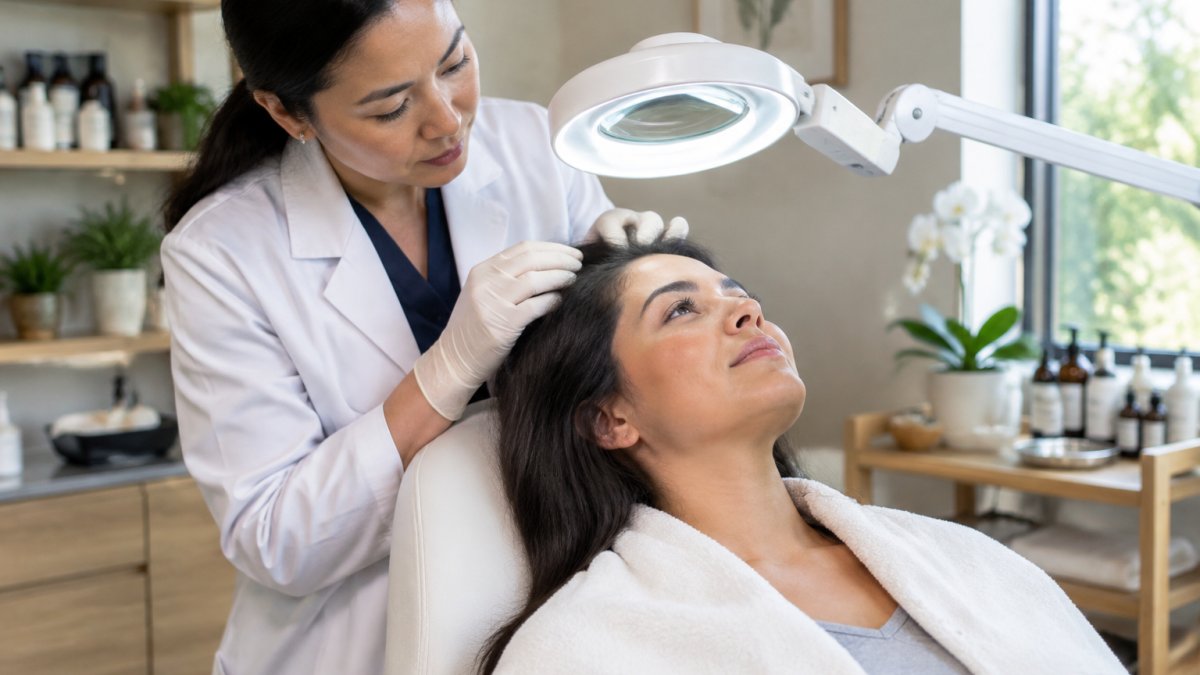
Trichology treatment options for thinning hair start with a clinical diagnosis, not a product recommendation. A trichologist examines the scalp under magnification, reviews your health history, and identifies which stage of the hair cycle has gone wrong before suggesting anything. At Sophiatrichoholistic Hair Spa LLC, we treat the scalp as the foundation: without a healthy follicle environment, no topical or oral therapy reaches its full potential.
Trichology is the clinical study of the hair and scalp, focused on diagnosing why hair is shedding, thinning, or breaking rather than simply masking the symptom. A trichologist looks at three things most people never consider: hair miniaturization, scalp inflammation, and the ratio of hairs in the anagen phase versus the telogen phase.
That distinction matters. Many women arrive having tried shampoo after shampoo with no plan. A structured trichology treatment changes the order of operations.
Causes of Female Hair Thinning a Trichologist Will Check
Female hair thinning rarely has one cause. A trichologist typically screens for several at once: androgenetic alopecia, telogen effluvium after pregnancy or illness, thyroid imbalance, iron deficiency, scalp psoriasis or seborrheic dermatitis, and trichotillomania. Each produces a different thinning pattern, and each responds to a different trichology treatment.
Androgenetic alopecia can show up as widening part lines and diffuse thinning. Telogen effluvium is often associated with sudden shedding some weeks after a trigger. Scalp inflammation from psoriasis or seborrheic dermatitis creates flaking and oiliness that can interrupt the hair cycle. A clinical diagnosis separates these before any plan is built. For a deeper look at what drives female alopecia, see our guide on root causes of female alopecia explained.
| What the trichologist checks | Why it matters | Typical sign |
|---|---|---|
| Hair miniaturization | Signals androgenetic alopecia | Thinner, shorter strands at the part |
| Scalp inflammation | Disrupts the hair cycle | Redness, flaking, oiliness |
| Shedding pattern | Distinguishes telogen effluvium | Sudden diffuse loss after a trigger |
| Bloodwork review | Rules out thyroid and iron issues | Fatigue, cold intolerance |
1. Topical Minoxidil: The Over-the-Counter Standard
Topical minoxidil is the most accessible trichology treatment for thinning hair, available without a prescription in 2% and 5% strengths. It is a vasodilator that prolongs the anagen (growth) phase and pushes resting follicles back into active growth, which is why density improves gradually rather than overnight. Rogaine is the best-known brand, and generic store-brand versions are also available.
The 2% solution is historically marketed toward women, while the 5% strength is available in both solution and foam forms. Foam formulations are sometimes chosen by women because they may be less irritating to the scalp. Application matters as much as the product: the liquid or foam needs to reach the scalp itself, not sit on the hair shaft, and it is typically applied once or twice daily to a dry scalp.
Expect a shedding phase. Many users notice increased shedding in the first two to six weeks as resting hairs are pushed out to make room for new growth. This is a common pattern and usually temporary, but it is the single most common reason people stop treatment before results appear. Visible changes typically take several months of consistent use, and individual timelines vary.
The catch is commitment. Minoxidil only holds results while you keep applying it, and stopping reverses the gains within a few months. It also works best on early-stage hair loss where follicles are still active; once a follicle has fully miniaturized, topical minoxidil is unlikely to revive it. If you want a wider comparison of options, our guide to thinning hair solutions that actually work covers the alternatives.
Best for: women with early-stage androgenetic alopecia who want a low-cost, non-prescription starting point. Skip if: shedding is sudden and diffuse, which points to a different cause such as telogen effluvium, or if you have a history of scalp sensitivity to propylene glycol, the vehicle used in many liquid formulations.
Watch out: buying a 5% product and applying it to damp hair or using more than the labeled dose does not speed results and raises the risk of scalp irritation and unwanted facial hair growth.
2. Prescription Options: Finasteride, Spironolactone, and Custom Topicals
Prescription trichology treatment options address hormonal drivers that over-the-counter products cannot reach. Finasteride blocks the conversion of testosterone to DHT and is FDA-approved for pattern hair loss, though it is used far more cautiously in women. Spironolactone, an androgen receptor blocker, is commonly prescribed off-label for female pattern thinning linked to hormonal imbalance. Custom compounded topicals combine active ingredients under physician supervision.
These require a dermatological assessment and ongoing monitoring, including bloodwork for spironolactone. They are not self-start options.
3. Platelet-Rich Plasma (PRP) Therapy for Follicle Stimulation
PRP therapy uses your own concentrated blood platelets, injected into thinning areas to stimulate dormant follicles. A small sample of your blood is spun in a centrifuge to separate the platelet-rich plasma from the red cells, and that concentrate is then injected across the thinning zone with a fine needle. It is a non-surgical, in-office procedure, and pricing depends on the clinic and the number of sessions; contact the provider for current fees.
Start Your Hair & Scalp Healing Journey →
Protocols vary, and a provider will recommend a schedule based on your assessment. That cadence matters for budgeting: the upfront series is the larger expense, and the maintenance schedule is the ongoing one. Gains may taper over time if treatment is not continued.
PRP suits women seeking a regenerative route without surgery, particularly those with early-to-moderate androgenetic alopecia or telogen effluvium who want to avoid hormonal prescriptions. It is often combined with minoxidil or low-level laser therapy rather than used alone, because the mechanisms are complementary: PRP supports follicle signaling while topicals and light support the growth phase.
Honest expectation-setting matters here. Results vary with platelet quality, injection technique, and how advanced the thinning is, and PRP is not a cure for scarring alopecia or fully miniaturized follicles. Candidates are generally women with active follicles and a clear diagnosis.
Watch out: clinics that offer PRP without a scalp examination or bloodwork review are skipping the diagnostic step that determines whether PRP is appropriate at all, and a low-platelet count or an undiagnosed thyroid issue can make the investment pointless.
4. Low-Level Laser Therapy and Photobiomodulation
Low-level laser therapy, also called photobiomodulation, delivers non-thermal light energy to the scalp to support cellular activity and circulation. Devices range from in-office treatments to home-use caps. It is often considered for maintenance between other treatments, though individual responses vary.
The tradeoff is variability. Results differ significantly between users, and consistency of use drives outcomes. We treat LLLT as a supporting layer, not a primary solution.
5. Holistic Hair Restoration Services and Scalp-First Care
Holistic hair restoration services combine clinical trichology with whole-body care, because the scalp reflects what is happening inside. At Sophiatrichoholistic Hair Spa LLC, we pair Traditional Chinese Medicine with clinical trichology. Our treatments are designed for women aged 18 to 65, and we offer both in-spa sessions and home hair growth solutions.
Scalp-first care means calming inflammation before chasing regrowth. For routines that support this, read our guide to the best scalp care for thinning hair.
How to Find a Clinical Trichologist Near Me
Finding a clinical trichologist near you comes down to credentials, scope, and fit. Look for a certified holistic trichologist or licensed practitioner who specializes in women's hair and scalp conditions, and confirm they run a proper clinical diagnosis before selling treatments. Ask how personalized the plan is and what maintenance looks like long term.
Start with our guide to finding a clinical trichologist near me for a practical walkthrough, then review how to choose a certified clinical trichologist before you commit. The American Academy of Dermatology is a useful reference for understanding scalp conditions, and the FDA's guidance on hair loss treatments clarifies which products are actually approved. For scalp-specific conditions, the National Institute of Arthritis and Musculoskeletal and Skin Diseases explains psoriasis and related disorders in plain terms.
Thinning hair is rarely solved by a single product, and the women who see the best results are the ones who start with a real diagnosis. If you are ready to address the root cause rather than the symptom, Sophiatrichoholistic Hair Spa LLC offers personalized, women-only care that blends clinical trichology with Traditional Chinese Medicine, including scalp microbiome restoration, hormonal balance support, and both in-spa and home treatment plans. Get started with Sophiatrichoholistic Hair Spa LLC and build a plan around your scalp, not a generic shelf product.
Frequently Asked Questions
What do trichologists recommend for thinning hair?
A trichologist typically starts with a scalp analysis and clinical diagnosis to identify whether the cause is androgenetic alopecia, telogen effluvium, scalp inflammation, or another factor. From there, recommendations often combine topical minoxidil, prescription options when appropriate, and in-clinic therapies such as PRP or low-level laser therapy. Many also address scalp health, nutrition, and stress. The right trichology treatment depends on your hair cycle stage and pattern of thinning, so a personalized treatment plan matters more than any single product.
How does holistic trichology differ from standard medical hair treatments?
Standard medical care usually targets one mechanism, such as minoxidil for follicle stimulation or finasteride for hormone conversion. Holistic hair restoration services look at the whole picture: scalp microbiome, inflammation, hormonal balance, diet, and stress. At Sophia Trichoholistic, that means blending Traditional Chinese Medicine with clinical trichology to address root causes rather than symptoms alone. The two approaches can work together, and a consultation helps you decide which combination suits your situation.
Is it better to see a trichologist or dermatologist for hair loss?
Both have a place. A dermatologist is a physician who can diagnose skin and scalp disease, prescribe medication, and order blood work. A clinical trichologist focuses specifically on hair and scalp health and often provides ongoing scalp analysis and treatment programs. For scarring alopecia, sudden shedding, or suspected thyroid issues, start with a dermatologist. For pattern thinning, scalp inflammation, or maintenance care, a trichologist can guide you. Many people use both, and a trichologist will refer you out when medical evaluation is needed.
Can scalp health improvements reverse thinning hair?
Improving scalp health can support regrowth when inflammation, oiliness, or conditions like seborrheic dermatitis or scalp psoriasis are contributing to hair miniaturization and breakage. Reducing scalp inflammation and restoring the scalp microbiome gives follicles a better environment. That said, scalp care alone rarely reverses advanced androgenetic alopecia, because follicle stimulation and hormonal factors also matter. Early-stage hair loss responds best. A scalp analysis can show whether your thinning is driven mainly by scalp condition or by pattern hair loss.