 Listicle
7 Thinning Hair Solutions That Actually Work
Table of Contents
- Understanding Hair Loss Causes in Women
- Quick Comparison: Thinning Hair Solutions at a Glance
- 1. Minoxidil for Hair Loss: Over-the-Counter Topical Treatment
- 2. Vitamins for Hair Growth: Nutritional Support From Within
- 3. Scalp Care for Thinning Hair: Foundation for Regrowth
- 4. Holistic and Traditional Medicine Approaches to Thinning Hair Solutions
- 5. Prescription Medications and Clinical Treatments for Hair Regrowth
- Treatment Timelines, Cost, and When to See a Healthcare Professional
- Frequently Asked Questions
Last Updated: October 12, 2026
Understanding Hair Loss Causes in Women
Hair thinning affects millions of women, and the causes are complex. At Sophiatrichoholistic Hair Spa LLC, effective thinning hair solutions start with understanding what's happening at the root.
Common causes include hormonal shifts, nutritional deficiencies, scalp inflammation, and stress-related disruptions to the growth cycle. Female pattern hair loss, postpartum telogen effluvium, thyroid dysfunction, and iron deficiency each require different approaches, what works for postpartum hair loss won't address androgenetic alopecia, and topical treatment alone rarely solves inflammation-driven thinning.
Most conventional approaches treat the symptom rather than the cause. Sustainable regrowth requires identifying whether your thinning stems from hormonal imbalance, poor scalp microbiome health, nutritional gaps, or a combination, only then can you choose thinning hair solutions that address the root problem.
Quick Comparison: Thinning Hair Solutions at a Glance
| Solution Type | Best For | Timeline | Commitment Level |
|---|---|---|---|
| Minoxidil (topical) | Pattern hair loss, all hair types | 3-6 months to see results | Daily application |
| Nutritional supplements | Deficiency-related thinning | 2-4 months | Daily intake |
| Scalp care routine | Inflammation, breakage, all causes | 4-8 weeks | 2-3x weekly |
| Holistic treatments (TCM + trichology) | Root-cause regeneration | 2-3 months | Variable, personalized |
| Prescription medications | Androgenetic alopecia | 4-12 months | Daily or as directed |
1. Minoxidil for Hair Loss: Over-the-Counter Topical Treatment
Minoxidil is an over-the-counter topical medication applied directly to the scalp to stimulate follicles and promote regrowth, one of the most accessible thinning hair solutions.
It increases blood flow to follicles, extending the growth phase and thickening existing hairs. For women with pattern hair loss or early-stage thinning, it's often an effective first step, available as foam or liquid applied twice daily.
Minoxidil works best on early hair loss, with the most consistent results within 3-6 months. Regrowth is often less dramatic than hoped, and stopping means hair loss resumes. It's not a solution for inflammation-driven thinning or scalp conditions like seborrheic dermatitis or psoriasis, it can irritate an already inflamed scalp.
Generic minoxidil is significantly cheaper than brand-name versions, making this one of the more affordable thinning hair solutions to start with.
2. Vitamins for Hair Growth: Nutritional Support From Within
Hair growth depends on specific nutrients: biotin, zinc, iron, vitamin D, and B vitamins all play direct roles in follicle function and hair shaft strength. Many women with thinning have nutritional gaps topical treatments won't fix.
Biotin is the most commonly recommended supplement, though research on it alone is mixed. What matters more is a comprehensive approach: iron deficiency is a leading cause of shedding in women, and vitamin D insufficiency correlates strongly with pattern hair loss.
Supplements take 2-4 months before you notice thicker hair or reduced shedding, since you're waiting for new hair to grow in while weakened strands shed out. That's why Sophiatrichoholistic Hair Spa LLC often recommends combining nutritional support with scalp care and other thinning hair solutions.
Look for formulations that include biotin, zinc, iron (if deficient), vitamin D, and B-complex vitamins. Quality matters, cheap supplements often have poor absorption.
3. Scalp Care for Thinning Hair: Foundation for Regrowth
The scalp microbiome is the foundation for all hair growth. When inflammation, excess oil, or microbial imbalance disrupts scalp health, even the best supplements and medications underperform.
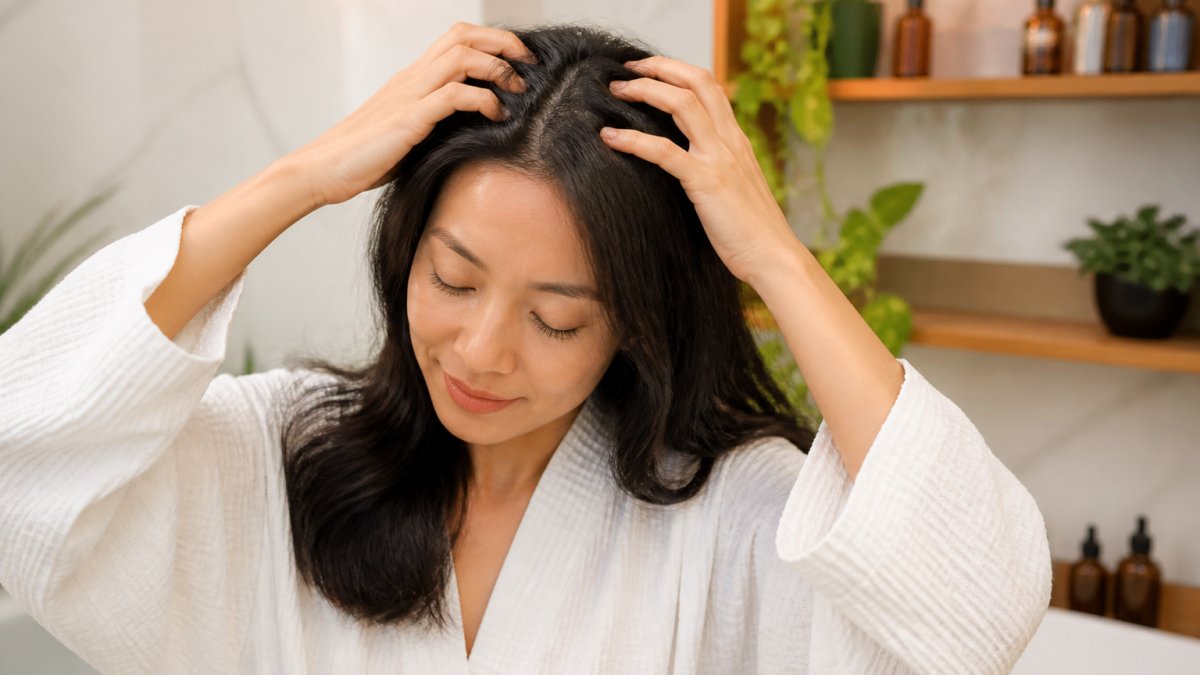
A proper scalp care routine includes gentle cleansing, massage to improve blood flow, and targeted treatments that reduce inflammation without stripping natural oils. Harsh shampoos and frequent washing worsen thinning by damaging the hair shaft and disrupting the scalp's protective layer.
Use a gentle, sulfate-free shampoo 2-3 times weekly, followed by moisturizing conditioner on the mid-lengths and ends. Once or twice weekly, do a 5-minute fingertip scalp massage in circular motions to boost blood flow. For inflammatory conditions like psoriasis or seborrheic dermatitis, specialized treatments become essential.
Scalp care results come faster than most expect: within 4-8 weeks of a consistent routine, you'll notice less breakage, reduced shedding, and improved scalp comfort. It's one of the few thinning hair solutions that works for virtually everyone, regardless of cause.
4. Holistic and Traditional Medicine Approaches to Thinning Hair Solutions
Holistic and traditional approaches are often considered alongside conventional treatments. Evidence quality can vary, and results depend on whether the underlying cause is something these methods can realistically address.
Traditional Chinese Medicine (TCM) frames hair thinning as internal imbalance, often described in terms of blood and qi circulation, kidney function, and hormonal regulation. Acupuncture and herbal formulas are the most common tools.
Clinical trichology is a separate discipline: a trichologist examines the scalp under magnification, assesses shedding patterns, and evaluates hair shaft integrity, distinguishing breakage from shedding, identifying inflammation, and tracking whether a treatment is working. It isn't a substitute for medical diagnosis, but it can complement one.
Where holistic approaches tend to help most:
- Stress-related telogen effluvium. Acupuncture, breathwork, and sleep-focused routines may reduce the stress load that's pushing follicles into the resting phase.
- Scalp inflammation support. Gentle botanical oils may soothe the scalp.
- Adjunct to conventional care. Some women use holistic methods alongside minoxidil or prescription treatment rather than instead of them.
Where they tend to fall short:
- Confirmed androgenetic alopecia. Herbal formulas and acupuncture alone rarely reverse pattern hair loss; they may slow it at best.
- Nutritional deficiencies. No amount of acupuncture corrects low ferritin or vitamin D. Lab work comes first.
- Thyroid or autoimmune causes. These require medical management, not herbal support.
Safety matters: herbal supplements can interact with medications. If you take prescription medication, are pregnant or breastfeeding, or have a liver, kidney, or thyroid condition, clear any herbal regimen with a clinician first.
Holistic approaches typically need 2-3 months before you can judge whether they're helping, and response varies widely. If shedding hasn't slowed and density hasn't changed, a re-evaluation of the approach may be beneficial.
National Center for Complementary and Integrative Health, herbal safety and interaction resources
Start Your Hair & Scalp Healing Journey →
If conventional dermatological treatments haven't produced lasting results, the problem may be systemic rather than topical, a reason to get a fuller workup to explore comprehensive solutions.
5. Prescription Medications and Clinical Treatments for Hair Regrowth
Prescription and in-office treatments sit at the aggressive end of the thinning hair solutions spectrum.
Oral minoxidil (low-dose). Originally a blood pressure medication, low-dose oral minoxidil is now a common off-label prescription for hair thinning.
Finasteride. FDA-approved for male pattern hair loss, not for women.
Spironolactone. One of the more commonly prescribed off-label options for women with hormonal acne and androgenetic alopecia. It blocks androgen receptors, slowing follicle miniaturization.
Topical prescription options. Topical finasteride and topical spironolactone are newer formulations that aim to reduce systemic exposure. Evidence is still developing, and availability varies by pharmacy.
Low-level laser therapy (LLT). FDA-cleared devices (caps, combs, bands) use specific red-light wavelengths to stimulate follicle activity and are cleared for androgenetic alopecia in men and women.
Platelet-rich plasma (PRP). PRP involves drawing your blood, concentrating the platelets, and injecting the plasma into the scalp, typically 3-4 sessions spaced about a month apart, then maintenance every 3-6 months.
When to see a healthcare professional promptly. Some patterns of hair loss warrant evaluation rather than trial-and-error with products:
- Sudden, rapid shedding over weeks
- Patchy, well-defined bald spots (possible alopecia areata)
- Scalp pain, burning, scaling, or pustules
- Thinning accompanied by fatigue, weight change, irregular periods, or cold intolerance (possible thyroid or hormonal issue)
- Hair loss that began after starting a new medication
- Loss accompanied by a rash, joint pain, or other systemic symptoms
Cost and commitment are the practical filters. Topical minoxidil and oral prescriptions vary in cost. LLT devices are a one-time purchase with ongoing use required. PRP is often a significant investment. None are one-and-done, and stopping any typically means the underlying process resumes.
American Academy of Dermatology, hair loss diagnosis and treatment guidance
Treatment Timelines, Cost, and When to See a Healthcare Professional
Understanding realistic timelines is critical for choosing the right thinning hair solutions. Hair grows in cycles, and most treatments work by extending the growth phase or improving follicle health, this takes time.
Topical minoxidil typically shows results in 3-6 months. Supplements require 2-4 months. Scalp care improvements appear in 4-8 weeks. Holistic treatments combining acupuncture and trichology usually deliver noticeable changes in 2-3 months.
The most important decision isn't which single treatment to choose, it's recognizing when to consult a healthcare professional. See a dermatologist or qualified trichologist if:
- Your hair loss is sudden or severe
- You're experiencing scalp pain, redness, or unusual symptoms
- Home treatments haven't helped after 3-4 months
- Your thinning is accompanied by other health changes (fatigue, weight changes, hormonal symptoms)
- You have chronic scalp conditions like psoriasis or seborrheic dermatitis that resist conventional treatment
At Sophiatrichoholistic Hair Spa LLC, we recommend a personalized evaluation before starting any thinning hair solutions regimen. The right approach depends on your cause of hair loss, scalp condition, health history, and realistic timeline.
Combining approaches typically works better than relying on a single solution. Minoxidil plus scalp care plus nutritional support addresses multiple mechanisms at once, while prescription medications combined with Traditional Chinese Medicine target both hormonal and systemic drivers.
The most sustainable thinning hair solutions address root causes rather than masking symptoms, which is why we emphasize diagnosis first, then personalized treatment planning.
Hair thinning doesn't have to be permanent, but finding the right solution requires understanding what's actually causing your hair loss.
Sophiatrichoholistic Hair Spa LLC specializes in diagnosing the root causes of hair loss and designing personalized treatment plans that combine Traditional Chinese Medicine with clinical trichology.
Frequently Asked Questions
What are the most common causes of thinning hair in women?
Thinning hair in women stems from multiple causes: hormonal changes (postpartum, menopause, thyroid disorders), genetic predisposition to pattern hair loss, nutritional deficiencies (iron, biotin, zinc), chronic scalp conditions like seborrheic dermatitis or psoriasis, stress-induced shedding, and excessive heat or chemical damage. Identifying the underlying cause is essential because thinning hair solutions must address the root issue. A healthcare professional or dermatologist can evaluate your specific pattern and recommend targeted treatment.
How long does it take to see results from thinning hair solutions?
Results vary by treatment type. Minoxidil typically shows visible improvement in 3 to 6 months of consistent daily use, with full results by 12 months. Vitamin and supplement support for hair growth may take 2 to 3 months before new hair growth becomes noticeable, since hair growth cycles are slow. Holistic approaches combining scalp care, nutrition, and stress reduction often show incremental improvements over 8 to 12 weeks. Prescription medications like finasteride may require 3 to 6 months. Consistency is critical, stopping treatment usually reverses progress.
Can hair grow back from thinning, or is it permanent?
Hair can regrow from thinning if the follicles are still active and the underlying cause is addressed. Early intervention yields better outcomes. If thinning results from reversible causes (nutritional deficiency, temporary stress, scalp inflammation), hair density often improves once the cause is resolved. Pattern hair loss requires ongoing treatment to maintain regrowth. Severely damaged or scarred follicles may not recover. A dermatologist can assess follicle health through examination and determine whether regrowth is realistic for your specific situation.
What's the difference between minoxidil and other thinning hair solutions?
Minoxidil is a topical medication that increases blood flow to hair follicles and extends the growth phase of the hair cycle. It works directly on follicles and is available over-the-counter. Vitamins and supplements support hair growth by addressing nutritional gaps but work systemically and take longer. Scalp care (cleansing, massage, reducing inflammation) creates an environment where follicles function better. Prescription medications like finasteride work on hormonal drivers of hair loss. Holistic approaches combine multiple strategies to address root causes. Most effective regimens combine treatments, for example, minoxidil plus scalp care plus nutritional support.