 Ultimate guide
7 Benefits of Holistic Hair and Scalp Therapy
Last Updated: October 29, 2026
Quick Summary
Holistic hair and scalp therapy is a whole-person approach that combines clinical trichology with Traditional Chinese Medicine to treat internal imbalances alongside the scalp itself. At Sophiatrichoholistic Hair Spa LLC, every plan is built around the understanding that shedding, inflammation, and thinning are signals, not isolated faults. This root-cause model targets circulation, scalp cleansing, hydration, and stress rather than surface symptoms alone.
- Poor scalp circulation reduces oxygen and nutrient delivery, pushing follicles into resting phases earlier.
- Balancing the scalp microbiome involves appropriate oil levels, a healthy skin barrier, and reduced inflammation.
- Patch test new scalp products behind the ear or at the nape for 24 to 48 hours first.
- Skip scalp massage over open sores, active infections, recent scalp procedures, or sudden patchy hair loss.
- See a trichologist when shedding persists beyond a few weeks or part lines keep widening.
Table of Contents
- Why Holistic Hair and Scalp Therapy Treats the Root, Not the Symptom
- 1. Better Blood Circulation and Nutrient Delivery to Hair Follicles
- 2. Stronger Roots and Healthier-Looking Hair Over Time
- 3. Scalp Cleansing, Purification, and Product Buildup Removal
- 4. Hydration, Moisture Balance, and Relief From Dryness and Irritation
- 5. Scalp Massage, Stress Reduction, and Relaxation Benefits
- What a Clinical Trichology Consultation Reveals About Your Scalp
- Realistic Expectations: Evidence, Frequency, and Who Should Avoid Treatment
- Frequently Asked Questions
Why Holistic Hair and Scalp Therapy Treats the Root, Not the Symptom
Holistic hair and scalp therapy is a whole-person approach to hair restoration that combines clinical trichology with Traditional Chinese Medicine, treating internal imbalances alongside the scalp itself. At Sophiatrichoholistic Hair Spa LLC, we build every plan around the understanding that shedding, inflammation, and thinning are signals, not isolated faults.
Most conventional routines target the surface, such as a medicated shampoo for flakes or a serum for thinning. Each may calm one symptom, but none necessarily asks why the scalp became inflamed or why follicles stopped cycling normally.
Below, we walk through seven benefits, what a clinical consultation reveals, and where honest expectations belong.
For a concrete view of how the root-cause model translates into steps, see our holistic scalp health treatment plan.
1. Better Blood Circulation and Nutrient Delivery to Hair Follicles
Follicles are demanding tissue. They need steady blood flow to receive oxygen, iron, zinc, and the proteins that build keratin. When circulation to the scalp is poor, nutrient delivery drops and follicles move into resting phases earlier than they should.
Scalp massage, heat application, and targeted needling all aim at moving blood through the galea, the tight layer of tissue across the skull. Improved circulation is generally understood to support a healthy follicle environment.
2. Stronger Roots and Healthier-Looking Hair Over Time
Strong roots come from a scalp that is not chronically inflamed, not starved of nutrients, and not choked by buildup at the follicle opening. When those conditions improve, hair looks denser, shinier, and less brittle.
Hair strength is largely determined before the strand exits the scalp, and an inflamed follicle may produce a thinner, more fragile shaft.
The honest caveat: hair grows slowly. Judge changes in hair strength over a full growth cycle, not a few weeks.
3. Scalp Cleansing, Purification, and Product Buildup Removal
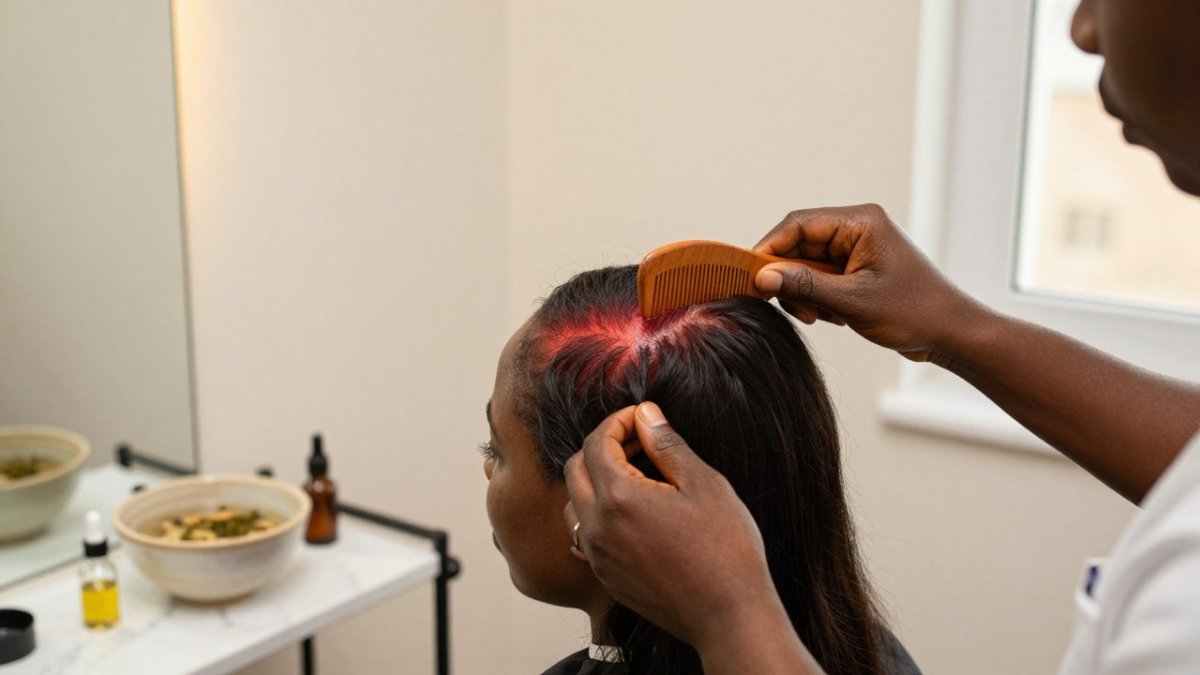
Sebum, dead skin, styling residue, and hard-water minerals can accumulate at the follicle opening and trap irritants against the skin, which is why thorough scalp cleansing matters.
Residue can reduce how well any active ingredient reaches the skin.
How a Holistic Scalp Treatment Resets the Scalp Microbiome
The scalp hosts a community of yeast and bacteria that stays harmless when balanced and becomes problematic when it is not. An overgrowth of Malassezia yeast is associated with seborrheic dermatitis, the oily, flaking, inflamed condition many of our clients arrive with after years of medicated shampoos (Seborrheic Dermatitis and Malassezia species: How Are They Related?).
Balancing the scalp microbiome generally involves appropriate oil levels, a healthy skin barrier, and reduced inflammation. Internal factors such as stress hormones and blood sugar swings are understood to influence sebum production.
4. Hydration, Moisture Balance, and Relief From Dryness and Irritation
Dryness and oiliness can look like opposites but may share a cause related to the skin barrier.
Match the Approach to Your Scalp Condition
A personalized plan starts with identifying which pattern you have, because the same product can help one scalp and worsen another.
- Dry, tight, flaky scalp: Emollients and humectants such as glycerin and hyaluronic acid are commonly discussed for barrier support.
- Oily, flaky, or greasy scalp: Excess sebum is often discussed as a contributing factor, and gentle cleansing is commonly recommended.
- Sensitive or reactive scalp: Fragrance-free products with short ingredient lists are often considered a cautious choice, and patch testing is a common precaution.
- Flaking with redness or itching: This pattern may reflect a condition other than simple dryness, and it is worth having a professional look at it.
Hair Texture Changes the Plan
Hair texture can influence how moisture is applied. Fine hair often looks greasy with heavier products, while curly, coily, relaxed, or color-treated hair may have different moisture needs.
Ingredients and Safety
Some commonly discussed hydrating ingredients include glycerin, aloe vera, and panthenol. Each carries some risk worth knowing:
- Essential oils and fragrances can irritate sensitive skin, particularly when undiluted or used frequently.
- Heavy oils and butters can be unsuitable for oily or seborrheic scalps, where they may worsen flaking and itching.
- Over-moisturizing with occlusive layers can trap sweat and sebum, leading to buildup and irritation. Hydration and oiliness are not the same problem, and treating one as the other makes it worse.
When Hydration Is Not Enough
Reducing the number of active products may help when scalp sensitivity is present. Persistent redness, scaling, pain, or hair loss alongside scalp symptoms warrants evaluation by a dermatologist or clinician.
Start Your Hair & Scalp Healing Journey →
Track changes in flaking, itching, and comfort over two to four weeks rather than judging after a single wash.
5. Scalp Massage, Stress Reduction, and Relaxation Benefits
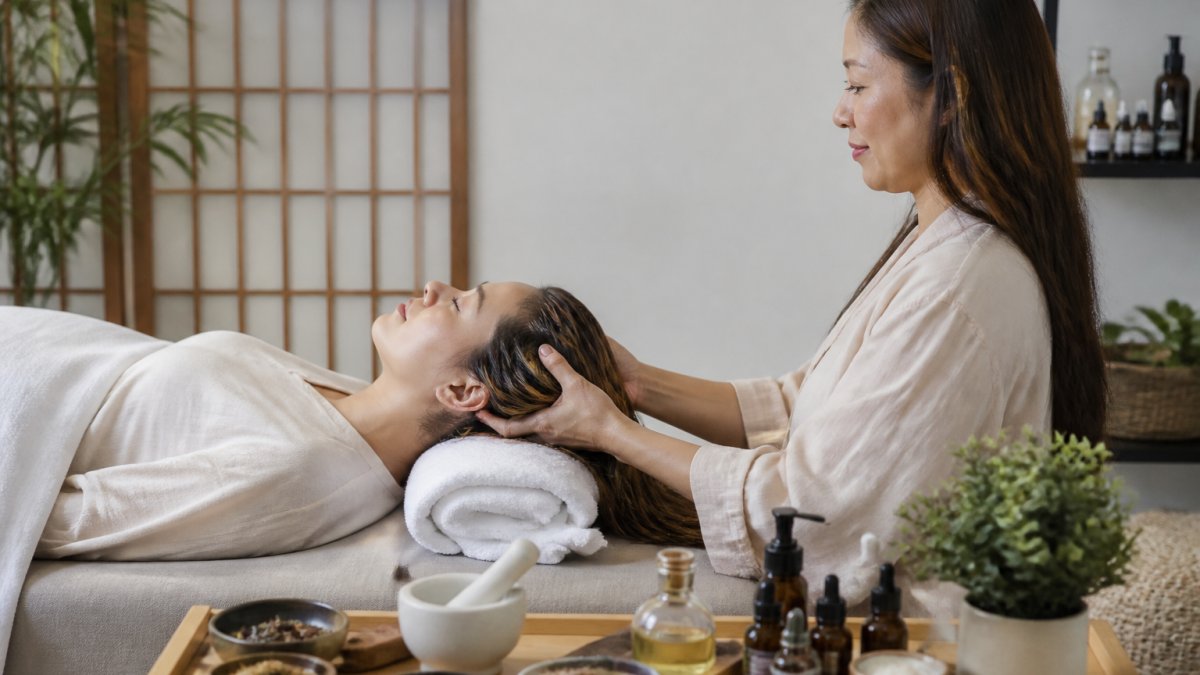
Stress can influence hair shedding through hormonal pathways (Psychological stress induces hair regenerative disorders through corticotropin-releasing...). Scalp massage may support circulation and lower tension, and its effects depend on technique, frequency, and the scalp condition.
Techniques That Actually Move the Needle
Not all scalp massage is equivalent. The approaches most practitioners use fall into a few categories:
- Fingertip kneading (petrissage): Slow, circular pressure with the pads of the fingers, moving the scalp over the skull rather than dragging the skin. This is the safest starting point for sensitive or inflamed scalps.
- Pressure-point work: Brief, static pressure on the temples, occiput, and the ridge above the ears. Useful for tension headaches and jaw clenching, which many clients carry without realizing it.
- Manual lymphatic drainage: Very light, directional strokes toward the neck to reduce puffiness and fluid retention around the hairline. Helpful after long periods of tight hairstyles or headwear.
- Tool-assisted massage: Silicone brushes, wooden combs, and electric scalp massagers. These extend reach and consistency but require caution: stiff bristles and aggressive use can scratch an already irritated scalp and worsen flaking.
Pressure, Duration, and Frequency
More pressure is not better. Moderate pressure that feels firm but not sharp is commonly suggested for self-massage, and shorter, regular sessions are generally considered practical.
What the Relaxation Effect Actually Does
The relaxation effect is not a bonus. Tension relief in the neck, jaw, and scalp reduces the physical tightness that restricts blood flow, and stress reduction addresses a driver no topical product can reach.
Massage alone is not a substitute for diagnosis or medical treatment of hair loss.
Tracking Whether It Is Working
Because the benefits are cumulative and subtle, track them rather than relying on memory. A simple log of scalp tightness, headache frequency, sleep quality, and comfort on a 1-to-5 scale over four to six weeks gives you something concrete to review. If tension and comfort are not improving after a month, the technique or frequency likely needs adjustment.
What a Clinical Trichology Consultation Reveals About Your Scalp
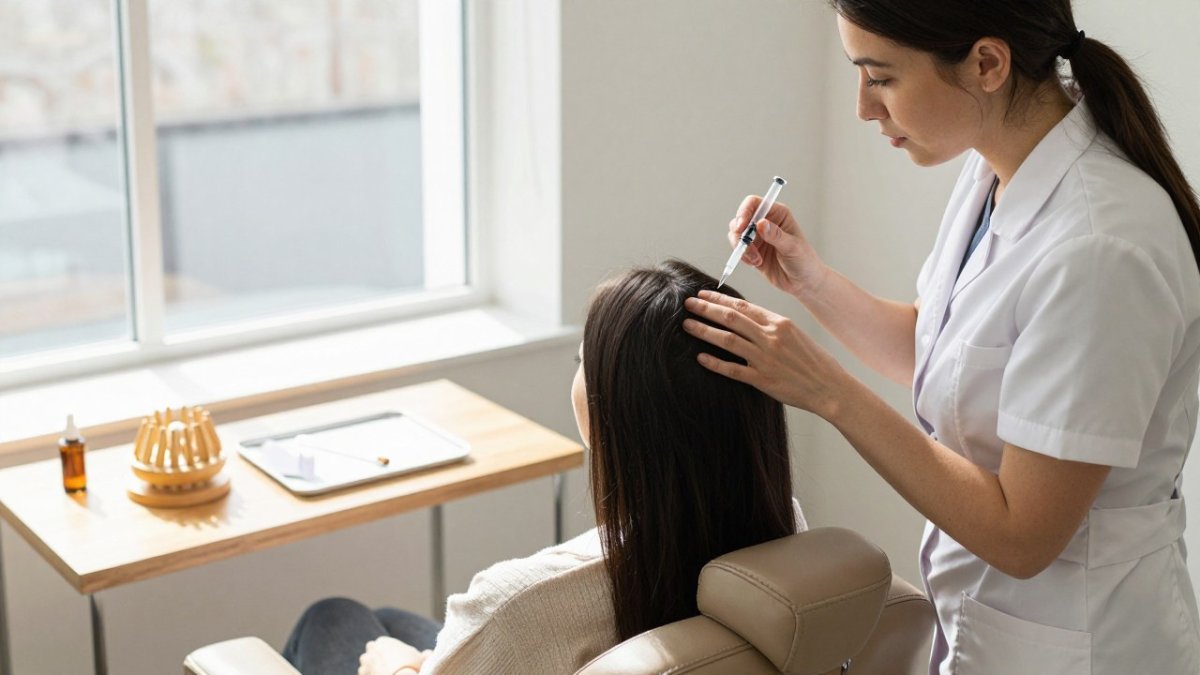
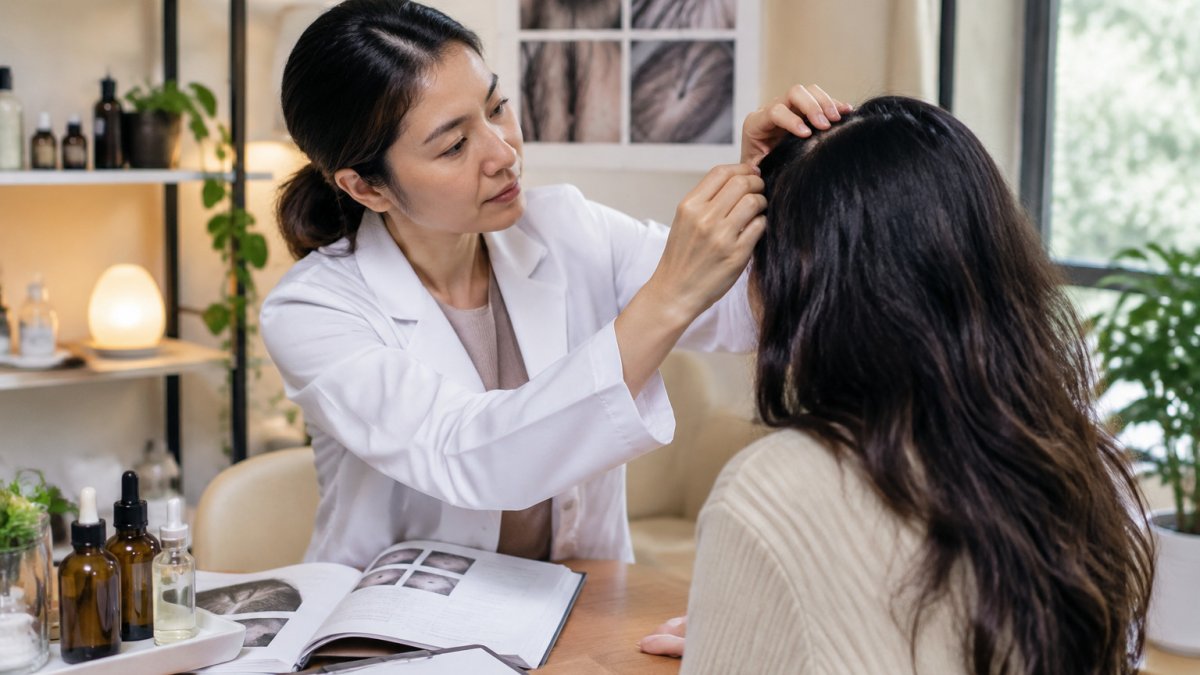
A clinical trichology consultation generally involves examining the scalp and reviewing history to better understand what may be contributing to scalp or hair concerns.
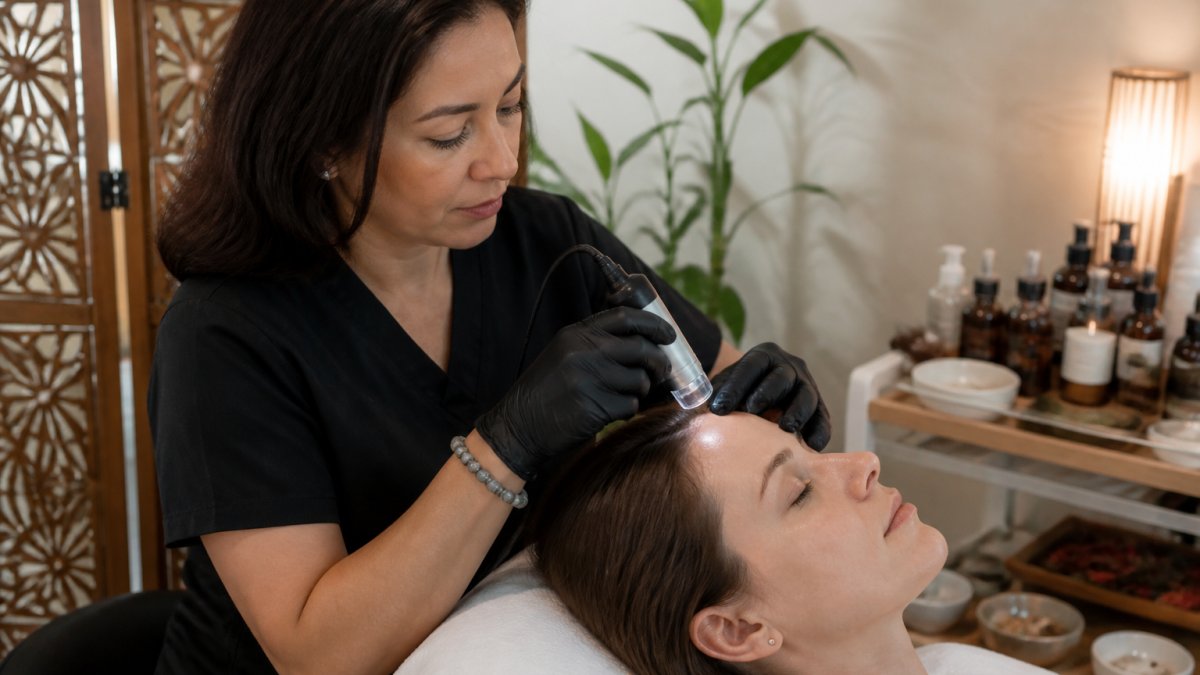
If you want to understand what that session covers before you arrive, our guide to a personalized scalp health consultation walks through the process.
When to See a Trichologist for Hair Loss Instead of Guessing
See a trichologist for hair loss when shedding persists beyond a few weeks, when you can see widening part lines or thinning patches, or when scalp symptoms keep returning after treatment. Guessing with over-the-counter products costs months you cannot recover in a growth cycle.
Certain signs warrant medical attention rather than a spa visit: sudden patchy loss, scalp pain, open sores, or shedding accompanied by systemic symptoms. Those need a physician's evaluation. A trichologist works alongside medical care, not in place of it. If you are unsure who to see, our guide on how to find a clinical trichologist explains what credentials to look for.
Realistic Expectations: Evidence, Frequency, and Who Should Avoid Treatment
Honest expectations start with timelines. Hair grows slowly, and a full growth cycle runs for months. Any plan judged after two weeks is being judged on the wrong clock.
Frequency matters more than intensity.
Anyone with an active scalp infection, open lesions, or a recent scalp procedure should wait for medical clearance. Chronic conditions like psoriasis are generally managed rather than cured, and no treatment should be assumed to resolve them permanently.
If you are weighing the broader approach against conventional options, our breakdown of whether holistic hair treatment is worth it covers the trade-offs, and our guide to how often to get scalp treatments helps you plan a realistic schedule.
| Benefit | What It Targets | Realistic Timeline |
|---|---|---|
| Circulation and nutrient delivery | Blood flow to follicles | Weeks to months |
| Stronger roots | Follicle health before growth | One full growth cycle |
| Cleansing and purification | Buildup at follicle opening | Noticeable after first sessions |
| Microbiome reset | Yeast and bacteria balance | Months, with maintenance |
| Hydration and moisture balance | Skin barrier repair | Weeks |
| Stress and tension relief | Cortisol and physical tightness | Per session, cumulative over time |
Chronic scalp conditions often need more than one product or one appointment. Sophiatrichoholistic Hair Spa LLC combines Traditional Chinese Medicine with clinical trichology, and offers in-spa treatments and home hair growth solutions.
Frequently Asked Questions
What are the benefits of holistic hair and scalp therapy?
Holistic hair and scalp therapy supports scalp health from several angles at once: improved blood circulation and nutrient delivery to hair follicles, thorough cleansing of product buildup, better moisture balance, and relief from dryness and irritation. It also includes scalp massage and relaxation work that can lower stress, which matters because stress is a known contributor to shedding. Because it addresses the scalp condition and lifestyle factors together rather than masking symptoms, many people find the results easier to maintain over time.
What does a trichologist do for hair loss?
A trichologist examines the scalp and hair under magnification, reviews your history, and identifies patterns such as inflammation, buildup, or thinning that point to a cause. During a clinical trichology consultation, they map out a plan that may combine in-spa treatments with at-home care. A certified trichologist does not replace a dermatologist for medical diagnosis, so if your scalp shows signs of infection or a condition like psoriasis is flaring, you may be referred for medical care alongside your treatment plan.
Can scalp therapy help with thinning hair?
Scalp therapy can support thinning hair when the cause is something it addresses, such as poor circulation, buildup, inflammation, or stress. Regular treatment with scalp massage and follicle stimulation is thought to encourage a healthier environment for growth. Results vary by cause and hair type, so a consultation matters: thinning linked to hormones, postpartum shedding, or alopecia needs a plan built around that specific trigger rather than a generic routine.
When should I seek professional help for scalp problems?
See a professional if you have persistent itching, flaking, redness, sores, or patches of hair loss that do not improve with over-the-counter shampoo, or if shedding continues for more than a few months. Sudden hair loss, scalp pain, or signs of infection warrant prompt medical attention. A clinical trichology consultation can help you understand what is happening and whether your situation calls for a dermatologist, a holistic treatment plan, or both working together.