 how-to
How Often to Get Scalp Treatments: A Complete Guide
Table of Contents
- Determining Your Scalp Type and Condition
- Scalp Treatment Frequency for Hair Loss and Thinning
- Recommended Frequency for Medicated and Clinical Treatments
- How to Identify Scalp Buildup and When to Adjust Frequency
- Benefits of Professional Scalp Treatments and Why Consistency Matters
- Finding a Clinical Trichologist Near You
- Signs of Over-Treatment and When to Pause
- Transitioning From Treatment to Maintenance
- Frequently Asked Questions
Last Updated: September 25, 2026
Determining Your Scalp Type and Condition
Understanding how often to get scalp treatments requires knowing your scalp type and condition, since every scalp is different.
Scalp types include oily, dry, combination, or sensitive, and specific conditions like dandruff, seborrheic dermatitis, or psoriasis directly affect treatment frequency.
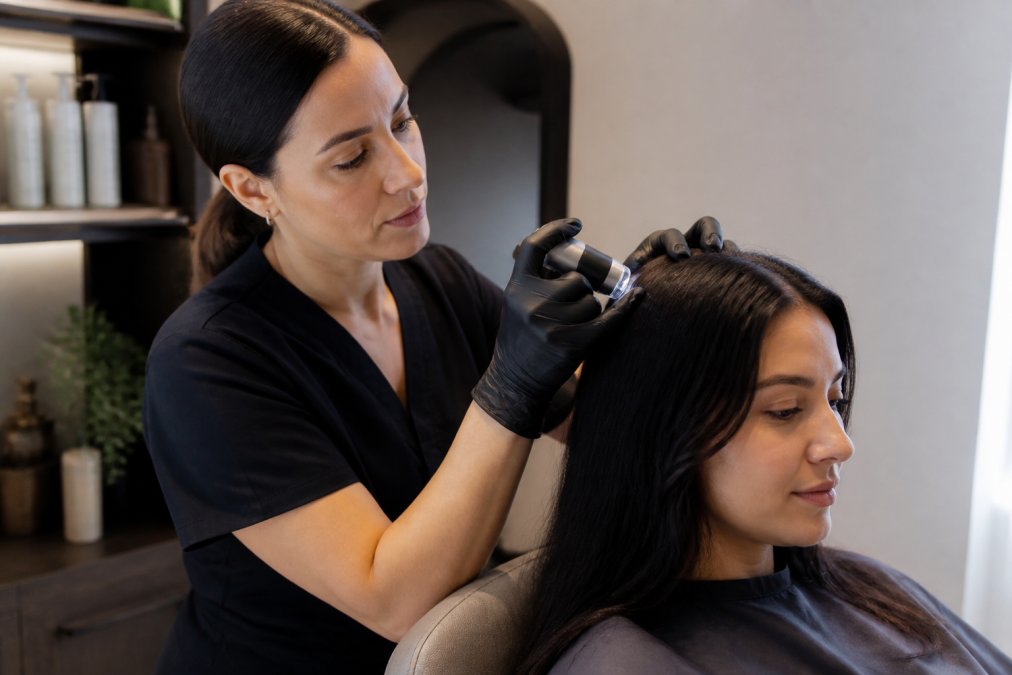
A thorough scalp assessment by a trichologist or dermatologist reveals your scalp microbiome state, inflammation levels, follicle health, and whether you have follicle congestion, excess sebum, or barrier dysfunction.
Common signs that indicate you need professional evaluation include:
- Persistent itching or burning sensations
- Visible flaking or scaling
- Red, inflamed patches
- Excessive oiliness or dryness
- Hair shedding beyond normal daily loss
- Tender or painful scalp areas
- Buildup that doesn't respond to regular shampooing
Mild oiliness typically requires treatments every 4-6 weeks, while seborrheic dermatitis or psoriasis often needs more frequent intervention, sometimes every 2-3 weeks initially.
Scalp Treatment Frequency for Hair Loss and Thinning
Hair loss and thinning stem from multiple factors, hormonal shifts, inflammation, poor circulation, or follicle miniaturization, and require activating growth from the root, not just treating symptoms.
Initial Treatment Phase
Consistency matters most when addressing hair loss; real regeneration takes longer than two weeks.
Weekly or bi-weekly professional treatments during the initial phase allow microbiome rebalancing and consistent follicle stimulation through massage, topicals, and clinical interventions.
This 8-12 week phase establishes new scalp health patterns, reduces inflammation, improves circulation to dormant follicles, and creates conditions for hair growth.
Maintenance and Long-Term Schedules
After the initial phase, transition to maintenance, many people mistakenly stop treatment after seeing improvement, then experience hair loss again.
Maintenance typically requires monthly or bi-monthly professional treatments to keep the microbiome stable, prevent inflammation, and support ongoing growth, like dental care, you don't stop after initial cleaning.
Severe alopecia may require ongoing bi-weekly treatments; others do well with quarterly check-ins plus at-home care. The right schedule depends on your condition and scalp response.
Recommended Frequency for Medicated and Clinical Treatments
Medicated treatments disrupt the scalp microbiome and must be balanced against your scalp's ability to rebuild it. Too-frequent use eliminates protective bacteria; too-infrequent use fails to control pathogens.
Understanding Scalp Microbiome and Treatment Frequency
Your scalp's protective biofilm contains hundreds of bacterial and fungal species. Medicated treatments disrupt this ecosystem to control pathogens like Malassezia or Staphylococcus, requiring time between treatments for rebalancing.
Medicated shampoos (ketoconazole, zinc pyrithione, salicylic acid) are typically used 2-3 times weekly for active conditions, aggressive enough to suppress pathogens but spaced enough for beneficial microbes to recolonize. Daily use strips the barrier; weekly use often fails to control symptoms.
After 4-8 weeks, taper to 1-2 times weekly, then maintenance (once weekly or every other week), allowing the microbiome to shift from treatment to stability mode.
Adjusting Frequency by Hair Porosity and Texture
Hair porosity affects how quickly medicated products penetrate and remain active on your scalp.
Low-porosity hair (straight, fine, Asian types) has a sealed cuticle where treatments accumulate easily. Use 2 times weekly (not 3) with 5-minute contact times to avoid buildup and irritation.
High-porosity hair (curly, coily, 4C types) has an open cuticle where treatments absorb quickly. Tolerate 3 times weekly with 8-10 minute contact times, followed by hydrating leave-in products to prevent dryness.
A trichologist can assess porosity by observing drying speed, moisture response, and product buildup to determine your medicated treatment frequency.
Clinical Treatments and Frequency
Clinical treatments (laser, microneedling, light therapy, prescription topicals) follow different schedules based on their mechanisms.
Low-level laser therapy (LLLT) requires sessions every 2-4 weeks for 3-6 months, then every 4-8 weeks for maintenance. Laser light stimulates mitochondrial activity in follicles gradually, requiring repeated exposure.
Start Your Hair & Scalp Healing Journey →
Microneedling (0.5-1.5 mm depth) is performed every 4-6 weeks. More frequent sessions compromise the barrier; less frequent sessions don't trigger enough collagen remodeling. The frequency allows 3-5 day healing while maintaining cumulative benefit.
Prescription topicals (minoxidil, finasteride) require daily or twice-daily use for months and must be used consistently to maintain effect.
| Treatment Type | Initial Frequency | Maintenance Frequency | Best For | Porosity Adjustment |
|---|---|---|---|---|
| Ketoconazole shampoo | 2-3 times weekly | 1-2 times weekly | Seborrheic dermatitis, fungal overgrowth | Low-porosity: reduce to 2x; high-porosity: can tolerate 3x |
| Zinc pyrithione shampoo | 2-3 times weekly | 1-2 times weekly | Dandruff, mild inflammation | Low-porosity: reduce to 2x; high-porosity: can tolerate 3x |
| Salicylic acid treatment | 1-2 times weekly | Every 1-2 weeks | Scalp buildup, psoriasis | Low-porosity: 1x weekly; high-porosity: 2x weekly |
| Low-level laser therapy | Every 2-4 weeks | Every 4-8 weeks | Hair loss, follicle stimulation | No adjustment needed |
| Microneedling | Every 4-6 weeks | Every 6-8 weeks | Alopecia, scalp circulation | No adjustment needed |
| Professional scalp massage | Weekly initially | Monthly | General scalp health, circulation | No adjustment needed |
The Risk of Over-Frequency with Medicated Treatments
Increasing medicated treatment frequency beyond recommendations doesn't speed results; it triggers barrier dysfunction, redness, irritation, and itching, by eliminating protective microbiome and damaging the lipid barrier.
If results are slow, adjust the treatment type or address underlying factors (diet, stress, hormones) rather than increasing frequency.
How to Identify Scalp Buildup and When to Adjust Frequency
Scalp buildup, product residue, sebum, dead cells, and debris, differs from natural sebum and creates a barrier that prevents treatments from working and traps bacteria and fungi.
Identifying Buildup
Signs of buildup include flaking unresponsive to shampooing, waxy or chalky coating, heavy/limp hair, intensified itching after products, visible residue, dull appearance, and reduced treatment effectiveness. Buildup blocks protection; natural sebum provides it.
Environmental Factors That Drive Buildup Frequency
Your environment directly determines clarifying treatment frequency.
Hard water contains minerals (calcium, magnesium) that bind to hair and scalp, accumulating faster than product buildup. Hard water areas (Midwest, Southwest, Northeast) may require clarifying every 3-4 weeks instead of 6-8. Test with inexpensive strips or observe soap lathering; hard water has mineral content above 120 ppm.
Humidity affects buildup rate. High humidity (above 60%) increases sebum oxidation and traps moisture, requiring clarifying every 4-5 weeks. Low humidity (below 30%) paradoxically increases buildup because people use more leave-in products, which accumulate.
Air pollution contributes to buildup.
Product Usage and Buildup Accumulation
Product count affects buildup: 1-2 products clarify every 6-8 weeks; 3-4 products every 4-6 weeks; 5+ products every 3-4 weeks. Multiple products in hard water with high humidity may require clarifying every 2-3 weeks.
Adjusting Treatment Frequency Based on Buildup
Clarifying treatments remove accumulated residue and restore permeability. Professional treatments use chelating or exfoliating agents and improve treatment response for 2-3 weeks. At-home clarifying shampoos (EDTA, citric acid) can be used 1-2 times monthly for maintenance.
Creating Your Buildup-Adjusted Schedule
Determine optimal clarifying frequency by assessing environment (hard water, humidity, pollution add 1-2 weeks), counting products, noting seasonal changes, testing buildup return timing, and scheduling intensive treatments 1-2 weeks after clarification.
Benefits of Professional Scalp Treatments and Why Consistency Matters
Professional treatments offer targeted pressure, specialized equipment, and clinical-grade products unavailable over-the-counter. Benefits include improved circulation, reduced inflammation, better absorption, and professional assessment. Benefits accumulate with consistency.
Finding a Clinical Trichologist Near You
A clinical trichologist specializes in scalp and hair health, studying hair biology, scalp conditions, and diagnostics, identifying problems general practitioners miss.
Signs of Over-Treatment and When to Pause
Yes, you can over-treat your scalp. Too-frequent professional treatments, too-strong products, or too-aggressive techniques can damage your scalp barrier and trigger irritation.
Signs of over-treatment include:
- Increased itching or burning after treatments
- Redness that doesn't fade within hours
- Flaking or scaling that worsens
- Scalp tenderness or pain
- Hair breakage or increased shedding
- Dryness that develops suddenly
Transitioning From Treatment to Maintenance
Eventually, your scalp reaches a stable, healthy state. At this point, you transition from intensive treatment to maintenance. This shift is crucial, many people miss it and either continue unnecessary intensive treatment or stop entirely.
Frequently Asked Questions
How often should I get professional scalp treatments if I have hair loss?
For active hair loss, most people benefit from weekly or bi-weekly professional scalp treatments during the initial phase, typically lasting 8-12 weeks. This frequency helps address inflammation, restore scalp microbiome balance, and activate follicular health. Once you see stabilization, maintenance treatments shift to monthly or every 6-8 weeks. Your clinical trichologist will adjust frequency based on your specific condition, whether it's postpartum shedding, alopecia, or chronic inflammation, and your scalp's response to treatment.
What is the difference between scalp treatment frequency for seborrheic dermatitis versus psoriasis?
Seborrheic dermatitis typically requires more frequent initial treatments (weekly) because it involves active inflammation and follicle congestion that responds well to regular scalp detox and microbiome restoration. Psoriasis may benefit from bi-weekly or even less frequent treatments combined with longer intervals between sessions to avoid irritating the keratinization process. Both conditions require personalized assessment by a clinical trichologist who can evaluate your dermatological sensitivity and adjust the therapeutic regimen accordingly.
Can you overdo scalp treatments?
Yes. Over-treatment can damage your scalp's moisture barrier, increase irritation threshold sensitivity, and disrupt the scalp microbiome. Signs include persistent redness, flaking beyond your baseline, or increased shedding after treatments. If you experience these, pause treatments for 1-2 weeks and consult your trichologist. Most people do best with a structured schedule, weekly for acute conditions, then tapering to maintenance, rather than frequent ad-hoc treatments. Quality and consistency matter more than frequency.
Should I adjust my scalp treatment frequency seasonally?
Environmental factors do affect scalp health. Many people experience increased sebum production and inflammation in humid seasons or drier scalp conditions in winter. You may need slightly more frequent treatments during high-stress or seasonal flare-up periods, then reduce frequency when your scalp stabilizes. A professional clinical trichologist can help you recognize these patterns and adjust your maintenance cycle accordingly, ensuring your scalp stays balanced year-round.