 How-to
Nutrition Plan for Healthy Hair Growth: Foods That Feed Your Follicles
Last Updated: November 7, 2026
Quick Summary
A nutrition plan for healthy hair growth centers on lean protein at every meal, iron-rich foods paired with vitamin C, and healthy fats from fish, nuts, and seeds. Aim for a palm-sized portion of protein per meal, fatty fish twice weekly, and produce at every meal.
- Pair iron-rich foods with vitamin C, and keep tea and coffee an hour away from meals.
- Adults need 30 micrograms of biotin daily, and true deficiency is rare in balanced diets.
- Hair grows roughly half an inch per month, so visible change takes several months of consistency.
- Vegans should watch B12, since it occurs naturally almost only in animal foods.
- Seek medical assessment for sudden or patchy hair loss or heavy shedding lasting months.
Table of Contents
- Why Your Plate Matters for Healthy Hair Growth
- The Best Food for Hair Growth and Thickness
- A Nutrition Plan for Healthy Hair Growth for Women
- Your Free Nutrition Plan for Healthy Hair Growth
- Building a Weekly Hair Growth Meal Plan
- Vegetarian, Vegan, and Allergy-Friendly Swaps
- Realistic Expectations and When to Seek Medical Assessment
- Start Your Hair & Scalp Healing Journey
- Frequently Asked Questions
Why Your Plate Matters for Healthy Hair Growth
Hair is one of the fastest-growing tissues in the body and one of the first to suffer when nutrients run short.
That is the gap most hair advice ignores.
Hair follicles depend on a steady supply of nutrients from the bloodstream. The Office of Dietary Supplements nutrient fact sheets are a useful starting point for understanding what each nutrient actually does.
Food will not fix every cause of hair loss, but a balanced diet supplies many of the raw materials hair needs.
The Best Food for Hair Growth and Thickness
The best food for hair growth and thickness is not one magic ingredient but a pattern: lean protein at every meal, iron-rich foods paired with vitamin C, and healthy fats from fish, nuts, and seeds. Hair is made of protein, so inadequate protein intake is one factor worth reviewing.
Protein and Amino Acids: The Building Blocks
Hair structure depends on keratin, a protein built from amino acids. Eat too little protein and the body has nothing to spare for strand production. Aim for a palm-sized portion of lean protein at each meal.
Good sources include:
- Eggs, which also supply biotin and vitamin D
- Salmon and other fatty fish
- Poultry and lean red meat
Iron, Zinc, and Other Minerals
Iron carries oxygen to the hair follicles, and low iron stores are a frequent finding in women with shedding. Pair iron-rich foods with vitamin C to boost absorption: think lentils with bell pepper, or spinach with citrus.
Zinc supports hair tissue repair and scalp health. Find it in:
- Shellfish such as oysters
- Beef and poultry
- Pumpkin seeds and cashews
Watch out: tea and coffee block iron absorption when drunk with meals. Keep them an hour away from iron-rich food.
Biotin, B Vitamins, and Omega-3s
Biotin and the B vitamins, including B6, B12, and folic acid, support normal hair growth. Eggs, whole grains, and leafy greens cover most of this. Omega-3 fatty acids from salmon, sardines, walnuts, and flaxseed help support a healthy scalp environment and shiny hair.
The NIH Office of Dietary Supplements biotin fact sheet notes that true biotin deficiency is rare in people who eat a balanced diet. So before buying a supplement, look at your plate first.
A Nutrition Plan for Healthy Hair Growth for Women
A nutrition plan for healthy hair growth for women should match your life stage. Menstruating women lose iron monthly, postpartum women face rapid nutrient demands and heavy shedding, and women in perimenopause may notice thinning tied to hormonal shifts.
Here is what a practical framework looks like:
- Protein: a palm-sized portion at every meal
- Iron: lentils, spinach, or lean meat most days, paired with vitamin C
- Healthy fats: fatty fish two to three times weekly
Consistency matters more than intensity. A steady pattern over months is more likely to support follicles than a single perfect week.
Your Free Nutrition Plan for Healthy Hair Growth
You do not need an expensive program to start. A free nutrition plan for healthy hair growth works best when it translates nutrient advice into daily targets and serving examples you can check off.
Daily Nutrient Targets to Aim For
These are general adult reference points from public dietary guidance, not prescriptions. Your clinician can adjust them for your age, medications, pregnancy status, and any diagnosed deficiency.
- Iron: 18 milligrams per day for menstruating adults and 8 milligrams per day after menopause, per standard dietary reference intakes. Pair plant iron with vitamin C.
- Zinc: 8-11 milligrams per day for most adults, depending on sex and life stage.
- Biotin: 30 micrograms per day for adults. Deficiency is uncommon in people eating a varied diet.
What Those Targets Look Like on a Plate
Numbers only help if you can picture them. Use these serving examples as a mental checklist:
- Protein at 20-30 grams per meal: 3 ounces of cooked salmon (about 22 grams), 3 ounces of chicken breast (about 26 grams), 1 cup of cooked lentils (about 18 grams), 1 cup of Greek yogurt (about 20 grams), or 2 large eggs (about 12 grams, so add a second source).
- Iron at 3-6 milligrams per serving: 1 cup of cooked lentils (about 6.6 milligrams), 1 cup of cooked spinach (about 6.4 milligrams), 3 ounces of lean beef (about 2-3 milligrams), or 1 cup of fortified cereal (check the label).
- Vitamin C alongside iron: half a bell pepper (about 95 milligrams), one medium orange (about 70 milligrams), or 1 cup of strawberries (about 85 milligrams).
The Four Rules, Rewritten With Specifics
- Anchor every meal with 20-30 grams of protein. Eggs plus Greek yogurt at breakfast, a palm-sized portion of fish or poultry at lunch and dinner, or a cup of legumes if you eat plant-based.
- Add an iron source daily and pair it with vitamin C. Lentils with bell pepper, spinach with citrus, or lean meat with tomatoes. Keep tea and coffee at least an hour away.
- Eat fatty fish twice a week, about 8 ounces total. On other days, use walnuts, ground flaxseed, or chia seeds.
- Fill half your plate with produce. Leafy greens, cruciferous vegetables, and fruit cover vitamins A, C, and E plus antioxidants.
Watch out: more is not better with supplements. High-dose biotin can interfere with certain lab tests, and excess zinc can disrupt copper absorption, so treat food as the foundation and discuss any supplement with your clinician.
Fortified dairy, fortified plant milk, and safe sun exposure are common vitamin D sources to discuss with your clinician. For a deeper look, see our guide to which foods actually promote female hair regrowth.
These general adult reference points from public dietary guidance show what to aim for each day.
| Nutrient | Daily target | Note |
|---|---|---|
| Iron | 18 mg menstruating; 8 mg after menopause | Pair plant iron with vitamin C |
| Zinc | 8-11 mg for most adults | Depends on sex and life stage |
| Biotin | 30 mcg for adults | Deficiency uncommon in varied diets |
| Vitamin D | 600 IU up to age 70; 800 IU after | From food and safe sun exposure |
| Omega-3s | Two servings fatty fish weekly, about 8 ounces | Common food-first recommendation |
Building a Weekly Hair Growth Meal Plan
A hair growth meal plan works best when it is repeatable, simple, and built around foods you already like. Below is a full week of meals with portions, a grocery list, and swaps for meat-eaters, plant-based eaters, and common allergens.
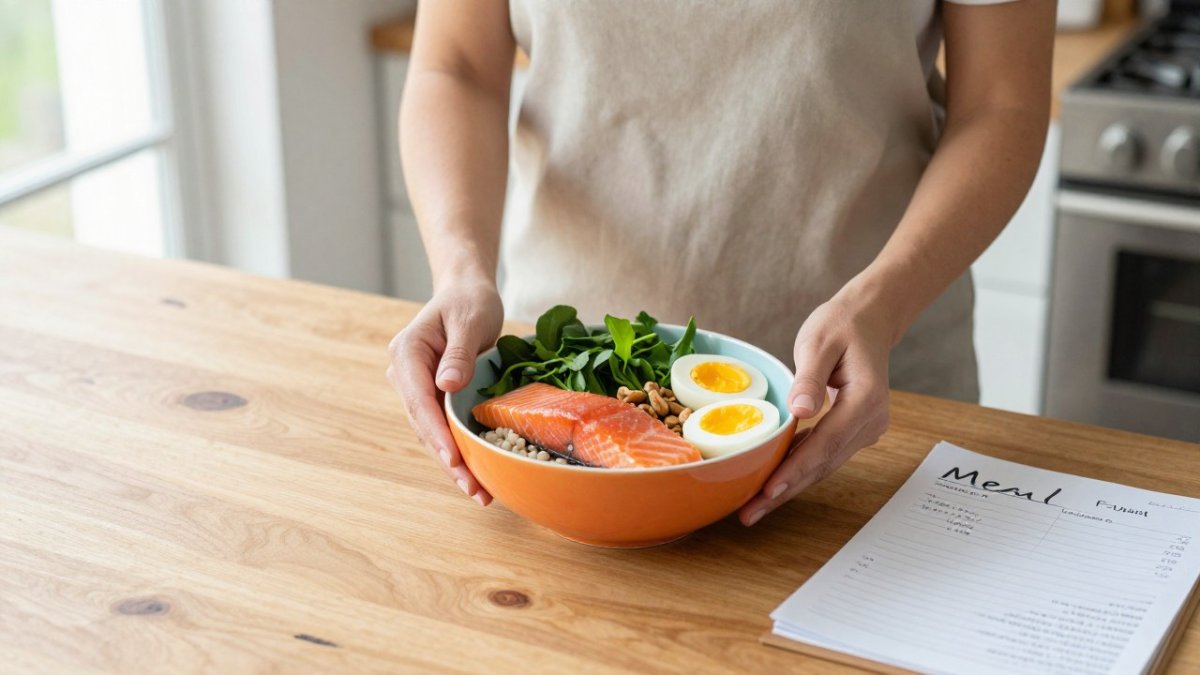
A Full Week of Meals With Portions
Rotate these days in any order. Each day lands near the protein, iron, omega-3, and produce targets above.
Day 1
- Breakfast: 1 cup Greek yogurt with 1 ounce walnuts, 1/2 cup berries, and 1 tablespoon ground flaxseed
- Lunch: 1 cup lentil and spinach salad with 1/2 bell pepper and 1 tablespoon olive oil
- Snack: 1 boiled egg and 1 medium orange
Day 2
- Breakfast: 2-egg omelet with 1 cup spinach and 1/2 bell pepper, plus 1 slice whole-grain toast
- Lunch: 3 ounces chicken breast with 1 cup chickpeas and 1 cup mixed greens
- Snack: 1 ounce pumpkin seeds and 1 apple
Day 3
- Breakfast: 1 cup fortified cereal with 1 cup fortified milk and 1/2 cup strawberries
- Lunch: 3 ounces sardines on whole-grain crackers with 1 cup cucumber and tomato salad
- Snack: 1 cup Greek yogurt with 1 tablespoon chia seeds
Day 4
- Breakfast: 1 cup oatmeal with 1 tablespoon ground flaxseed, 1 ounce walnuts, and 1/2 cup berries
- Lunch: 1 cup black bean salad with 1/2 bell pepper and 1/2 avocado
- Snack: 1 boiled egg and 1 medium orange
Day 5
- Breakfast: 1 cup Greek yogurt with 1 ounce almonds and 1/2 cup berries
- Lunch: 3 ounces turkey breast with 1 cup lentils and 1 cup spinach
- Snack: 1 ounce cashews and 1 pear
Day 6
- Breakfast: 2-egg scramble with 1 cup spinach and 1/2 cup mushrooms, plus 1 slice whole-grain toast
- Lunch: 1 cup chickpea and kale salad with 1/2 bell pepper and 1 tablespoon olive oil
- Snack: 1 cup Greek yogurt with 1 tablespoon ground flaxseed
Day 7
- Breakfast: 1 cup fortified oatmeal with 1 ounce walnuts and 1/2 cup berries
- Lunch: 1 cup lentil soup with 1 slice whole-grain bread and 1 medium orange
- Snack: 1 ounce pumpkin seeds and 1 apple
Consolidated Grocery List
Build your list around these staples for the week. Quantities assume one adult; scale as needed.
- Protein: 1 dozen eggs, 32 ounces Greek yogurt, 12 ounces salmon, 6 ounces sardines or mackerel, 12 ounces chicken or turkey breast, 6 ounces lean beef, 6 ounces shrimp, 14 ounces tofu
- Legumes and grains: 2 cans lentils, 2 cans chickpeas, 1 can black beans, quinoa, brown rice, whole-grain bread, whole-grain crackers, whole-grain pasta, fortified cereal and oatmeal
- Produce: spinach, kale, broccoli, Brussels sprouts, cauliflower, bell peppers, cucumbers, tomatoes, mushrooms, sweet potato, avocado, berries, oranges, apples, pears
Swaps for Vegetarian, Vegan, and Allergy-Friendly Diets
- Instead of salmon: use 1 ounce walnuts plus 1 tablespoon ground flaxseed, or a chia pudding, for omega-3s
- Instead of meat iron: rely on lentils, chickpeas, tofu, and spinach, always with a vitamin C food such as bell pepper or citrus
- Instead of dairy: choose fortified plant milks for vitamin D and B12, and plant-based yogurt with added protein
Vegans should pay close attention to B12, since it occurs naturally almost only in animal foods. Fortified foods and a supplement discussed with your clinician can cover the gap.
Watch out: a plan only works if it fits your budget and schedule, so pick three anchor meals you can repeat and fill the rest with produce and healthy fats.
For meal-timing tips that reinforce scalp healing, our guide on dietary changes to support scalp acupuncture results pairs well with this plan.
Vegetarian, Vegan, and Allergy-Friendly Swaps
Plant-based eaters can absolutely support healthy hair growth with a little planning. The key is combining protein sources and watching iron and B12.
Vegans should pay close attention to B12, since it occurs naturally almost only in animal foods. Fortified foods and a supplement discussed with your clinician can cover the gap.
Realistic Expectations and When to Seek Medical Assessment
Diet is one factor in hair health, and it does not address every cause of hair loss.
Seek medical assessment if you notice:
- Sudden or patchy hair loss
- Scalp redness, scaling, or persistent inflammation
- Heavy shedding that continues for months
A clinical trichologist's overview of hair loss evaluation can help you understand what a proper workup involves. Our article on the benefits of seeing a clinical trichologist explains what that evaluation covers.
For a science-based framework on reducing scalp inflammation through food, read our anti-inflammatory diet for hair growth guide. Postpartum women can find tailored steps in our guide to postpartum hair regrowth nutrition.
Start Your Hair & Scalp Healing Journey
Nutrition is one foundation, and some women benefit from additional professional support.
The brand offers both in-spa treatments and home hair growth solutions.
If shedding, scalp inflammation, or thinning has not improved with diet changes, a professional assessment can help identify possible contributing factors. Get started with Sophiatrichoholistic Hair Spa LLC and give your follicles the support they need to regrow.
Frequently Asked Questions
What is the best nutrition plan for hair growth?
There is no single best plan, but research points to a balanced diet built around lean protein, iron-rich foods, omega-3 fatty acids, and a range of vitamins and minerals. Aim for protein at every meal, leafy greens and cruciferous vegetables daily, fatty fish two to three times a week, and nuts or seeds as snacks. Pair iron-rich foods with vitamin C to improve absorption. A registered dietitian or trichologist can tailor portions to your needs, especially if you have a diagnosed deficiency.
How long does it take for dietary changes to affect healthy hair growth?
Hair grows roughly half an inch per month, and the growth cycle moves slowly. Visible changes typically take several months of consistent nutrition to appear. Consistency matters more than intensity, so focus on steady improvements rather than dramatic short-term changes. If shedding continues past six months despite dietary changes, seek a medical assessment to rule out thyroid, hormonal, or scalp conditions.
Can a hair growth meal plan help reduce shedding?
Yes, when shedding is linked to a nutrient shortfall. Nutrient shortfalls are one possible contributor to shedding. Addressing a confirmed gap with a balanced diet may help, and a clinician can advise. However, shedding from hormonal shifts, postpartum changes, or scalp inflammation like seborrheic dermatitis needs a broader approach. A holistic trichologist can help identify whether nutrition is the main driver or one piece of a larger picture.
What is the Chinese approach to nutrition for healthy hair growth?
Traditional Chinese Medicine links hair health to blood and kidney energy, often recommending warming, nutrient-dense foods such as black sesame seeds, goji berries, dark leafy greens, and bone broths. Many of these foods also contain iron, zinc, and healthy fats. A practitioner trained in both TCM and clinical trichology can combine these food principles with evidence-based nutrient targets for a personalized plan.