 How-to
Postpartum Hair Regrowth: Nutrition Steps That Support Recovery
Quick Summary
Postpartum hair regrowth is supported by eating enough protein at each meal, getting iron-rich foods like lean meat, lentils and fortified cereals, and including produce and healthy fats. Postpartum shedding is often temporary, so steady, adequate nutrition helps your body while the hair cycle resets.
- Fill about a quarter of your plate with protein at each main meal.
- Include iron-rich foods, since blood loss during delivery can lower iron stores.
- Pair plant-based iron with vitamin C foods such as oranges or strawberries.
- Avoid crash diets and very low-calorie eating, which can trigger more shedding.
- See a healthcare provider if shedding continues well past the first year.
Table of Contents
- Why Postpartum Hair Shedding Happens and How Long It Lasts
- Build Each Meal Around Protein for Postpartum Hair Regrowth
- Foods for Postpartum Hair Growth: Iron, Produce and Healthy Fats
- Best Vitamins for Postpartum Hair Loss While Breastfeeding
- Supplements for Postpartum Hair Loss: Safety and Interactions
- A Practical Daily Meal Plan and Recipes for Regrowth
- When to Book a Healthcare Evaluation for Ongoing Hair Loss
- Frequently Asked Questions
Last Updated: November 5, 2026
Postpartum hair regrowth is one of the most common worries new mothers bring to a trichology or wellness practice, and nutrition is one of the few factors you can start adjusting today. Postpartum hair shedding is a common concern for new mothers. Postpartum shedding is often temporary, and nutrition can support your body while the hair cycle resets. This guide walks through practical nutrition steps that support recovery, along with an honest look at what diet can and cannot do.
Why Postpartum Hair Shedding Happens and How Long It Lasts
Postpartum hair loss is usually a form of telogen effluvium, a temporary increase in hairs entering the resting phase of the growth cycle. During pregnancy, higher estrogen levels keep more hairs in the growing phase. After delivery, estrogen drops and those hairs shift into shedding together. Many women notice the shedding a few months after birth.
Hormonal changes and the hair growth cycle
Each hair moves through growth, rest, and shedding phases. Pregnancy extends the growth phase, which is why many women feel their hair looks thicker during those months. When hormone levels return toward their usual range, the extra hairs shed in a wave. This is a normal process, not a sign that your hair follicles are permanently damaged.
What a realistic regrowth timeline looks like
For many women, shedding eases within several months, and new growth becomes visible over the following months. Hair grows roughly half an inch per month, so regrowth is gradual. If shedding continues well beyond the first year, or if you see patches of thinning, talk with a healthcare provider. Ongoing hair loss can have other causes, including thyroid problems and iron deficiency.
Build Each Meal Around Protein for Postpartum Hair Regrowth
Hair is made mostly of protein, so getting enough protein each day supports the body's repair work. Many women after birth also need extra protein while breastfeeding.
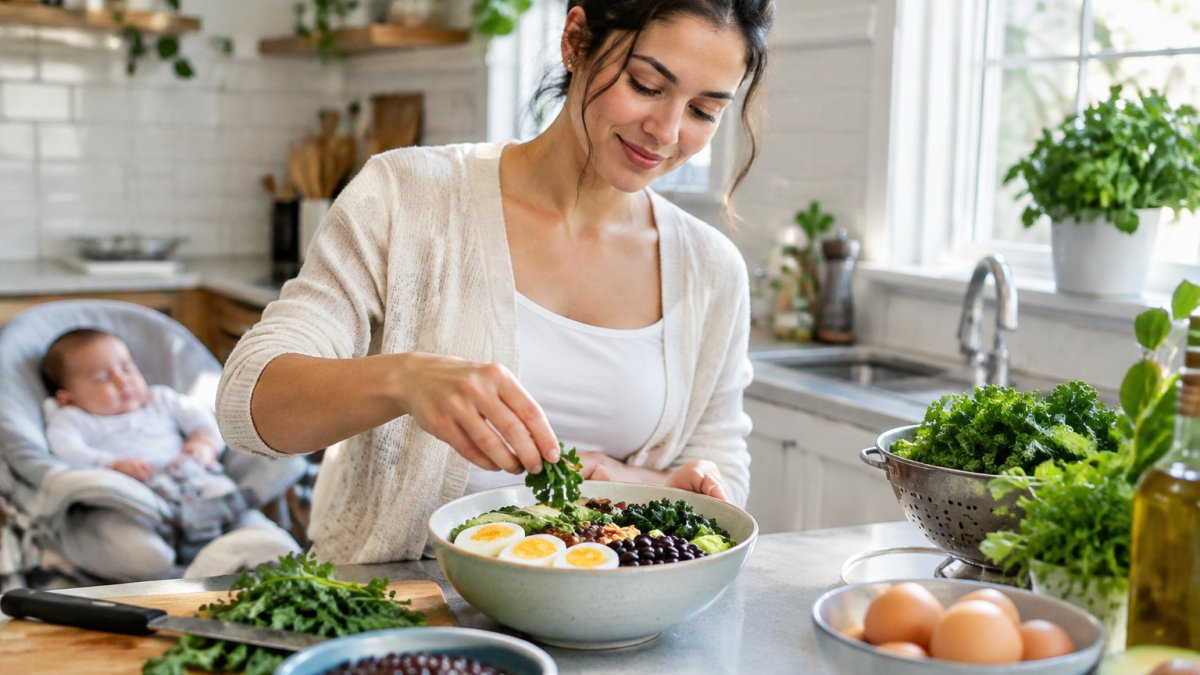
Start each meal with a protein source:
- Eggs at breakfast or in a lunch salad
- Beans and lentils in soups, stews, and grain bowls
- Fish, such as salmon or sardines, two or more times a week
- Lean chicken, turkey, or tofu in dinner meals
- Plain Greek yogurt or cottage cheese as a snack
A simple rule helps: fill about a quarter of your plate with protein at each main meal. If you follow a vegetarian or vegan diet, combine beans, grains, and soy foods across the day to cover all essential amino acids.
Watch out: crash diets and very low-calorie eating can trigger more shedding, so do not cut calories sharply while you recover.
Foods for Postpartum Hair Growth: Iron, Produce and Healthy Fats
Several nutrients matter for hair growth, and iron is one of the most important after childbirth. Blood loss during delivery can lower iron stores, and low iron is linked to hair shedding.
Iron-rich foods to include:
- Lean red meat and dark poultry meat, about 3 ounces cooked provides roughly 2 to 3 mg of heme iron, the form your body absorbs most easily
- Lentils, chickpeas, and fortified cereals, a half-cup of cooked lentils supplies about 3 mg, and many fortified cereals deliver 4 to 8 mg per serving
- Spinach, kale, and other leafy greens, a cup of cooked spinach offers about 3 mg, though plant iron is absorbed less efficiently
- Pumpkin seeds and cashews, an ounce of pumpkin seeds provides more than 2 mg
Pairing plant-based iron with vitamin C foods, such as half a bell pepper, a cup of strawberries, or a small orange, may help absorption. See which foods actually promote female hair regrowth for a more specific list.
Produce that supports hair health:
- Carrots and sweet potatoes for vitamin A, one medium sweet potato covers well over a day's worth of beta-carotene
- Citrus, berries, and tomatoes for vitamin C, a medium orange or half a cup of strawberries is a practical target
- Avocado and nuts for vitamin E, a quarter of an avocado or a small handful of almonds
Healthy fats:
- Salmon, walnuts, and ground flaxseed for omega-3 fatty acids, aim for two servings of fatty fish a week, about 3 to 4 ounces each
- Olive oil for everyday cooking, a tablespoon or two across the day is a simple way to add monounsaturated fat
If you are breastfeeding, your energy and nutrient needs run higher, so these servings are a floor rather than a ceiling.
Be realistic about what food can do. Diet supports healthy hair, but it is not a guaranteed fix, so treat food as one part of a broader recovery plan. If you suspect low iron, ask your provider about a blood test rather than guessing from symptoms alone.
The quantities below are the servings the article suggests for each nutrient group.
| Nutrient | Food source | Serving from article |
|---|---|---|
| Iron | Lean red meat or dark poultry | About 3 ounces cooked, roughly 2 to 3 mg heme iron |
| Iron | Lentils | A half-cup cooked, about 3 mg |
| Iron | Fortified cereals | 4 to 8 mg per serving |
| Iron | Spinach | A cup cooked, about 3 mg |
| Vitamin C | Orange or strawberries | A medium orange or half a cup of strawberries |
| Vitamin A | Sweet potato | One medium potato, well over a day's beta-carotene |
| Omega-3 | Fatty fish like salmon | Two servings a week, about 3 to 4 ounces each |
| Vitamin E | Avocado or almonds | A quarter avocado or a small handful of almonds |
Best Vitamins for Postpartum Hair Loss While Breastfeeding
Many women continue a prenatal vitamin while breastfeeding, since it covers nutrients such as folate, iron, and vitamin D. Some prenatal products contain biotin, zinc, or B vitamins, which are often discussed for hair health.
Start Your Hair & Scalp Healing Journey →
When you review a vitamin label, look for:
- Iron, if your provider has confirmed you need it
- Vitamin D, which many adults do not get enough of
- B vitamins, including B12, especially if you eat little animal food
- Zinc, in moderate amounts
More is not always better. High doses of some vitamins can cause harm, and excess iron should only be taken under medical guidance. Ask your provider before starting any new vitamin while breastfeeding.
Supplements for Postpartum Hair Loss: Safety and Interactions
Supplements sold for hair growth are not regulated the way prescription drugs are, and quality varies widely. Biotin is the best-known example. High-dose biotin can interfere with certain lab tests, including thyroid and cardiac markers, so tell your provider if you take it before any blood work.
Other safety points to check:
- Tell your provider about every supplement, herbal product, and medication you take
- Be cautious with herbal blends, since some can interact with blood thinners, hormonal medicines, or breastfeeding
- Choose products with third-party testing labels, such as USP or NSF certification, when possible
- Do not start high-dose supplements without a clear reason
Herbal products should be discussed with a qualified healthcare professional before use, especially during breastfeeding.
A Practical Daily Meal Plan and Recipes for Regrowth
A simple daily pattern makes these steps easier to follow, and a loose week structure keeps it from collapsing by Thursday. The plan below is built for postpartum schedules: short prep, batch-friendly components, and meals that work one-handed.
A sample day:
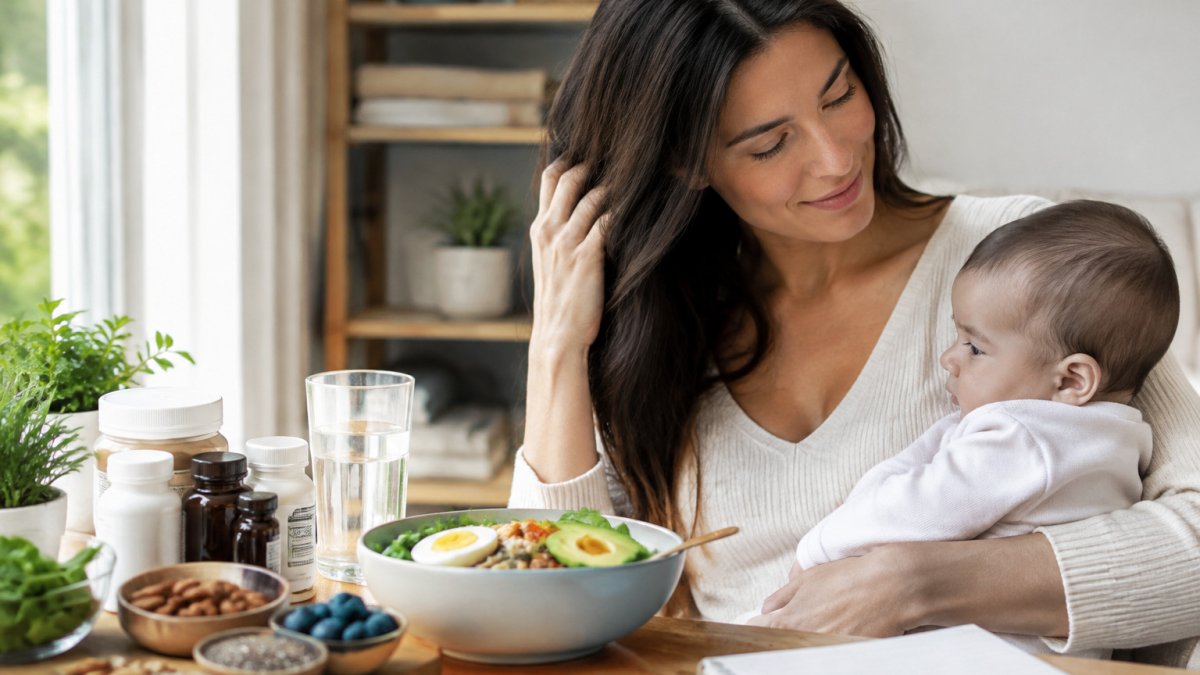
- Breakfast: Two eggs with spinach and sautéed mushrooms, plus a slice of whole-grain toast and an orange.
- Lunch: Lentil soup with carrots and kale, a side of whole-grain bread, and bell pepper slices.
- Snack: Plain Greek yogurt with berries and a small handful of walnuts.
- Dinner: Baked salmon, roasted sweet potatoes, and a large mixed salad with olive oil dressing.
How to stretch it across a week:
- Cook one pot of lentils and one tray of roasted sweet potatoes on the weekend; both hold for several days.
- Bake or pan-cook two extra salmon portions and flake the leftovers into salads or grain bowls.
- Keep washed greens, cut bell peppers, and hard-boiled eggs at eye level in the fridge so the easiest snack is also the supportive one.
- Freeze half the soup in single portions for the days when cooking is not realistic.
Easy lentil soup recipe:
- 1 cup dried red lentils, rinsed
- 1 chopped onion, 2 carrots, 2 cups chopped kale
- 4 cups low-sodium broth, a squeeze of lemon, and cumin
Simmer the vegetables and lentils in broth for about 20 minutes, stir in kale until wilted, and finish with lemon juice. Batch-cook it on weekends so lunch is ready when time is tight.
Quick swaps for low-energy days:
- Canned salmon or sardines on whole-grain crackers with cucumber
- Cottage cheese with fruit and pumpkin seeds
- Fortified cereal with milk and a handful of berries
- Rotisserie chicken over bagged salad with olive oil and lemon
If you are breastfeeding, add an extra snack and keep water within reach at every feeding; thirst often runs ahead of hunger. Watch out: skipping meals to "get back on track" tends to backfire, since crash diets and very low-calorie eating can trigger more shedding. The goal is steady, adequate eating rather than a perfect plan, and a repeated pattern of simple meals does more for recovery than an ambitious menu you abandon by midweek.
When to Book a Healthcare Evaluation for Ongoing Hair Loss
Postpartum shedding often improves on its own, but some signs call for a professional evaluation. Book a visit if shedding continues well past the first year, if you see clear patches or widening part lines, or if you notice fatigue, feeling cold, or changes in heart rate.
A consultation can check iron, thyroid function, and vitamin D levels, and it can identify other causes of hair loss. Look for a qualified professional who can explain their methods clearly and who works with your medical history. Learn how to choose a certified clinical trichologist before you book. If you want guidance on hair and scalp care alongside your overall health plan, you can book a consultation with Sophiatrichoholistic Hair Spa LLC to talk through your options.
Frequently Asked Questions
What can I eat to help with postpartum hair loss?
Focus on a balanced diet with adequate protein from lean meat, fish, eggs, beans and lentils, plus iron-rich foods such as lean red meat, spinach and fortified cereals. Add vitamin C from citrus, berries and peppers to help absorb iron, and include healthy fats like avocado, nuts and salmon for omega-3 fatty acids. Eating regular meals helps support breastfeeding needs as well. Results depend on the individual, so changes to your diet are best viewed as support rather than a guaranteed cure.
When does postpartum hair loss usually stop?
Postpartum shedding often peaks several months after delivery and typically tapers over the following months as hormone levels settle and the hair growth cycle normalizes. Many women notice improvement within about 6 to 12 months, though timing varies widely. If shedding continues beyond that window, or is accompanied by patchy loss, scalp symptoms or fatigue, speak with a healthcare provider to rule out other causes such as thyroid or iron issues.
Which vitamins are important for postpartum hair loss while breastfeeding?
A prenatal or breastfeeding-appropriate multivitamin is commonly used to cover nutrient gaps, with attention to iron, vitamin D, iodine and B vitamins. Biotin and zinc are often discussed for hair health, but high doses of single nutrients are not always appropriate while breastfeeding. Ask your healthcare provider or pharmacist before starting any supplement, especially if you take other medications.
Can supplements help with postpartum hair loss?
Supplements may help only when a specific deficiency is present, such as low iron or low vitamin D, and a clinician has confirmed it with testing. Taking high doses without a documented need can cause side effects and interactions. A food-first approach remains the foundation, and supplements are best used as a targeted addition under professional guidance.
Every woman's recovery is different. Start with protein at each meal, add iron-rich and colorful produce, and keep your provider informed about any supplements. Consistent habits over several months give your hair the best chance to recover.