 How-to
7 Dietary Changes to Support Scalp Acupuncture Results
Last Updated: November 1, 2026
Quick Summary
To support scalp acupuncture results, eat warm cooked meals, include protein at every meal, pair iron-rich foods with vitamin C, sip water steadily, and limit alcohol and caffeine around sessions. Time meals so you are neither starving nor stuffed at appointment time.
- Make cooked food the base of most meals, such as soups, stews, porridge, and steamed vegetables.
- Pair iron-rich foods with vitamin C, like citrus or bell pepper, to help absorption.
- Avoid alcohol, fried food, large amounts of sugar, very cold drinks, and heavy caffeine after a session.
- Avoid caffeine within one hour before a session and keep intake moderate afterward.
- Ask for blood work if unusual shedding lasts more than two to three months despite eating well.
Table of Contents
- Why Diet Shapes Your Scalp Acupuncture Results
- 7 Dietary Changes to Make Before and After Sessions
- Foods for Healthy Hair and Scalp: What to Put on Your Plate
- What to Eat After Acupuncture (and What to Skip)
- Hydration, Alcohol, and Caffeine Around Treatment
- Nutrient Deficiencies and Hair Loss: When to Ask for Testing
- Supplements for Hair Thinning: What to Discuss First
- Tracking Results and Setting Realistic Expectations
- Frequently Asked Questions
Why Diet Shapes Your Scalp Acupuncture Results
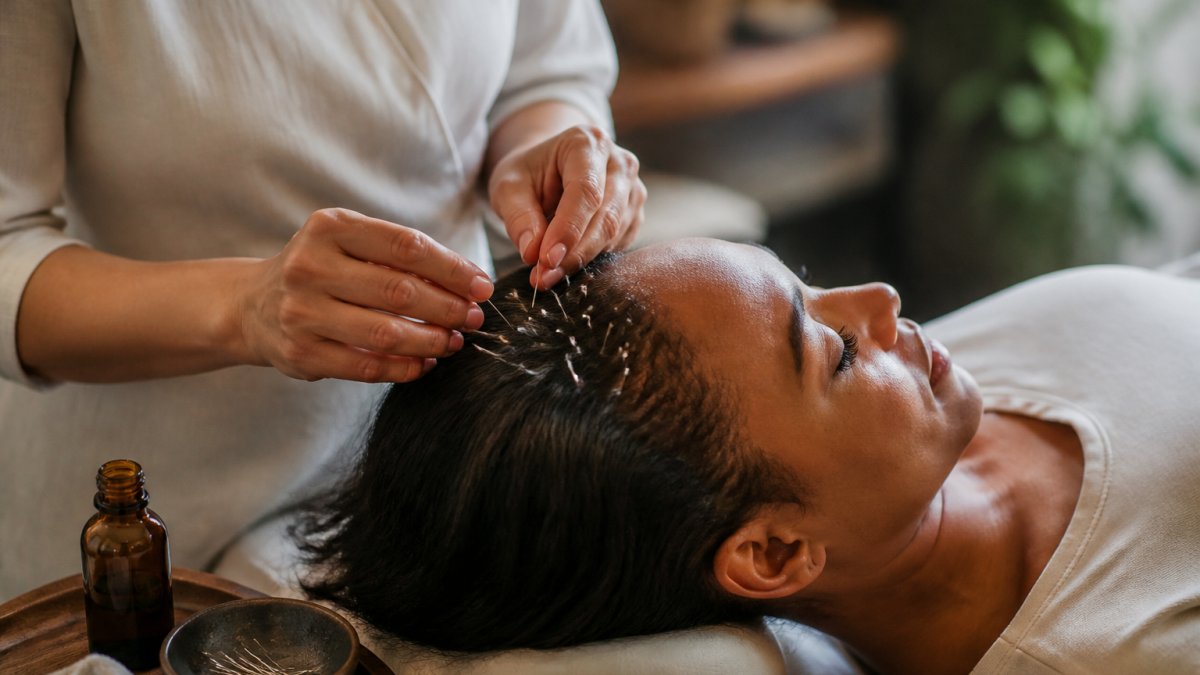
Scalp acupuncture is a targeted form of acupuncture in which fine needles are placed at specific points on the scalp to influence hair growth, scalp health, and overall balance. For a closer look at the technique itself, see this TCM Scalp Acupuncture for Hair Growth: A How-To Guide.
Your scalp is tissue, and tissue is built from what you feed it. A session can support circulation and calm inflammation, but if your diet is low in protein, iron, or fluids, the body has little raw material to work with.
Diet is often paired with treatment. Below, we break down common dietary changes people consider before and after sessions, plus how to track whether they help.
7 Dietary Changes to Make Before and After Sessions
These seven changes are the practical core of supporting scalp acupuncture results with food. None require a strict diet; each is small, repeatable, and easy to adjust around your treatment schedule:
- Shift toward warm, cooked meals and ease off cold, raw foods.
- Eat protein at every meal, especially before a session.
- Pair iron-rich foods with vitamin C.
- Drink water steadily through the day, not in one burst.
- Cut back on alcohol in the days around treatment.
- Cap caffeine and avoid it right before a session.
- Time your meals so you are neither starving nor stuffed at appointment time.
Eat Warm, Cooked Foods
Traditional Chinese Medicine is often associated with warm, cooked food. Soups, stews, porridge, and steamed vegetables fit this general pattern.
This does not mean never eating a salad. It means making cooked food the base of most meals.
Front-Load Protein and Iron
Hair is largely made of protein, which is why protein intake is commonly discussed in relation to hair (The structure of people’s hair). Many people include a protein source such as eggs, fish, chicken, tofu, or beans at each meal. Iron also plays a role in the oxygen supply that cells rely on (Review on iron and its importance for human health).
A common mistake is eating iron-rich foods alone. Pair them with vitamin C, like citrus or bell pepper, to help absorption.
Time Your Meals Around Treatment
A light, balanced meal before a session is a common approach. Going in very hungry or very full can both make the experience less comfortable.
After treatment, many people keep the next meal simple and warm.
Foods for Healthy Hair and Scalp: What to Put on Your Plate
Foods for healthy hair and scalp are often grouped into protein, iron, zinc, healthy fats, and colorful vegetables. Building meals from these groups is a general approach to varied nutrition.
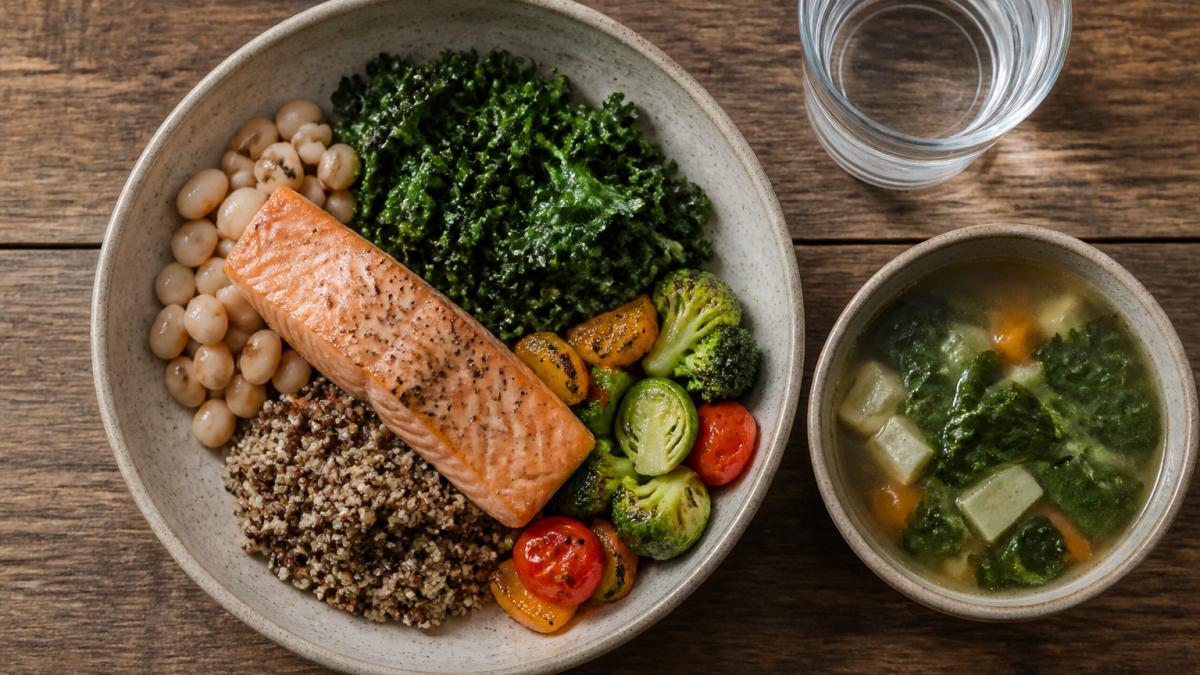
Commonly discussed food sources include:
- Protein: eggs, salmon, chicken, lentils, Greek yogurt
- Iron: spinach, beef, lentils, pumpkin seeds
- Zinc: oysters, chickpeas, cashews
- Healthy fats: olive oil, walnuts, avocado
- Vegetables and fruit: leafy greens, carrots, berries, citrus
- Whole grains: brown rice, oats, quinoa
Beans and grains round out meals and support steady energy.
What to Eat After Acupuncture (and What to Skip)
Warm, light, and easy-to-digest foods are commonly suggested after acupuncture, such as soup, steamed vegetables with rice, or a small portion of fish.
Skip these right after a session:
- Alcohol
- Fried or greasy food
- Large amounts of sugar
- Very cold drinks
- Heavy caffeine
Some people feel relaxed or slightly tired after treatment.
Hydration, Alcohol, and Caffeine Around Treatment
General guidance often advises staying hydrated and limiting alcohol. The timing-based notes below describe commonly discussed approaches around a session.
Hydration: steady sips, not a single burst
Water is involved in blood volume and circulation. Steady sipping through the day is generally a more comfortable pattern than drinking a large amount right before a session.
A commonly discussed pattern is to sip water across the day, drink a normal amount with a light meal before a session, avoid overdrinking, and have water with your first gentle meal afterward.
Pale yellow urine is a commonly used general sign of adequate hydration.
Alcohol: skip it for a window, not just the day of
Alcohol can affect hydration, sleep, and digestion, which many people consider when planning around a treatment session.
Start Your Hair & Scalp Healing Journey →
Some people choose to avoid alcohol for a period around a session, including the day of treatment.
If you drink regularly, do not stop abruptly without medical advice, withdrawal can be dangerous. Talk to your clinician about a safe approach.
Caffeine: moderate is fine, timing matters
Caffeine intake is commonly discussed in moderate amounts. Timing and individual sensitivity are often the main considerations around a session.
Some people choose to limit caffeine shortly before a session, and it is commonly noted that caffeine can come from sources such as energy drinks, pre-workout powders, some teas, and certain sodas.
Meal timing: neither starving nor stuffed
A light, balanced meal before a session is a common approach, and a simple, warm meal afterward is often suggested.
Quick reference
| Timing | Hydration | Alcohol | Caffeine | Food |
|---|---|---|---|---|
| 24-48 hrs before | Sip steadily | Skip | Normal, moderate | Normal meals |
| 2 hrs before | 1-2 glasses with meal | Skip | Avoid within 1 hr | Light, balanced meal |
| During session | Normal | , | , | , |
| 24 hrs after | Sip steadily | Skip | Moderate; watch sensitivity | Warm, light, simple |
Nutrient Deficiencies and Hair Loss: When to Ask for Testing
Nutrient deficiencies and hair loss are closely linked, and testing is the only way to know for sure. To see how testing fits into a broader plan, read this TCM Approach to Thinning Hair: A Step-by-Step Guide. Here is a practical framework for when a clinician should measure something before you supplement.
Why testing beats guessing
Hair growth can be affected by nutritional status, and blood work is one way to assess this. Two people with the same shedding pattern can also need opposite interventions: one may need iron, another may already have excess.
Some nutrients can be harmful in excess, which is one reason testing before supplementing is commonly recommended.
Nutrients worth discussing with your clinician
Clinicians may consider a range of tests for unexplained thinning, which can include:
- Ferritin (stored iron), often the most useful iron marker for hair, since serum iron alone can look normal while stores are low.
- Complete blood count (CBC), screens for anemia and other blood patterns.
- Vitamin D (25-hydroxy), low levels are common and associated with shedding.
- Zinc, low zinc is linked to hair loss; excess zinc can interfere with copper.
- Thyroid panel (TSH, and free T4 if indicated), thyroid dysfunction is a well-known cause of thinning.
- Vitamin B12 and folate, especially relevant for people on plant-based diets, metformin, or certain acid-reducing medications.
Other tests, such as copper, selenium, or a full hormone panel, may be appropriate depending on your history, medications, and symptoms. Your clinician decides which apply.
When to ask for testing
Consider discussing it with a clinician if any of these apply:
- You eat well and still shed more than usual for more than two to three months.
- You follow a restricted diet (vegan, vegetarian, gluten-free, or very low-calorie).
- You have heavy menstrual bleeding, a history of anemia, or gastrointestinal conditions that affect absorption (such as celiac disease or inflammatory bowel disease).
- You take medications that affect nutrient levels, for example, metformin (B12), proton-pump inhibitors (B12, iron, magnesium), or certain anticonvulsants.
- You have fatigue, brittle nails, or cold intolerance alongside hair changes.
- You are considering starting a supplement, especially iron or high-dose vitamin A.
What 'normal' can mean
Reference ranges are population-based rather than personal, so results are best interpreted with a clinician. Bring results to your clinician and ask what target makes sense for you rather than self-diagnosing.
Supplements: food first, test second, supplement third
If testing confirms a gap, a clinician can advise on any dose and recheck schedule. It is worth bringing a full list of everything you take, including herbs, multivitamins, and powders, since some can interact with medications or affect lab results.
Supplements for Hair Thinning: What to Discuss First
Supplements for hair thinning are generally considered only when they match a confirmed gap. Bring a list of everything you take to your clinician, including herbs and multivitamins. Some interact with medications or affect lab results.
Food is commonly considered before supplements. Readers weighing supplements may also want to explore Natural Ways to Balance Hormones for Hair Growth. A well-rounded diet may cover many nutritional needs.
Tracking Results and Setting Realistic Expectations
Tracking shedding, scalp comfort, and how your hair feels can be a simple way to notice changes. Take a photo on the same day each month under the same light. Note changes in itching, flaking, or oiliness.
Hair grows slowly, so changes are often judged over a few months. Setting expectations with a clinician is generally advisable. You can book a Personalized Scalp Health Consultation to track your progress.
Diet alone is not a treatment for chronic scalp conditions. Food choices may support the broader context in which other approaches are used.
Frequently Asked Questions
What should I eat after scalp acupuncture?
After a scalp acupuncture session, choose a warm, cooked meal that combines protein, complex carbohydrates, and vegetables. Soups, stews, and porridge are often considered easy to digest. Include a protein source such as fish, eggs, or beans, plus cooked greens and a whole grain. Drink water through the rest of the day. Some people choose to avoid heavy fried food, excess alcohol, and very large meals right after treatment.
Can diet support hair growth while receiving scalp acupuncture?
Diet and other lifestyle factors are commonly considered alongside treatment. Nutrients such as protein, iron, zinc, and vitamin D are involved in hair growth. Neither works alone. A well-rounded diet with adequate protein, vegetables, fruit, beans, and grains is generally considered supportive of overall health. If you have a diagnosed deficiency, correcting it matters more than any single food. Discuss nutrition with a qualified clinician alongside any treatment you are considering.
Which nutrients are important for healthy hair and scalp?
The core nutrients for hair and scalp health are protein, iron, zinc, vitamin D, B vitamins including biotin, and omega-3 fats. Protein provides amino acids used to make keratin, the structural protein of hair. Iron, zinc, vitamin D, and omega-3 fats are among the nutrients commonly discussed in relation to hair health. A well-rounded diet with fish, eggs, legumes, leafy greens, nuts, and whole grains includes many of these nutrients. Testing is one way to assess whether a deficiency is present.
Should I take supplements for hair thinning while receiving acupuncture?
Talk to your practitioner and a physician before starting supplements for hair thinning. Some supplements can interact with medications or exceed safe limits, and biotin can interfere with certain lab tests. If bloodwork shows a deficiency, a clinician may discuss targeted supplementation. Extra supplements when levels are normal are generally not expected to improve hair growth, and can carry risks of side effects. Bring your current supplement list to your consultation so it can be reviewed against your treatment plan and any medications.