 how-to
TCM Approach to Thinning Hair: A Step-by-Step Guide
Table of Contents
- Understanding Hair Loss Through a TCM Lens
- The Role of Qi and Blood Deficiency in Hair Health
- Acupuncture for Alopecia and Hair Regrowth
- TCM Herbs for Hair Growth and Scalp Health
- Dietary Therapy for Hair Thinning
- Integration With Modern Diagnostics and Clinical Trichology
- Creating Your Personalized TCM Hair Regrowth Plan
- Frequently Asked Questions
Last Updated: September 3, 2026
Understanding Hair Loss Through a TCM Lens
Hair thinning affects millions of women, yet the root causes often remain misunderstood. Traditional Chinese Medicine offers a fundamentally different framework for diagnosing and treating hair loss compared to Western dermatology. Rather than viewing thinning hair as an isolated scalp problem, TCM examines the entire body's internal balance, particularly the health of your Qi, blood, and organ systems that govern hair growth.
At Sophiatrichoholistic Hair Spa LLC, we integrate this ancient diagnostic wisdom with modern clinical trichology to identify why your hair is thinning and how to restore it from the root.
How TCM Differs From Western Hair Loss Diagnosis
Western dermatology categorizes hair loss by appearance, androgenetic alopecia, telogen effluvium, alopecia areata, and prescribes targeted treatments like minoxidil or corticosteroids. TCM diagnosis works differently. Rather than naming a disease, a TCM practitioner asks: What internal imbalance is causing the hair follicles to weaken? Is this blood deficiency starving the follicles of nourishment? Is this Qi deficiency weakening the body's ability to hold hair in place? Is this damp-heat inflaming the scalp?
The same pattern of thinning might stem from three different root causes, each requiring a different herbal protocol, dietary approach, and acupuncture strategy. This root-cause analysis is why TCM often succeeds where generic treatments fail.
Common TCM Patterns Behind Hair Thinning
Blood deficiency is perhaps the most common pattern: the body lacks sufficient blood volume or quality to nourish hair follicles, often appearing after childbirth, during heavy menstrual periods, or following prolonged stress.
Qi deficiency manifests as insufficient energy to hold hair in the scalp and drive follicle activity. Hair falls out readily and regrowth is sluggish.
Wind dryness describes a pattern where the scalp and follicles lack moisture and protective oils, resulting in brittle, breaking hair.
Damp-heat creates inflammation and excess sebum production, disrupting normal follicle function and accelerating miniaturization.
Blood heat drives inflammation and hormonal dysregulation, often appearing as postpartum hair loss or thinning linked to high stress and poor sleep.
The Role of Qi and Blood Deficiency in Hair Health
Hair depends on two fundamental substances in TCM: Qi (vital energy) and blood (nourishment). When Qi is deficient, the body cannot generate enough energy to sustain the hair growth cycle. Follicles enter the resting phase prematurely and regrowth slows. Blood deficiency starves hair follicles of the nutrients they need to produce strong, pigmented hair.
The liver plays a central role in blood storage and regulation. When liver blood is insufficient, the scalp receives inadequate nourishment. The kidneys govern the deep reserves of constitutional energy that sustain long-term hair health. Kidney deficiency, whether from aging, excessive stress, or chronic illness, undermines the foundation of hair growth itself.
Restoring Qi and blood requires time, consistency, and a multi-pronged approach: acupuncture stimulates Qi production and circulation, herbal decoctions rebuild blood volume and quality, and dietary therapy provides the raw materials the body needs to manufacture both.
Acupuncture for Alopecia and Hair Regrowth
Acupuncture activates the body's inherent capacity to heal itself. When needles are placed at specific points on the scalp and body, they stimulate nerve endings, increase local blood flow, and trigger the release of neurotransmitters that regulate inflammation and hormonal balance.
For hair regrowth, scalp acupuncture is particularly effective. Points along the scalp meridians, especially those on the bladder and gallbladder channels, directly influence follicle activity and scalp circulation. Systemic acupuncture points on the spleen, liver, and kidney meridians rebuild constitutional energy and improve the body's capacity to nourish hair from within.
How Acupuncture Stimulates Scalp Circulation
The scalp has rich vascular networks that supply oxygen and nutrients to hair follicles. Acupuncture needles trigger a localized inflammatory response that dilates blood vessels and increases nutrient delivery to the scalp (peer-reviewed research). Acupuncture also regulates the autonomic nervous system. Chronic stress activates the sympathetic nervous system, constricting blood vessels and diverting blood away from the scalp. Acupuncture shifts the nervous system toward parasympathetic dominance, allowing blood vessels to relax and circulation to normalize.
Step-by-Step Scalp Massage Techniques
Scalp massage amplifies acupuncture's benefits and can be performed at home daily. The technique activates meridian pathways, increases local circulation, and relieves tension that restricts blood flow.
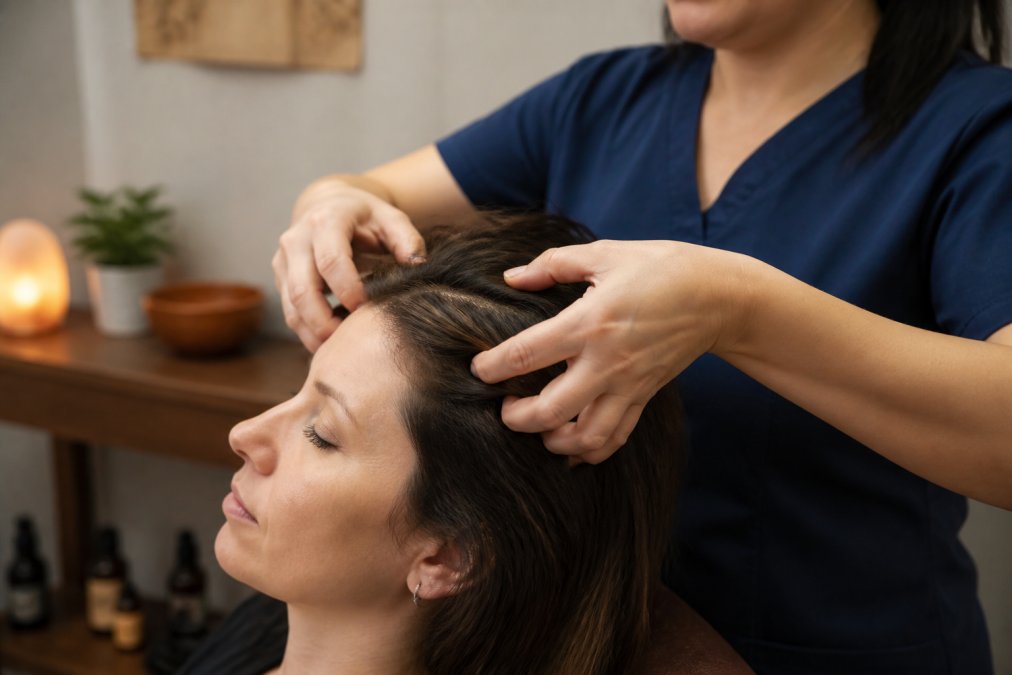
Step 1: Prepare and Center Sit comfortably with your spine straight. Place your fingertips on your scalp at the hairline, just above your eyebrows. Take three deep breaths to calm your nervous system and set an intention for healing.
Step 2: Apply Pressure to the Crown Using your thumbs or middle fingers, apply firm but gentle pressure to the crown of your head. Hold for 3-5 seconds, then release. Move slightly backward and repeat, working from the front hairline to the nape of your neck.
Step 3: Massage the Sides Place your fingers on the temples. Using circular motions, massage for 30 seconds. Move upward along the sides of your head toward the crown. This activates the gallbladder meridian, which governs hair health.
Step 4: Work the Back of the Scalp Interlace your fingers at the base of your skull. Using your fingertips, apply upward pressure along the occipital ridge. Hold each point for 3-5 seconds.
Step 5: Stimulate the Hairline Using your index and middle fingers, tap gently along your entire hairline. Perform this for 1-2 minutes daily.
Frequency and Duration: Perform this 5-10 minute sequence daily. Consistency matters more than intensity. Over 4-6 weeks, you may notice improved scalp sensation and reduced tension.
TCM Herbs for Hair Growth and Scalp Health
Herbal medicine is the cornerstone of TCM treatment for hair loss. Specific herbs rebuild blood, nourish Qi, cool inflammation, and improve scalp health. Unlike single-nutrient supplements, herbal decoctions contain complex compounds that work synergistically to address root causes.
Start Your Hair & Scalp Healing Journey →
Polygonum multiflorum (fo-ti or he shou wu) is the most commonly used herb for hair regeneration. This herb nourishes the liver and kidneys, the organs that govern hair health, and has been used for centuries to restore dark, lustrous hair. Rehmannia root rebuilds blood volume and cools blood heat, particularly useful for women with inflammatory scalp conditions or postpartum hair loss. Angelica sinensis (dong quai) improves blood circulation and regulates hormonal balance.
For Qi deficiency patterns, ginseng and astragalus are foundational adaptogens that boost energy production and strengthen the immune system. Damp-heat patterns require cooling, drying herbs like chrysanthemum flower and sophora root.
Common Herbal Decoctions and Their Benefits
A typical herbal formula for blood deficiency might include Polygonum multiflorum, rehmannia, angelica, and peony root. For Qi deficiency, a formula might combine ginseng, astragalus, and atractylodes to rebuild energy reserves and improve digestion. Damp-heat formulas typically include chrysanthemum, sophora, and bupleurum.
Herbal decoctions are prepared by simmering dried herbs in water for 30-45 minutes, then straining and consuming the liquid. The dose is typically one decoction twice daily on an empty stomach. A single formula is usually prescribed for 4-8 weeks, then reassessed and adjusted based on progress.
Safety and Herb-Drug Interactions
Before starting any herbal protocol, disclose all medications and supplements to your TCM practitioner. Some herbs interact with common medications. Polygonum multiflorum may interact with certain blood thinners (the FDA). Rehmannia can potentiate the effects of diabetes medications. Angelica increases estrogen sensitivity and should be used cautiously by women on hormone therapy.
Herbal quality matters significantly. Herbs sourced from reputable suppliers that test for heavy metals, pesticides, and microbial contamination are essential. Pregnancy and breastfeeding require modified herbal protocols; a qualified TCM practitioner will adjust recommendations based on your life stage.
Dietary Therapy for Hair Thinning
Food is medicine in TCM. Specific foods rebuild blood, nourish Qi, cool inflammation, and support scalp health. A dietary approach to thinning hair is gentler than herbs and can be sustained indefinitely.
Foods That Nourish Blood and Support Hair Follicles
Dark leafy greens, spinach, kale, and chard, are iron-rich and directly support blood production. Eat these daily, preferably cooked rather than raw, to improve absorption. Bone broth is nutrient-dense and deeply nourishing. The collagen, minerals, and amino acids support hair structure and scalp health. Consume 1-2 cups daily.
Black sesame seeds are considered a premier hair-nourishing food in TCM. They contain lignans and minerals that support hair pigmentation and scalp health. Red dates (jujubes) are blood-nourishing and support spleen function. Eat 3-5 daily. Goji berries nourish the liver and kidneys. A small handful daily provides meaningful support. Walnuts contain omega-3 fatty acids and minerals that support scalp health. Eggs provide complete protein and choline, both essential for hair structure and growth.
Avoid excessive sugar, processed foods, and alcohol, which create inflammation and damp-heat. Reduce caffeine, which depletes Qi. Eat warming, nourishing foods rather than cold, raw foods that impair digestion.
Integration With Modern Diagnostics and Clinical Trichology
A TCM approach to thinning hair is most effective when integrated with modern diagnostic tools. Blood work revealing iron, ferritin, vitamin D, thyroid, and hormone levels provides concrete data about nutritional and endocrine status. Scalp imaging can assess hair density, follicle diameter, and the ratio of terminal to vellus hair.
This integration creates a comprehensive picture. TCM diagnosis identifies the energetic imbalance; modern diagnostics confirm the biochemical underpinnings. A woman with blood deficiency pattern may also show low ferritin and vitamin D levels. Addressing both the TCM pattern and the nutritional deficiency accelerates recovery. Trichology provides objective measurements of treatment efficacy through hair density counts, follicle diameter assessments, and growth phase analysis.
Creating Your Personalized TCM Hair Regrowth Plan
A successful hair regrowth plan is personalized to your specific pattern, severity, and life circumstances. Generic protocols fail because they ignore individual variation.
What to Expect During Your First Consultation
During your first consultation at Sophiatrichoholistic Hair Spa LLC, a comprehensive intake explores your hair loss history, menstrual cycle, digestion, sleep, stress levels, and overall health. The practitioner examines your scalp, hair texture, and tongue, which reveals the state of your internal organs and the nature of any imbalances.
This thorough assessment allows the practitioner to identify your specific TCM pattern and design a treatment protocol tailored to your needs.
Timeline and Realistic Outcomes
Hair regrowth follows biological timelines that cannot be rushed. New hairs take 3-6 months to emerge visibly (peer-reviewed research). Most women notice initial improvements, reduced shedding, improved scalp health, better energy, within 4-6 weeks. Visible regrowth typically appears around 8-12 weeks. By 4-6 months of consistent treatment, many women report noticeably thicker hair and improved hair quality.
The most important variable is consistency. Women who maintain acupuncture appointments, take herbs as prescribed, and follow dietary recommendations often see the best results. Postpartum hair loss often resolves more quickly, within 6-9 months, because the underlying pattern is self-limiting. Chronic alopecia patterns may require longer commitment, sometimes 6-12 months or more.
Realistic expectations also mean accepting that some hair loss may not fully reverse. Women with severe, long-standing androgenetic alopecia may achieve improvement rather than complete restoration. The goal is to activate whatever follicle potential remains, improve hair quality, and prevent further loss.
Hair thinning rooted in internal imbalance requires treatment that addresses the root, not just the symptom. A TCM approach to thinning hair identifies whether your loss stems from blood deficiency, Qi deficiency, inflammation, or hormonal dysregulation, then treats that specific pattern with acupuncture, herbs, and dietary therapy. At Sophiatrichoholistic Hair Spa LLC, our Licensed Acupuncture Physician and Certified Holistic Trichologist integrate TCM diagnostics with modern clinical assessment to create personalized protocols that activate hair growth from the root, restore scalp microbiome balance, and address the systemic imbalances driving your hair loss. Start your hair and scalp healing journey with a consultation that treats you as a whole person, not a scalp condition.
| TCM Hair Loss Pattern | Primary Imbalance | Key Symptoms | Treatment Focus |
|---|---|---|---|
| Blood Deficiency | Insufficient blood nourishing follicles | Thin, pale hair; dry scalp; fatigue | Herbal rebuilding; iron-rich foods; acupuncture for circulation |
| Qi Deficiency | Insufficient energy to sustain hair growth | Excessive shedding; slow regrowth; fatigue | Adaptogenic herbs; digestive support; scalp stimulation |
| Damp-Heat | Inflammation and excess sebum | Oily scalp; itching; seborrheic dermatitis | Cooling herbs; anti-inflammatory diet; scalp massage |
| Blood Heat | Inflammatory hormonal dysregulation | Postpartum shedding; hormonal fluctuations | Blood-cooling herbs; stress reduction; dietary modifications |
| Wind-Dryness | Scalp and follicle dehydration | Brittle, breaking hair; dry skin | Nourishing herbs; moisturizing foods; scalp oil applications |
Frequently Asked Questions
Q: How does Traditional Chinese Medicine view hair thinning differently than Western medicine?
A: TCM approaches hair thinning as a symptom of internal imbalance rather than a localized scalp problem. While Western dermatology focuses on follicle miniaturization and hormonal factors like androgenetic alopecia, TCM examines Qi and blood deficiency, meridian flow disruption, and systemic health. TCM practitioners perform root cause analysis by evaluating your energy patterns, digestion, hormonal regulation, and stress levels. This holistic perspective means treatment targets the underlying deficiency rather than just addressing surface symptoms, which is why many people find TCM effective for conditions that haven't responded to conventional treatments alone.
Q: What role does blood and kidney deficiency play in hair health according to TCM?
A: In TCM, the kidneys store the essence that governs hair growth, and blood nourishes hair follicles and the scalp. When blood deficiency occurs, hair lacks the nutritional foundation needed for terminal hair development and density. Kidney deficiency weakens the root cause of hair vitality itself. These patterns often appear together and manifest as gradual thinning, weak hair texture, and slow regrowth. TCM treatment focuses on nourishing blood through herbal decoctions, dietary therapy, and acupuncture to restore meridian flow to the scalp. Addressing these deficiencies from within is central to sustainable hair regeneration.
Q: Can acupuncture and herbal medicine really help with hair regrowth, or is this just alternative medicine?
A: Acupuncture and herbal medicine work through measurable mechanisms: acupuncture increases scalp circulation and stimulates nerve endings that influence hormonal regulation and inflammation reduction, while TCM herbs contain compounds that support follicle health and systemic balance. Many practitioners now integrate TCM with clinical trichology and modern diagnostics to bridge ancient wisdom with contemporary science. Results vary based on the underlying pattern, duration of hair loss, and consistency of treatment. Postpartum hair loss and stress-related thinning often respond well, while androgenetic alopecia may require longer therapeutic timelines. A personalized consultation helps determine whether TCM is appropriate for your specific condition.
Q: How long does it typically take to see hair regrowth results with a TCM approach?
A: Hair growth cycles mean results are not immediate. Most people notice reduced shedding and improved scalp health within 4-6 weeks, but visible hair density improvement typically takes 3-4 months of consistent treatment. The hair growth phase (anagen) lasts several years, so sustainable regrowth requires patience and adherence to your treatment plan. Postpartum hair loss may show faster improvement than chronic patterns like seborrheic dermatitis or androgenetic alopecia. Your practitioner will establish realistic expectations during your initial consultation and adjust your plan based on progress. Combining in-spa treatments with home dietary therapy and lifestyle adjustments accelerates results.