 how-to
Natural Ways to Balance Hormones for Hair Growth
Table of Contents
- Signs of Hormonal Imbalance Hair Thinning and What They Mean
- Foods to Balance Hormones for Hair Growth
- How to Reduce DHT Naturally for Thicker Hair
- Stress Reduction and Sleep Hygiene for Hormone Regulation
- Blood Work and Diagnostic Testing: What to Ask For
- Topical Treatments and Scalp Care for Hormonal Hair Loss
- Common Mistakes and When to See a Professional
- Frequently Asked Questions
Last Updated: September 15, 2026
Signs of Hormonal Imbalance Hair Thinning and What They Mean
Hair thinning from a hormonal imbalance rarely looks like simple shedding. It follows a pattern, and that pattern is the diagnostic clue. At Sophiatrichoholistic Hair Spa LLC, we see this distinction every week: two clients with identical shedding volumes, two completely different underlying causes. The signs of hormonal imbalance hair thinning include diffuse loss across the whole scalp, a widening part, a receding hairline, or shedding that clusters around major hormonal shifts like pregnancy, perimenopause, or coming off birth control. The natural ways to balance hormones hair growth depends on identifying which pattern you have before you change anything. Hair grows in a cycle with three phases: anagen (growth), catagen (transition), and telogen (rest) (Integrative and Mechanistic Approach to the Hair Growth Cycle and Hair Loss). When hormones disrupt that cycle, more follicles sit in telogen at once, and shedding follows weeks later.
PCOS, Thyroid, and Menopause: How Patterns Differ
PCOS thinning concentrates at the crown and part line, driven by excess androgens that shrink hair follicles over time (pubmed.ncbi.nlm.nih.gov). Thyroid-related loss is diffuse, affecting the entire scalp roughly evenly, and often accompanies fatigue, cold intolerance, or weight changes. Menopause thinning hits the top and front of the scalp as estrogen and progesterone decline, leaving androgens relatively unopposed. Same complaint, three different protocols.
Foods to Balance Hormones for Hair Growth
Foods to balance hormones for hair growth work by supplying the raw materials follicles need while stabilizing the signals that tell those follicles to keep growing. No single food fixes a hormonal imbalance, but a consistent dietary pattern reduces insulin resistance, lowers inflammation, and supports the endocrine system. Protein intake matters more than most people expect. Hair is largely protein, and low intake pushes follicles into rest.
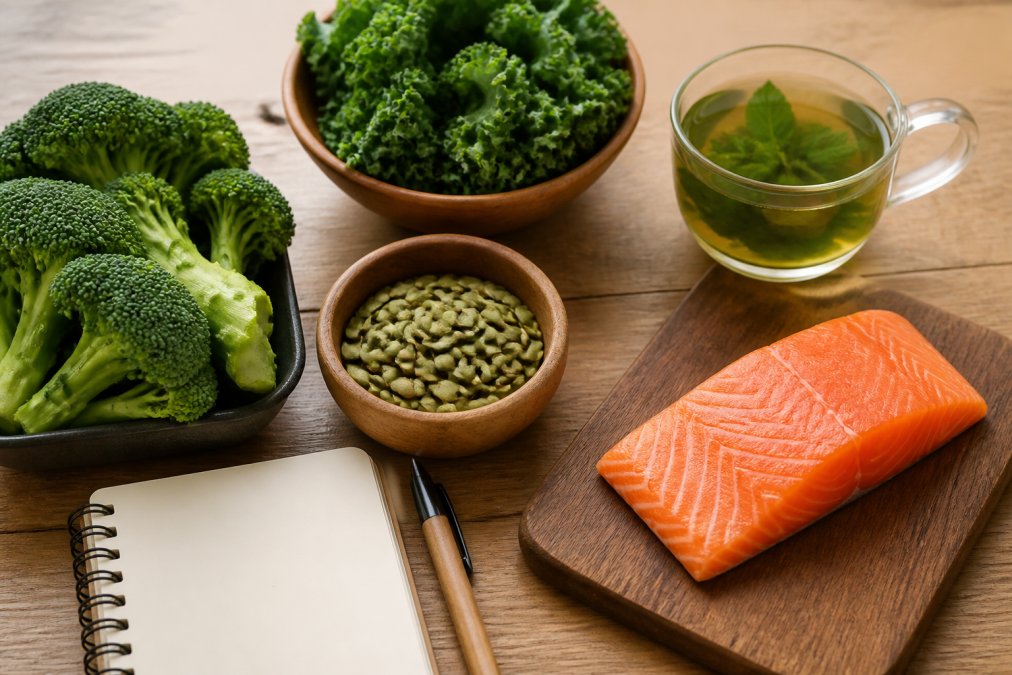
Zinc-Rich Foods, Fatty Acids, and Cruciferous Vegetables
Zinc-rich foods such as oysters, pumpkin seeds, and lentils support follicle stimulation and help regulate androgen activity. Fatty acids from salmon, walnuts, and flaxseed reduce inflammation at the scalp. Cruciferous vegetables, including broccoli, cauliflower, and Brussels sprouts, support the liver's processing of excess hormones, which matters when estrogen dominance is part of the picture. Spearmint tea has become a common addition for its anti-androgen effect, and many women find it an easy daily habit.
How to Reduce DHT Naturally for Thicker Hair
DHT, or dihydrotestosterone, is the androgen that miniaturizes hair follicles in androgenetic alopecia. It does this by binding to androgen receptors in the dermal papilla, shortening the anagen (growth) phase and shrinking the follicle with each cycle. Reducing DHT naturally means working on two separate levers, and most guides only mention one:
- Lower conversion. Testosterone is converted to DHT by the enzyme 5-alpha-reductase, which exists in two forms (Type 1 and Type 2). Type 2 is dominant in the scalp. Anything that reduces 5-alpha-reductase activity reduces how much DHT is produced locally.
- Reduce binding and receptor sensitivity. Even normal DHT levels can cause thinning if receptors are highly sensitive or if inflammation increases receptor activity. This is why two women with identical lab values can have very different hair outcomes.
The Conversion Lever
- Rosemary oil (Rosmarinus officinalis). The most studied natural topical for androgenetic thinning. It is thought to work partly through 5-alpha-reductase inhibition. It must be diluted, typically around 2 to 3 drops per tablespoon of carrier oil, and applied to the scalp rather than the hair shaft. Undiluted use is a common cause of contact irritation.
- Saw palmetto (Serenoa repens). A common oral option in natural protocols, usually standardized to 85 to 95 percent fatty acids. It is not appropriate during pregnancy or while trying to conceive.
- Green tea catechins. EGCG has shown 5-alpha-reductase inhibition in lab settings. Topical green tea extract is more relevant than drinking tea for scalp-level effect, though drinking it supports overall metabolic health.
- Pumpkin seed oil. Used both orally and topically. The oral form has the more consistent anecdotal following for androgen-related thinning.
The Binding and Inflammation Lever
- Zinc. Zinc is a mild 5-alpha-reductase inhibitor and also supports the follicle's own defense against oxidative stress. Oysters, pumpkin seeds, and lentils are the most concentrated food sources.
- Insulin control. High insulin drives ovarian and adrenal androgen production. This is the single most underrated DHT lever. Reducing refined carbohydrates, adding resistance training, and getting fasting insulin tested matters more than any single supplement for many women.
- Scalp inflammation control. Seborrheic dermatitis and chronic scalp irritation increase local inflammatory signaling that worsens androgen-driven miniaturization. Treating the scalp is part of treating the DHT problem, not a separate issue.
How This Looks Across Different Hormonal Profiles
- PCOS pattern (crown and part-line thinning with irregular cycles): The priority is lowering insulin and total androgen load. Diet, resistance training, and inositol are common starting points. Topical rosemary oil and oral saw palmetto are reasonable additions, but they will underperform if insulin is not addressed.
- Perimenopause and menopause pattern (top and front thinning): DHT is relatively unopposed as estrogen and progesterone fall. The lever here is less about lowering DHT and more about supporting the estrogen-to-androgen ratio. This is a conversation to have with a clinician, because some women benefit from hormone therapy and some do not.
- Thyroid-driven diffuse thinning: DHT is usually not the primary driver. Correcting thyroid function comes first, and DHT-focused supplements can be a distraction.
What to Expect and When to Stop
Hair grows roughly half an inch per month, and the anagen phase lasts two to six years. Any DHT-focused change needs at least three to six months before you can judge it, and shedding often increases slightly in the first four to six weeks as follicles cycle. If you see no change at six months, the lever you are pulling is probably not the one driving your thinning. Stop and reassess with labs rather than adding more supplements.
Start Your Hair & Scalp Healing Journey →
Stress Reduction and Sleep Hygiene for Hormone Regulation
Cortisol and hair loss are directly linked, but the mechanism is more specific than "stress causes shedding." The hypothalamic-pituitary-adrenal (HPA) axis governs your stress response, and when it stays activated, it suppresses gonadotropin-releasing hormone, which in turn shifts the balance of estrogen, progesterone, and androgens. Elevated cortisol also increases scalp 5-alpha-reductase activity, the enzyme that converts testosterone into DHT. That is why a stressful quarter can show up as thinning three months later, not the following week.
The sleep piece is where most natural hair protocols quietly fail. Hair follicle repair, growth hormone release, and melatonin production all peak during deep sleep.
What Actually Moves the Needle on Sleep
Adaptogens and Herbal Support
A Simple Sequence to Test
Blood Work and Diagnostic Testing: What to Ask For
Topical Treatments and Scalp Care for Hormonal Hair Loss
Common Mistakes and When to See a Professional
| Sign | Likely Driver | First Step |
|---|---|---|
| Crown and part-line thinning | Androgen excess (PCOS pattern) | Test androgens and fasting insulin |
| Even, diffuse shedding | Thyroid or telogen effluvium | Full thyroid panel plus ferritin |
| Top and front thinning | Estrogen decline | FSH and estradiol with a clinician |
| Oily, inflamed, flaking scalp | Seborrheic dermatitis or psoriasis | Scalp assessment before topicals |
Frequently Asked Questions
Can hormonal hair loss be reversed naturally in females?
Hormonal hair loss can improve when the underlying imbalance is addressed, but results vary by cause. For telogen effluvium after pregnancy or stress, regrowth often happens within 6 to 12 months as hormones settle. Androgenetic alopecia and PCOS-related thinning may need ongoing management. Natural approaches like an anti-inflammatory diet, stress reduction, and correcting nutrient deficiencies can support the hair growth cycle, but a professional evaluation helps set realistic expectations.
What are the primary signs of hormonal imbalance hair thinning?
Signs include a widening part, diffuse thinning across the crown, a receding hairline, and increased shedding on pillows or in the shower. Scalp symptoms like oiliness, itching, or inflammation often accompany hormonal changes. PCOS may bring irregular cycles and acne; thyroid issues can cause fatigue and dry skin; menopause often brings thinning along the front and crown. Blood work can confirm which hormone pathway is involved.
How can I reduce DHT naturally to support hair growth?
Diet and lifestyle play a role in DHT management. Foods rich in zinc, like pumpkin seeds and lentils, plus green tea and spearmint tea, may help. Reducing insulin resistance through balanced meals and regular exercise supports hormone regulation. Rosemary oil applied to the scalp has been studied for its effect on androgenetic alopecia. These steps work best alongside a professional plan, since DHT sensitivity varies from person to person.
What role does diet play in balancing hormones for hair health?
Diet supplies the raw materials for hormone production and hair growth. Protein intake supports the hair shaft, while fatty acids and zinc-rich foods support follicle function. Cruciferous vegetables and an anti-inflammatory diet can help with estrogen metabolism. Avoiding refined sugar helps manage insulin resistance, which is linked to hormonal thinning. Small, consistent changes often matter more than strict short-term diets.