 how-to
TCM Scalp Acupuncture for Hair Growth: A How-To Guide
Table of Contents
- What to Expect During a TCM Scalp Acupuncture Session
- Acupuncture Points for Hair Loss: Key Acupoints and Meridians
- TCM Diagnosis for Hair Thinning: Identifying Your Pattern
- How Long Does Acupuncture Take for Hair Growth?
- At-Home Acupressure Protocols for Scalp Health
- Integrating Scalp Acupuncture with Western Hair Loss Treatments
- Common Mistakes to Avoid When Using Scalp Acupuncture
- Conclusion
- Frequently Asked Questions
Last Updated: September 10, 2026
What to Expect During a TCM Scalp Acupuncture Session
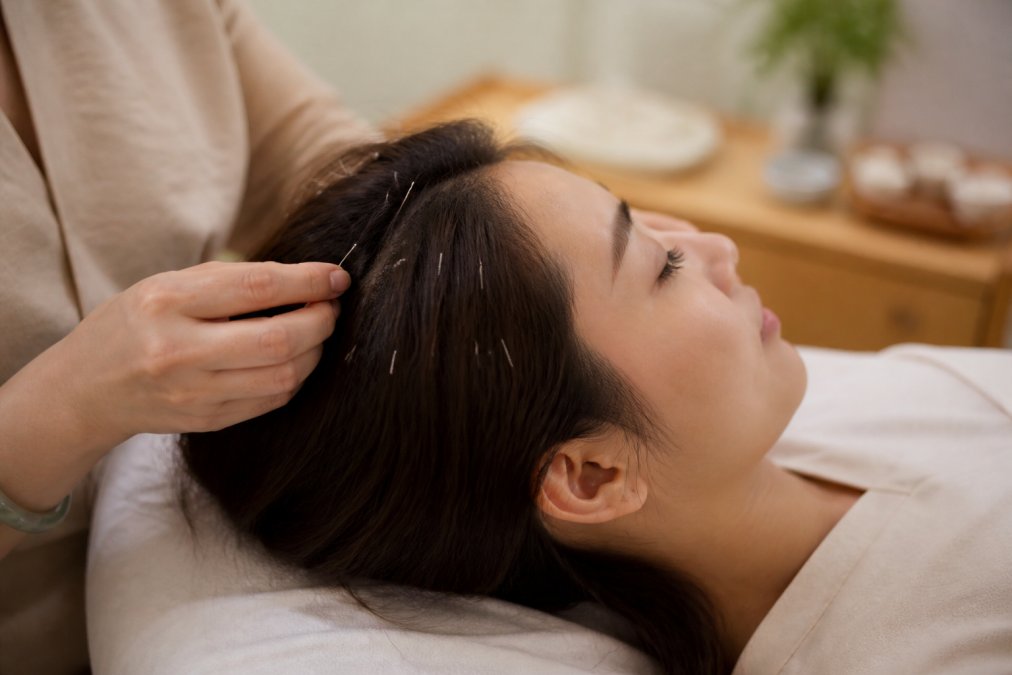
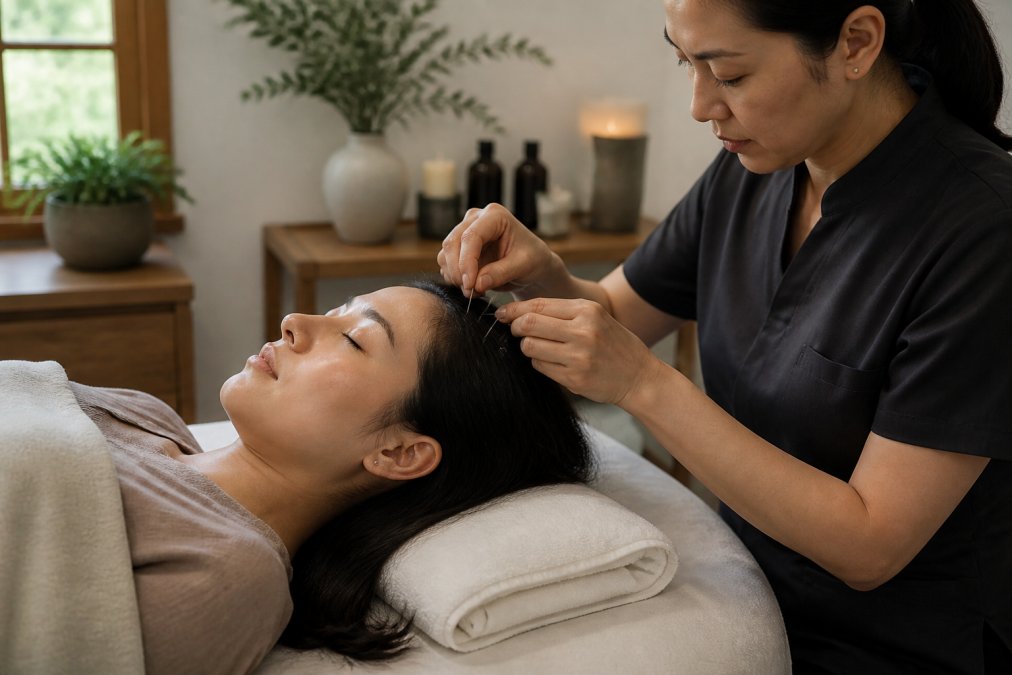
A TCM scalp acupuncture session for hair growth combines a full intake assessment with fine needle insertion into specific scalp points, typically lasting 30 to 45 minutes for the needling portion alone (peer-reviewed research). At Sophiatrichoholistic Hair Spa LLC, every session is structured around your individual pattern diagnosis, not a one-size-fits-all protocol.
Most first-time patients are surprised by how uneventful the session feels: the needles are thinner than a strand of hair, and the room is designed to let your nervous system settle.
Your First Visit: Intake and TCM Diagnosis
Your first visit runs longer than follow-ups because the intake is where the real work begins. A practitioner trained in Traditional Chinese Medicine asks about your sleep, digestion, menstrual cycle, stress levels, and medical history, then examines your tongue and pulse. These map to specific patterns that determine which acupoints get needled and how your treatment plan is sequenced.
Needle Insertion and Sensation
Insertion into scalp points is typically described as a mild tapping or tingling rather than sharp pain. Once the needles are in, you may feel a dull ache, warmth, or a spreading sensation around the point, practitioners call this deqi, a signal the point is active. Needles usually stay in for 20 to 30 minutes while you rest (peer-reviewed research).
Acupuncture Points for Hair Loss: Key Acupoints and Meridians
The acupoints for hair loss most commonly used in scalp acupuncture lie along the Governing Vessel, Gallbladder, and Bladder meridians, which run across the top and sides of the head. The specific combination depends on your TCM diagnosis, not a fixed formula.
Commonly selected points include:
- Baihui (GV20): the crown point, used to lift Qi and support circulation to the vertex
- Fengchi (GB20): at the base of the skull, used when tension and stress are driving the pattern
- Sishencong: a cluster of four points around Baihui, often used for follicle stimulation
- Touwei (ST8): along the hairline, selected for frontal thinning
- Shuai Gu: a modern scalp acupuncture zone associated with hair regrowth
- Yiming (EX-HN14): behind the ear, used when the pattern involves the occipital region
Many practitioners also use seven-star needling, a plum-blossom tapping technique that lightly stimulates the scalp surface to encourage microcirculation near dormant hair follicles.
How Scalp Acupuncture Actually Reaches the Follicle
Needling a scalp point is not a symbolic gesture. The scalp is densely vascularized, and the galea aponeurotica sits directly above the subcutaneous layer where hair follicles reside. When a fine needle is inserted and stimulated, three measurable things tend to happen:
- Local vasodilation. Needling produces a brief, controlled microtrauma and a localized inflammatory response, dilating nearby capillaries and increasing perfusion to the dermal papilla, the structure at the base of each follicle that supplies it with oxygen and nutrients.
- Microcirculation and follicle cycling. Hair follicles are among the most metabolically active structures in the body. When blood flow to the dermal papilla drops, the anagen (growth) phase shortens and more follicles shift into telogen (resting) and then exogen. Restoring perfusion is one proposed mechanism by which needling may extend the growth phase.
- Autonomic and neuroendocrine modulation. Scalp needling appears to influence the hypothalamic-pituitary-adrenal axis, which governs cortisol release. Because stress-driven shedding (telogen effluvium) is mediated by cortisol and the sympathetic nervous system, calming that axis is a plausible pathway for reducing stress-related hair loss.
Practitioners commonly describe patients noticing reduced shedding before new growth, which fits the mechanism: the follicle has to stop shedding before it can re-enter a productive growth phase.
Electroacupuncture vs. Manual Needling
Electroacupuncture applies a low-frequency electrical current to the needles, producing steady, measurable stimulation that manual twirling can't replicate. It's often chosen when the goal is vasodilation and sustained blood flow to the scalp. Manual needling gives the practitioner more control over subtle sensation and suits patients who are sensitive or new to treatment. Neither is universally better; the choice depends on your pattern and comfort level.
When electroacupuncture is used, practitioners typically work around 2 Hz, sometimes alternated with a higher frequency, because low-frequency stimulation is associated with sustained vasodilation and endorphin release (PubMed). Sessions usually run 20 to 30 minutes once the needles are connected. If you have a cardiac pacemaker or a history of seizures, tell your practitioner beforehand; electroacupuncture is generally avoided in those cases.
Safety, Side Effects, and What to Watch For
Scalp acupuncture is widely considered low-risk when performed by a licensed practitioner using sterile, single-use needles. Common side effects are minor and short-lived:
- Small pinpoint bleeding at a needle site, especially along the highly vascular hairline
- Mild bruising that fades within a few days
- A dull ache or heaviness at a point that can linger for a few hours
- Lightheadedness during or right after a session, more common if you haven't eaten
Serious complications are rare but worth knowing. Infection is possible if sterile technique is not followed, which is one reason self-needling is not a safe substitute for a licensed session. Anyone on blood-thinning medication, with a bleeding disorder, or with an active scalp infection should clear treatment with their physician first. Pregnant patients should tell their practitioner, since some points are avoided during pregnancy.
What to Expect During a Session
A typical session begins with a brief check-in on sleep, stress level, and any changes in shedding, then the practitioner inserts fine needles into the selected scalp points. Insertion is usually described as a mild tapping or tingling rather than sharp pain. Once the needles are in, you may feel a dull ache, warmth, or a spreading sensation around the point, practitioners call this deqi, a signal the point is active. Needles typically stay in for 20 to 30 minutes while you rest.
After the needles are removed, most people feel relaxed, sometimes slightly drowsy. There's no downtime, and you can return to normal activity immediately. Avoid washing your hair for a few hours, and skip heavy exercise for the rest of the day if you tend to feel lightheaded.
Combining Acupuncture with Herbal Medicine
Many practitioners pair scalp needling with internal herbal formulas, because the two address different layers of the same pattern. Needling works locally and on the meridian system; herbs work systemically on the underlying deficiency or stasis. Common formulas used in hair-loss patterns include variations of Si Wu Tang (Four Substance Decoction) for Blood deficiency and Liu Wei Di Huang Wan (Six Flavor Rehmannia Pill) for Kidney essence depletion.
Herbs are not risk-free: some interact with prescription medications, affect blood pressure, or are not appropriate during pregnancy. Bring your full medication list to your practitioner so the formula can be adjusted, and do not start a Chinese herbal formula on your own based on an internet description of your pattern.
TCM Diagnosis for Hair Thinning: Identifying Your Pattern
A TCM diagnosis for hair thinning identifies which underlying pattern is disrupting the hair cycle. The two most common categories are Blood deficiency and Kidney essence depletion; both can produce diffuse shedding, but they call for different treatment strategies.
- Blood deficiency: often linked to poor sleep, fatigue, and a pale tongue. Hair lacks nourishment because the Blood that should reach the follicles is insufficient.
- Kidney essence deficiency: associated with aging, hormonal shifts, and thinning at the crown. In TCM theory, Kidney essence governs growth and reproduction, including hair.
- Blood stasis: poor circulation with a fixed, dull quality. Often seen alongside scalp inflammation or a history of telogen effluvium that never fully resolved.
- Qi deficiency: fatigue, weak pulse, and shedding triggered by stress or overwork.
How Long Does Acupuncture Take for Hair Growth?
Most patients need a series of sessions rather than a single treatment, and noticeable hair regrowth typically takes three to six months of consistent care. That timeline matches the hair cycle itself: the anagen phase runs for years, but shedding and regrowth lag behind whatever triggered the loss.
Start Your Hair & Scalp Healing Journey →
A common approach is weekly sessions for the first several weeks, then tapering to biweekly or monthly maintenance. With stress-induced hair loss, shedding may improve sooner than visible regrowth; for chronic alopecia, expect a longer runway. Patience matters more than intensity here.
A Realistic Session Cadence
Practitioners generally structure treatment in phases rather than a fixed number of visits:
- Phase 1, Loading (weeks 1-6): weekly sessions. The goal is to establish a consistent stimulus and address the acute pattern.
- Phase 2, Consolidation (weeks 7-12): every 10 to 14 days. Shedding should be stabilizing by this point if the pattern is responding.
- Phase 3, Maintenance (month 4 onward): monthly or as-needed sessions, often paired with at-home acupressure.
Some patients respond faster; others need longer. Response time depends heavily on the underlying pattern, which is why a proper TCM diagnosis matters more than a generic treatment package.
How Your TCM Pattern Changes the Timeline
Not all hair loss responds on the same schedule. The pattern driving your shedding is one of the strongest predictors of how quickly you'll see change:
- Blood deficiency: often responds within 8 to 12 weeks if sleep and nutrition are also addressed. The follicle is undernourished rather than damaged, so restoring supply can produce relatively fast results.
- Kidney essence deficiency: typically the slowest pattern. Because it is associated with aging and long-term depletion, expect 4 to 6 months or longer before visible change, and plan on ongoing maintenance.
- Blood stasis: variable. If there is underlying scalp inflammation or a history of telogen effluvium that never resolved, improvement often tracks with reduced inflammation, which can take 3 to 4 months.
- Qi deficiency: frequently the fastest to show reduced shedding, especially when stress management and sleep improve alongside treatment.
A practitioner may adjust the cadence based on which pattern is dominant and how you respond in the first six weeks.
How to Track Progress Objectively
Hair changes are slow and easy to misjudge in the mirror. A few habits make progress measurable:
- Photograph the same three angles monthly, part line, hairline, and crown, under the same lighting, with hair dry and unstyled.
- Count shedding. Collect hair from your brush or shower drain for a few days each month. A rough baseline helps you notice real shifts rather than day-to-day noise.
- Note the non-hair signals. Sleep quality, stress level, and digestion often improve before hair does. Those changes are early evidence the pattern is shifting.
- Keep a simple log. Date, session number, and any changes you notice. Bring it to your appointments so your practitioner can adjust the plan.
When to Reassess
If you've completed 12 weeks of consistent treatment with no change in shedding, density, or how you feel, that's a signal to reassess, not necessarily to quit. Your practitioner may adjust point selection, add electroacupuncture, or refer you for a medical workup. Hair loss can have thyroid, iron, or autoimmune drivers that acupuncture alone won't resolve, so a blood panel is a reasonable next step if progress stalls.
At-Home Acupressure Protocols for Scalp Health
At-home acupressure can support what happens in the treatment room and takes about five minutes a day. Press each point with your fingertip in small circles for 30 to 60 seconds, using firm but comfortable pressure.
Try this sequence:
- Baihui (GV20): center of the crown
- Sishencong: four points surrounding Baihui
- Fengchi (GB20): hollows at the base of the skull
- Touwei (ST8): along the front hairline
- Taiyang: temples, for stress-related tension
Do this once in the morning and once before bed. Consistency beats duration. What most people get wrong is pressing too hard, which irritates the scalp rather than stimulating it.
Integrating Scalp Acupuncture with Western Hair Loss Treatments
Scalp acupuncture can be used alongside conventional treatments like minoxidil, prescription medications, or low-level laser therapy, and many patients pursue both at once. The approaches aren't in conflict. Western treatments often target the follicle directly, while TCM addresses systemic balance, stress, and circulation.
Integration requires coordination: tell your dermatologist and your acupuncturist what the other is doing. If you use a topical treatment, avoid applying it immediately before or after a session so the scalp isn't overloaded, and if you're on medication for an underlying condition, your acupuncturist needs to know.
Common Mistakes to Avoid When Using Scalp Acupuncture
The biggest mistake is treating scalp acupuncture as a one-off fix rather than a process. Hair regrowth follows the hair cycle, which doesn't respond to a single session.
Other frequent errors:
- Skipping the intake. Without a proper TCM diagnosis, you're guessing at points.
- Ignoring lifestyle factors. Poor sleep, high stress, and poor nutrition will undercut even good needling.
- Expecting results in weeks. Give it months, not days.
- Self-needling. Acupressure at home is fine. Needles are not a DIY tool.
- Not tracking progress. Photograph your part line and hairline monthly so you can see changes objectively.
Conclusion
Hair thinning rarely has a single cause, which is why a blended approach tends to work better than a narrow one. If you've tried conventional treatments without lasting results, or you want a root-cause path that respects both clinical trichology and Traditional Chinese Medicine, Sophiatrichoholistic Hair Spa LLC offers personalized scalp acupuncture and holistic hair restoration designed specifically for women. Our licensed acupuncture physician and certified holistic trichologist build every treatment plan around your pattern, your history, and your goals. Start your hair and scalp healing journey with Sophiatrichoholistic Hair Spa LLC and give your follicles the conditions they need to regrow.
Frequently Asked Questions
Can TCM scalp acupuncture really help with hair growth?
TCM scalp acupuncture aims to improve blood flow to hair follicles and balance underlying patterns that contribute to thinning. Research suggests it may support hair regrowth by increasing microcirculation and reducing stress-related cortisol pathways. Results vary by individual, so a consultation with a licensed acupuncturist is the best way to determine if it suits your specific situation.
What are the most effective acupuncture points for hair loss?
Commonly used acupoints for hair loss include Baihui (GV20) on the top of the head, Sishencong, and points along the gallbladder and bladder meridians. These points are chosen to stimulate scalp microcirculation and address underlying qi or blood deficiency. A qualified practitioner will select points based on your TCM diagnosis rather than using a one-size-fits-all approach.
How long does acupuncture take for hair growth to become visible?
Many people notice reduced shedding within four to six weeks, while visible regrowth often takes three to six months of consistent sessions. The timeline depends on your hair cycle, the severity of your condition, and how well you respond to treatment. Your practitioner may recommend weekly sessions initially, then taper frequency as improvement stabilizes.
Is scalp acupuncture safe to combine with Western hair loss treatments?
Scalp acupuncture is often used alongside treatments like minoxidil or low-level laser therapy. Because it works on different mechanisms, combining approaches may support better outcomes. Always inform both your dermatologist and acupuncturist about all treatments you are using so they can coordinate your care safely and avoid any potential interactions.