 blog
Is Topical Caffeine for Hair Loss Worth It in 2026
Table of Contents
- How Topical Caffeine May Affect Hair Follicles
- Caffeine Shampoo vs Minoxidil for Hair Loss
- How Long Does Caffeine Shampoo Take to Work
- Caffeine Shampoo Side Effects and Limitations
- Is Topical Caffeine Worth It: The Real Answer
- Combining Topical Caffeine With Other Treatments
- Frequently Asked Questions
Last Updated: October 20, 2026
How Topical Caffeine May Affect Hair Follicles
Topical caffeine for hair loss works by targeting hair follicles at the cellular level. When applied directly to the scalp, caffeine penetrates the hair follicle to stimulate growth during the anagen phase, the active growth period of the hair cycle. The mechanism isn't accidental, it's based on how caffeine interacts with adenosine receptors in follicle cells.
Proposed mechanisms: follicle stimulation and cellular energy
The theory behind caffeine's effectiveness centers on two primary pathways. First, caffeine blocks adenosine receptors, which normally suppress cellular activity. By blocking these receptors, caffeine may increase ATP (adenosine triphosphate) production, essentially boosting cellular energy in hair follicles.
Second, caffeine may reduce the effects of DHT (dihydrotestosterone) on hair follicles. DHT is the hormone responsible for androgenetic alopecia, the most common form of hair loss.
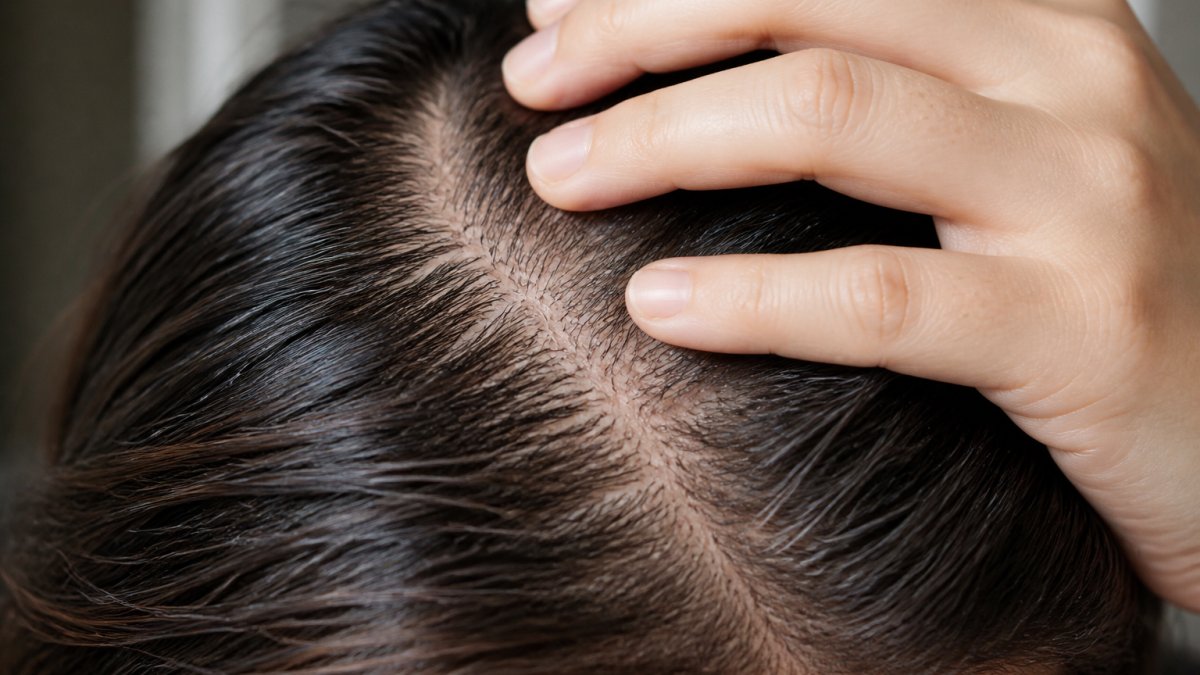
The scalp microbiome also plays a role. At Sophiatrichoholistic Hair Spa LLC, we recognize that scalp health depends on microbial balance and reduced inflammation.
What laboratory and clinical studies show
Laboratory research on caffeine and hair follicles is encouraging but limited. Test-tube and animal studies have demonstrated that caffeine stimulates hair shaft elongation and extends the anagen phase in isolated follicles. These results sound promising until you examine human trials, where the evidence becomes murkier.
Human clinical studies on caffeine shampoos show mixed results. Some trials report modest improvements in hair density or reduced shedding after 4-6 months of use. Other studies find no statistically significant difference between caffeine-containing products and placebo shampoos.
A critical limitation is contact time. Most shampoos rinse off within 2-3 minutes, which may not provide sufficient exposure for caffeine to penetrate deeply into the follicle. Leave-on treatments offer longer contact, theoretically allowing better absorption, but human evidence supporting this remains sparse.
Caffeine Shampoo vs Minoxidil for Hair Loss
When evaluating caffeine vs minoxidil for hair loss, the comparison reveals why minoxidil remains the clinical gold standard. Minoxidil (Rogaine) is FDA-approved for androgenetic alopecia and has decades of clinical evidence behind it. Topical caffeine, by contrast, lacks FDA approval and relies on emerging research that hasn't yet met the evidentiary bar for regulatory clearance.
Head-to-head efficacy comparison
Minoxidil works through a different mechanism than caffeine. It's a vasodilator that increases blood flow to hair follicles, delivering more oxygen and nutrients. Clinical trials show that 5% minoxidil solutions produce visible hair regrowth or halt hair loss progression in roughly 40% of users over 4-6 months.
Caffeine's efficacy, by comparison, appears more modest. When human studies do report positive outcomes, improvements typically range from slowed shedding to slight increases in hair density, not the visible regrowth minoxidil can deliver. No head-to-head trial has directly compared caffeine shampoo to minoxidil under identical conditions, so definitive ranking isn't possible.
That said, caffeine may offer advantages for certain users. It doesn't require a prescription, carries fewer reported side effects, and doesn't produce the scalp irritation or dryness some people experience with minoxidil.
Cost and accessibility
Minoxidil is widely available over-the-counter and costs approximately $20-40 per month for the 5% solution, depending on brand and retailer. Caffeine shampoos vary more widely in price. Some mainstream brands offer caffeine shampoos for $8-15 per bottle, while specialized formulations can cost $25-50. Neither option is prohibitively expensive, but minoxidil's long track record of efficacy may justify the cost for many users seeking proven results.
Accessibility also favors minoxidil. It's stocked in virtually every pharmacy and major retailer. Caffeine shampoos are increasingly available but less universally stocked, though online ordering solves this problem quickly.
How Long Does Caffeine Shampoo Take to Work
How long does caffeine shampoo take to work? Most users won't see meaningful results before 3-4 months of consistent use, and full effects may take 6 months or longer. This timeline aligns with the hair growth cycle, not with the shampoo's immediate action on your scalp.
Realistic timelines for visible results
Hair doesn't grow uniformly. At any given moment, roughly 85% of your scalp hair is in the anagen (growth) phase, 1-3% is in catagen (transition), and 10-14% is in telogen (resting). Hair in telogen will shed regardless of what you apply to your scalp.
Early signs of caffeine shampoo effectiveness, if it works for you, might include reduced shedding within 6-8 weeks. You may notice fewer hairs in your brush or shower drain. Visible density improvements or new hair growth typically emerge between 3-6 months.
The challenge is patience. Many users abandon caffeine shampoo after 4-6 weeks because they don't see results, not realizing that the hair cycle operates on a longer timeline. Conversely, some people attribute improvements to caffeine when they're actually experiencing normal regrowth after a shedding phase unrelated to the product.
Hair cycle phases and what to expect
Understanding the hair cycle clarifies why timelines matter. The anagen phase lasts 2-7 years, during which hair grows continuously. Telogen lasts 2-3 months, after which hair sheds and the cycle restarts. When you start using a caffeine shampoo, existing telogen hairs will shed on their normal schedule. You won't see density improvement until new anagen hairs grow long enough to be visible, typically 2-3 inches, which takes several months.
For postpartum hair loss or other telogen effluvium (excessive shedding), caffeine may help by supporting follicle health during the transition back to normal cycling. But the shedding phase itself must complete first. Expecting caffeine to stop shedding immediately is unrealistic.
Caffeine Shampoo Side Effects and Limitations
Caffeine shampoos are generally well-tolerated, but they're not risk-free. Understanding potential side effects and the limitations of current evidence helps you make an informed decision about whether is topical caffeine for hair loss worth it for your time and money.
Scalp irritation and contact time concerns
Scalp irritation is the most commonly reported side effect, though it remains uncommon. Some users report mild tingling, redness, or itching after applying caffeine shampoo. These reactions typically resolve quickly and may reflect sensitivity to other shampoo ingredients rather than caffeine itself. Discontinuing use resolves irritation in most cases.
Start Your Hair & Scalp Healing Journey →
The contact time problem deserves emphasis. Caffeine shampoos rinse off within minutes, limiting absorption. Caffeine molecules are relatively large and don't penetrate skin easily. A 2-3 minute wash may not provide enough exposure for meaningful follicle penetration. Leave-on caffeine treatments (sprays, serums) offer longer contact, but human data validating their superiority remains limited. If you try a caffeine product, a leave-on formulation theoretically offers better potential than a rinse-off shampoo, but "theoretically" is the operative word.
Study limitations and what we don't know
The evidence for topical caffeine has significant gaps. Most human studies are small (under 100 participants), short-term (under 6 months), or industry-funded. Small sample sizes reduce statistical power, making it harder to detect real effects.
Few studies directly compare caffeine to placebo under rigorous conditions. Many lack proper control groups or randomization. Publication bias also skews perception: studies showing positive results are more likely to be published than those showing no effect.
Additionally, most studies measure hair count or density using clinical photography or phototrichography, methods that can be subjective or prone to measurement error.
We also don't know which hair loss causes caffeine might help. Does it work better for androgenetic alopecia than for alopecia areata or telogen effluvium? Current evidence doesn't clearly distinguish.
Is Topical Caffeine Worth It: The Real Answer
The honest answer depends on your specific situation, expectations, and what you've already tried. Is topical caffeine for hair loss worth it? For some people, yes. For others, no. Here's how to decide.
When caffeine makes sense versus when it doesn't
Caffeine shampoo makes sense if you meet these criteria: you have mild to moderate hair thinning or shedding, you haven't responded well to minoxidil (or can't tolerate it), you're willing to commit to 4-6 months of consistent use, and you have realistic expectations about results.
Caffeine shampoo doesn't make sense if you have severe hair loss, you need proven results quickly, or you're experiencing hair loss from a cause unrelated to follicle miniaturization (like alopecia areata, trichotillomania, or nutritional deficiency). In these cases, minoxidil, finasteride, or other evidence-based treatments are more appropriate.
Caffeine also doesn't make sense as a replacement for addressing underlying health issues. Postpartum hair loss, thyroid-related shedding, iron deficiency, or hormonal imbalances require diagnosis and treatment of the root cause. A shampoo won't fix these problems, no matter what it contains.
Diagnosing your hair loss first
Before choosing any treatment, you need an accurate diagnosis. Not all hair loss responds to the same interventions. Androgenetic alopecia (male or female pattern baldness) is driven by genetic sensitivity to DHT and may respond to minoxidil or finasteride.
At Sophiatrichoholistic Hair Spa LLC, we emphasize diagnosis as the foundation of effective treatment. A licensed trichologist or dermatologist can examine your scalp and help determine whether your hair loss stems from follicle miniaturization, inflammation, hormonal imbalance, or another cause. This step is non-negotiable and should precede any product purchase.
If you're experiencing chronic scalp inflammation, seborrheic dermatitis, psoriasis, or other inflammatory conditions, addressing scalp health becomes the priority. Caffeine shampoo alone won't resolve these issues. A holistic approach combining topical care, internal balance, and professional treatment offers better outcomes.
Combining Topical Caffeine With Other Treatments
If you decide to try caffeine shampoo, combining it with other approaches may improve results. Caffeine works through follicle stimulation and energy production, while minoxidil works through vasodilation. These mechanisms are complementary, not redundant.
Adding scalp massage amplifies blood flow, supporting nutrient delivery to follicles. Consistent massage for 5 minutes daily may enhance any topical treatment's effectiveness.
Internal hormonal balance and stress management influence hair loss significantly. Postpartum hair loss improves as hormones stabilize. Chronic stress accelerates shedding through telogen effluvium.
For users with inflammatory scalp conditions, combining caffeine shampoo with anti-inflammatory approaches, whether topical (neem oil, salicylic acid) or systemic (omega-3 supplementation, acupuncture) or both, offers a more complete strategy.
The evidence suggests that topical caffeine has modest potential for certain types of hair loss, but it's not a proven solution like minoxidil.
Frequently Asked Questions
Can topical caffeine actually help with hair loss?
Topical caffeine may help reduce hair shedding and support hair follicle health, but the evidence is mixed. Laboratory studies show caffeine can stimulate hair follicles and increase cellular energy (ATP) production, which supports the anagen (growth) phase of the hair cycle. However, human clinical trials are limited and show modest results, typically reducing shedding rather than producing dramatic new hair growth. The effect is most promising for androgenetic alopecia (male and female pattern baldness) and works best as part of a broader treatment approach rather than as a standalone solution.
How does caffeine shampoo compare to minoxidil for hair loss?
Minoxidil (5% solution) has stronger clinical evidence for promoting hair regrowth and is FDA-approved for androgenetic alopecia. Caffeine shampoos have weaker evidence but fewer reported side effects. Minoxidil typically shows measurable results within 4-6 months; caffeine products may take 3-6 months to reduce shedding noticeably. Cost varies, but minoxidil is often cheaper long-term. For significant hair regrowth, minoxidil is the more proven option. Caffeine may work best as a complementary treatment or for those who cannot tolerate minoxidil's side effects like scalp irritation.
What are the side effects of caffeine shampoo?
Caffeine shampoos are generally well-tolerated with minimal side effects reported in clinical studies. Potential issues include scalp irritation, dryness, or sensitivity in people with reactive scalps, though these are uncommon. Unlike minoxidil, caffeine does not typically cause systemic effects. The main limitation is that contact time matters, caffeine must remain on the scalp long enough (usually 1-2 minutes minimum) to penetrate and be absorbed. Rinse-off products are less effective than leave-on treatments because the contact time is too short for adequate absorption.
How long does it take to see results from caffeine shampoo?
Most users see measurable reduction in hair shedding within 3-4 months of consistent use, though some see changes earlier. Visible hair regrowth or increased hair density typically takes 4-6 months or longer because new hair must grow through the full hair cycle. Results depend on consistent use, scalp health, and the underlying cause of hair loss. Women with postpartum hair loss or early-stage androgenetic alopecia may see faster improvements than those with advanced hair loss. Tracking results objectively (counting shed hairs, measuring hair density with photos) helps confirm whether the product is working for you.