 How-to
How to Stop Scalp Itching: Causes and Relief That Works
Table of Contents
- How to Stop Scalp Itching: A Step-by-Step Approach
- Common Itchy Scalp Causes You Should Rule Out First
- Itchy Scalp Without Dandruff: What Else Is Going On
- Scalp Eczema Treatment Options That Calm the Skin
- Itchy Scalp Home Remedies You Can Use Safely
- Medicated Shampoos and OTC Treatments: How to Use Them Correctly
- Red Flags: When Scalp Itching Needs Medical Evaluation
- Preventing Scalp Itching: Product Triggers and Daily Habits
- Frequently Asked Questions
Last Updated: October 6, 2026
How to Stop Scalp Itching: A Step-by-Step Approach
Scalp itching is a symptom, not a diagnosis, and learning how to stop scalp itching starts with finding the cause rather than grabbing the first shampoo on the shelf. At Sophiatrichoholistic Hair Spa LLC, we understand that many women have tried numerous products without identifying the root cause of their scalp irritation.
Here is the order we recommend:
- Check for flakes, redness, or sores to narrow the cause
- Try one gentle, fragrance-free routine for two weeks
- Add a targeted treatment only if the first step fails
- Track triggers in a simple daily note
- See a clinician if symptoms persist past two to three weeks
Most people skip to step three, which is why the itch keeps coming back.
Common Itchy Scalp Causes You Should Rule Out First
Most itchy scalp causes fall into two groups: those with visible flakes or patches, and those without. Part your hair in good light and look closely at the skin, what you see points to what you should do.
Dandruff, Seborrheic Dermatitis, and Dry Scalp
Dandruff is mild flaking that responds to regular washing and over-the-counter shampoo. Seborrheic dermatitis is the stubborn cousin: greasy yellowish flakes, redness, and itching that spreads to the hairline and behind the ears, linked to an overgrowth of Malassezia yeast.
Dry scalp looks similar but feels tight rather than oily, usually from overwashing, harsh detergents, or cold weather. Seborrheic dermatitis rarely improves with moisturizing alone, and oil can make it worse.
A quick way to tell them apart:
- Dry scalp: small white flakes, tight feeling, worse in winter, improves with less washing and more moisture
- Dandruff: white to yellow flakes, mild itch, responds to washing and an over-the-counter active ingredient
- Seborrheic dermatitis: greasy yellow flakes, redness, itching at the hairline and behind the ears, often flares with stress and cold weather
Psoriasis, Lice, and Allergic Reactions
Scalp psoriasis shows up as thick, silvery scales over red patches, often extending past the hairline. It is inflammatory, not a hygiene problem, and flares and fades.
Head lice cause intense itching behind the ears and at the nape, with nits glued to hair shafts near the root.
Allergic reactions, or contact dermatitis, burn or sting as much as itch.
Match Your Symptoms to Your Next Step
Use this decision path to move from observation to action. It is not a diagnosis, but it narrows the field.
- Small white flakes, tight dry skin, no redness: Treat as dry scalp. Wash less often with a gentle, fragrance-free shampoo, add a light moisturizing scalp oil, and use a humidifier in dry months. Reassess in two weeks.
- White to yellow flakes, mild itch, no redness: Treat as dandruff. Start an over-the-counter antidandruff shampoo with zinc pyrithione, selenium sulfide, or ketoconazole. Use it two to three times per week with full contact time. Reassess in two to four weeks.
- Greasy yellow flakes, redness at the hairline or behind the ears: Treat as seborrheic dermatitis. Use an antidandruff shampoo with ketoconazole or selenium sulfide, and consider a short course of over-the-counter hydrocortisone for flare control. If it does not improve in two to four weeks, see a clinician.
- Thick silvery scales over red patches, extends past the hairline: Suspect psoriasis. See a clinician for diagnosis. Over-the-counter shampoos may help with scale but will not control the inflammation.
If your symptoms do not fit one row cleanly, start with the gentlest option and track what changes. A daily note of what you used and how the itch felt usually reveals the pattern within two weeks.
Itchy Scalp Without Dandruff: What Else Is Going On
Scalp itching without visible flakes is common and often misdiagnosed. If skin looks normal but itches, the cause is usually something you apply, something in your environment, or a nerve-related sensitivity.
The usual suspects:
- Product buildup: conditioners, dry shampoos, and styling gels left on the scalp
- Fragrance and preservatives: the top triggers in contact dermatitis
- Tight hairstyles: braids and ponytails that pull on the follicles
- Dry indoor air: low humidity dries the skin barrier
Try a two-week reset: wash with a fragrance-free shampoo, skip styling products, and loosen tight styles. If the itch fades, you have found your trigger.
Scalp Eczema Treatment Options That Calm the Skin
Scalp eczema treatment follows the same logic as eczema anywhere: reduce inflammation, repair the barrier, and stop the irritant. Scratching feels good for three seconds, then makes everything worse.
What actually helps:
- Gentle, fragrance-free washing every two to three days
- Moisturizing the scalp with a light oil or leave-in product
- Cool compresses during flares to interrupt the itch-scratch cycle
- Over-the-counter hydrocortisone for short-term flare control, used only as directed
A common mistake is switching products every few days. Barrier repair takes time, and constant switching makes it impossible to tell what works.
Itchy Scalp Home Remedies You Can Use Safely
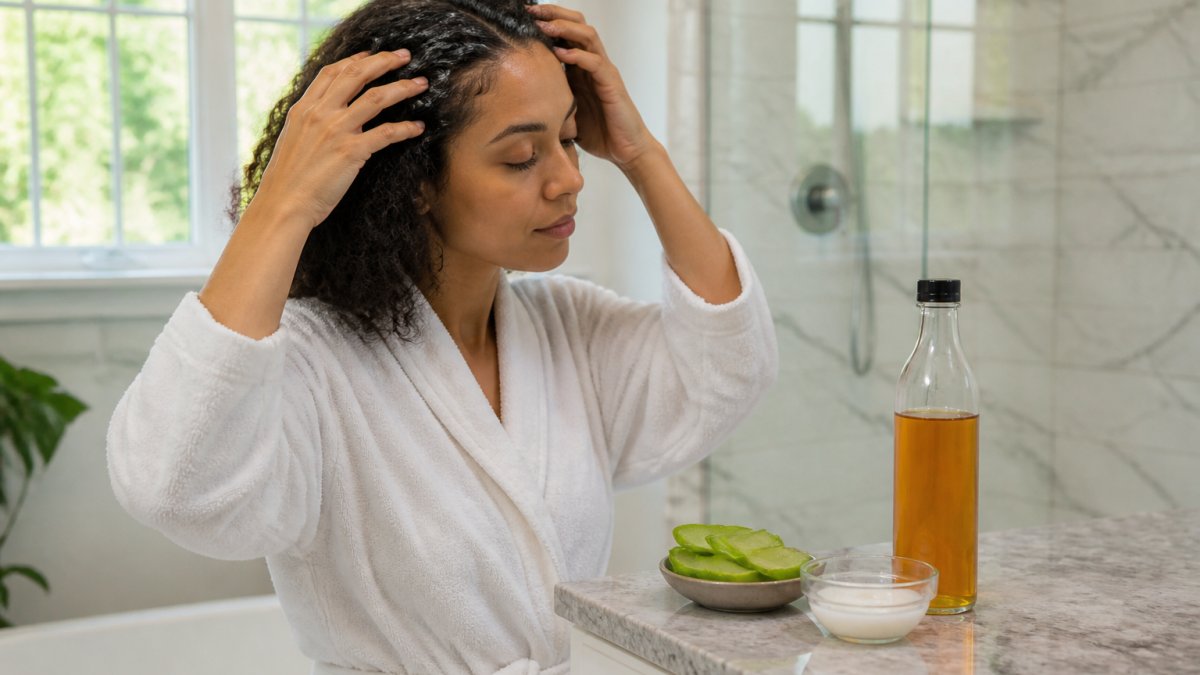
Most home remedies fail for one of two reasons: the wrong strength or the wrong cause. A coconut oil mask does nothing for a fungal flare, and undiluted tea tree oil can burn skin a 2 percent dilution would calm.
Start Your Hair & Scalp Healing Journey →
Dilution and Patch Testing: The Two Rules That Prevent Most Reactions
Essential oils are the most common cause of self-inflicted scalp irritation. The fix is arithmetic, not willpower.
- Carrier oil base: For a 2 percent dilution, add about 12 drops of essential oil to 1 ounce (roughly 2 tablespoons) of carrier oil such as jojoba, fractionated coconut, or sweet almond. For a 1 percent dilution, use about 6 drops per ounce. Start at 1 percent for any first use.
- Tea tree oil: 1 percent to 2 percent is the range most practitioners find tolerable for scalp use. That is roughly 6 to 12 drops per ounce of carrier. Do not apply it neat.
- Peppermint and eucalyptus: Keep these at or below 1 percent. They feel cooling at first and then can tip into burning, especially on broken skin.
- Citrus oils: Skip them on the scalp. They are phototoxic, meaning sun exposure after use can cause a burn-like reaction.
Patch-test protocol: apply a small amount of the diluted mixture to your inner forearm, cover it, and wait 24 to 48 hours. If redness, swelling, itching, or burning appears, do not put it on your scalp. Repeat behind your ear before full application, since scalp skin can react differently.
What to Try, What to Skip, and When to Stop
Reasonable options for the right cause:
- Aloe vera gel: Cooling for dry, irritated scalp. Apply to a clean scalp, leave 10 to 15 minutes, rinse. Use pure gel, not one with fragrance or alcohol.
- Diluted apple cider vinegar rinse: One part vinegar to four parts water. Pour over the scalp after shampooing, leave 1 to 2 minutes, rinse. Helps some mild flaking; it does not treat seborrheic dermatitis or psoriasis.
- Coconut oil: Best for dry scalp and tight, flaky skin. Apply 20 to 30 minutes before washing. It can worsen greasy yellow flaking by feeding the yeast behind seborrheic dermatitis, so skip it if flakes are oily.
- Cool water rinse: Zero risk, immediate relief whenever the itch escalates.
Skip these entirely:
- Undiluted essential oils, which can cause chemical burns and contact dermatitis
- Hot water, which strips the skin barrier and increases itching
- Lemon juice or baking soda paste, both too harsh and too acidic or alkaline for repeated use
- Any remedy left on overnight without a prior patch test
Stop and reassess if:
- Burning, stinging, or new redness appears within 24 hours
- Itching gets worse rather than better after two or three uses
- You develop a rash that spreads beyond the scalp
- Symptoms have not improved after two weeks of consistent, correct use
A remedy that helps one cause can worsen another. If you cannot tell whether your scalp is dry or oily, treat it as oily first, since oil-based remedies most often backfire on a fungal or seborrheic cause.
Medicated Shampoos and OTC Treatments: How to Use Them Correctly
Medicated shampoo works only when you follow the label, and most people do not. The two most common errors are rinsing too soon and giving up after one wash.
For most medicated shampoos:
- Wet your hair and apply to the scalp, not just the strands
- Massage in and leave it for the full contact time on the label
- Rinse thoroughly with cool or lukewarm water
- Repeat at the frequency stated, often two to three times per week
- Give it at least two to four weeks before judging results
If one active ingredient fails after a fair trial, a different one may work. Do not stack multiple medicated shampoos on the same day.
Red Flags: When Scalp Itching Needs Medical Evaluation
See a clinician if itching lasts more than two to three weeks, keeps you awake, or comes with any of these signs:
- Open sores, crusting, or bleeding
- Sudden hair loss in patches
- Pus, swelling, or warmth
- A rash spreading to the face or neck
These signs need a proper diagnosis. A clinician can distinguish psoriasis, seborrheic dermatitis, a fungal infection, and an allergic reaction, and prescribe treatment when over-the-counter options fall short.
Preventing Scalp Itching: Product Triggers and Daily Habits
Prevention comes down to two things: knowing your triggers and keeping the scalp barrier healthy.
Product triggers to watch:
- Fragrance, the most common culprit in contact dermatitis
- Sulfate detergents in shampoo
- Hair dyes and chemical straighteners
- Dry shampoo left on the scalp for days
- Styling gels and sprays applied close to the roots
Daily habits that help:
- Wash two to three times a week with a gentle shampoo
- Rinse thoroughly, especially at the nape
- Loosen tight styles and rotate part lines
- Use a humidifier in dry months
- Manage stress, which lowers your itch threshold
If chronic scalp conditions like psoriasis or seborrheic dermatitis keep returning despite good home care, the issue is often deeper than the surface.
Chronic scalp itching rarely resolves with a single product. It takes the right diagnosis, a patient routine, and root-cause care when surface treatments stall.
Frequently Asked Questions
What vitamin is lacking if your scalp itches?
Low levels of vitamin D, B vitamins (especially B7, biotin), zinc, and iron are sometimes linked to scalp itching and flaking, but a deficiency is rarely the only cause. Most scalp itching comes from dandruff, seborrheic dermatitis, dry scalp, or product irritation. If you suspect a nutrient gap, ask a doctor for bloodwork before adding supplements, since taking the wrong vitamin will not stop scalp itching and can cause other problems.
How can scalp eczema be treated?
Scalp eczema treatment usually starts with a gentle, fragrance-free shampoo and a moisturizing routine to rebuild the skin barrier. For flare-ups, a doctor may recommend a medicated shampoo containing ketoconazole or a topical corticosteroid. Avoiding harsh detergents, hot water, and known irritants helps prevent repeat episodes. If itching and flaking persist beyond a few weeks or you notice oozing or crusting, see a dermatologist for a proper evaluation.
Does apple cider vinegar stop itchy scalp?
Apple cider vinegar has mild antimicrobial and acidic properties that some people find soothing, but there is no strong clinical evidence that it stops scalp itching on its own. If you want to try it, dilute one part vinegar with three to four parts water, apply to the scalp, and rinse thoroughly. Never use it undiluted, since the acid can burn skin and worsen irritation, especially if you have open sores or a rash.
When should I see a doctor about an itchy scalp?
See a doctor if scalp itching lasts more than two to three weeks, does not improve with OTC shampoos, or comes with red flags like severe pain, oozing, crusting, open sores, hair loss, or swelling. These signs can point to psoriasis, a fungal infection, or contact dermatitis that needs prescription treatment. A medical evaluation also rules out conditions that look like dandruff but require a different approach.