 ultimate-guide
Seborrheic Dermatitis Holistic Treatment Guide 2026
Table of Contents
- What Seborrheic Dermatitis Looks Like on Your Scalp
- How to Stop Scalp Itching Without Harsh Medicated Shampoos
- Dietary Triggers for Seborrheic Dermatitis and Gut Health
- TCM Approach to Scalp Health: Balancing Internal Heat and Dampness
- Natural Topical Remedies That Support Skin Barrier Function
- Stress, Sleep, and the Stress-Gut-Skin Axis
- Seasonal and Climate-Based Flare-Up Management
- Conclusion: Building Your Personalized Holistic Protocol
- Frequently Asked Questions
Last Updated: September 12, 2026
What Seborrheic Dermatitis Looks Like on Your Scalp
Seborrheic dermatitis is a chronic inflammatory scalp condition driven by an overgrowth of Malassezia yeast, excess sebum production, and a compromised skin barrier. It typically appears as greasy, yellowish scales along the hairline, behind the ears, and across the crown, often accompanied by redness and persistent itching. Many women find that this pattern persists even after cycling through medicated shampoos without lasting relief.
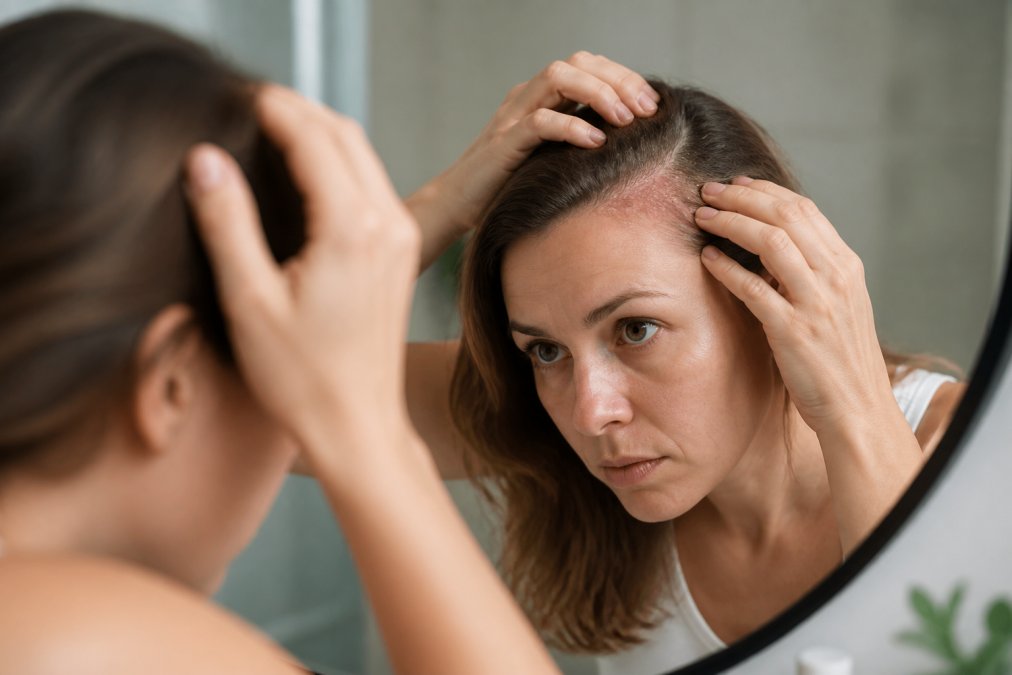
The telltale signs go beyond dandruff. You may notice erythema (redness) that worsens with stress, desquamation (flaking) that returns within days of washing, and a scalp that feels oily yet tight. According to the American Academy of Dermatology's overview of seborrheic dermatitis, this condition affects areas rich in oil glands and tends to flare in cycles rather than resolve permanently. That cyclical nature is exactly why a seborrheic dermatitis holistic treatment guide 2026 approach matters: you're managing a system, not just a symptom.
How to Stop Scalp Itching Without Harsh Medicated Shampoos
The fastest way to calm scalp itching is to reduce inflammation and restore pH balance rather than strip the scalp with harsh surfactants. Many women find that conventional medicated shampoos work short-term but leave the skin barrier compromised, triggering rebound oiliness and more itching.
Cooling Agents and pH Balance for Immediate Relief
Cooling agents like aloe vera and diluted tea tree oil can soothe irritation on contact, while pH-balanced cleansers help the scalp return to its natural acidic environment. A common mistake is over-washing. In practice, washing every other day with a gentle, non-comedogenic cleanser reduces transepidermal water loss and keeps the skin microbiome steadier.
- Aloe vera gel: apply to damp scalp, leave 10 minutes, rinse
- Diluted tea tree oil: 2-3 drops per tablespoon of carrier oil
- pH-balanced rinse: diluted apple cider vinegar, 1 part to 4 parts water
Dietary Triggers for Seborrheic Dermatitis and Gut Health
Dietary triggers for seborrheic dermatitis usually trace back to two mechanisms: systemic inflammation and blood sugar volatility. When blood glucose spikes, insulin rises, and insulin-like growth factor 1 (IGF-1) signals the sebaceous glands to produce more sebum. Malassezia yeast feeds on that sebum, so a high-glycemic eating pattern can indirectly fuel the same overgrowth you are trying to calm topically. This is the practical core of the gut-skin axis: what you eat changes the oil your scalp produces, and the oil changes the yeast environment.
The Triggers Most Often Implicated
- Refined carbohydrates and added sugars, white bread, pastries, sweetened drinks, and syrups drive the insulin-IGF-1 pathway described above.
- High-glycemic dairy, some women notice flares with milk and sweetened yogurt, though evidence is mixed and individual. Fermented dairy like plain kefir is often better tolerated.
- Processed seed oils, heavily refined oils in packaged snacks and fried foods are associated with higher inflammatory markers in observational research.
- Alcohol, especially beer and sweet cocktails, which combine yeast, sugar, and a diuretic effect that can leave skin drier and more reactive.
- Excess caffeine, not a direct trigger for everyone, but it amplifies cortisol, which we cover in the stress section below.
What Actually Helps
A food-first anti-inflammatory pattern tends to outperform strict elimination diets for most women. That means:
- Omega-3 sources, wild-caught salmon, sardines, walnuts, and flaxseed. Omega-3s support the resolution of inflammation rather than just suppressing it.
- Fermented foods, plain kefir, sauerkraut, kimchi, and unsweetened yogurt feed beneficial gut bacteria.
- Fiber-rich vegetables, leafy greens, broccoli, and artichokes support short-chain fatty acid production in the colon, which in turn supports a calmer immune response.
- Low-glycemic fruit, berries, apples, and pears instead of tropical fruit and fruit juice.
- Green tea, contains EGCG, a polyphenol studied for its anti-inflammatory and sebum-regulating properties.
Probiotics, Fish Oil, and the Gut Microbiome Connection
Probiotics and fish oil are two of the most studied complementary supports for chronic inflammatory skin conditions. Most practitioners find that rebalancing gut bacteria reduces the systemic inflammatory load that shows up on the scalp. The mechanism is not mystical: a diverse gut microbiome produces short-chain fatty acids and modulates immune signaling, which influences sebum production and how aggressively your skin reacts to Malassezia.
When supplementing, look for:
- Lactobacillus and Bifidobacterium strains, the most commonly studied for skin and gut support. A typical maintenance dose is 10-20 billion CFU daily, though this varies by product and individual (ods.od.nih.gov).
- Omega-3 fish oil, often dosed at 1-2 grams of combined EPA and DHA daily. Choose a brand third-party tested for heavy metals and oxidation.
- Vitamin D, many women with chronic scalp conditions run low, especially in winter. Ask your clinician to test before supplementing, since vitamin D is fat-soluble and can accumulate.
- Zinc, involved in skin barrier repair and immune regulation. Food sources include oysters, beef, pumpkin seeds, and chickpeas.
A food-first approach, plus targeted supplementation under professional guidance, tends to outperform elimination diets alone, and it is far more sustainable. Cutting entire food groups without a clear reason often creates nutrient gaps that make the skin worse, not better.
TCM Approach to Scalp Health: Balancing Internal Heat and Dampness
A TCM approach to scalp health treats the scalp as a reflection of internal balance, specifically the relationship between heat and dampness. In Traditional Chinese Medicine, oily, inflamed, scaling scalps are often read as damp-heat rising, and treatment focuses on cooling, draining, and restoring flow rather than suppressing symptoms topically.
Acupuncture, herbal formulas, and dietary adjustments work together in this framework. The National Center for Complementary and Integrative Health's overview of acupuncture notes that acupuncture is increasingly studied for inflammatory conditions, though results vary by individual. At Sophiatrichoholistic Hair Spa LLC, we combine this TCM lens with clinical trichology, offering an approach where internal balancing and topical scalp care can reinforce each other.
Natural Topical Remedies That Support Skin Barrier Function
Natural topical remedies work best when they support skin barrier function instead of attacking the scalp. Harsh antifungals can disrupt the skin microbiome, which is why gentle, evidence-informed options often produce steadier results over time. The table below covers the most commonly used options, their primary action, and how to apply them safely.
| Remedy | Primary Action | Best For | How to Apply | Key Safety Note |
|---|---|---|---|---|
| Zinc pyrithione | Antifungal, keratolytic | Mild flaking | 2-3x weekly, leave 5 min | Avoid on broken or cracked skin |
| Selenium sulfide | Slows yeast overgrowth | Persistent scaling | 2x weekly | Can discolor blonde, gray, or chemically treated hair |
| Tea tree oil | Anti-inflammatory, antimicrobial | Itching, irritation | Dilute to 1-2% in carrier oil, 2-3x weekly | Never apply undiluted; patch test first |
| Aloe vera | Soothes, hydrates | Barrier repair | Daily on damp scalp | Use pure gel, not alcohol-based formulas |
| Colloidal silver | Antimicrobial support | Sensitive scalps | Spot application only | Not for long-term daily use |
| Apple cider vinegar rinse | Restores acidic pH | Product buildup, dull scalp | 1 part ACV to 4 parts water, rinse after 2 min | Skip if scalp is cracked or bleeding |
| Grapefruit seed extract | Biofilm disruption | Stubborn scaling | Dilute per label, 2x weekly | Evidence still emerging; can irritate |
| Xylitol | Biofilm disruption | Stubborn scaling | Dilute per label, 2x weekly | Keep away from pets, toxic to dogs |
How to Layer and Rotate Remedies
One of the most common mistakes is stacking multiple actives on the same day. A better pattern is to rotate:
- Monday / Thursday, antifungal wash (zinc pyrithione or selenium sulfide)
- Tuesday / Friday, soothing barrier support (aloe vera, colloidal silver spot treatment)
- Wednesday / Saturday, anti-inflammatory botanical (diluted tea tree oil or a chamomile-based rinse)
- Sunday, rest day with a gentle, fragrance-free cleanser only
This rotation reduces the risk of sensitization, gives the skin barrier time to recover, and prevents any single ingredient from overwhelming the scalp microbiome.
Dilution Ratios That Matter
Essential oils are the most common source of self-inflicted irritation in holistic scalp care. Safe dilution for scalp use is generally:
- 1% dilution, 6 drops of essential oil per 1 ounce (about 2 tablespoons) of carrier oil. Best for sensitive or reactive scalps.
- 2% dilution, 12 drops per 1 ounce. Appropriate for most adults with non-broken skin.
- 3% dilution, 18 drops per 1 ounce. Only for short-term, targeted use, and never on the face or neck.
Carrier oils that work well for the scalp include jojoba (closest to human sebum), fractionated coconut oil, and sweet almond oil. Avoid olive oil on the scalp, it can feed Malassezia.
Patch Testing Before You Commit
Before applying anything new to your scalp, patch test on the inner forearm for 48 hours. Apply a small amount of the diluted remedy, cover with a bandage, and check for redness, itching, or swelling. If you react on your arm, do not put it on your scalp. If you have a history of contact dermatitis, eczema, or fragrance sensitivity, patch test for 72 hours instead.
When Natural Is Not Enough
Natural remedies are not a replacement for medical care when the scalp is cracked, bleeding, oozing, or infected. A dermatological assessment is worth having before starting anything new, especially if you have tried multiple remedies without improvement. Prescription options like ketoconazole, ciclopirox, or topical corticosteroids may be necessary to break a severe flare, and there is no shame in using them. The goal is a calm scalp, not ideological purity.
Stress, Sleep, and the Stress-Gut-Skin Axis
The stress-gut-skin axis explains why flare-ups often arrive during your busiest weeks. Chronic stress raises cortisol, which increases sebum production and disrupts the gut microbiome, feeding the same inflammatory loop that shows up on your scalp. Sleep loss compounds it.
What most guides miss is how much this loop responds to small, consistent changes. A regular sleep window, ten minutes of daily breathwork, and reducing caffeine after noon can meaningfully lower flare frequency for many women. This is also where the psychological impact of a chronic skin condition deserves honest attention: the anxiety of visible flaking is itself a trigger.
Seasonal and Climate-Based Flare-Up Management
Seasonal shifts change how your scalp behaves, and your routine should shift with them. Cold, dry winters strip the skin barrier and increase transe epidermal water loss, while hot, humid summers ramp up sebum production and yeast activity.
In winter, switch to richer, hypoallergenic moisturizers and reduce wash frequency. In summer, cleanse more often with a pH-balanced formula and keep a cooling aloe mist on hand. If you live in a dry climate, a humidifier in the bedroom often does more for your scalp than another product.
Conclusion: Building Your Personalized Holistic Protocol
A seborrheic dermatitis holistic treatment guide 2026 protocol only works when it's built around your specific triggers, climate, and stress load. Generic plans fail because they ignore the gut-skin connection, seasonal shifts, and the emotional weight of a chronic condition.
At Sophiatrichoholistic Hair Spa LLC, we combine Traditional Chinese Medicine with clinical trichology to address root causes, not just surface symptoms. Our approach restores the scalp microbiome, reduces inflammation, and supports sustainable hair regeneration from the root. If you've tried various approaches without lasting success, our methods are designed to address the underlying issues.
Frequently Asked Questions
What is the best natural remedy for seborrheic dermatitis?
There is no single best remedy, but several natural options show promise. Tea tree oil has antifungal properties against Malassezia, the yeast linked to seborrheic dermatitis. Aloe vera can soothe erythema and itching. Zinc pyrithione and selenium sulfide are effective non-prescription ingredients. A holistic protocol often combines gentle cleansing, topical anti-inflammatory agents, and dietary changes. Consult a dermatologist or holistic trichologist before starting new treatments, especially if your scalp is broken or infected.
What vitamin deficiency causes seborrheic dermatitis?
Research has linked seborrheic dermatitis to low levels of certain nutrients, including zinc, biotin, and vitamin B6. However, deficiency is not the sole cause. Malassezia yeast overgrowth, sebum production, and skin barrier function all play roles. A blood test can identify deficiencies, but correcting them alone may not clear the condition. A holistic approach addresses nutrition alongside topical care and gut health.
What does Chinese medicine say about seborrheic dermatitis?
In Traditional Chinese Medicine, seborrheic dermatitis is often viewed as an imbalance of internal heat and dampness. The TCM approach to scalp health focuses on cooling the blood, clearing dampness, and supporting the spleen and stomach. Practitioners may use acupuncture, herbal formulas, and dietary therapy. While clinical studies are limited, many patients report reduced inflammation and itching when TCM is combined with standard dermatological care.
Can diet and lifestyle changes improve seborrheic dermatitis?
Yes, diet and lifestyle can significantly affect flare-ups. Common dietary triggers for seborrheic dermatitis include sugar, refined carbohydrates, dairy, and alcohol. An anti-inflammatory diet rich in omega-3 fatty acids, vegetables, and probiotics may help. Stress management, quality sleep, and regular exercise also support the stress-gut-skin axis. These changes work best alongside topical treatments and professional guidance.
What are the safest holistic alternatives to medicated shampoos?
Safest options include diluted tea tree oil, aloe vera gel, colloidal silver, and xylitol-based rinses. These have fewer side effects than some prescription shampoos but may be less potent. Always patch-test essential oils and avoid undiluted application. For chronic or severe cases, a dermatological assessment is essential to rule out other conditions and prevent complications.
How to manage chronic scalp itching using natural methods?
Start with a gentle, hypoallergenic shampoo to avoid stripping the skin barrier. Apply cool compresses or aloe vera to calm irritation. Tea tree oil and colloidal silver can reduce yeast and bacteria. Avoid hot water and harsh scrubbing. If itching persists, a holistic practitioner can create a personalized plan that includes dietary adjustments and stress reduction techniques to address root causes.
Chronic scalp conditions rarely resolve with a single product. They respond to a system: the right topical care, dietary support, stress management, and professional guidance working together. Sophiatrichoholistic Hair Spa LLC offers personalized, women-focused treatment that blends TCM and modern trichology, including scalp microbiome restoration, inflammation reduction, and root-cause hair regeneration. Get started with Sophiatrichoholistic Hair Spa LLC and build a protocol that finally holds.