 How-to
How to Build a Scalp Care Routine for Curly Hair
Last Updated: November 9, 2026
Quick Summary
A scalp care routine for curly hair starts with assessing your scalp type and curl pattern, then setting a wash schedule that fits your scalp. Use a gentle sulfate-free shampoo, layer products from the scalp down, and exfoliate the roots gently once or twice a month.
- Track oiliness, flaking, and itch in a log for two weeks before changing products.
- Oily scalps may need washing every 2 to 3 days, while dry scalps may need only once a week.
- Patch-test new products behind the ear or on the inner forearm for 24 to 48 hours.
- Exfoliate the scalp once or twice a month, avoiding harsh scrubs and daily use.
- Persistent itching, redness, or flaking should prompt a visit to a dermatologist.
Table of Contents
- Why Scalp Health Matters for Curly Hair
- Step 1: Assess Your Scalp Type and Curl Pattern
- Step 2: Set a Wash Schedule That Fits Your Scalp
- Curly Hair Routine Products in Order
- Step 3: Exfoliate and Clear Buildup Without Stripping Curls
- Dry Scalp Care for Curly Hair: Moisture and Massage
- Curly Hair Routine for Beginners: Common Mistakes and Seasonal Adjustments
- Booking a Scalp Consultation If Your Routine Is Not Working
- Frequently Asked Questions
Why Scalp Health Matters for Curly Hair
Your scalp is the skin that hair grows from, and for curly hair it does more work than most people realize. A healthy scalp is widely regarded as the core of a good scalp care routine.
Curly hair shapes how the scalp behaves. Each bend in a curl makes it harder for natural oil, called sebum, to travel down the shaft. Oil stays near the roots, so the scalp can feel oily while the ends feel dry. That imbalance is one reason a routine built only around the lengths often falls short.
How curl pattern affects oil distribution
Tight coils and kinks block sebum more than loose waves do. Because the oil cannot reach the ends easily, many people with curls add moisturizers and oils to the lengths. Those products can build up on the scalp if they are not cleansed away. A routine that accounts for this balance keeps the scalp clean without stripping the curls.
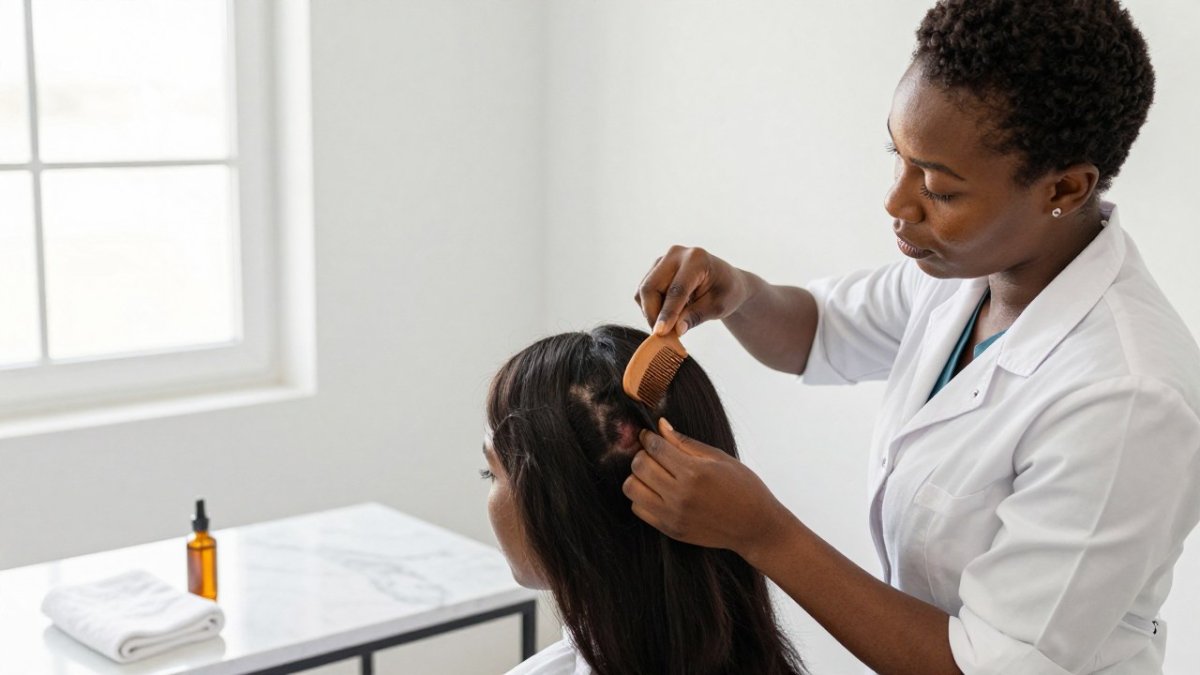
Signs your scalp needs attention
Watch for these common signals:
- Persistent itching or tightness
- Flaking that does not respond to regular washing
- Redness, burning, or soreness
- Oil that returns quickly after washing
- Thinning or hair that breaks near the roots
Any of these can point to a condition that home care alone may not resolve. If symptoms persist or worsen, American Academy of Dermatology guidance on scalp conditions explains when to see a dermatologist.
Step 1: Assess Your Scalp Type and Curl Pattern
Before you change products, figure out what your scalp and curls need. Most people with curls have either a drier scalp, an oilier one, or a mix of both.
Check these points:
- Oil level: Does your scalp feel greasy within a day or two of washing?
- Flaking: Are flakes small and dry, or larger and yellowish?
- Curl density: Tighter coils usually need more moisture at the lengths and gentler cleansing at the roots.
- Sensitivity: Does the scalp sting after certain products?
Write down what you notice for two weeks. That log will guide the rest of your routine.
Step 2: Set a Wash Schedule That Fits Your Scalp
Your wash schedule matters more than the brand of shampoo. Washing too rarely lets buildup collect. Washing too often can dry out the scalp and trigger more oil production.
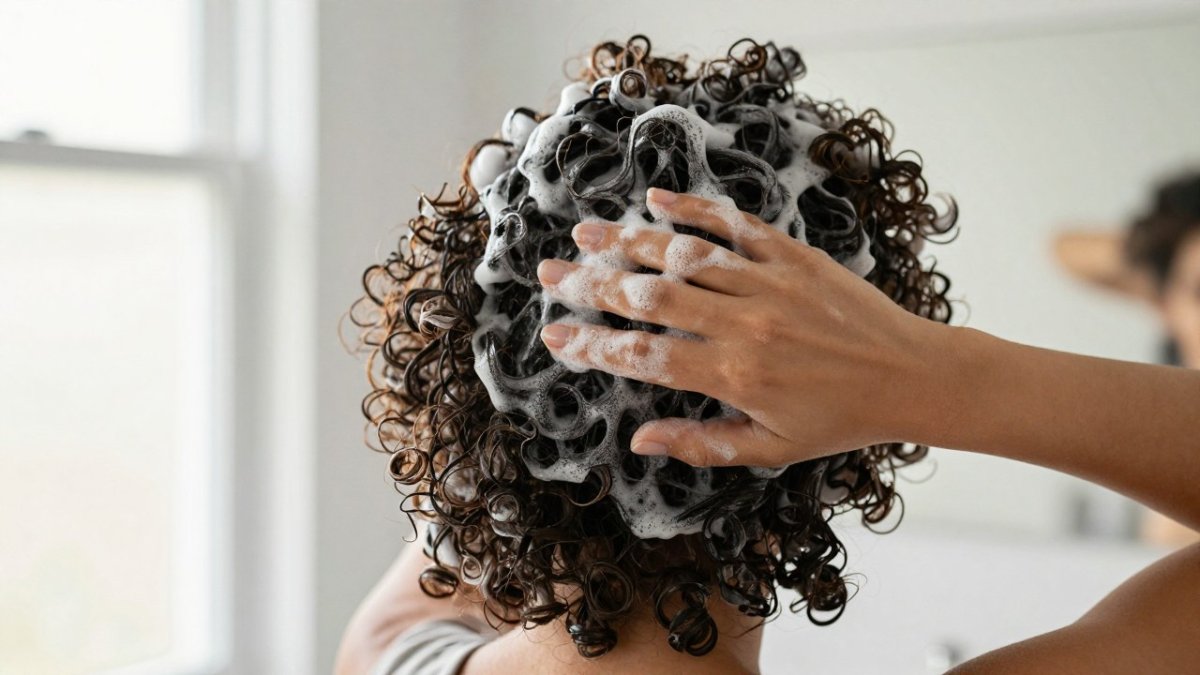
How often to wash curly hair
Many people with curls wash once or twice a week. An oily scalp may need washing more often, while a dry scalp may do better with less frequent shampooing. Use your two-week log to find the rhythm that keeps your scalp balanced.
- Oily scalp: every 2 to 3 days
- Balanced scalp: once or twice a week
- Dry scalp: once a week, with a gentle cleanser
For professional scalp treatments, how often to get scalp treatments, Sophiatrichoholistic Hair Spa LLC guide covers frequency based on condition.
Choosing a sulfate-free, low-lather shampoo
Sulfate-free, low-lather shampoos clean the scalp without removing too much natural oil. Look for gentle cleansers and avoid heavy formulas that leave residue. Patch-test any new product on a small area first, since ingredient sensitivity varies from person to person.
Identifying irritants on a sensitive scalp
'Sulfate-free' is a starting point, not a guarantee. A shampoo can be sulfate-free and still sting a reactive scalp. The practical move is to read the ingredient list and know which families of ingredients most often trigger reactions, then test one variable at a time.
Common irritant categories to scan for:
- Fragrance and essential oils: 'fragrance,' 'parfum,' peppermint oil, eucalyptus oil, and citrus oils are frequent triggers of stinging and redness.
- Preservatives: methylisothiazolinone (MIT) and methylchloroisothiazolinone (CMIT) are well-known contact allergens; some people also react to formaldehyde-releasing preservatives.
- Surfactants beyond sulfates: some low-lather cleansers still contain cocamidopropyl betaine, which causes reactions in a small share of users.
- Alcohols and astringents: drying alcohols high on the list can leave the scalp tight and flaky.
- Exfoliating acids: salicylic acid and glycolic acid help some scalps and irritate others, especially at higher concentrations.
A simple sensitivity test: apply a small amount of the product behind the ear or on the inner forearm, leave it for 24 to 48 hours, and check for redness, itching, or burning.
Watch out: a reaction that spreads beyond the test spot, causes swelling, or includes difficulty breathing is not a normal sensitivity response, stop using the product and seek medical care. For persistent scalp reactions, American Academy of Dermatology guidance on scalp conditions explains when to see a dermatologist.
Matching cleanser strength to your scalp
A clarifying shampoo is stronger than a moisturizing one, and neither is right for every wash. Rotate: use a gentle sulfate-free cleanser for most washes and reserve a clarifying formula for every third or fourth wash, or after heavy styling-product use. If your scalp feels tight right after washing, the cleanser is too strong for your current schedule, step down rather than washing less often.
Wash frequency depends on how your scalp feels, so the article suggests matching it to your scalp type.
| Scalp type | Suggested wash frequency | Note |
|---|---|---|
| Oily scalp | Every 2 to 3 days | Oil returns quickly |
| Balanced scalp | Once or twice a week | Keep the rhythm steady |
| Dry scalp | Once a week | Use a gentle cleanser |
Curly Hair Routine Products in Order
Use products in this sequence so each one works as intended:
- Gentle sulfate-free shampoo, applied to the scalp
- Conditioner, worked through the lengths
- Leave-in moisturizer for the curls
- Styling product, applied last
- Scalp oil or lightweight serum, used sparingly at the roots
Applying heavy products to the scalp before cleansing is a common mistake. It is one of the fastest routes to buildup.
Step 3: Exfoliate and Clear Buildup Without Stripping Curls
Once or twice a month, a gentle scalp exfoliant can be a useful part of your scalp care routine, lifting away dead skin and product residue. Use a mild scrub or a chemical exfoliant formulated for the scalp. Apply it to the roots, massage lightly, and rinse thoroughly.
Avoid harsh scrubs and daily exfoliation. Over-exfoliating can irritate the scalp and leave curls dry and frizzy. If you notice persistent redness or stinging, stop and consult a professional.
Dry Scalp Care for Curly Hair: Moisture and Massage
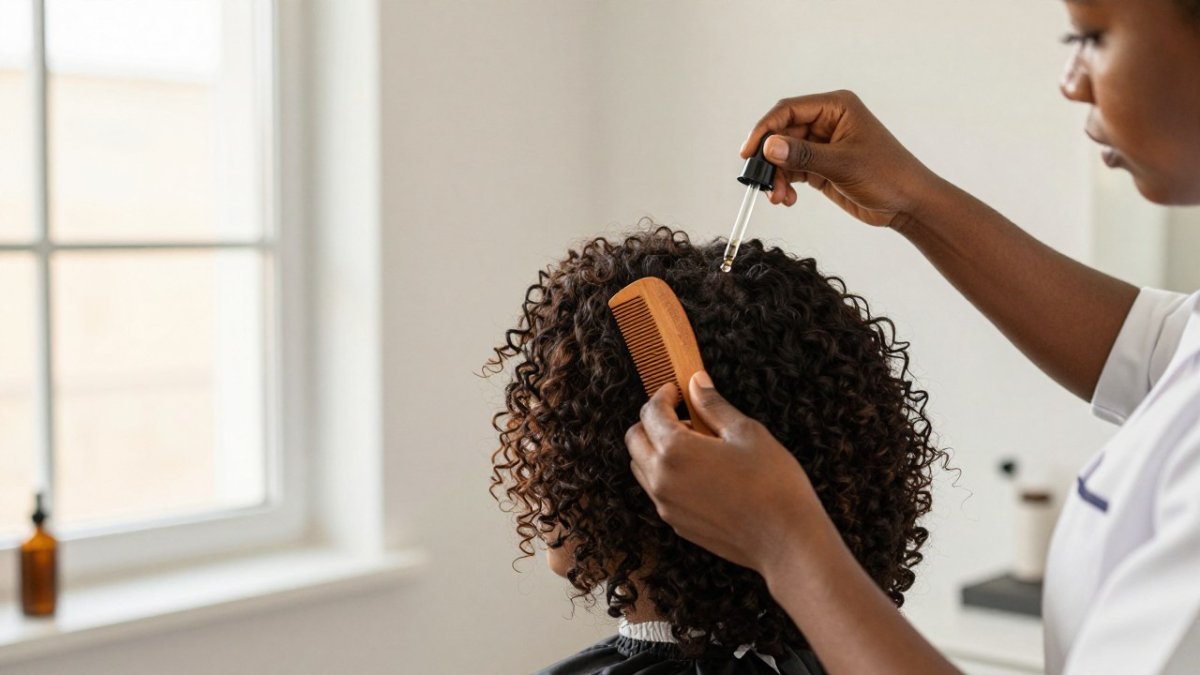
A dry scalp needs hydration and gentle handling. A few drops of a lightweight scalp oil, applied with the fingertips, can help. Scalp massage also encourages circulation, and many people find it relaxing. Keep pressure light and avoid scratching, which can damage the skin.
Curly Hair Routine for Beginners: Common Mistakes and Seasonal Adjustments
Beginners often make the same few errors:
- Using too much product at once
- Washing with hot water, which dries the scalp
- Skipping conditioner and drying out the lengths
- Changing products too quickly to judge results
Adjusting your routine for winter dryness
Cold outdoor air holds less moisture, and indoor heating pulls humidity down further. The scalp often responds with tightness, flaking, and itch. Practical adjustments:
- Shift to a richer, non-comedogenic scalp oil or balm for overnight use, applied sparingly at the roots.
- Reduce clarifying washes to every four to six weeks unless you are using heavy stylers.
- Add a humidifier in the room where you sleep; keeping indoor humidity in the 30 to 50 percent range is a common target.
- Avoid hot showers, lukewarm water cleans just as well and strips less.
Adjusting for summer humidity and sweat
Humidity and sweat increase oil and product residue at the roots. Many people with curls find they need to wash more often in summer, or at least rinse and re-apply a light leave-in. A lightweight, water-based styler reduces the residue that feeds buildup. If you exercise and sweat heavily, a quick co-wash or water rinse between full wash days can keep the scalp comfortable without over-cleansing.
Hard water and mineral buildup on curly scalps
Hard water contains dissolved calcium and magnesium (Hardness of Water). When it mixes with shampoo and sebum, it can leave a film on the scalp and hair that feels waxy, dulls curls, and makes buildup worse. This is a common and under-addressed problem for curly hair, because the same bends that slow sebum also trap mineral residue.
Signs of mineral buildup:
- Hair feels coated or stiff after washing
- Scalp itches or flakes despite regular cleansing
- Curls look dull and lose definition faster
- Soap and shampoo lather poorly
What helps:
- Clarifying wash: use a chelating or clarifying shampoo every few weeks to lift mineral film along with product residue.
- Water testing: a home water-test kit or a report from your municipal water supplier will tell you whether hardness is high in your area.
- Shower filter: a filtered shower head reduces some sediment and chlorine, though it will not fully soften hard water.
- Rinse with filtered or distilled water: a final rinse with softer water can reduce residue left on the scalp.
When to change products versus when to change technique
Most beginners change products when the real problem is technique: too much product, applying heavy stylers to the roots, or rinsing conditioner through the scalp instead of the lengths. Before buying a new shampoo, try one variable at a time for two to three weeks, amount, application point, water temperature, or wash frequency, and keep the product constant so you can judge what actually changed.
Booking a Scalp Consultation If Your Routine Is Not Working
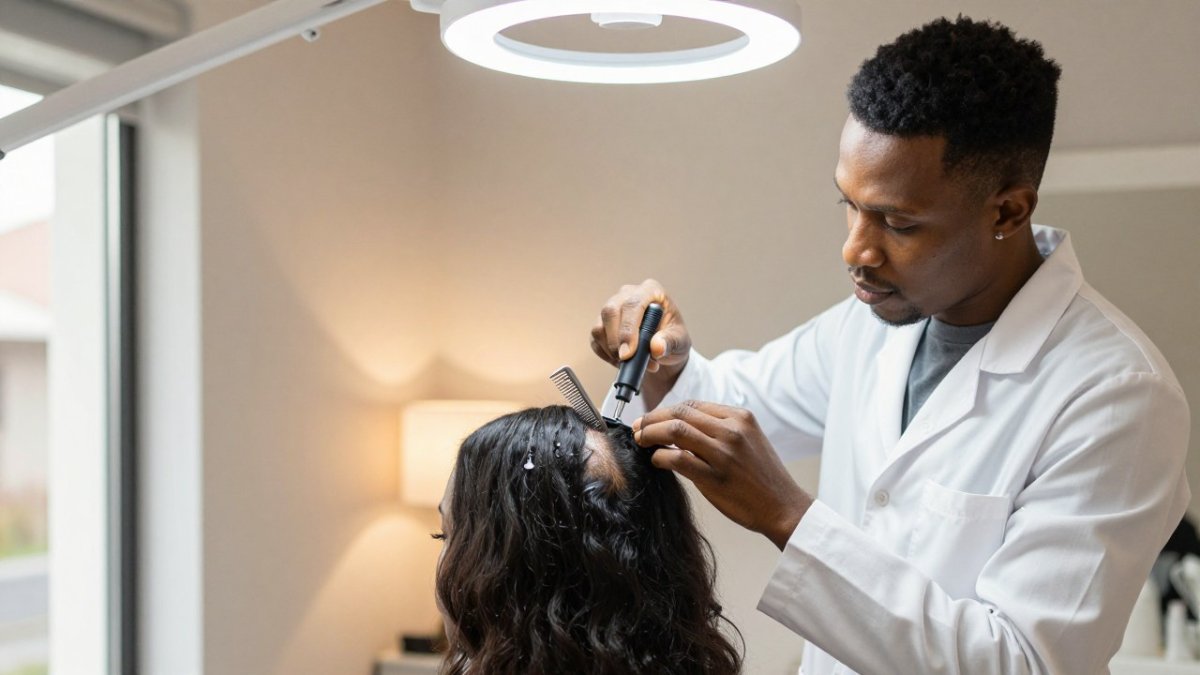
If your scalp stays itchy, flaky, or inflamed after several weeks of consistent care, professional guidance can help. Sophiatrichoholistic Hair Spa LLC offers holistic scalp and hair consultations designed for women, combining Traditional Chinese Medicine with clinical trichology. To see how to check credentials before you book, read [how to choose a certified clinical trichologist | sophiatrichoholistic.com]. You can also [find a clinical trichologist near you | sophiatrichoholistic.com].
Start Your Hair & Scalp Healing Journey with Sophiatrichoholistic Hair Spa LLC, where a personalized plan targets the root causes of scalp concerns.
Frequently Asked Questions
How often should you wash your scalp if you have curly hair?
Most people with curly hair wash every three to seven days, depending on how quickly the scalp gets oily, how much product is used and whether the hair is dry or fine. Scalps that produce more sebum or sit under heavy styling products may need more frequent cleansing, while drier scalps often do well with less. Watch how your scalp feels between washes rather than following a fixed calendar, and adjust the schedule as seasons and routines change.
How do you clean your scalp without ruining your curls?
Use a sulfate-free, low-lather shampoo and focus the lather on the scalp rather than the lengths. Massage with your fingertips, not your nails, and let the suds rinse down through the curls so they cleanse without stripping. Follow with a conditioner on the lengths to restore moisture. A clarifying wash once a month can remove buildup if your curls feel weighed down or your scalp feels itchy.
Should you exfoliate your scalp if you have curly hair?
A gentle scalp exfoliant can help clear buildup from products and dead skin, but it should be used no more than once or twice a month for most people. Harsh scrubs can irritate the scalp and cause flaking, so choose a mild formula. If you have a diagnosed scalp condition such as psoriasis or seborrheic dermatitis, check with a qualified dermatologist or trichologist before adding exfoliation to your routine.
When should you see a dermatologist or trichologist about scalp problems?
See a professional if you notice persistent itching, burning, pain, bleeding, open sores, thick scaling, or hair shedding that is sudden or patchy. Also seek advice if an over-the-counter routine has not improved your scalp after several weeks. A consultation can help identify the cause and suggest a plan suited to your scalp and hair. This article provides general information and is not a substitute for individual medical advice.