 ultimate-guide
Does Holistic Hair Growth Work? A 2026 Guide for Women
Table of Contents
- What Does Holistic Hair Growth Actually Mean?
- Causes of Hair Thinning in Women: What Holistic Approaches Can and Cannot Fix
- The Evidence Behind Holistic Hair Growth: What Research Supports
- Natural Hair Regrowth for Women: Remedies With Real Potential
- Holistic Scalp Health Treatments: From Acupuncture to Clinical Trichology
- Hormones, Stress, and Internal Balance: The Factors Most Women Overlook
- How to Tell If a Holistic Approach Is Working: Timelines and Realistic Expectations
- Conclusion
- Frequently Asked Questions
Last Updated: September 11, 2026
What Does Holistic Hair Growth Actually Mean?
Holistic hair growth is a root-cause approach to hair restoration that treats the scalp, the body, and the mind as one connected system rather than isolating hair loss as a single symptom. This guide examines whether that approach holds up.
The short answer: it can work, but not for every cause of thinning, and not on the timeline most people hope for. Below, we break down which causes of hair thinning in women respond to holistic care, which need medical intervention first, and how to tell whether a plan is working.
Causes of Hair Thinning in Women: What Holistic Approaches Can and Cannot Fix
The most common causes of hair thinning in women fall into two groups: those driven by internal imbalance, and those driven by permanent follicle damage. Holistic care has real use over the first and limited use over the second.
Androgenetic alopecia is a genetic, progressive thinning driven partly by DHT sensitivity in the hair follicle. Telogen effluvium is temporary shedding after stress, illness, surgery, or childbirth, and often resolves on its own within months (peer-reviewed research).
Holistic approaches tend to help most with:
- Telogen effluvium triggered by stress, poor sleep, or crash dieting
- Nutrient deficiency, particularly low iron, vitamin D, or protein intake
- Scalp inflammation from seborrheic dermatitis or psoriasis
- Hormonal shifts around postpartum recovery and perimenopause
Where holistic care cannot replace medical treatment: scarring alopecias, advanced androgenetic alopecia with follicle miniaturization, and thyroid or autoimmune conditions that need a physician's diagnosis first.
The Evidence Behind Holistic Hair Growth: What Research Supports
Evidence for holistic hair growth is mixed, and honesty about that matters more than hype. Read the research by tier: what has randomized controlled trial support, what has only small or observational studies, and what has no human data. Most marketing collapses those tiers into one.
Tier 1: reasonable clinical support.
- Low-level laser therapy (LLLT) and red light therapy. These devices deliver red or near-infrared light to the scalp, and the proposed mechanism is photobiostimulation, light energy absorbed by cytochrome c oxidase in follicle cells, which is thought to extend the anagen (growth) phase and improve local blood flow. peer-reviewed dermatology research on low-level laser therapy for androgenetic alopecia Results across trials are generally described as modest but measurable when the device is used consistently for several months. In the U.S., some LLLT devices are cleared by the FDA as medical devices for androgenetic alopecia, which is a clearance for safety and a reasonable assurance of effectiveness, not an approval, and not a guarantee of results.
- Topical minoxidil. Not "natural," but it belongs here because it is the benchmark every holistic claim is measured against. FDA-approved for androgenetic alopecia, it prolongs the growth phase and widens the follicle, typically taking three to six months to show visible change. Any holistic protocol that ignores it is comparing itself to nothing.
Tier 2: weak but real support.
- Scalp massage. Studies on standardized daily scalp massage report improvements in hair shaft thickness and hair count, but samples were small, duration short, and placebo hard to rule out. The plausible driver is stretch-induced gene expression in follicle cells plus improved local circulation, not "unclogging" anything.
- Rosemary oil. Small trials comparing topical rosemary oil to low-concentration minoxidil reported comparable hair counts over several months with fewer side effects. The catch: those trials were small, and rosemary oil is not FDA-approved for hair loss.
- Caffeine-based topicals. Studied for DHT inhibition at the follicle level in lab and small human work. Results are modest, and the effect is not equivalent to a prescription androgen blocker.
Tier 3: anecdotal or tradition-only.
- Biotin. Helps only if you are genuinely deficient, which is uncommon on a varied diet. There is no evidence it grows hair at normal levels, and high-dose biotin can interfere with lab tests, including thyroid and cardiac troponin assays (the FDA).
- Onion juice, garlic, castor oil, rice water, and most "growth" oils. No controlled human data showing regrowth. They may improve how hair feels, which is not the same as growing more of it.
- Collagen and most hair gummies. Marketed heavily, studied lightly. Protein adequacy matters; specific collagen peptides lack strong hair-specific evidence.
The unique angle most guides skip: the diagnostic step. Before you spend months on any tier, get bloodwork. A basic panel worth requesting from a physician includes ferritin (iron stores), a complete blood count, thyroid-stimulating hormone and free T4, vitamin D, and, if your provider agrees it is appropriate, reproductive hormones and fasting glucose or A1c. Ferritin in particular is worth discussing with your doctor, because the threshold for "normal" on a standard lab report is often lower than the level associated with hair shedding in some patients. No topical product can substitute for that information, and no supplement should be started without it.
Natural Hair Regrowth for Women: Remedies With Real Potential
Natural hair regrowth for women works best when remedies are matched to the actual cause, not chosen because they are popular. Here are the approaches with the most defensible rationale, plus how each fits alongside standard medical treatment.
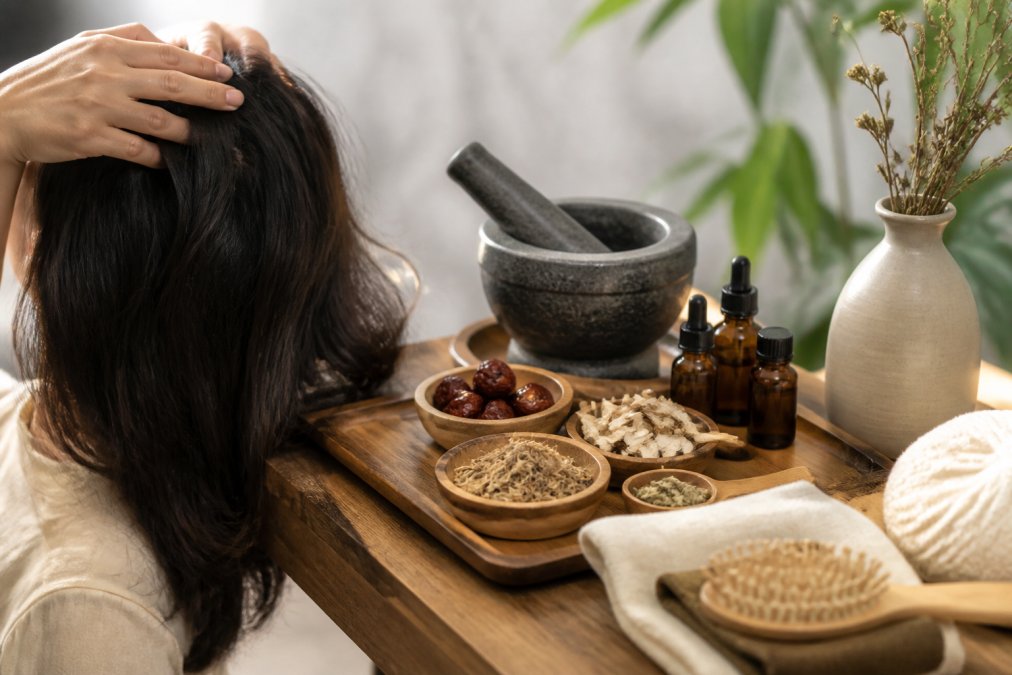
- Rosemary oil, applied topically. Often compared to low-concentration minoxidil in small trials, with fewer side effects. Typical use is a few drops diluted in a carrier oil, massaged into the scalp once or twice daily; expect several months before change. If you also use topical minoxidil, space them apart and tell your dermatologist what else is on your scalp.
- Scalp massage, 4-5 minutes daily. Improves circulation to the follicles and reduces tension. Consistency matters more than technique; a silicone brush or fingertips both work, and daily frequency beats intensity.
- Caffeine-based topical products. Caffeine has been studied for its effect on DHT inhibition at the follicle level. Results are modest. If you use a prescription androgen blocker like finasteride or spironolactone, a caffeine shampoo is complementary, not a replacement.
- Iron and vitamin D correction. Only relevant if bloodwork shows a deficiency. Supplementing without a deficiency does nothing for hair, and iron in particular should not be taken blindly, excess iron is harmful. Ask your provider to check ferritin and vitamin D before you buy anything.
- Protein and overall calorie adequacy. Severe restriction triggers telogen effluvium. Eating enough, especially adequate protein, is a hair treatment. Crash diets and very low-calorie plans are a common and reversible cause of shedding in women.
- Stress management. Chronic stress pushes follicles into the resting phase; sleep, breathwork, and acupuncture all have a place. Anxiety about shedding drives stress, which drives more shedding, breaking that loop is part of the treatment, not a soft add-on.
- Red light therapy. A few sessions per week, sustained for months, is the typical protocol. Devices vary widely in power and wavelength, so a device that is FDA-cleared for androgenetic alopecia is a more defensible choice than a generic red light panel.
How to combine holistic methods with medical treatment safely.
Holistic methods and standard treatments are not mutually exclusive, but they are not interchangeable either.
- Minoxidil (topical or oral). FDA-approved for androgenetic alopecia. If you start it, plan to stay on it, stopping typically reverses gains within months. Scalp massage or LLLT can be used alongside it, but do not stop minoxidil to "try natural first" unless a physician advises it.
- Finasteride and spironolactone. Prescription androgen-related treatments. Finasteride is not appropriate for women of childbearing potential, and spironolactone requires monitoring. These are physician decisions, not spa decisions.
- Thyroid medication. If bloodwork shows hypothyroidism, treating it is the hair treatment. No topical will compensate for an untreated thyroid.
- What to avoid combining. Do not layer multiple topical irritants (rosemary oil plus a strong exfoliant plus a caffeine serum) on the same scalp, contact dermatitis causes shedding and looks like treatment failure. Introduce one new product at a time, and give each at least eight to twelve weeks before judging it.
Notice what is missing: any single miracle ingredient. The remedies that work tend to work slowly and in combination, and best when matched to a cause you have actually confirmed.
Holistic Scalp Health Treatments: From Acupuncture to Clinical Trichology
Holistic scalp health treatments combine hands-on therapies with diagnostic trichology, where most single-remedy approaches fall short. Acupuncture, scalp exfoliation, and clinical trichoscopy each address a different layer of the problem.
Start Your Hair & Scalp Healing Journey →
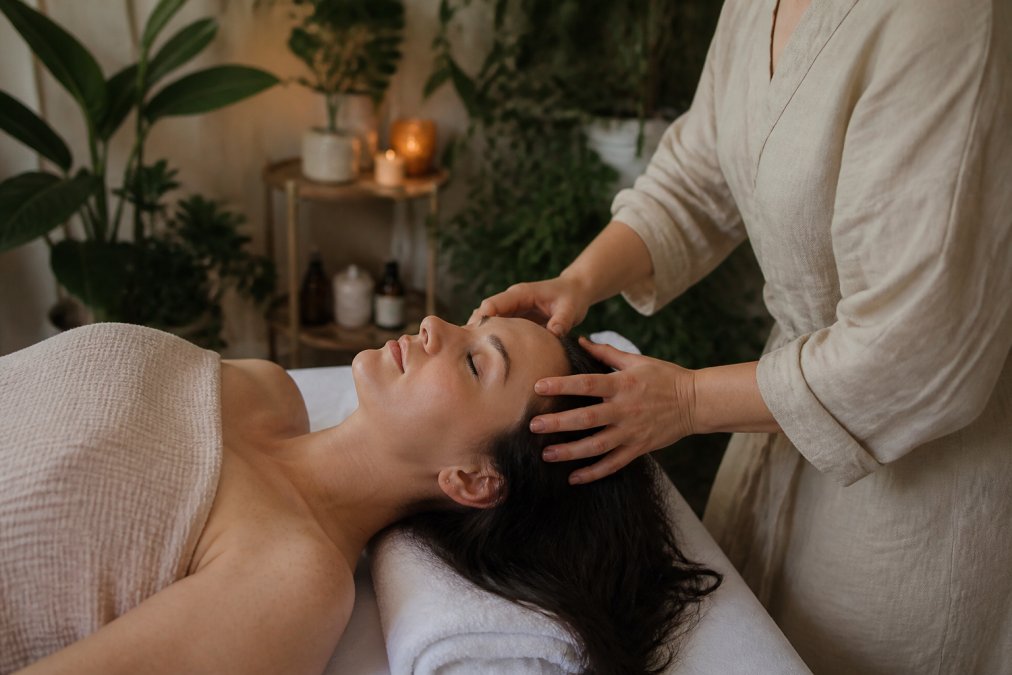
Acupuncture for hair loss rests on the idea that blood circulation and nervous system regulation affect follicular stimulation. In practice, that means fewer sessions on the scalp itself and more on systemic drivers: sleep quality, stress response, and digestion.
Clinical trichology adds the diagnostic layer. A trichoscope lets a practitioner see hair shaft thickness, follicle density, and signs of inflammation or miniaturization that the naked eye misses. That distinction matters because it separates a scalp that needs calming from a scalp that needs stimulating.
At Sophiatrichoholistic Hair Spa LLC, this is the model we work from: Traditional Chinese Medicine for the internal picture, clinical trichology for the scalp picture, and a plan that changes as the two evolve.
Hormones, Stress, and Internal Balance: The Factors Most Women Overlook
Hormonal health beyond DHT is where most hair loss conversations stop too early. Estrogen, progesterone, thyroid hormones, cortisol, and insulin all influence the hair cycle, and shifts in any can trigger shedding.
Postpartum hair loss is the clearest example: falling estrogen after delivery pushes many follicles into the telogen phase at once, producing heavy shedding a few months later. It is normal, temporary for most women, and not a sign your hair will not return.
Perimenopause brings a different pattern: declining estrogen relative to androgens, which can gradually thin hair at the crown and part line. Thyroid imbalance, whether underactive or overactive, frequently shows up as diffuse thinning before any other symptom is obvious.
This is why diagnostic testing belongs in a holistic plan, not outside it. A basic panel covering thyroid function, ferritin, vitamin D, and reproductive hormones gives you a starting point no topical product can substitute for. If your provider has not ordered bloodwork, ask why.
How to Tell If a Holistic Approach Is Working: Timelines and Realistic Expectations
The hair regrowth timeline is the part most people underestimate. Hair grows roughly half an inch per month, and the anagen phase lasts years, so visible change takes time.
Here is what a realistic timeline looks like:
| Timeframe | What You Can Expect |
|---|---|
| Weeks 1-4 | Reduced shedding may begin if the trigger was addressed |
| Months 2-3 | Scalp feels calmer; inflammation and oiliness often improve first |
| Months 3-6 | Early regrowth appears as fine, short hairs along the part line |
| Months 6-12 | Hair density and shaft thickness changes become visible |
| Beyond 12 months | Maintenance phase; results hold only with continued care |
If nothing changes by month three, that is useful information, not failure. It may mean the diagnosis was wrong, the cause was not addressed, or the plan needs a different emphasis.
Conclusion
The honest challenge with holistic hair growth is patience: it asks you to fix the cause before you chase the symptom, and the mirror will not reward you quickly. For women dealing with stress-related shedding, scalp inflammation, or hormonal shifts, that trade-off is usually worth it. At Sophiatrichoholistic Hair Spa LLC, we combine Traditional Chinese Medicine with clinical trichology to identify what is actually driving your thinning, then build a plan around it. Our services are designed exclusively for women, and every plan starts with a personalized assessment rather than a generic protocol. Get started with Sophiatrichoholistic Hair Spa LLC and give your scalp the root-cause care it has been missing.
Frequently Asked Questions
Is there scientific evidence supporting holistic hair growth treatments?
Some holistic approaches have clinical backing. Low-level laser therapy and red light therapy have shown measurable increases in hair density in controlled studies. Rosemary oil has performed comparably to minoxidil in at least one trial. Scalp massage has been linked to improved hair shaft thickness. Other remedies, like many herbal supplements, rely more on traditional use than rigorous trials. The strongest results come from combining evidence-supported methods with personalized assessment of underlying causes such as nutrient deficiency, hormonal shifts, or inflammation.
How long before I see results from natural hair regrowth for women?
Hair grows in cycles, and the anagen (growth) phase lasts two to six years. Most treatments need at least three to six months before visible changes appear. Early signs include less shedding, reduced scalp inflammation, and new baby hairs along the hairline. Photographing your scalp monthly under the same lighting helps track progress objectively. Consistency matters more than any single product. If nothing changes after six months of consistent effort, a professional evaluation can identify what is blocking regrowth.
Can holistic scalp health treatments help with seborrheic dermatitis or psoriasis?
Holistic scalp treatments that focus on reducing inflammation, restoring the scalp microbiome, and improving blood circulation may ease symptoms of seborrheic dermatitis and psoriasis. Acupuncture and herbal formulas have been used in Traditional Chinese Medicine for inflammatory skin conditions for centuries. However, these approaches work best alongside, not instead of, medical care. A qualified practitioner can assess whether your scalp condition needs prescription treatment, lifestyle changes, or a combination of both.
What causes hair thinning in women that holistic approaches can address?
Holistic approaches can support thinning caused by nutrient deficiency, chronic stress, poor scalp circulation, inflammation, and hormonal imbalances beyond DHT, including thyroid issues and postpartum shifts. Telogen effluvium, often triggered by stress or childbirth, frequently responds well to root-cause support. Androgenetic alopecia has a genetic component that holistic methods may slow but not reverse. Diagnostic testing for iron, vitamin D, thyroid function, and hormones helps identify which causes apply to you before committing to any treatment plan.