 how-to
Can Acupuncture Stop Hair Thinning? A 2026 Guide
Table of Contents
- How Acupuncture Targets Hair Thinning at the Root
- TCM Hair Loss Treatment: The Meridian Framework
- Types of Hair Loss Acupuncture Can Address
- Acupuncture and Scalp Inflammation: What the Evidence Shows
- Acupuncture vs. Conventional Treatments for Hair Thinning
- How Long Does Acupuncture Take for Hair Growth Results
- Integrating Acupuncture With Clinical Trichology
- Frequently Asked Questions
Last Updated: September 2, 2026
How Acupuncture Targets Hair Thinning at the Root
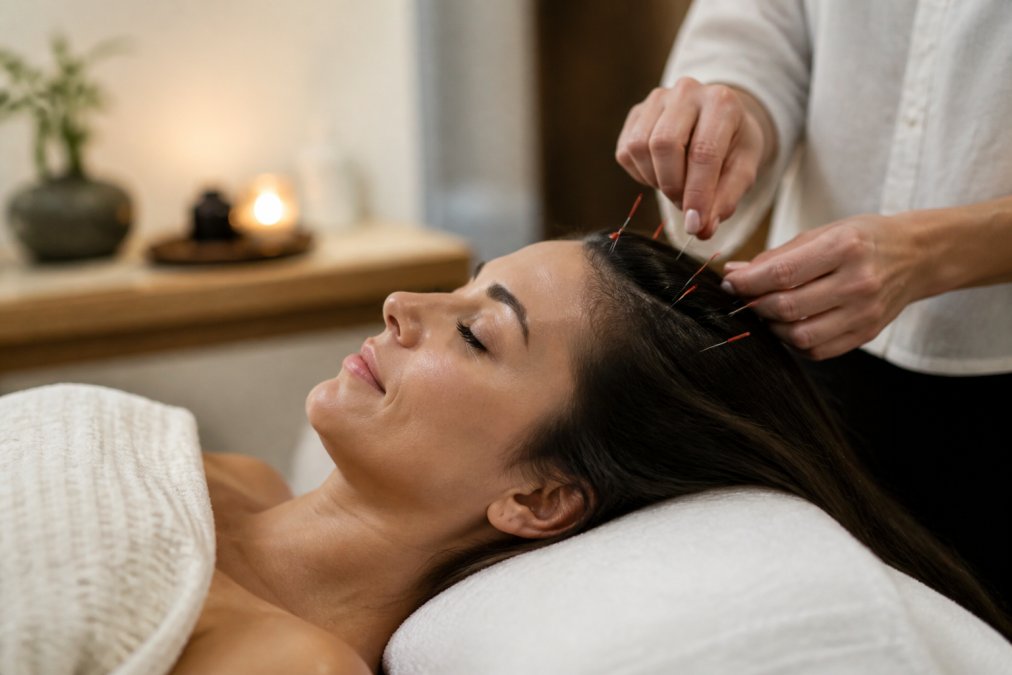
Whether acupuncture can stop hair thinning has moved beyond alternative-medicine circles. At Sophiatrichoholistic Hair Spa LLC, we integrate Traditional Chinese Medicine with clinical trichology because acupuncture's effects on hair follicles are grounded in physiology. Acupuncture inserts fine needles at specific anatomical points to stimulate nerve pathways, modulate immune responses, and alter local blood chemistry. For hair loss, this targets two primary areas: the follicle itself and the hormonal environment governing the hair growth cycle.
Follicle Stimulation and Scalp Microcirculation
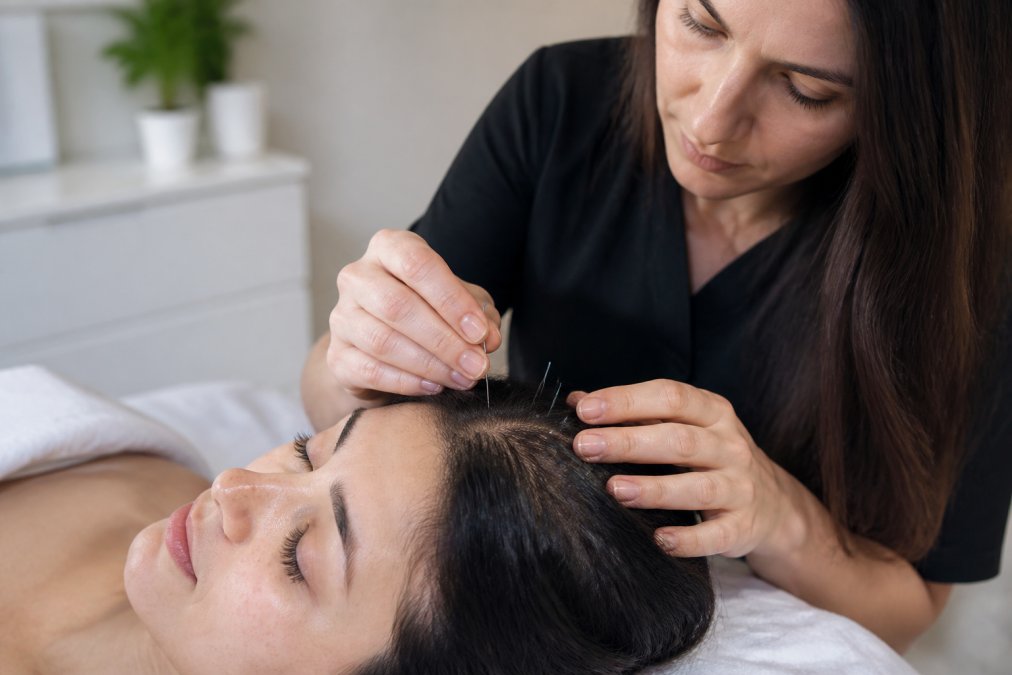
Hair follicle miniaturization, the progressive shrinking that characterizes thinning, is driven partly by inadequate blood supply. Needle insertion at scalp acupuncture points triggers localized vasodilation, drawing oxygen and nutrients back to follicle tissue. The anagen phase, when active hair growth occurs, depends on this nutrient delivery. When microcirculation is restored, follicles stalled in the telogen phase can be recruited back into anagen. Blood flow enhancement also reduces inflammatory mediators around the follicle, addressing a recognized driver of both androgenetic alopecia and diffuse thinning.
Hormonal Imbalance and Cortisol Regulation
Sustained cortisol elevation pushes follicles prematurely into catagen and telogen phases, producing diffuse shedding (peer-reviewed research). Acupuncture influences the hypothalamic-pituitary-adrenal axis, the endocrine pathway governing cortisol output, which is why many patients report improved sleep and reduced anxiety alongside hair density changes. While acupuncture does not replicate the pharmacological blockade of 5-alpha reductase inhibitors, it modulates the broader hormonal environment, making it a meaningful complementary strategy for androgenetic alopecia.
TCM Hair Loss Treatment: The Meridian Framework
In Traditional Chinese Medicine, hair is considered an extension of the blood and kidney system. Deficiency in either produces thinning, brittleness, and premature loss. TCM's systemic view means practitioners assessing hair loss also evaluate digestion, sleep quality, menstrual regularity, and emotional state, because each reflects the internal balance expressed at the scalp.
Key Meridian Points Used in Clinical Practice
Specific meridian points used in scalp and hair loss protocols include:
- Baihui (GV 20): Located at the crown, this governing vessel point stimulates scalp microcirculation and calms the nervous system.
- Sishencong (EX-HN1): Four points surrounding Baihui, used to increase local blood flow and address hair thinning at the vertex.
- Fengchi (GB 20): At the base of the skull, this gallbladder meridian point addresses stress-induced hair loss by releasing tension and improving scalp circulation.
- Zusanli (ST 36): A leg point used to tonify overall blood and qi, supporting systemic health conditions that feed follicle activity.
- Taixi (KD 3): The primary kidney meridian point, used when thinning is associated with hormonal imbalance, postpartum depletion, or chronic fatigue.
Moxibustion, the application of heat from burning dried mugwort near acupuncture points, is sometimes combined with needle insertion to amplify warming and circulatory effects.
Types of Hair Loss Acupuncture Can Address
Acupuncture is most effective for conditions with significant inflammatory, hormonal, or stress-related components. Purely structural causes, such as scarring alopecia from severe follicle destruction, are outside its scope.
Androgenetic Alopecia and Telogen Effluvium
Androgenetic alopecia is genetically influenced thinning driven by DHT-mediated follicle miniaturization. Acupuncture does not reverse genetic predisposition, but it can slow progression by reducing scalp inflammation, improving blood flow to affected follicles, and modulating the hormonal environment. It is most effective when started early, before miniaturization becomes irreversible.
Telogen effluvium is diffuse shedding triggered when systemic stressors push a large proportion of follicles into the telogen phase. Because the trigger is systemic, acupuncture's effect on cortisol levels and endocrine regulation addresses the cause directly. Many patients with stress-induced hair loss see stabilization of shedding within the first treatment phase.
Postpartum Hair Loss and Stress-Induced Shedding
Postpartum hair loss is a specific form of telogen effluvium. The hormonal crash following delivery, combined with sleep deprivation and physical demands, creates a perfect storm for shedding. Acupuncture addresses this through multiple pathways: restoring kidney and blood deficiency in TCM terms, reducing cortisol levels, and improving scalp microcirculation. Postpartum telogen effluvium almost always resolves, and acupuncture accelerates that recovery by addressing the underlying depletion.
Acupuncture and Scalp Inflammation: What the Evidence Shows
Scalp inflammation is present in androgenetic alopecia, seborrheic dermatitis, psoriasis, and alopecia areata. It accelerates follicle miniaturization and disrupts the hair growth cycle regardless of primary diagnosis. Acupuncture modulates inflammatory response through needle insertion that stimulates release of endogenous opioids and anti-inflammatory neuropeptides, while also activating the parasympathetic nervous system to down-regulate pro-inflammatory cytokine cascades.
For women with seborrheic dermatitis or scalp psoriasis, this matters practically. These conditions create a hostile follicular environment that standard medicated shampoos address only at the surface. Acupuncture targets systemic drivers, which is why combining topical trichology protocols with internal TCM treatment can be beneficial.
As documented in research indexed by PubMed on acupuncture and inflammatory skin conditions, studies on acupuncture's effect on inflammatory dermatological conditions show promising results, though the research community calls for larger randomized controlled trials to establish definitive efficacy benchmarks.
Acupuncture vs. Conventional Treatments for Hair Thinning
The comparison between acupuncture and conventional treatments is most useful when framed as complementary rather than competitive. Minoxidil remains the most widely used topical treatment for androgenetic alopecia; finasteride reduces DHT by blocking 5-alpha reductase. Both have documented efficacy and side effects.
Start Your Hair & Scalp Healing Journey →
Acupuncture occupies a distinct position: it addresses systemic conditions, hormonal imbalance, elevated cortisol, chronic inflammation, that conventional treatments do not touch. Minoxidil does not regulate the endocrine system. Finasteride does not reduce scalp inflammation or improve scalp microbiome health. Acupuncture, particularly within a full TCM protocol including herbal medicine, addresses these upstream variables.
| Approach | Primary Mechanism | Addresses Systemic Drivers | Requires Ongoing Use |
|---|---|---|---|
| Minoxidil | Prolongs anagen phase, increases local blood flow | No | Yes, indefinitely |
| Finasteride/Oral DHT blockers | Reduces DHT conversion | Partially (hormonal) | Yes, indefinitely |
| Acupuncture (TCM protocol) | Nerve stimulation, endocrine regulation, inflammation reduction | Yes | Protocol-based, then maintenance |
| Combined TCM + Trichology | Systemic + topical, root cause + surface | Yes | Protocol-based, then maintenance |
How Long Does Acupuncture Take for Hair Growth Results
The hair growth cycle spans several months, so any intervention working at the follicle level will not produce visible density changes until new anagen growth is long enough to see. Most practitioners structure treatment in three phases.
Patient-Reported Outcomes and What to Expect Per Phase
Phase 1 (Weeks 1-6): Stabilization
- Reduction in daily shed count
- Improved sleep quality and reduced anxiety
- Decreased scalp tenderness and itching
- No visible density change yet
Phase 2 (Weeks 7-16): Regeneration
- Emergence of new anagen growth at the hairline or part
- Improved hair shaft thickness on existing strands
- Patient-reported improvement in hair texture
Phase 3 (Month 4 onward): Consolidation
- Continued density improvement as new growth matures
- Reduced frequency of maintenance sessions
- Sustained hormonal balance and reduced stress markers
New fine growth can initially look discouraging before looking encouraging. A trichoscopy assessment at the eight-week mark provides objective data confirming that follicle activity is increasing. According to the American Academy of Dermatology's patient guidance on hair loss, most hair loss treatments require a minimum of three to six months before visible results can be assessed, a timeline aligned with the hair growth cycle.
Integrating Acupuncture With Clinical Trichology
The most effective protocols combine acupuncture's systemic reach with clinical trichology's precision at the scalp level. This integration model defines our approach at Sophiatrichoholistic Hair Spa LLC.

Clinical trichology contributes diagnostic precision: trichoscopy to assess follicle diameter and density, scalp microbiome analysis to identify inflammatory triggers, and targeted topical protocols. Acupuncture contributes systemic regulation: endocrine balance, cortisol reduction, blood flow enhancement, and immune modulation.
The integration protocol at a practical level includes:
- Initial trichoscopy assessment to establish baseline follicle density and scalp condition
- TCM intake evaluation covering systemic health, menstrual pattern, sleep, digestion, and stress history
- Concurrent treatment scheduling with acupuncture sessions timed to support active trichology phases
- Herbal adjuncts prescribed according to TCM pattern diagnosis
- At-home care protocol combining prescribed topical treatments with lifestyle recommendations
- Re-assessment at eight weeks using trichoscopy to document objective follicle response
Chronic hair thinning rarely has a single cause, and that complexity is why single-modality treatment so often disappoints. The most durable results come from addressing the full picture. Sophiatrichoholistic Hair Spa LLC integrates a Licensed Acupuncture Physician and Certified Holistic Trichologist within a single protocol so the systemic and structural are treated together. Start Your Hair and Scalp Healing Journey with a comprehensive assessment that treats the root cause, not just the symptom.
Frequently Asked Questions
Q: Are there specific acupuncture points for stimulating hair follicles?
A: Yes. Practitioners commonly work with scalp acupuncture zones along the Du (Governing Vessel) meridian, as well as points such as GB-20 (Fengchi), BL-23 (Shenshu), and ST-36 (Zusanli). These points are selected to improve blood flow to the scalp, support kidney and liver function in TCM theory, and reduce cortisol levels. A qualified acupuncture physician will tailor the point protocol to your specific diagnosis rather than applying a one-size-fits-all approach.
Q: How many acupuncture sessions are typically needed for hair thinning?
A: Most practitioners recommend an initial course of 8 to 12 weekly sessions before assessing measurable change in hair density or shedding rates. The hair growth cycle means visible improvement in hair shaft thickness and anagen phase activity often takes three to six months. Factors like the type of hair loss, duration of thinning, and overall systemic health all influence the timeline. A personalized assessment at your first consultation will give you a more accurate projection for your situation.
Q: Can acupuncture be combined with clinical trichology treatments?
A: Acupuncture works well alongside clinical trichology when both are coordinated by practitioners who understand each modality. While acupuncture addresses internal imbalances through TCM hair loss treatment principles, trichology focuses on scalp microbiome health, follicle condition, and topical protocols. Used together, they target hair thinning progression from multiple directions simultaneously. Always disclose all treatments to every provider so protocols can be adjusted to avoid contraindications and maximize results.
Q: Is acupuncture a recognized treatment for alopecia in clinical settings?
A: Acupuncture is not a first-line treatment approved by the FDA for alopecia, but it is used as a complementary therapy within integrative medicine settings. Peer-reviewed studies have examined its effect on androgenetic alopecia and telogen effluvium, with some showing improvements in scalp microcirculation and reduced inflammatory response. Clinical evidence is still growing, and outcomes vary by individual. A licensed acupuncture physician can help you evaluate whether it is appropriate given your diagnosis and medical history.